







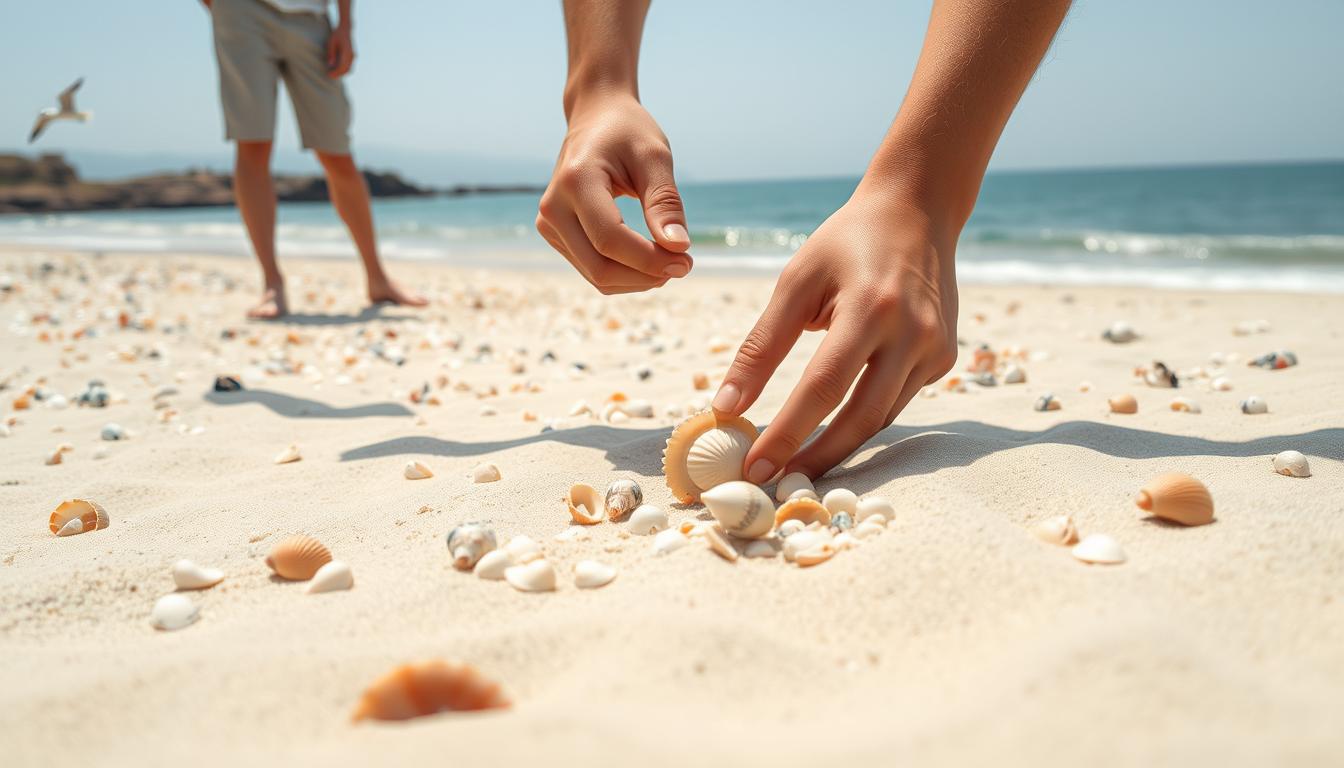
Walking on the beach is calming, with sand between your toes and the wind in your hair. For many, beachcombing is a favorite hobby. Finding seashells is a highlight, as each one is unique and colorful.
Doing coastal activities like seashell collecting connects you with nature. It’s a hobby for all ages, bringing calm and happiness. The sound of waves and the sight of seashells are meditative, perfect for relaxation.
Collecting seashells is more than a hobby; it’s a way to enjoy the ocean’s beauty. Whether you’re experienced or new, the excitement of finding shells is always joyful.
The Allure of Seashell Collecting
Seashell collecting connects us to nature and offers a calm escape from daily stress. It’s become more popular as people look for ways to relax and feel good.
One big reason people love shell collecting is its calming effects. Walking on the beach, searching for shells, can be very meditative. The sound of waves and feeling the sand are part of the experience, making it a great way to relax.
The Thrill of the Hunt
Many find the excitement in finding rare or perfectly shaped shells. Beaches are big, and finding that special shell is a challenge. This hunt encourages people to explore different beaches, learn about shells, and appreciate marine life.
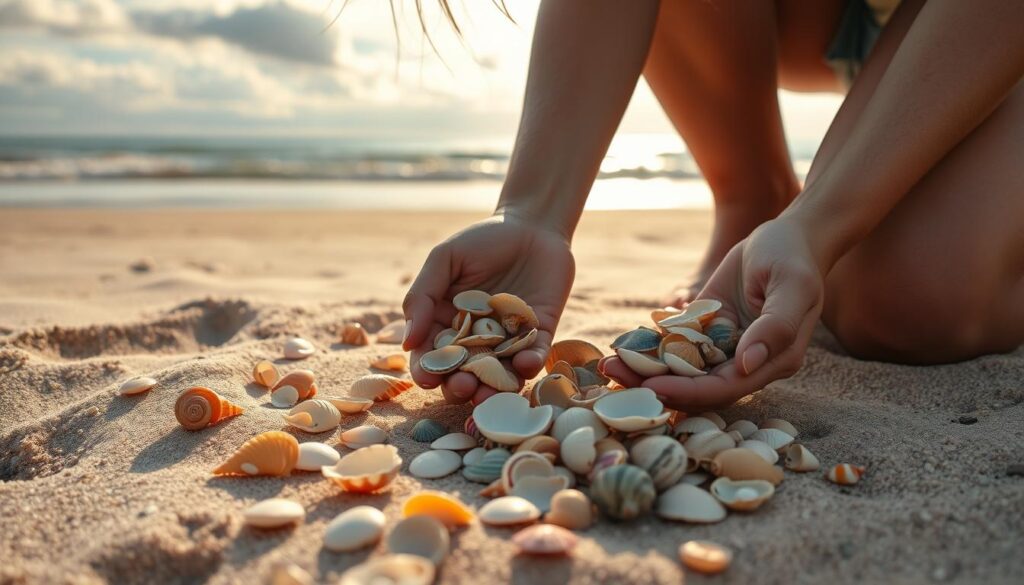
Shell collecting also helps us connect with nature. It teaches us about ecosystems and why we need to protect them. This connection can make us want to help keep these places safe for others in the future.
In short, seashell collecting is special because it offers relaxation, adventure, and a deeper connection to nature. Whether you’re new to it or have been collecting for years, there’s something for everyone.
Different Types of Seashells
Seashells come in many shapes and sizes, from delicate scallop shells to strong conch shells. The wide variety of seashell types comes from the many creatures in our oceans.
Seashells fall into several groups based on their looks and the animals they protect. Bivalves, like clams and mussels, have two shells. Gastropods, which include snails and slugs, have one shell.
Characteristics of Popular Seashells
Scallop shells are loved for their fan shape and bright colors. Conch shells, with their big, shiny inside, are also favorites. Knowing how to identify shell types makes collecting more fun, letting people see each shell’s special traits.
The marine life in these shells can tell us a lot. For example, the shape, size, and patterns of shells can show what kind of creature lived in them. This helps collectors learn about the marine life they find.
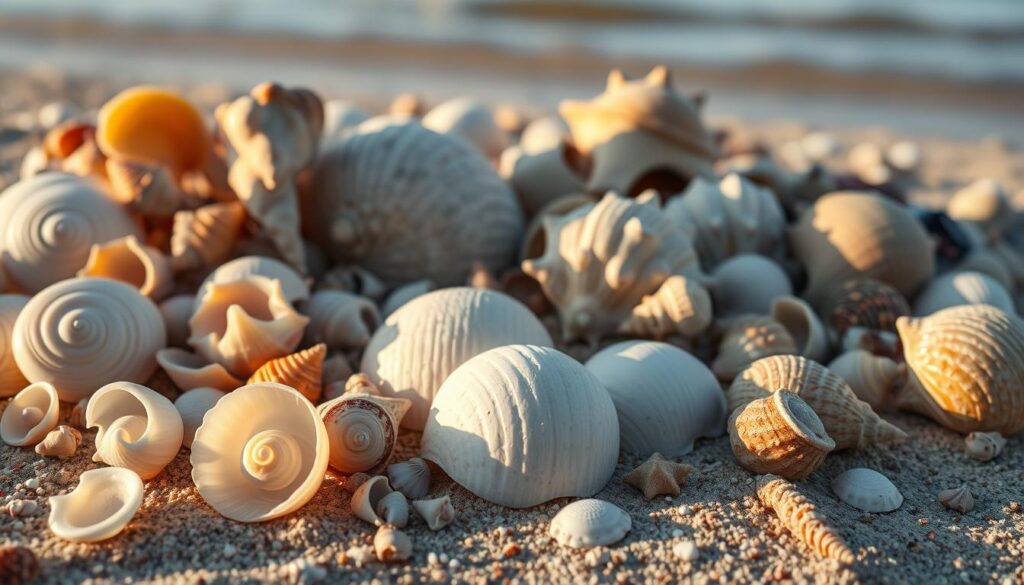
To identify shells, look at their shape and any special features. Field guides and online resources can also help. By using these tools, collectors can learn a lot about the seashell types they find.
The world of seashells is full of wonder and discovery. Whether you’re new to collecting or have been doing it for years, finding a rare shell is exciting. It’s a big part of the fun of this hobby.
Best Beaches for Shell Collecting
The best shelling beaches are where the tide and sea life create a treasure trove for collectors. Tidal patterns are key in uncovering and reshaping the beach. They bring new shells to the surface and change the layout of existing ones. Beaches with big tidal ranges often have a wider variety of shells.
Beach shape is also important. Beaches with a mix of sand and pebbles or those with sandbars offshore tend to have more shells. The shape and direction of the beach can also affect the types of shells found.
Marine life is the source of the shells. Beaches near coral reefs, estuaries, or other marine ecosystems rich in life are great for shelling. These places have a variety of mollusk species, showing in the shells found on the beach.
Some of the world’s top shelling beaches are in places like Sanibel Island in Florida and the Gulf Coast beaches. They are famous for their wide range of shells.
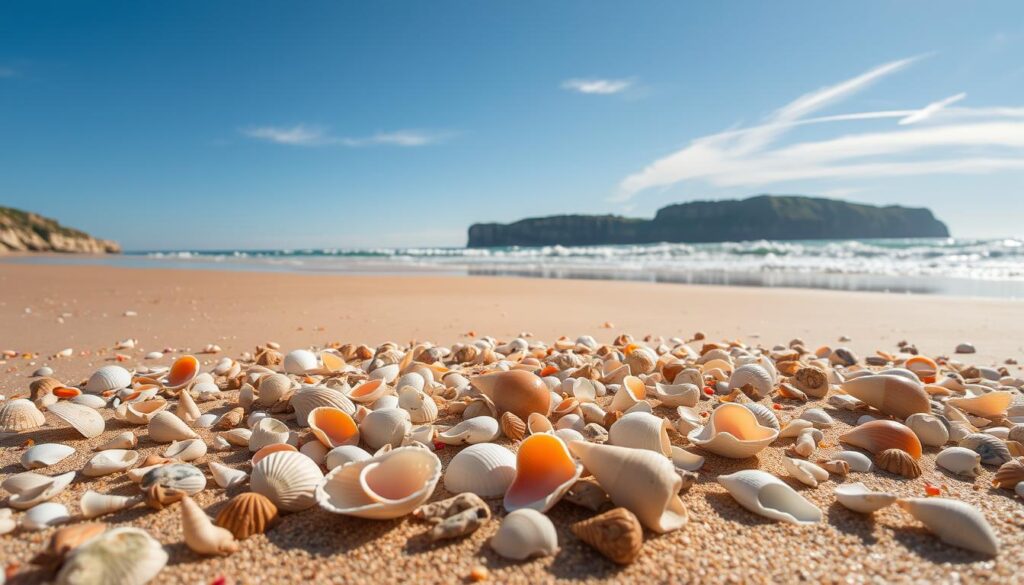
When looking for good shelling spots, visit beaches after storms or during seasonal changes. This is when new shells are often found. Exploring different beach levels, like the high tide line or areas with shell piles, can also help you find interesting shells.
The best beaches for shell collecting offer a mix of natural factors that support a rich shell population. By understanding these factors and knowing where to look, shell collectors can find beautiful and unique shells.
Tools and Techniques for Collecting Shells
Whether you’re new to shell collecting or have been doing it for years, knowing the right tools and techniques is key. The right shell collecting gear and methods can make finding great shells easier.
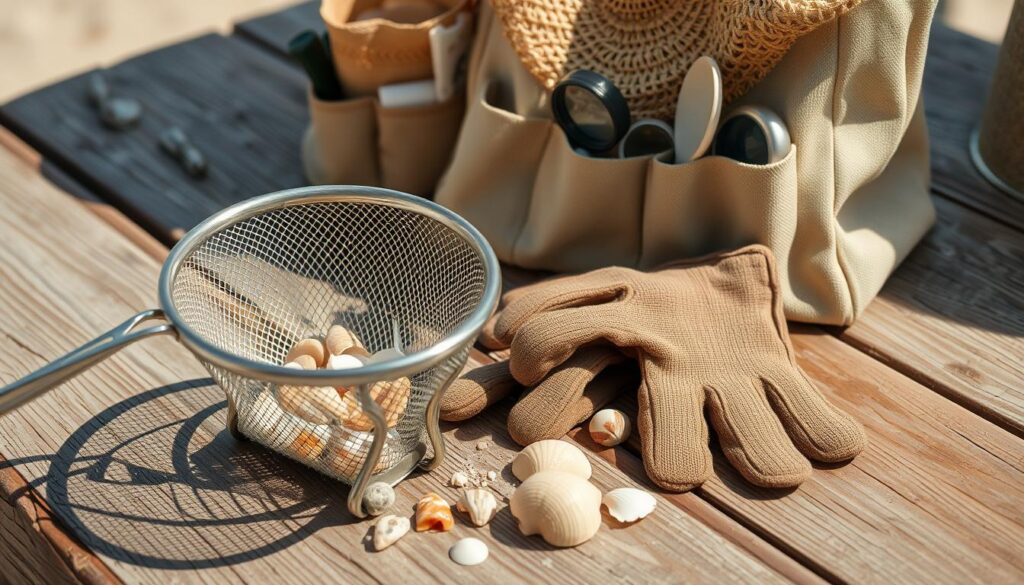
A good pair of gloves is a must-have beachcombing tool. They keep your hands safe from sharp shells and other beach trash. A small rake or trowel is also handy for digging up hidden shells in the sand or mud.
Patience and detail are essential for shelling techniques. Take your time to search the beach, looking for shells after storms or during low tide. Knowing what to look for can help you find interesting shells.
It’s important to handle shells carefully to keep them in good shape. Try not to touch the shell too much, as your skin oils can harm them. For delicate or valuable shells, use a protective case or wrap them up to avoid damage.
Cleaning your shells is a big part of the process. Rinse them with water to get rid of dirt and debris. For a deeper clean, use a soft-bristled brush but be gentle to avoid scratches. Learning these shelling techniques and using the right shell collecting gear will make your hobby more enjoyable.
Identifying Seashells
Identifying seashells is a mix of using field guides, online resources, and personal experience. It’s key for collectors and fans to know their shells well.
Field guides are a top way to identify seashells. They’re filled with expert info, images, and where to find shells. “The Shell Collector’s Guide” is a favorite among shell lovers, giving deep insights into many shells.
Online databases and marine life guides are also great for finding out about shells. Websites on marine biology and malacology offer big databases to search by many criteria. They’re always updated, helping both new and experienced collectors.
For those who like mobile tools, there are shelling apps to help. These apps have photo galleries, guides, and ways to track your finds. “iNaturalist” and “Shells of the World” are favorites for their big databases and easy use.
Getting good at identifying shells also means observing and being patient. Learning about shapes, patterns, and colors, and where shells live, helps a lot. Joining a shell club or going on guided tours can also teach a lot from others.
In short, finding out about seashells takes many steps. Using field guides, online tools, apps, and personal experience helps collectors grow their knowledge and love for seashells.
Cleaning and Preserving Shells
Cleaning and preserving seashells is key to keeping them beautiful and lasting. Whether you’re a seasoned collector or just starting, knowing how to care for your shells is important.
The first step in shell cleaning is to gently remove dirt or debris. Use a soft-bristled brush or a cloth for this. For tough dirt, mix water with mild soap. Always rinse the shells well to get rid of soap.
After cleaning, focus on shell preservation. Apply a clear varnish or sealant to enhance and protect the shell. Make sure to pick a product that fits the shell type you’re preserving.
Don’t forget about conservation too. Handle shells carefully to avoid damage. Store them in a cool, dry place, away from sunlight.
Storage Tips
For long-term storage, wrap each shell in acid-free tissue paper. This prevents damage from acidic materials. Place the wrapped shells in a strong box, making sure they’re not crowded or touching.
By following these steps for shell cleaning and preservation, your seashell collection will last for years. Proper care keeps the shells intact and makes them even more beautiful.
Creative Ways to Use Collected Shells
Your seashell collection can be more than just a memory. It can be a beautiful addition to your home decor. With a little creativity, you can turn your shells into stunning beach decor pieces that show off your style.
One easy way to use your seashells is to make a beautiful shell wreath. Use a wire or foam frame and decorate it with your favorite shells. Add some greenery like eucalyptus for a fresh look. This makes a lovely decorative shell piece that can hang on your front door or be a centerpiece.
Another idea is to fill a beautiful vase or jar with your shells. Use it as a beach decor piece on a shelf or mantle. You can also make shell crafts like jewelry, decorate picture frames, or even craft shell mobiles.
If you like DIY projects, try making a shell mirror or a shell-encrusted candle holder. These projects add a personal touch to your home. They also make great gifts for friends and family who love shell crafts.
Seashell Collecting Etiquette
Responsible shell collecting is more than just finding rare shells. It’s about keeping the ocean’s ecosystem safe. As collectors, we must make sure our hobby doesn’t harm the sea or upset its balance.
Respecting marine life is a big part of shell collecting etiquette. We should avoid places where sensitive or endangered species live. It’s also key not to take too many shells. Leave some for others and for the ecosystem’s health.
Knowing about protected areas is also important. Many beaches have rules to protect certain species or habitats. Learning these rules before collecting shows respect for conservation.
By following these steps, shell collectors help protect marine resources. It’s about enjoying our hobby while keeping the ocean’s wonders safe for the future.
Joining the Seashell Community
As a shell collector, you’re part of a larger community that shares your passion for the ocean’s treasures. Joining beachcombing groups and shell enthusiast clubs can be a great way to connect with like-minded individuals.
Many coastal towns have local shell collecting clubs. These clubs organize regular beach cleanups and shelling trips. They share knowledge, tips, and stories about their favorite shells.
Online forums and social media groups dedicated to shell collecting are also a great resource. You can share your finds, ask for identification help, and learn from experienced collectors.
By joining the shell collecting community, you’ll not only expand your knowledge but also contribute to the preservation of our ocean’s treasures. So, dive in and become part of this vibrant community of shell enthusiasts.