





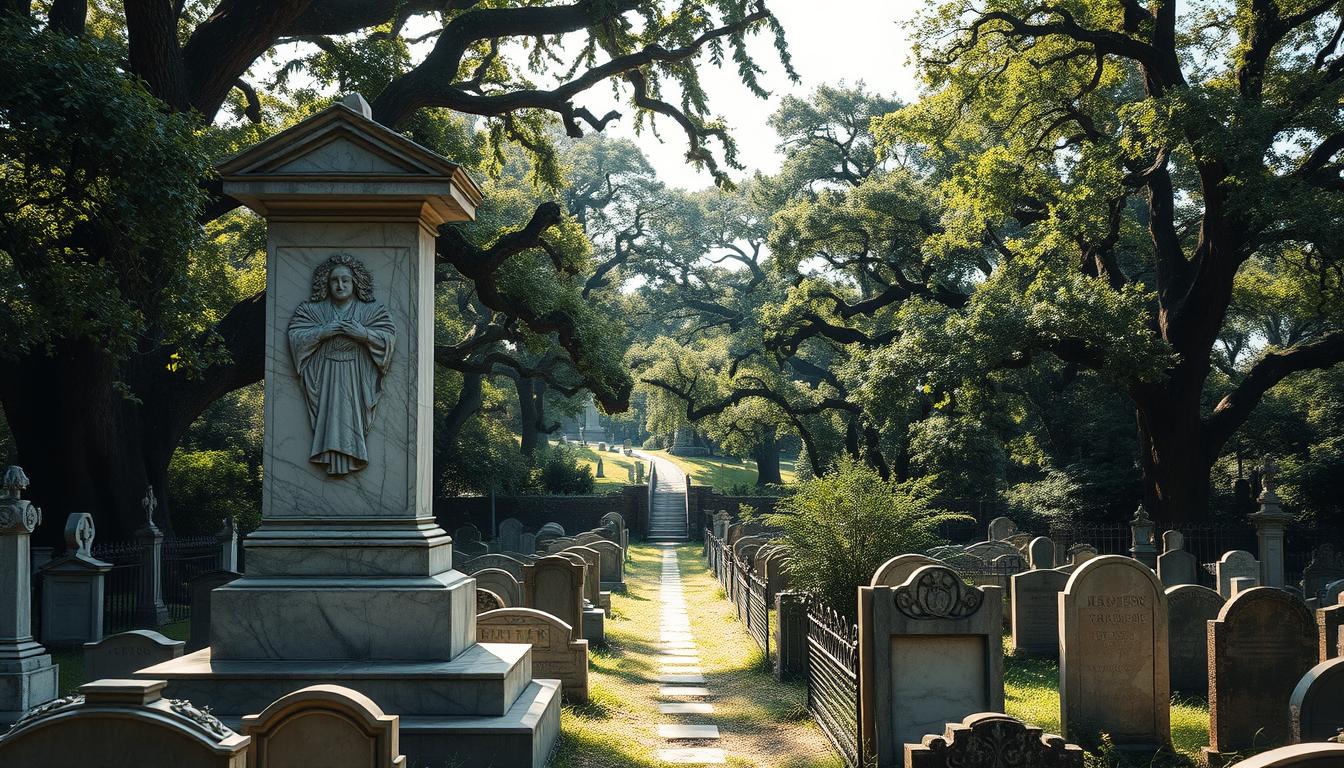
As the sun casts long shadows across the weathered tombstones, a sense of history fills the air in a cemetery. For many, these places are not just resting grounds. They are also repositories of stories and memories.
I find myself drawn to the detailed carvings on grave markers. Each one tells a story of a life lived and a tale waiting to be told. The history in these memorials is a rich tapestry of human experience, woven through time.
Cemeteries are windows into the past, giving us glimpses into the lives of those who came before us. By exploring these memorial sites, we can understand our shared history better. We can also learn the stories that shape us.
The Silent Historians: Why Cemeteries Matter
Cemeteries are not just places where people are buried. They are full of stories from the past. These places give us a peek into the lives of people and communities that once were.
These sites are not just rows of gravestones. They are filled with memories, each stone telling a story of a life lived. Historians and researchers often visit these places to learn about history, culture, and society.
Cemeteries connect us to history in a real way. By looking at the inscriptions, symbols, and monuments, we can piece together the stories of those who came before us. This helps us understand the world they lived in.
In short, cemeteries are silent historians. They keep the stories of past generations alive. They remind us of our shared history.
Evolution of Cemetery Markers Through American History
Cemetery markers have silently watched over American history, changing over time. They tell the stories of the past through their designs. From carved angels to inscribed names, they show the love and respect of those who remain.

In America’s early days, markers often showed death’s head and soul effigies. These symbols showed life’s fleeting nature and the soul’s journey. They reflected the Puritan influence on early American culture.
Material Limitations and Craftsmanship
The materials used for markers were chosen based on what was available and the skill of craftsmen. At first, markers were made from slate and sandstone, which weathered easily. Later, with better skills, granite and marble were used, making markers last longer.
Symbolism and Sentimentality
Markers also show the symbols and feelings of the time. Symbols like anchors, hearts, and flowers told about the deceased’s life and beliefs. They also showed the emotions of those who stayed behind. These symbols varied by culture and community, adding depth to American history.
The change in cemetery markers reflects America’s shifting values and beliefs. By looking at these markers, we learn more about the nation’s history and its people.
Types of Cemetery Markers and Their Significance
Cemetery markers range from simple headstones to grand monuments. Each type has its own importance. They are more than just grave markers; they share stories of lives lived and loved ones lost.
Headstones are the most common. Made from stone or marble, they list the name, birth, and death dates of the buried. The style and words on headstones show who the person was and their place in society.
Footstones are smaller and placed at the grave’s foot. They often add extra details or mark the grave’s edges.
Monuments are bigger and more detailed. They honor important people or families. Made from stone, metal, or concrete, they can have complex designs and sculptures.
These markers are key to understanding our past. They connect us to history, revealing the culture, society, and personal lives of those who came before us.
Decoding Symbolism on Grave Markers
Grave markers show us the beliefs and values of a community. These symbols are not just decorations. They reflect the religious, social, and personal lives of the deceased.
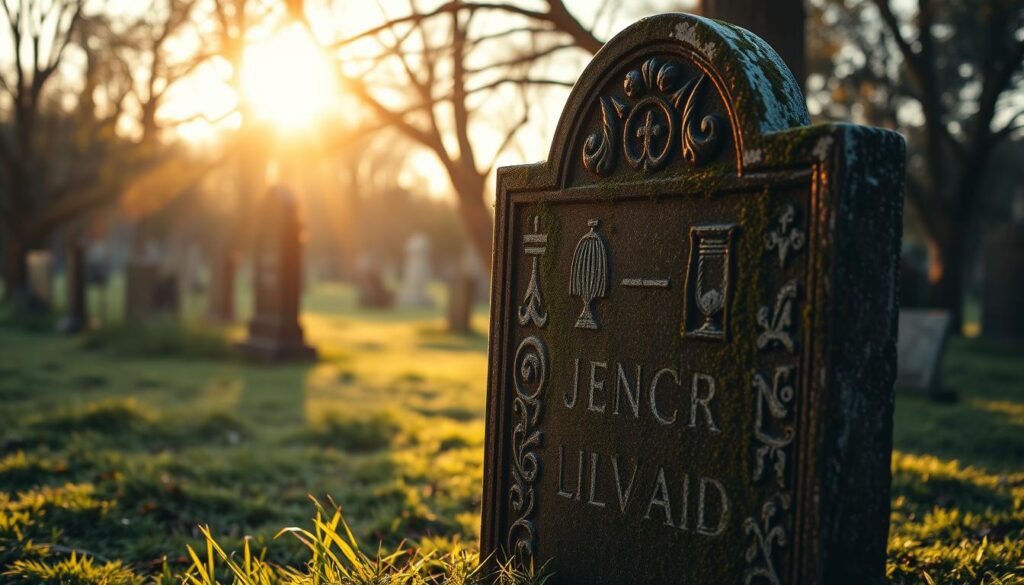
Christian grave markers often have symbols like the cross. It stands for faith and salvation. The dove symbolizes peace and the soul’s journey to heaven. These symbols comfort the grieving family by showing the deceased’s faith.
Jewish Traditions
In Jewish cemeteries, you might see symbols like the menorah or the Star of David. These symbols show the deceased’s faith and heritage. Hebrew inscriptions and specific icons reflect the community’s beliefs and traditions.
Other Faith Representations
Grave markers for other faiths also have unique symbols. For example, symbols like the Om or the Buddha reflect spiritual beliefs. These symbols honor the deceased and show the diversity of beliefs in a community.
Understanding grave marker symbols helps us appreciate cemeteries’ history and culture. By decoding these symbols, we learn more about the lives and beliefs of those who came before us.
Material Matters: What Stone Types Reveal
The type of stone used for cemetery markers tells us about the past and the person who passed away. Different stone types were picked for reasons like how long they last, their cost, and how they look.
Old tombs, with signs of time and weather, share stories of long-lost generations. The stone choice often showed the deceased’s social standing. Wealthier families chose high-quality marble or granite. But, limestone or sandstone was more common for the average person.
The significance of stone types goes beyond looks; it shows us about the economy and culture back then. By looking at the stone used for markers, we learn more about history and what people valued.
Epitaphs: The Stories Behind the Words
As we explore cemeteries, the epitaphs we find take us back in time. They tell stories of love, loss, and what we leave behind. These messages on cemetery markers are more than names and dates. They are the last words from the departed to us, giving us a peek into their lives.
Epitaphs show us what people valued, believed in, and experienced. They can be serious, thoughtful, or even funny. For example, some might celebrate a person’s accomplishments or their place in the family. Others might share a heartfelt message or a simple goodbye.
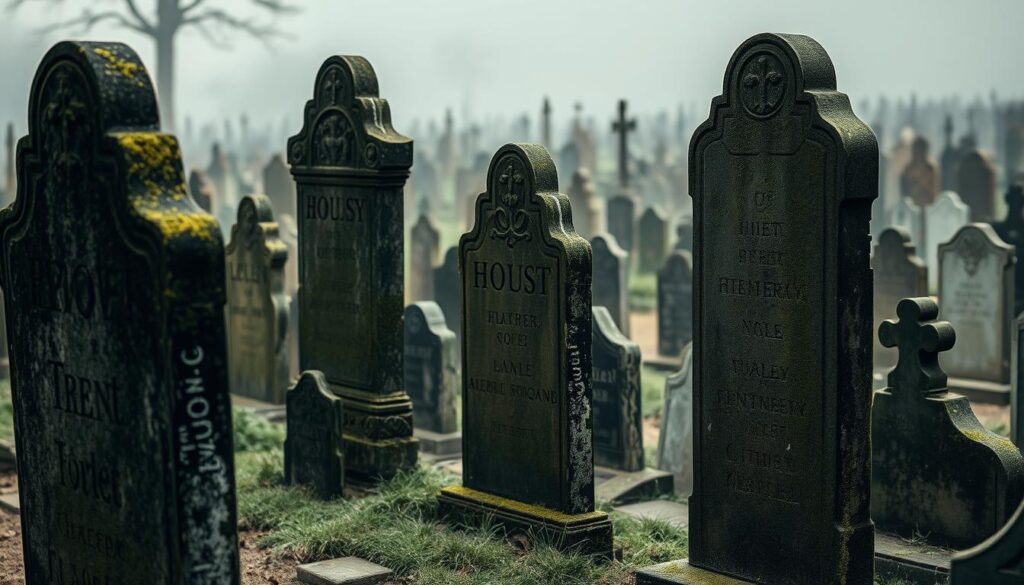
The tales behind these epitaphs are not just about the people they honor. They also tell us about the times they lived in. They reflect the norms, traditions, and beliefs of their era. This makes them important for historians and those tracing family trees.
Looking at these epitaphs helps us understand our shared history and the people who made it. They remind us that every cemetery marker holds a story, a life, and a memory worth keeping.
Researching a Cemetery’s History Before Your Visit
Understanding a cemetery’s history can make your visit more special. My Dad taught us that each headstone tells a unique story. By researching, you can learn more about the lives of those buried there.
Find A Grave and BillionGraves
Find A Grave and BillionGraves are great for cemetery research. They let you search for people, look at cemetery records, and see photos of grave markers. These tools help you understand the cemetery’s layout and the people buried there.
Cemetery Records and Maps
Cemetery records and maps are key to understanding a cemetery’s history. They show where graves are, notable ones, and how the cemetery grew. Cemetery records also have info on burials, grave moves, and historical events.
Using these resources together, you can get a full picture of the cemetery’s history. This makes your visit more meaningful and informative.
Cemetery Marker Documentation Techniques
To truly preserve the history of cemetery markers, one must employ careful documentation techniques. It’s not just about capturing their images. It’s about preserving the stories and histories they convey.
Photography is a key part of this process. Photography techniques are vital in capturing the details of cemetery markers. Anna Garrison, a renowned photographer, says, “The right lighting can make all the difference in capturing the intricacies on a marker.”
Lighting and Angle Considerations
When photographing cemetery markers, lighting and angle are critical. Natural light is ideal, but the time of day and weather can affect the quality of photos. Early morning or late afternoon light often provides the best results, as it reduces harsh shadows.
The angle of the shot is also important. A straight-on approach is usually best. But sometimes, shooting from a slight angle can help capture the texture and depth of the marker.
Equipment Recommendations
The right equipment is essential for high-quality documentation. A good camera with adjustable settings, a tripod for stability, and a remote shutter release or timer can help. They ensure sharp images by minimizing camera shake.
Photography experts note, “Using a camera with good low-light performance can be beneficial for capturing images in shaded areas or on overcast days.” By combining the right techniques with the right equipment, one can achieve high-quality documentation of cemetery markers.
“The art of documenting cemetery markers lies in the details.”
Reading Between the Lines: What Markers Reveal About Social History
Cemetery markers are more than just headstones. They open a window into the past’s social fabric. The way graves are laid out, family plots clustered, and grand monuments show us society’s norms, cultural practices, and historical events.
The cemetery’s layout tells us about the social hierarchy of the time. Grand monuments and elaborate mausoleums show wealth and status. Simpler markers hint at more modest lives. This contrast sheds light on the community’s economic and social layers.
Cultural practices are seen in cemetery markers too. Symbols, epitaphs, and artwork on grave markers show a community’s beliefs, values, and traditions. For example, certain religious symbols show the area’s dominant faiths. Epitaphs give glimpses into valued traits like kindness or resilience.
The condition and upkeep of markers also tell us about community values. Well-kept markers show a strong tradition of honoring ancestors. Neglected markers suggest a disconnection from the past.
By studying cemetery markers and their setting, we gain a deeper understanding of social history. This knowledge not only enriches our understanding of the past but also helps us appreciate our cultural heritage today.
Genealogical Treasures: Using Markers for Family Research
Cemetery markers are key for genealogists looking into their family’s past. They are not just simple memorials. They hold a wealth of historical and genealogical information.
Markers can be paired with other historical records to paint a fuller picture of ancestors. For example, marker info can match up with census data. This helps confirm details like age, where they lived, and what they did for work.
Census Data Correlation
Matching marker info with census data can fill in missing pieces of family history. Census records give more details about a person’s life. They show who lived with them and their social status.
Church and Civil Records
Church and civil records also add to the story. Baptismal records, marriage certificates, and death certificates give deeper insights into an ancestor’s life. They help us understand their experiences better.
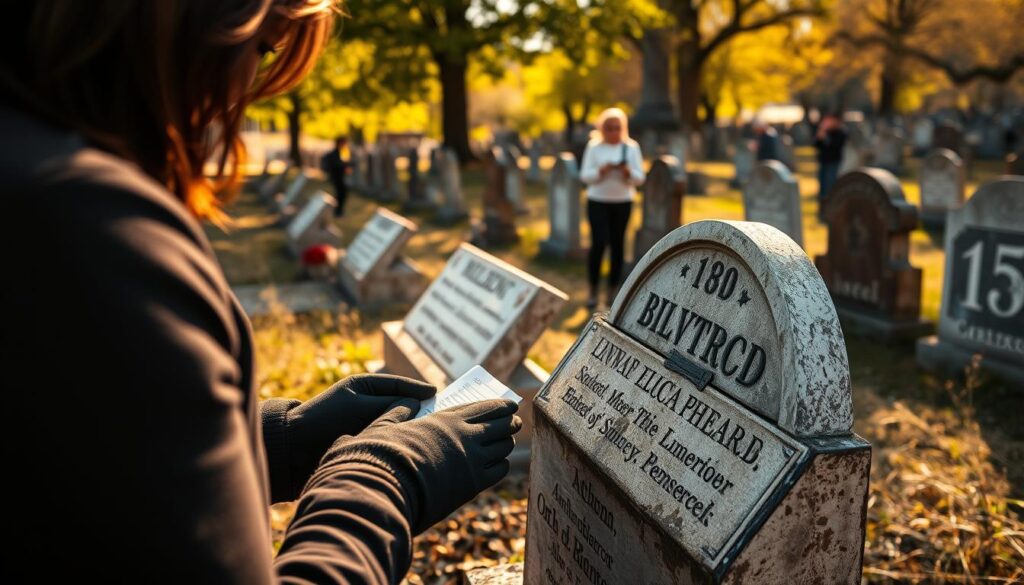
By mixing marker info with other records, genealogists can build a more complete family history. This approach not only respects our ancestors but also deepens our understanding of their lives and times.
Preservation Challenges for Historic Markers
Keeping historic cemetery markers safe is key to our cultural heritage. These markers show us the past and tell us about our ancestors’ lives.
There are many challenges in keeping these markers safe. Cleaning methods are very important. We need to clean them gently to avoid damage.
Using soft brushes and mild soap is a good way to clean them. This helps remove dirt without harming the markers.
Cleaning Methods
Good cleaning methods are essential for keeping markers safe. Dry brushing and low-pressure washing are often used. It’s important to stay away from harsh chemicals that can damage the stone or the inscriptions.
Repair Techniques
Repair techniques are also critical for keeping markers safe. Experts might reattach broken parts or fix crumbling stone. They need to know a lot about the materials and the marker’s history.
By using the right cleaning and repair methods, we can make sure these markers keep telling their stories for years to come.
Honoring the Stories: Ethical Approaches to Cemetery Exploration
Exploring cemeteries is more than just learning history. It’s a way to honor those who have come before us. We must approach this with respect and ethics. It’s about remembering the struggles and triumphs of our ancestors.
When we visit cemeteries, we should be careful and considerate. We need to think about the markers’ condition and the people around us. This way, we show respect and don’t disturb the site.
By following ethics and respect, we connect deeply with the past. We learn more about the people and events that shaped our world.