







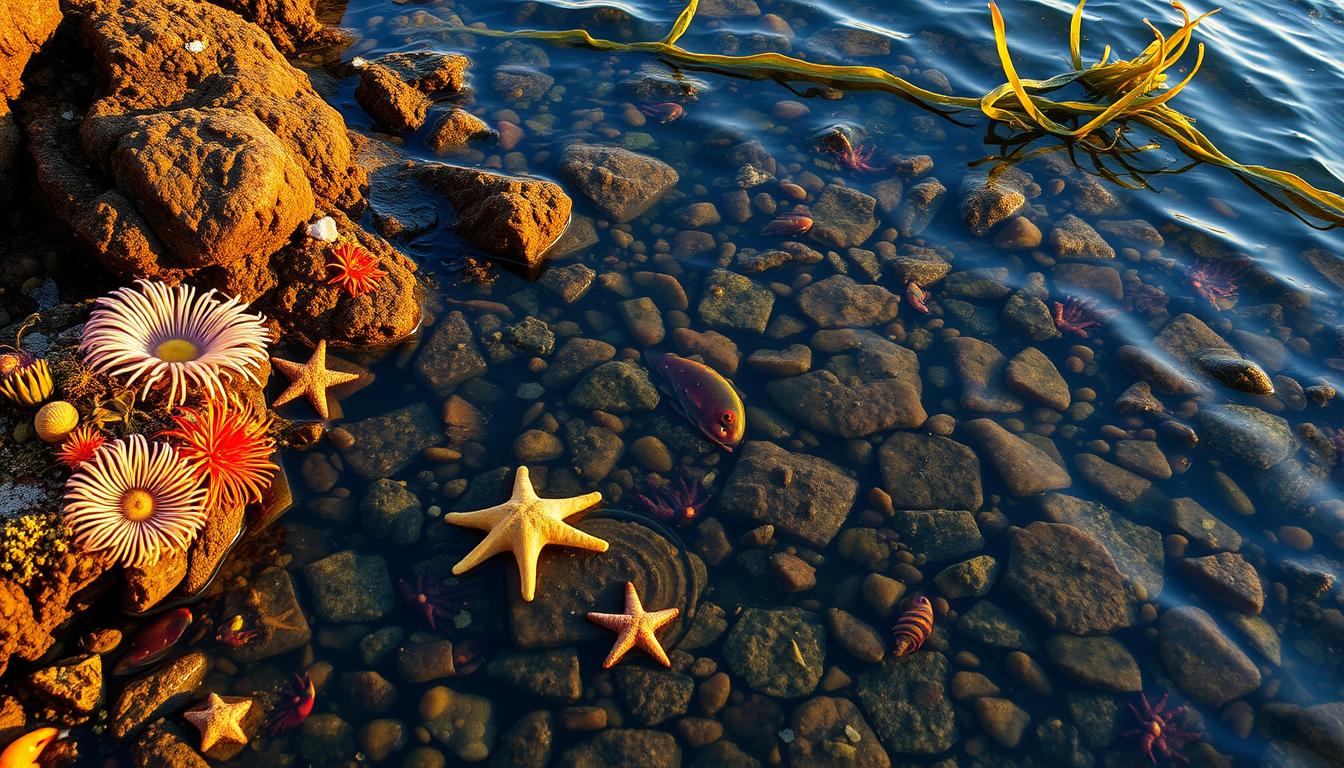
Exploring the marine life in tidal pools is truly fascinating. These shallow pools of seawater, left on the beach at low tide, are home to a wide variety of creatures.
From starfish and sea urchins to hermit crabs and sea anemone, the life in these pools is amazing. As you explore the rock pool, you’ll see a world of colorful seaweed, sponges, and algae.
This guide to the creatures in tidal pools will make you want to explore your local beach. You’ll discover the wonders that lie just beneath the surface.
What is a Rock Pool?
At low tide, the shoreline shows small pools of seawater. These are called rock pools or tidal pools. They are homes to many different marine life forms.
A rock pool is like a small, separate marine world. It has its own plants and animals. The pools’ unique features, like different salt levels and sunlight, make it a tough but lively place for life to thrive.
Rock pools are key parts of the marine ecosystem. They offer a home for many species that live in the intertidal zone. This helps make the coastal area more diverse.
Why Are Rock Pools Important?
Rock pools are vital for marine biodiversity. They are home to many marine species found nowhere else. These pools support a variety of life, from anemones and starfish to crabs and mollusks.
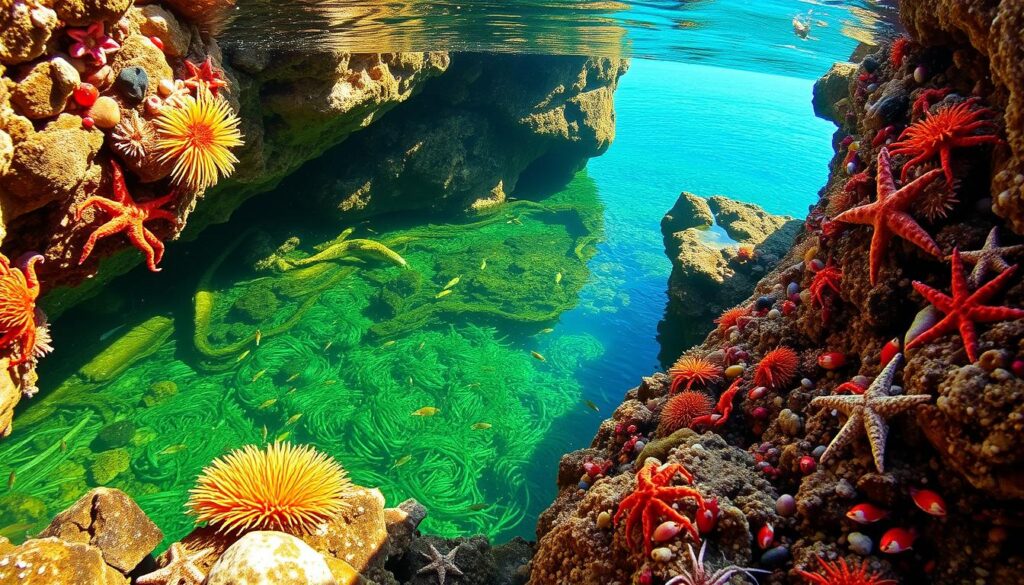
Rock pools play a key role in ecosystem services. They serve as nurseries for young marine animals. This helps them grow strong before facing the open sea. They also keep the marine ecosystem balanced by hosting species that control pests.
Rock pools are also great for learning. They teach people, mainly kids, about marine life and conservation. Exploring them helps understand how marine life is connected and how human actions affect it.
Ecological Significance
Rock pools are more than just homes for marine life. They show the health of the marine ecosystem. Changes in their species can warn of pollution, climate change, and overfishing.
They also help the shoreline by preventing erosion. The variety of life in rock pools keeps the ecosystem balanced. This supports the health of the marine environment.
In summary, rock pools are not just interesting places. They are essential for marine biodiversity and ecosystem services. Their role in education and as environmental indicators highlights the need to protect them.
Common Creatures Found in Rock Pools
Rock pools are home to many creatures, from simple algae to complex invertebrates like starfish and sea urchins. These places are full of life, with many different types of marine animals. They have all adapted to the special conditions found in rock pools.
Starfish, sea urchins, mussels, hermit crabs, and sea anemone are common in rock pools. These animals have special ways to survive in the changing environment of a rock pool. The tides can change quickly, making it hard for them to stay safe.
Starfish can grow back lost arms, helping them in a place full of predators. Sea urchins use their spines to protect themselves. Mussels and other bivalves hide in their shells to avoid predators and dryness.
Algae are also key in rock pool ecosystems. They provide food and shelter for many creatures. There are many types of algae, like green, red, and brown, each important in its own way.
Hermit crabs are interesting to see in rock pools. They use empty shells for protection. Sea anemone, with their stinging tentacles, help keep predators away, making a safe spot for some animals.
The variety of life in rock pools shows how complex and strong marine ecosystems are. By exploring these pools, we learn more about the creatures that live there. We also see how these creatures depend on each other.
Seasonal Changes in Rock Pools
Rock pools are dynamic ecosystems that change dramatically with the seasons. The creatures that inhabit these pools must adapt to the changing conditions, from the warmth of summer to the cold of winter.
Seasonal Variations in rock pools are not just about temperature; they also involve changes in salinity, water level, and the availability of food. For instance, during the summer, rock pools tend to have higher salinity due to increased evaporation, which can be challenging for some species.
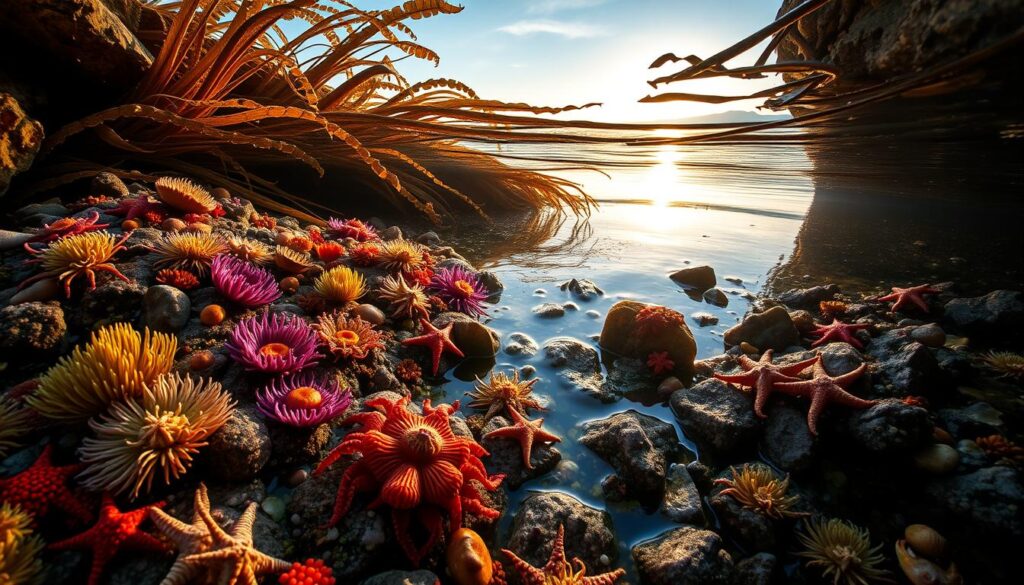
In the winter, the pools are often replenished with rainwater, reducing salinity and bringing in nutrients that support a surge in marine life. This cyclical change supports a diverse range of creatures, each with their unique life cycles adapted to these seasonal fluctuations.
Marine life cycles in rock pools are intricately linked with the seasonal changes. Some species thrive in the warmer months, while others are more suited to the cooler conditions of winter. For example, certain types of algae bloom in the spring, providing a rich food source for grazing creatures.
The adaptability of rock pool creatures is a testament to the resilience of marine life. As the seasons change, these creatures adjust their behaviors, feeding patterns, and even their reproductive cycles to survive and thrive in the ever-changing environment of the rock pool.
How to Safely Explore a Rock Pool
Exploring a rock pool requires being aware of your surroundings. These areas are both fascinating and dangerous if not approached carefully. It’s important to understand and respect the environment for rock pool safety.
Knowing the tide times is the first step in safe exploration. The tide can change quickly, leading to dangerous situations. Always check tide charts and visit during low tide for better access.
When it comes to marine safety, watch out for sharp rocks and slippery seaweed. Wear water shoes or sandals with good grip to prevent slips and cuts. Move carefully to avoid accidents.
Respecting marine life is also key. Avoid touching or disturbing creatures to protect both you and them. Outdoor education programs stress the importance of preserving these ecosystems. Visitors can help by being gentle and observant.
Being prepared is another important aspect of rock pool safety. Bring water, sunscreen, and a first-aid kit. Exploring in groups and telling someone your plans and return time is also wise.
By following these tips and respecting the marine environment, you can have a safe and enriching experience. The goal is to have fun while also helping to conserve these unique ecosystems.
Identifying Rock Pool Creatures
Anyone can learn to identify rock pool creatures with a little help. Rock pools are full of life, making them perfect for learning about marine creature identification.
First, know what to look for. You’ll find starfish, sea urchins, and sea anemones in rock pools. Each has unique features for identification. For example, starfish have a star shape, and sea urchins have spines.
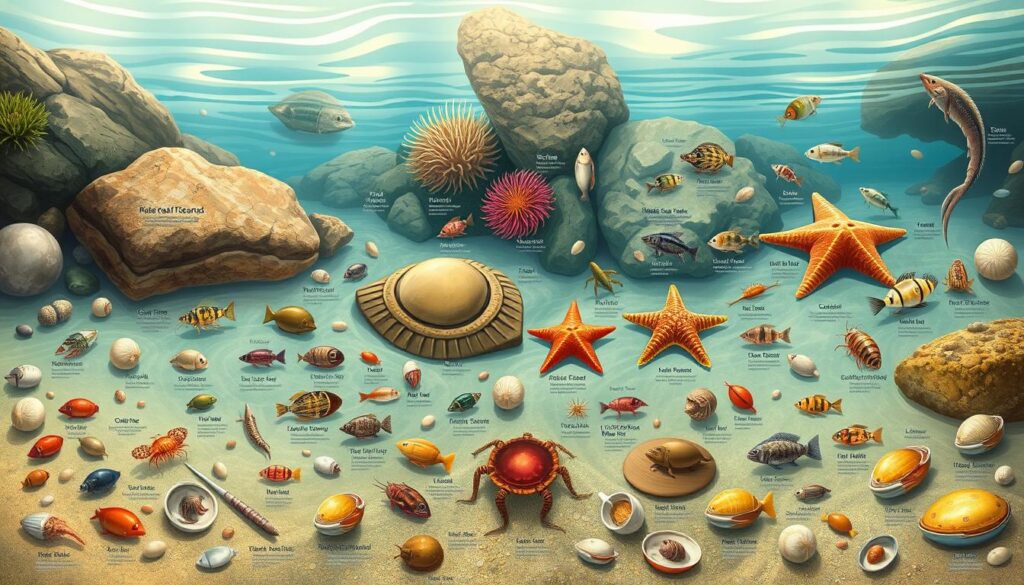
A field guide is very helpful for identifying creatures. These guides have detailed descriptions and pictures. Look closely at the habitats and features of the creatures described.
Observing creatures in their natural habitat is key. Note their behavior, how they interact with others, and their environment. This helps tell similar species apart.
For example, sea anemones stick to rocks and use tentacles to catch food. Knowing this helps confirm their identity. Also, understanding algae and plants in rock pools helps identify creatures that rely on them.
By observing and using a field guide, you can improve your marine creature identification skills. Whether you’re new or experienced, identifying rock pool creatures is rewarding and fun.
The Role of Rock Pools in Marine Ecology
Rock pools are key in marine ecology, giving a home to many marine species. They are found in the intertidal zone. This area is vital for the survival of many creatures adapted to its changing conditions.
The ecosystem role of rock pools is complex. They act as nurseries for young marine animals. They also protect them from predators and provide a stable place for algae and plants to grow. The interactions between creatures and their environment in rock pools are a major part of rock pool ecology.
Rock pools are essential in the marine habitat, supporting a wide variety of species. From anemones and starfish to crabs and fish, these pools are a diverse home. The changing water conditions in rock pools require creatures to be very adaptable.
The value of rock pools goes beyond their immediate area. They help us understand how environmental changes, like climate change, affect marine life. By studying rock pool ecology, scientists can learn about these impacts and help with conservation.
In summary, rock pools are more than just beautiful sights; they are vital in marine ecology. Saving them is key to keeping marine ecosystems balanced and diverse.
Rock Pool Conservation Efforts
Protecting rock pools is key to safeguarding these unique ecosystems. They are not just fascinating to explore but also vital for marine life.
The role of rock pool conservation is huge. Human actions like pollution, over-visitation, and climate change harm these ecosystems. For example, warmer temperatures from climate change can change which species live in rock pools.
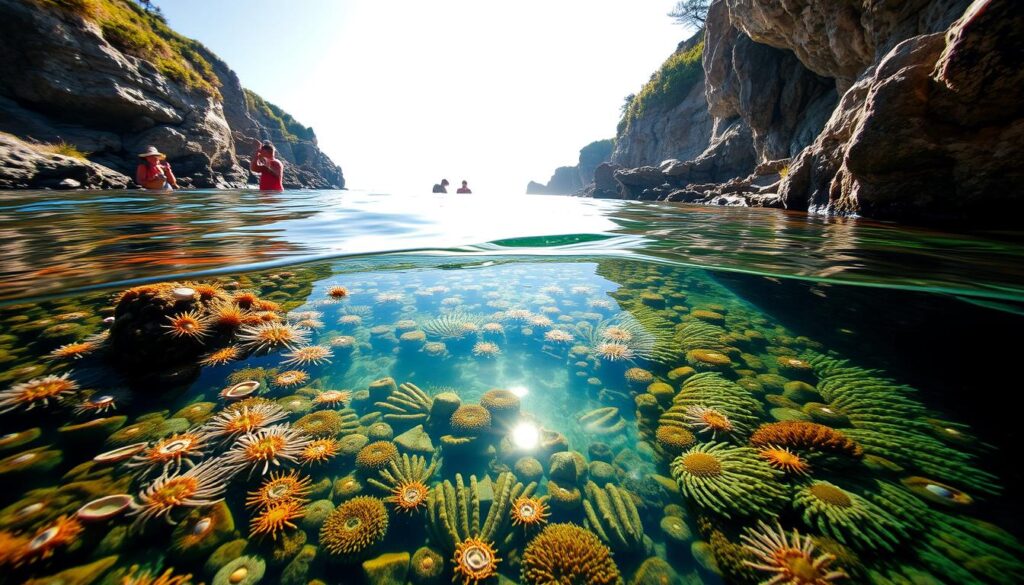
Marine conservation efforts, including rock pools, involve many activities. These include checking water quality, fighting pollution, and teaching people about these habitats. By protecting these habitats, we help keep rock pools diverse.
People can help by joining local clean-ups, supporting marine conservation groups, and sharing why these habitats matter. Every small action, like using less plastic or backing policies that protect marine areas, helps.
Also, supporting research on rock pool ecosystems is important. It helps us understand how they’re changing and how to protect them. Together, we can make a big difference in saving rock pools.
In short, saving rock pools is a team effort. By understanding their value and taking steps to protect them, we ensure they thrive for future generations.
Fun Facts About Rock Pools
The world of rock pools is full of surprises. You’ll find colorful sea anemones and cleverly camouflaged fish. These shallow pools in the rocky shoreline are filled with seawater. They support a wide range of marine life.
One of the coolest things about rock pools is how adaptable the creatures are. Some fish can change color to hide, while others can live out of water for a bit. Sea anemones, with their stinging tentacles, are common. They help the ecosystem by catching small prey.
Rock pools are not just interesting; they’re vital to marine ecology. They’re homes for many species and nurseries for marine animals. Exploring these pools is an exciting adventure. It shows us how different species interact with their environment.
By learning about rock pools and their creatures, we appreciate the marine world more. We also see why conservation is key to protect these unique ecosystems.
Planning a Rock Pool Adventure
Going on a rock pool adventure is exciting. It lets you see the amazing world of marine life up close. To enjoy it fully, planning is key.
First, check the tide times to visit when the pools are open. Wear suitable clothing, like comfy shoes and layers for weather changes. This will make your trip better.
Choose a spot known for its marine life. Researching the site beforehand helps you know what to expect. It prepares you for your adventure.
Remember to bring essentials like water, snacks, and a camera. Being ready and caring for the marine life makes your adventure fun and safe.
By following these tips, you’ll have a great time exploring rock pools. It’s a fun and educational outdoor activity that connects you with nature.
Stories from Rock Pool Enthuasiasts
Rock pool visitors often have amazing stories to share. They find hidden anemones and see the tidal rhythms. Each visit is a new adventure.
One enthusiast shared,
“My most memorable experience was finding a starfish in a rock pool during a visit to the coast. It was vibrant and healthy, a true marvel of nature.”
These personal experiences show the excitement and learning of rock pool visits.
For many, exploring rock pools is a beloved hobby. It’s filled with personal experiences that deepen their love for marine life. As one enthusiast said, “Each time I visit a rock pool, I learn something new about the creatures that live there.”
The stories from marine enthusiast communities often talk about unexpected discoveries. Whether it’s a colorful sea slug or a school of small fish, each find is special.
These rock pool stories entertain and teach, inspiring others to explore and protect these ecosystems. By sharing their experiences, enthusiasts help raise awareness about rock pool conservation.
Listening to these stories reminds us of the simple joys and deep learnings from nature. Rock pools, with their rich biodiversity, offer endless adventures and discoveries.
Conclusion: The Joy of Rock Pool Exploration
Exploring rock pools is a rewarding experience. It helps us appreciate marine life and nature more. These special places are full of creatures like anemones and starfish.
Learning about rock pools and their inhabitants brings joy and appreciation for the outdoors. Whether you’re an expert or just looking for fun, exploring rock pools is rewarding.
When you go to explore rock pools, be careful and respectful. This helps keep these ecosystems beautiful and diverse for others to enjoy in the future.