








Writing down your deepest feelings and ideas can really help your mental health. It helps you sort out your emotions, making your thoughts clearer.
When you draw your thoughts, you unlock your creativity. This makes it a great way to express yourself and feel better. It helps you understand yourself and your feelings better, boosting your overall well-being.
Starting to draw your thoughts can make your daily life calmer and clearer. It boosts your creativity and mental clarity.
What is Mind Mapping?
Mind mapping is a way to show thoughts, ideas, and information visually. It’s a tool that helps people organize their thoughts in a creative way.
It starts with a central idea and then branches out to related thoughts. This method is great for thought organization and mental clarity. It makes complex information easy to see and understand.
The definition of mind mapping also includes its use in brainstorming, note-taking, and planning projects. It helps people see how different ideas are connected. This can reveal patterns and connections that are hard to spot with other methods.
Mind mapping is useful in many areas, like personal planning and team work. Its flexibility and effectiveness make it a key tool for boosting productivity and mental clarity.
Benefits of Mind Mapping
Mind mapping helps you organize ideas in a visual way. It unlocks your full creative power. This method boosts creativity, productivity, and memory.
Enhanced Creativity is a key benefit. It lets you see patterns and connections in ideas. This makes solving problems more innovative and creative.
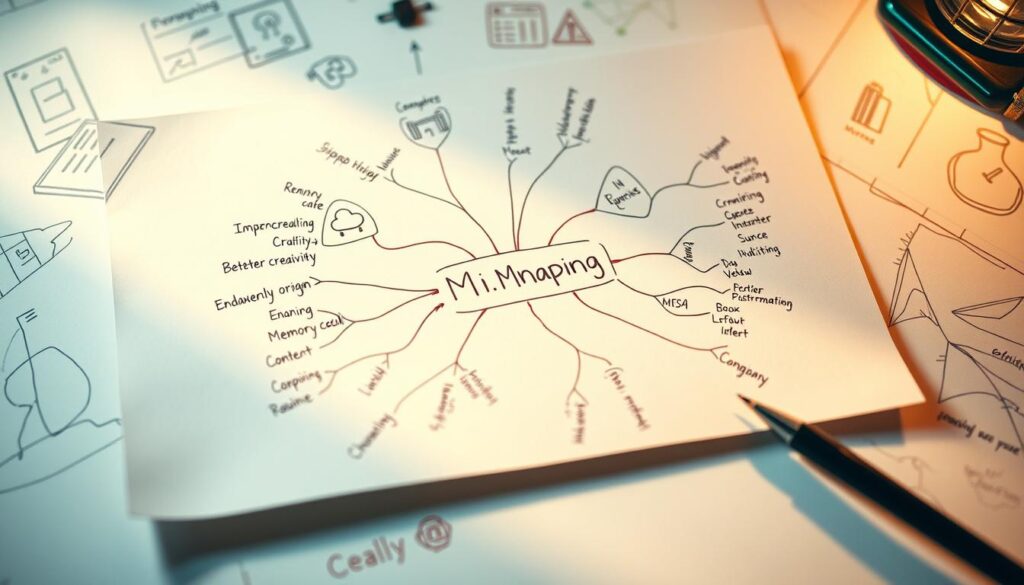
Mind mapping also improves memory and recall. It organizes information in a way that’s easy to remember. This is great for students and professionals.
Using mind mapping can also increase productivity. It breaks down big tasks into smaller ones. This helps you focus on what’s most important, making you more efficient.
In summary, mind mapping offers many benefits. It’s a powerful tool for boosting creativity, productivity, and memory. It’s useful for anyone looking to improve these areas.
How to Create a Mind Map
Creating a mind map is easy with a few steps. It helps you organize your thoughts and ideas better. Start by picking a central idea or concept you want to explore or expand.
To begin, define your central idea clearly. It could be a problem, a project, or a goal. Write it down in the center of your map with a few key words or a simple image.
Then, branch out from your central idea. Add related concepts, ideas, or subtopics. Use keywords and short phrases to keep it concise and easy to read. You can use colors, symbols, and images to make your map more appealing.
As you expand your mind map, organize your branches in a way that makes sense. You might group related ideas or use a specific structure. This helps you visualize your thoughts better.
Lastly, review and refine your mind map. Look for connections and patterns. Make adjustments as needed. This ensures your mind map is both visually engaging and useful for organizing your thoughts.
By following these steps, you can use visual thinking to boost your creativity and memory. It helps you organize your thoughts more effectively.
Different Types of Mind Maps
Different types of mind maps meet various needs and tastes. Mind mapping is flexible, fitting many uses and preferences.
Radial Mind Maps are common, with ideas branching out from a center. They’re great for brainstorming and exploring ideas freely.
Tree Mind Maps look like trees, with information organized in a clear hierarchy. They’re perfect for projects needing clear categorization and sub-categorization.
Landscape Mind Maps use a wide space to spread out ideas. They’re ideal for creative projects or event planning, needing lots of room to brainstorm.
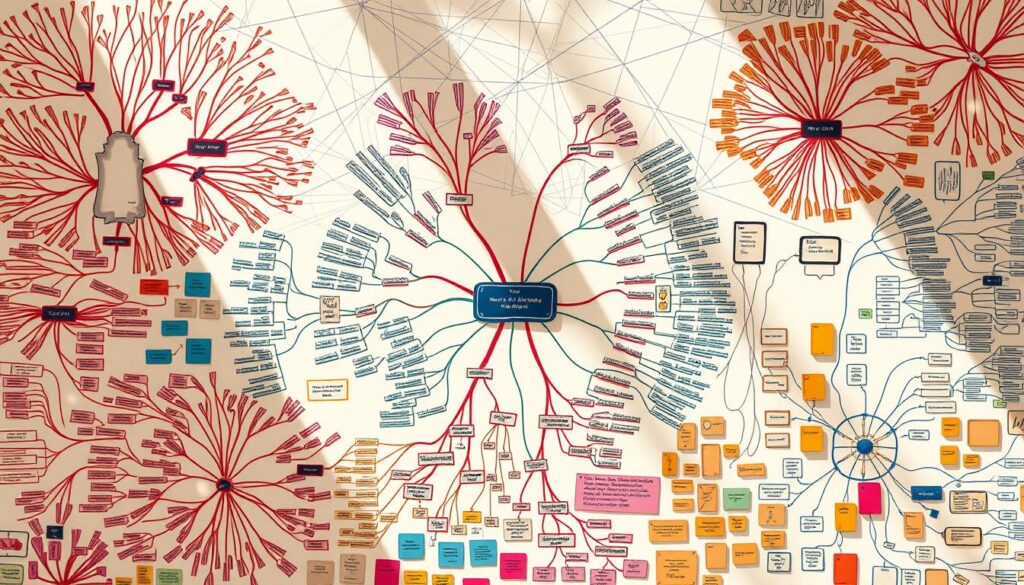
Each mind map type has its own benefits. Choosing the right one can make mind mapping more effective and fun.
By picking the right mind map, you can organize your thoughts better. It boosts creativity and productivity. Whether you’re a student, professional, or organizing personal projects, there’s a mind map for you.
Mind Mapping Techniques
To unlock the full power of mind mapping, you need to learn various techniques. Mind mapping techniques use visual elements to make your mind map engaging and easy to remember.
Colors are a key part of these techniques. They help sort information, highlight key points, and spark creativity. For example, different colors can show different ideas or themes in your mind map.
Images and symbols are also vital in mind mapping. Adding relevant images makes your mind map more attractive and aids in memory. Symbols can represent different ideas, adding depth to your mind map.
Tony Buzan, a mind mapping expert, said, “Colors, images, and symbols can turn a simple mind map into a masterpiece that excites the mind.”
“A mind map is a visual way to show information. It uses images, colors, and words to create a map of thought that matches how our brains work.”
It’s important to balance beauty and information in your mind map. It should look good but not be too complex. Try different techniques to find what works best for you.
By learning mind mapping techniques and using colors, images, and symbols, you can boost your creativity and memory. This makes mind mapping even more powerful.
Mind Mapping for Students
Mind mapping is a great way for students to improve their study skills. It lets them organize their notes in a fun, visual way. This helps them remember information better and see how different ideas are connected.
Mind mapping is super useful in school. It’s great for studying for exams. Students can make mind maps to summarize important points and keep their notes in order. This makes it easier to remember things during exams.
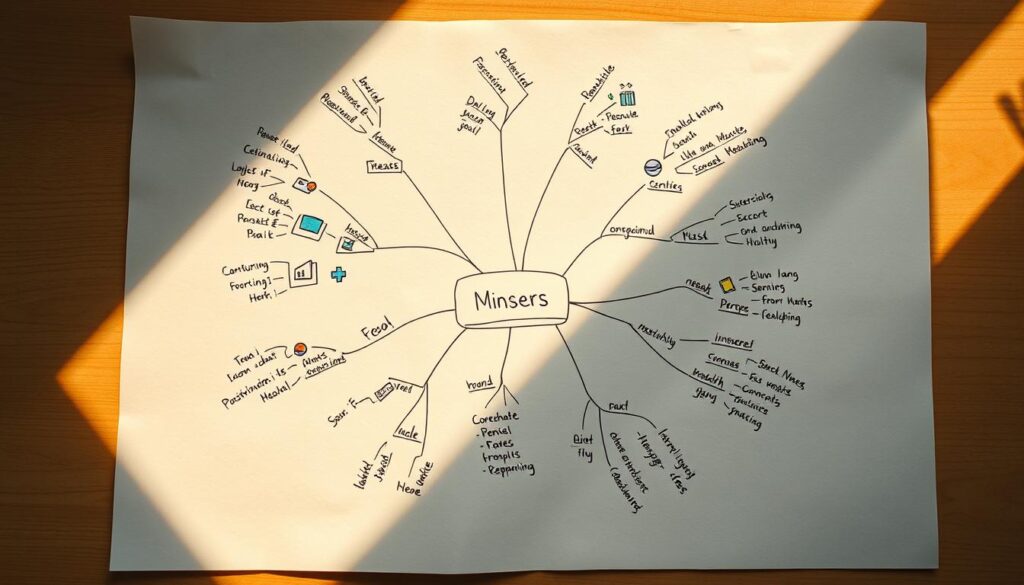
Mind mapping is also good for planning research papers, projects, and presentations. It helps students understand their tasks better and plan more effectively. This way, they can tackle their projects with confidence.
Another benefit is that mind mapping helps students work together. When everyone contributes to a shared mind map, they can share ideas and work together smoothly. It’s a great way to collaborate.
To make the most of mind mapping, students should use colors, symbols, and images. This makes their maps more interesting and helps them remember better. It makes studying more fun and effective.
Mind Mapping in Business
In the business world, mind mapping is a powerful tool. It helps teams organize ideas and see connections they might miss. This boosts productivity and collaboration.
Mind mapping makes team brainstorming better. It lets teams map out ideas and organize tasks clearly. This makes planning and decision-making faster.
It also helps teams work together better. By sharing a visual map of goals and tasks, everyone knows their role. This leads to more teamwork and coordination.
Business leaders can also use mind mapping to improve productivity. It helps them see where to improve and how to use resources better. This makes businesses more efficient and effective.
Mind mapping also drives innovation. It lets businesses generate ideas freely. This helps them stay ahead and find new growth opportunities.
Mind mapping offers many benefits in business. It improves productivity, collaboration, and innovation. As businesses change, mind mapping will become even more important.
Digital Mind Mapping Tools
Digital mind mapping tools have changed how we organize our thoughts. Now, there are many software and apps to choose from. This lets people pick the best one for them.
These tools have cool features like collaboration capabilities. This means many people can work on a mind map together. They also offer cloud storage, so you can access your mind maps from anywhere.
Popular tools include MindMeister, Coggle, and XMind. They have intuitive interfaces and lots of templates to help you start. Tony Buzan, who created mind mapping, says, “Choose a tool you like and that suits your style.”
“Mind mapping is a powerful tool for organizing and structuring information, and digital tools have made it more accessible than ever.” – Tony Buzan
When picking a digital mind mapping tool, think about a few things. Look at how easy it is to use, its features, and if it works with your device. It’s also key to pick one that fits your work style and preferences.
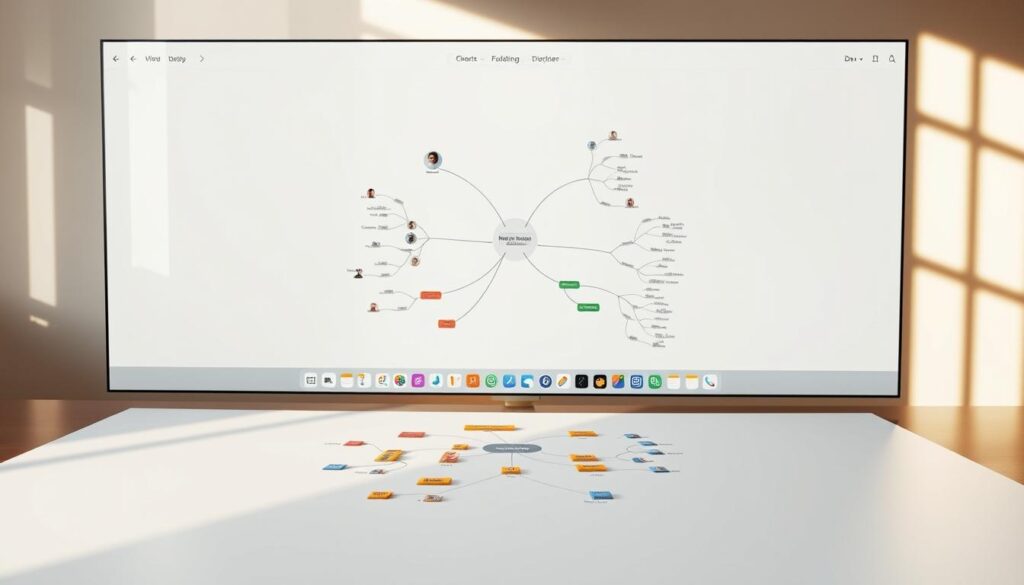
In summary, digital mind mapping tools have changed how we make and use mind maps. By using these tools, people can reach their full productivity.
Overcoming Common Mind Mapping Challenges
Mind mapping is a skill that needs practice and strategies to beat its challenges. People often struggle with starting, staying organized, and avoiding distractions while making mind maps.
To tackle these mind mapping challenges, using effective techniques is key. Begin with a clear goal in mind. This keeps your focus sharp and ensures your map stays relevant and organized.
Another effective mind mapping tip is to stick to a color scheme and symbols. This makes your map easier to read and look at, helping you understand it better.
Keeping things organized is also vital. Group information and use a clear structure. This makes your map not only look good but also informative and easy to follow.
For tips on avoiding distractions, try setting aside time just for mind mapping. Also, create a good work space to help you stay focused.
By using these strategies, you can beat common mind mapping challenges and get the most out of this powerful tool. Effective mind mapping is about being intentional, staying organized, and practicing to get better.
Real-World Applications of Mind Mapping
Mind mapping is used in many areas, like education, business, and personal growth. It helps people organize their thoughts and reach their goals. This way, they can tap into their creativity and succeed.
In schools, mind mapping helps students learn better and remember more. They use it to make notes, think of new ideas, and get ready for tests. A study at the University of Plymouth showed that students who mind mapped did better in school.
Businesses also find mind mapping useful. It boosts productivity, sparks new ideas, and helps make plans. Big names like IBM and Microsoft use it to innovate and work better together. Mind mapping helps companies be more efficient, find new chances, and stay competitive.
These examples show how mind mapping works in real life. Using it every day can lead to success in work and personal life. It’s a powerful tool for anyone looking to grow and achieve more.