





Discover the hidden world of pond ecosystems, where a diverse array of wildlife thrives. These serene bodies of water are more than just a reflection of nature. They are complex ecosystems that support a wide range of plant and animal life.
By exploring these ecosystems, we can gain a deeper appreciation for the natural world. We learn about the interconnectedness of different species. Our journey will take you through the fascinating aspects of wildlife that call a pond home, from the tiniest microorganisms to the largest predators.
This article will provide an overview of the importance of understanding pond ecosystems. It will show the incredible diversity they harbor.
What is a Pond?
A pond is a freshwater ecosystem that supports a variety of aquatic life. It has calm or slow-moving water, unlike rivers or streams.
Ponds can be found in many places, from countryside to city parks. Each pond has its own community of plants and animals, suited to its environment.
The definition of a pond includes different sizes and depths. From small pools to large lakes, ponds are key to biodiversity.
There are many types of ponds, like artificial ponds made for beauty or fun. These ponds help many species by providing homes.
In short, ponds are essential freshwater ecosystems that support many aquatic life forms. They are a vital part of our natural world.
Ecosystem Dynamics of Ponds
Ponds are alive with plants, animals, and tiny life forms working together. The ecosystem dynamics of ponds show how these elements interact. This creates a rich world of life in these water spots.
Plants and animals in ponds have a special bond. Plants offer shelter and food to animals, from tiny bugs to big fish. Animals, in turn, help spread seeds and nutrients, helping plants grow. This partnership is key to the pond’s health.
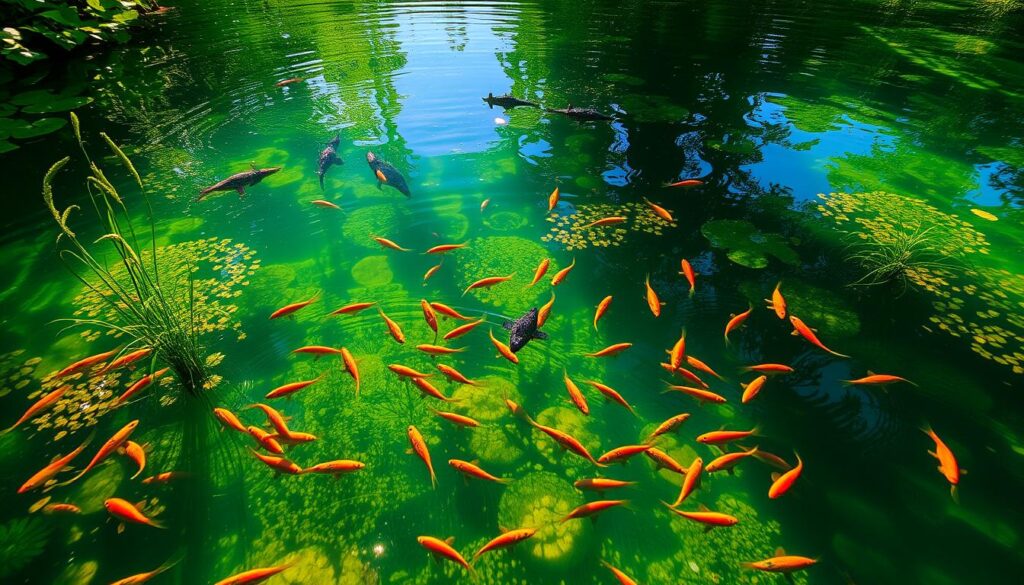
Ponds also have food chains that are complex. These chains start with algae and plants, then move to zooplankton and insects. Next, they reach fish and amphibians. Keeping this balance is vital for the pond’s well-being.
Another important part of pond life is the interactions between species. Predator-prey relationships help keep populations in check. For example, fish and dragonflies eat mosquito larvae, controlling their numbers.
Getting to know the ecosystem dynamics of ponds helps us see their beauty. By understanding how all parts of a pond work together, we can protect these precious places.
Plants Found in Ponds
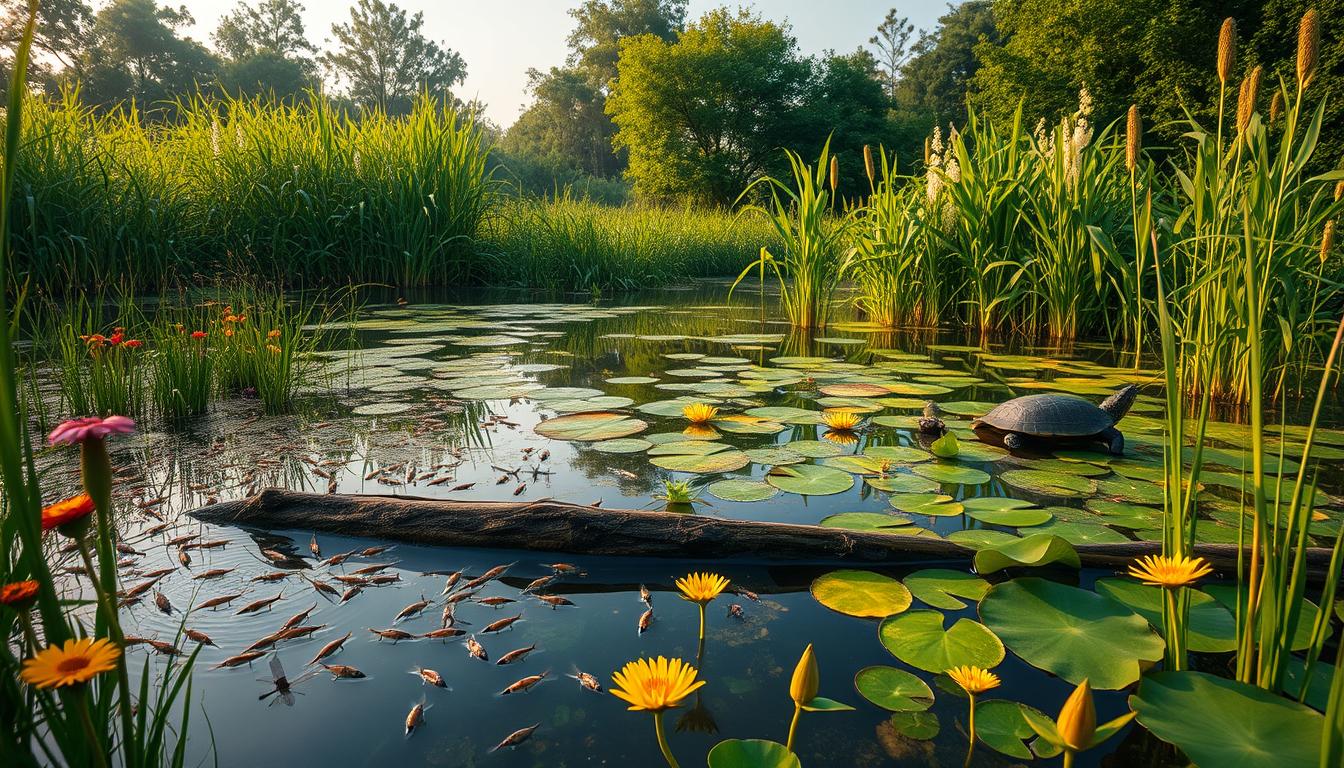
Ponds are home to a wide range of plants, adding beauty and life to these water bodies. These plants are key to the pond’s health. They offer homes, food, and oxygen to many aquatic creatures.
Submerged, Floating, and Emergent Plants
Ponds have three main types of plants: submerged, floating, and emergent. Submerged plants like hornwort and elodea live underwater. They help keep the water clean by taking in nutrients.
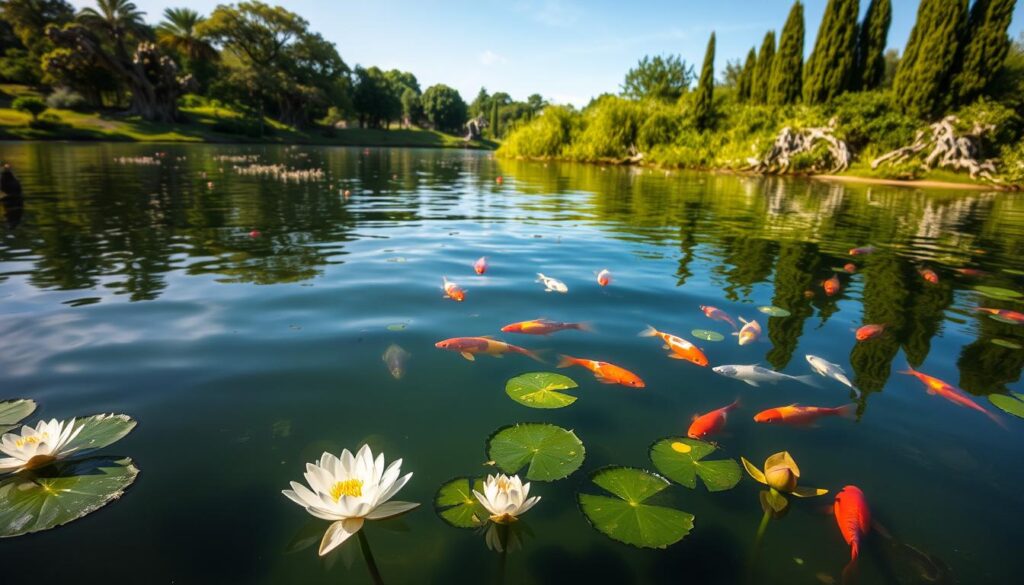
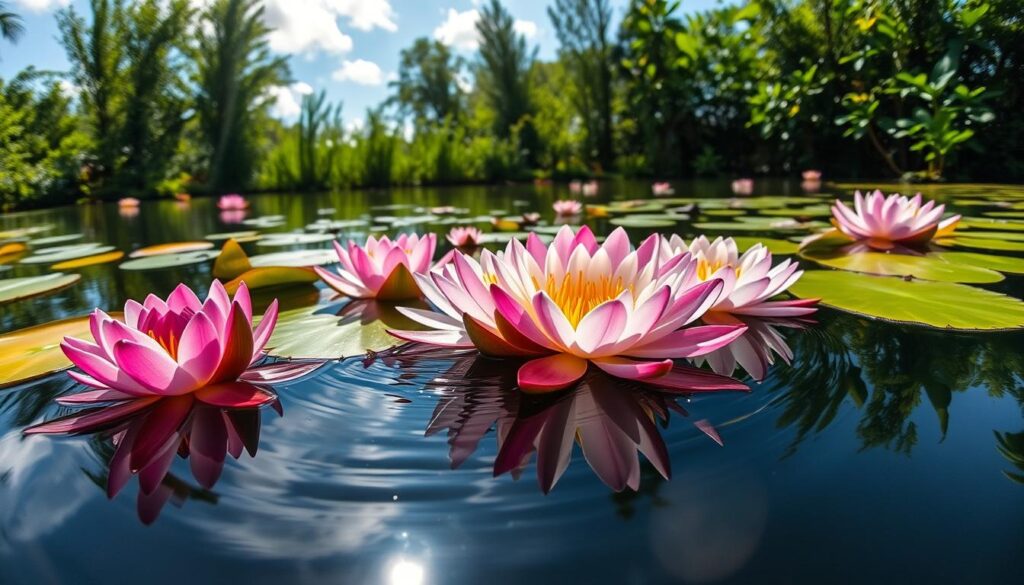
Floating plants, such as water lilies and duckweed, float on the pond’s surface. Water lilies, with their stunning flowers and big leaves, block sunlight. This stops algae from growing too much.
Emergent plants, like cattails and bulrushes, grow near the pond’s edges. They keep the soil in place, stopping erosion. They also offer a safe place for animals to hide.
The mix of aquatic plants in ponds is vital for a healthy ecosystem. They help create a food chain, from feeding herbivores to protecting fish and other animals.
Animal Life in Ponds
Ponds are full of life, from insects to amphibians. These creatures make ponds rich and diverse. They include wildlife like fish that keep algae in check and amphibians that are key to the food chain.
Many fish like goldfish and koi live in ponds. They look good and help keep the pond healthy by eating algae. Amphibians like frogs and toads also live here. They show how well the pond is doing.
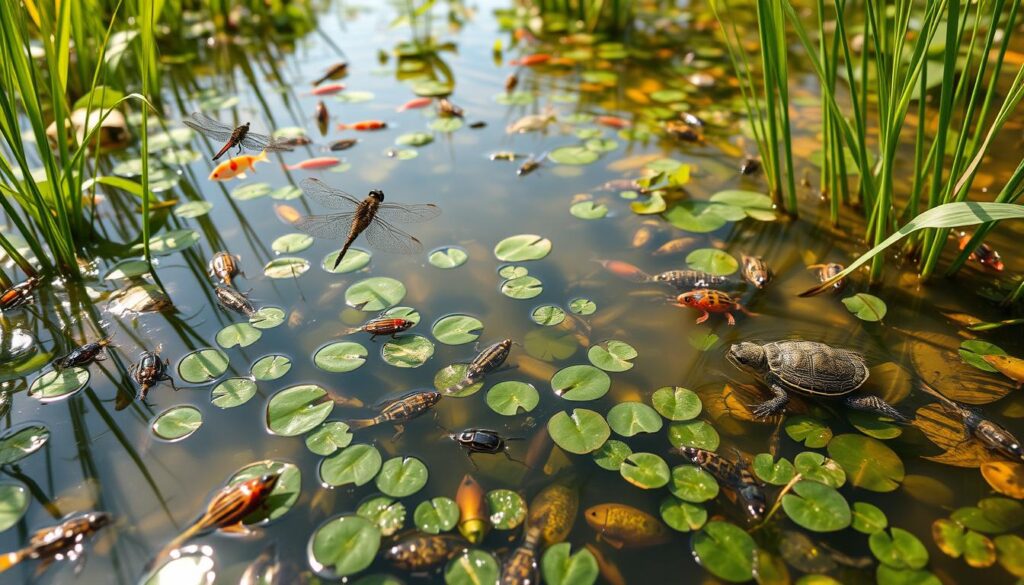
Ponds are also home to many other creatures. There are insects like dragonflies and water striders, and birds that come to eat or nest. These animals have special features to live in the pond, like webbed feet or camouflage.
The aquatic life in ponds is not just interesting; it’s also essential. For example, some fish eat algae to keep the water clean. Others are food for birds and other predators.
It’s important to understand the animal life in ponds. This helps us appreciate and protect these ecosystems. By knowing how important the different species are, we can take better care of ponds.
Seasonal Changes in Ponds
Seasonal changes deeply affect ponds and their inhabitants. As seasons change, ponds see big shifts in water levels, temperature, and plants. These changes impact the balance of their ecosystems.
The water levels in ponds change a lot with the seasons. Water rises in rainy times and drops in dry times. This change affects where aquatic life can live.
Temperature changes are also key. Warmer weather in spring and summer helps algae and plants grow. But, colder weather in fall and winter can harm some plants.
The environmental factors change, affecting pond ecosystems. This impacts the life cycles of plants and animals. For instance, some species breed or migrate at certain times of the year.
Knowing about these seasonal changes helps us understand pond ecosystems better. It also helps us manage ponds in a sustainable way.
Human Impact on Ponds
Human activities are growing, and so is their impact on ponds. Ponds are key to our environment, but they face many challenges because of us.
The environmental impact of human actions on ponds is wide-ranging. Pollution from farms, factories, and homes harms pond water. Too many nutrients from fertilizers can cause algae to grow, which uses up oxygen and hurts fish and plants.
Habitat loss is another big problem. Destroying plants around ponds and changing their shape for human use messes up the balance of these ecosystems. Also, invasive species can take over, pushing out native plants and animals.
Mitigating Human Impact
To lessen these effects, we need to use conservation methods. We should use fewer chemicals in farming and create green zones around ponds. Also, fixing natural habitats around ponds helps keep a variety of life.
Getting people involved is key. Teaching others about pond importance and dangers can make them want to help. This can lead to actions that protect these vital places.
In short, the human impact on ponds is a big worry that needs quick action from all of us. By knowing how our actions affect ponds and working on conservation, we can save these places for the next generations.
The Role of Ponds in Local Climate
Ponds are key in shaping local microclimates. They affect water cycles and help control temperatures.
Ponds can change local climate conditions a lot. They store and release water, which affects the area around them. This is important for keeping things balanced.
Ponds cool the air by evaporating water. This makes the local climate more stable. Plants around ponds also help by shading the area and changing humidity.
Ponds support many different plants and animals. They keep water levels steady, which helps the local ecosystem stay strong.
To wrap it up, ponds are very important in their ecosystems. They help control local climate and support environmental factors and water cycles. This shows how vital they are for keeping things balanced.
Educational Opportunities at Ponds
Ponds are perfect for nature study and environmental education. Students can learn by exploring these water bodies. They get to see science in action and grow to love nature more.
Ponds provide many learning chances, like outdoor learning for all ages and subjects. For example, checking water quality teaches about chemistry and biology. It also shows why we need to save our planet.
Doing wildlife surveys is another great way to learn. Students discover how different species work together. This helps them think critically and work as a team.
Also, ponds are great for teaching about how humans affect nature. Students learn why we must protect these areas. They see how they can help save the environment.
Adding pond education to school plans can change students’ lives. It makes them care more about the planet. They become active in helping their communities.
Conclusion: The Value of Ponds
Ponds are key ecosystems that support many plants and animals. They play a big role in keeping our environment healthy. Ponds help clean water and create homes for wildlife.
We need to protect ponds from harm caused by humans and climate change. Knowing how valuable ponds are helps us preserve them for the future. Good conservation plans keep pond ecosystems balanced, ensuring they keep providing important services.
Ponds are vital for biodiversity and ecosystem services. It’s important to focus on pond conservation and use sustainable practices. This will help protect these essential ecosystems for the future.