







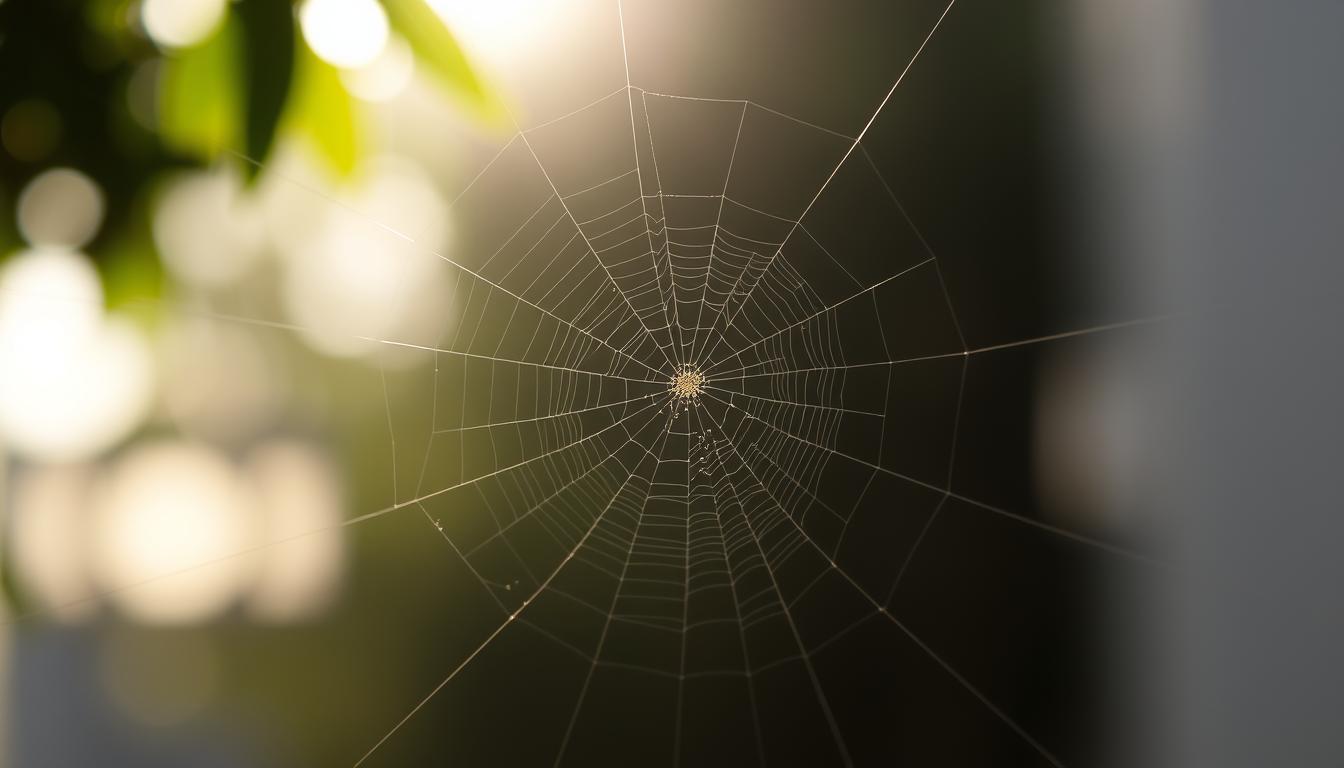
The patterns of a spider web are truly amazing. These structures are not just beautiful but also carry deep meanings.
In many cultures, arachnids and their webs are seen as life’s complexities. A spider web can represent the Christian life. It shows how challenges and doubts are woven together.
The Bible talks about these wonders, showing their importance. Learning about the different spider webs opens a door to the world of arachnids.
Understanding Spider Webs and Their Importance
Spider webs are more than just pretty to look at. They play a big part in keeping our environment healthy. These webs show how smart spiders are and help our planet stay in balance.
Spider webs help control pests. They catch insects that could harm crops and gardens. This means we don’t need as many pesticides. A study found that spider webs keep pests away, helping our ecosystem stay balanced.
Spider webs also help with biodiversity. They keep different species in check, which is good for our ecosystems. This balance is key for a healthy environment.
“The detailed patterns of spider webs amaze us with their beauty. They are also a vital part of nature’s machinery, keeping our ecosystem in balance.”
Spider webs also tell us about the health of our environment. Changes in spider webs can show bigger environmental problems. Scientists use them to study how healthy our ecosystems are.
In short, spider webs are important for many reasons. They help keep our environment balanced, control pests, and support biodiversity. By understanding this, we can work to protect spider habitats and the ecosystems they live in.
Common Types of Spider Webs
Spiders create a variety of webs, from the detailed orb webs to the chaotic tangle webs. Each web type shows how adaptable spiders are. They build webs for different reasons and with unique features.
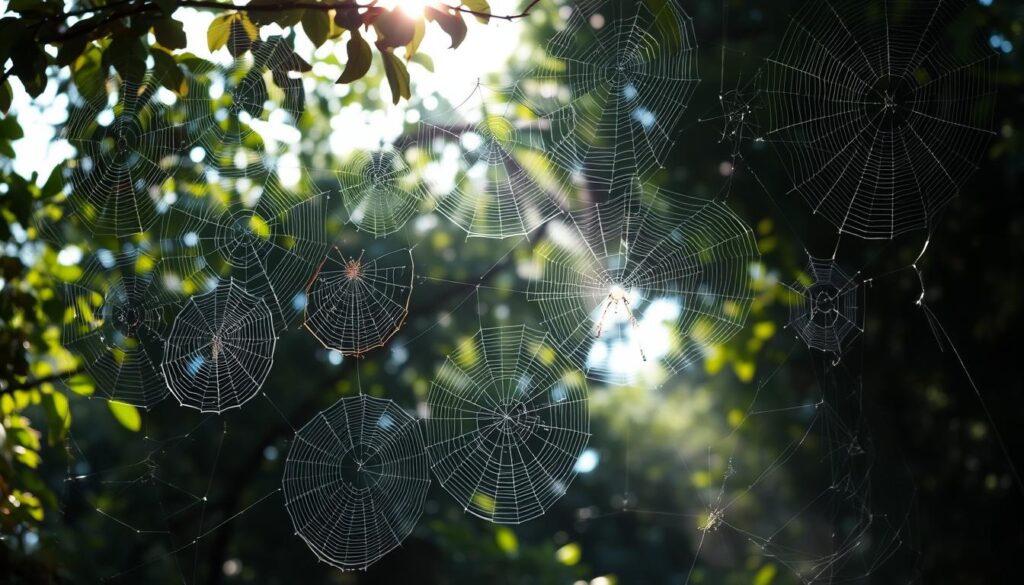
The spiral orb web is well-known. It looks like a circle with spiral lines, often in gardens. These webs are not just pretty; they’re also great at catching food.
Characteristics of Various Spider Webs
Spiders make different webs based on their needs and where they live. For example, tangle webs are messy and irregular. They’re good for catching prey in tight spots. Sheet webs are flat and found in open areas like grasslands.
Triangle webs and funnel webs are also common. Triangle webs are triangular and used in specific places. Funnel webs have a narrow tunnel leading to a spider’s hiding spot.
Knowing about the different types of spider webs helps us appreciate these amazing structures. It also makes spider web identification easier. This way, we can spot different spider species and where they live.
Studying spider webs shows how clever spiders are. It also teaches us about their behavior, where they like to live, and their role in nature. As we learn more about the natural world, seeing the variety of spider webs deepens our understanding of life’s connections.
How Spiders Construct Their Webs
Spiders are very careful when they make their webs. They use spider silk in a special way. This is key for catching food.
The web building process starts with a single thread. The wind carries it until it sticks to something nearby. Then, the spider adds more threads to make the web stronger.
Spiders make different kinds of silk for their webs. Sticky silk is used for catching prey. Non-sticky silk helps hold the web together.
As Robert Burns said, “The best-laid schemes o’ mice an’ men / Often go awry.” But spiders usually succeed in making their webs.
“The silk threads produced by spiders are finer than any human-made fiber, and their tensile strength is remarkable, making them one of the strongest natural materials known.”
The spider web construction shows how smart spiders are. Learning about their webs helps us appreciate these amazing creatures more.
Where to Find Spider Webs
Spider webs are everywhere, from our homes to outdoor spaces. They are fascinating once you start looking for them.
Start your search in your home. Cluttered areas like attics and basements are perfect for spiders. You can also find them in corners and behind furniture.
Gardens and flower beds are also great places to find spider webs. Spiders use plants for support and camouflage. Gardens with many flowers and shrubs attract more spider species.
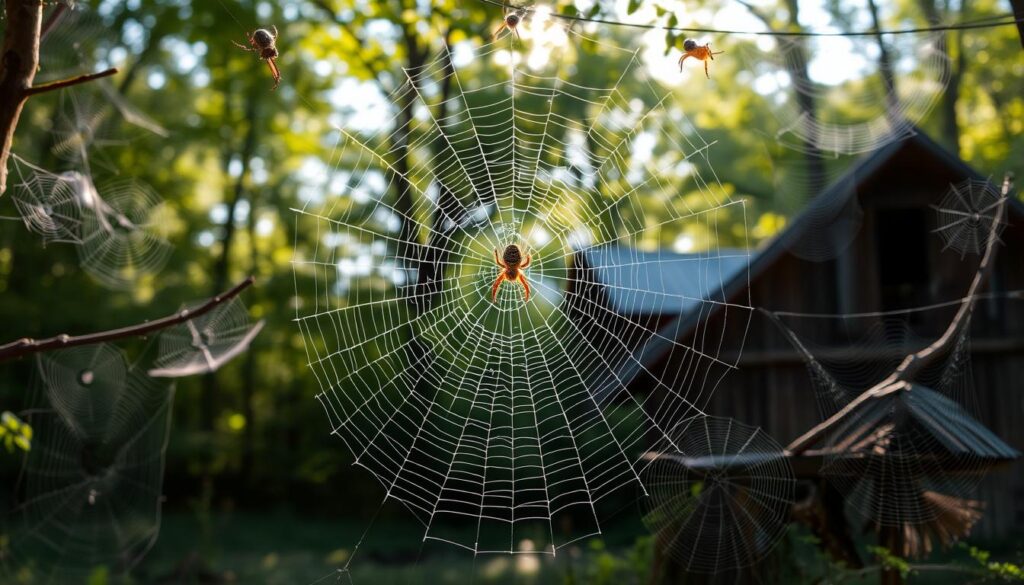
Outdoor spots like woods and urban areas have many spider webs. Look on trees, bushes, and man-made structures. Areas with dense vegetation or near water attract more spiders.
Knowing where to look makes finding spider webs easy. Whether at home, in your garden, or at the park, observing these webs is rewarding. So, keep an eye out for them next time you’re out.
Identifying Spider Webs in Your Environment
Spotting spider webs needs a sharp eye and knowledge of their features. These webs are not random; they are detailed patterns made by spiders. They serve as hunting tools and shelters.
To spot spider webs, knowing the different types is key. Experts say there are orb, cob, and sheet webs. Orb webs are round and often belong to garden spiders. Cobwebs are messy and irregular, found in corners or against walls.
When looking at spider webs, notice their design and where they are. Sheet webs are flat and found in grasslands or among leaves. The web’s shape, size, and material can tell you about the spider.
“The detailed patterns of spider webs show their cleverness and adaptability. By studying these, we learn about spiders’ behavior and their world.”
To get good at spotting spider webs, observe them in various places. Look in your garden, local park, or home. With practice, you’ll notice the differences between web types.
Understanding spider webs helps us respect these creatures more. Next time you see a web, take a closer look. It’s a glimpse into the fascinating world of spiders.
The Benefits of Spider Webs to Humans
Spider webs play a big role in controlling pests. They catch insects that could harm crops or gardens. This means we need less pesticides, making our environment healthier.
Spider web benefits go beyond just controlling pests. They also tell us about the health of our environment. The types of spiders we see can show us if there’s pollution or if habitats are being destroyed.
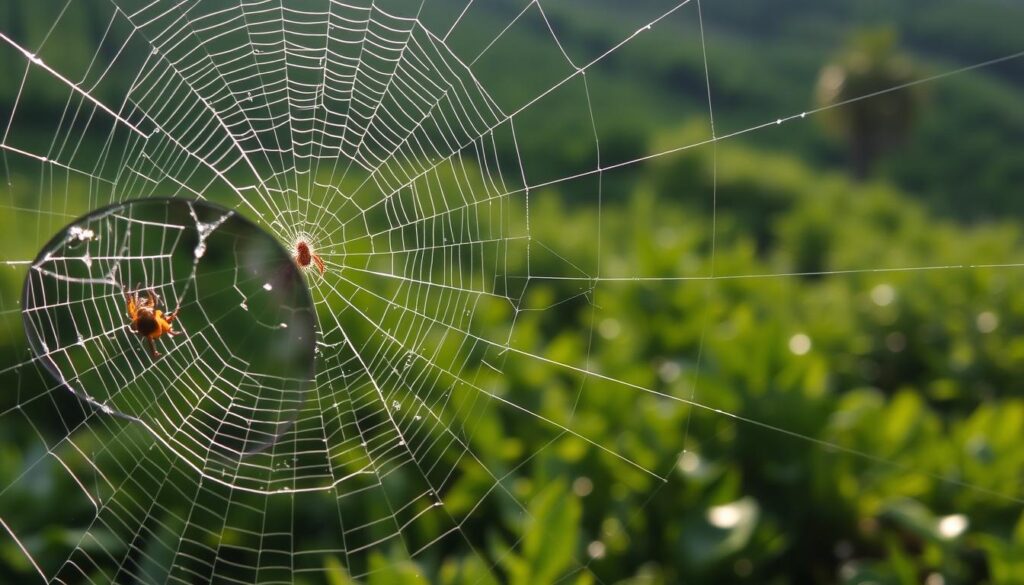
Spider webs have also led to new discoveries in science. Scientists have learned about the strength and flexibility of spider silk. This knowledge has helped create new materials and medical tools.
The way spiders control pests is very important. They keep the balance in nature by eating insects. This helps crops grow better and saves money for farmers.
Also, studying spider webs has helped in robotics and computer science. The patterns in spider webs have inspired new ways to send data and improve networks.
Myths and Misconceptions About Spider Webs
Spider webs are often misunderstood. Many think all spiders use webs to catch food. But, some spiders build webs for shelter or to protect their eggs. This shows how varied these structures can be.
Many believe spider webs are messy. But, most webs are meticulously constructed with detailed patterns. This complexity shows spiders’ amazing adaptability and skill.
Not all spider webs are sticky. Some spiders use dry webs to catch prey or for shelter. Knowing this can help clear up common myths about spider webs.
Learning about spider webs can deepen our appreciation for them. Spider webs are not just interesting to look at; they also play a key role in our ecosystem. They help control pests and keep nature balanced.
In summary, spider webs are complex and deserve our respect. By understanding the truth and correcting myths, we can appreciate nature more.
The Art and Science of Spider Webs
Spider webs are where art meets science, creating stunning and complex structures. These webs are not just for catching prey. They are also natural wonders, showing spiders’ amazing adaptability and creativity.
From an artistic view, spider webs show incredible patterns and designs. They often have symmetry and complexity, rivaling human-made structures. The web design reflects the spider’s behavior and evolution, making each web unique.
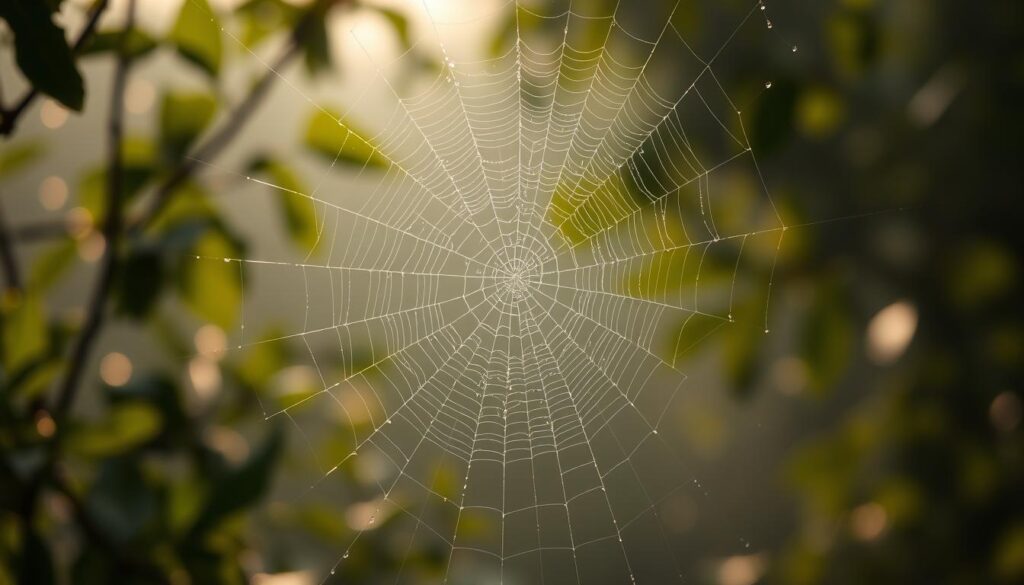
Scientifically, spider webs are amazing in material science and physics. Spiders make silk stronger than steel and more elastic than rubber. This silk helps them build webs that can handle different stresses. The study of spider web science has led to new human innovations in materials engineering and biomimicry.
The mix of art and science in spider webs shows the fascinating biology behind them. By enjoying the spider web art and understanding the science, we can appreciate the natural world more.
Conserving Spider Habitats
It’s important to keep spider habitats safe for our ecosystem’s health. Spiders help control pests, which is good for our environment. So, supporting their homes is key.
To help spiders, we can make our spaces more welcoming. Clearing less clutter in our homes and gardens helps. Spiders like dark, quiet spots. So, leaving some areas a bit messy helps them.
It’s also vital to protect natural habitats for spiders. We can do this by growing native plants and using fewer pesticides. Creating spots with leaves and logs is also helpful.
“The conservation of spiders and their habitats is not just about protecting these arachnids; it’s about preserving the health of our ecosystems.”
Helping spiders can also save us money on pest control. It makes our ecosystems more balanced. Simple actions can boost biodiversity and protect our environment for the future.
In short, saving spider habitats is easy and beneficial. By making our spaces spider-friendly and protecting natural areas, we help our environment. This way, we keep enjoying the good things spiders do for us.
Conclusion: Embracing the Beauty of Spider Webs
Spider webs are not just amazing feats of engineering. They are also key parts of our ecosystem. By appreciating their beauty and importance, we learn more about nature and our role in it.
Learning about how spiders make webs, the different types, and their benefits to us helps us value them more. This appreciation for spider webs shows us respect for the spiders and their homes.
We must keep spider habitats safe and encourage people to love spider webs. This way, future generations can also enjoy their beauty. It will inspire them to care for our planet and appreciate nature.