







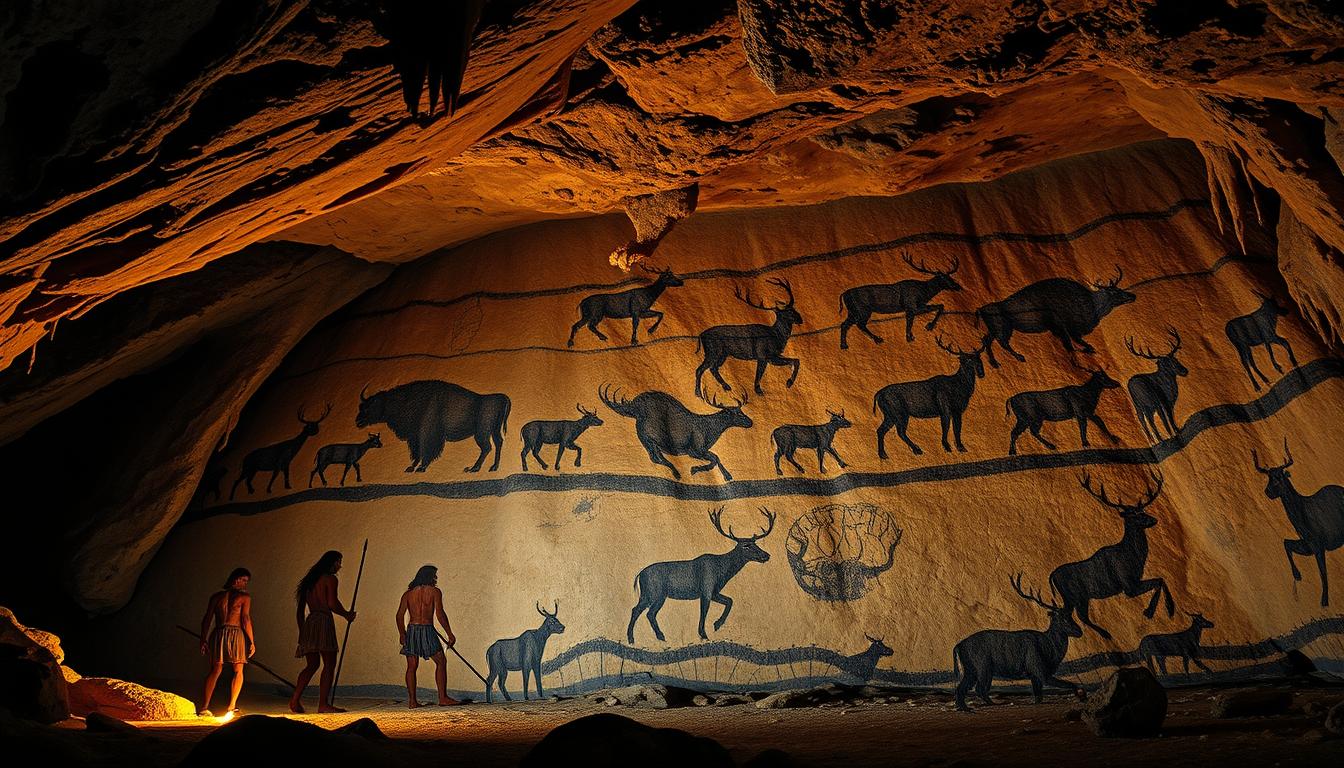
Explore the world of ancient art and discover prehistoric masterpieces. Cave paintings give us a glimpse into our ancestors’ lives. They show us their culture, beliefs, and art.
Recent finds, like the ancient art in Sulawesi, Indonesia, are over 51,200 years old. They show how important these artworks are. Places like the Lascaux caves in France and new sites amaze people all over.
This article will dive into the importance, history, and places of these ancient paintings. We’ll learn about the art and culture of our ancient ancestors.
What Are Cave Paintings?
“Cave paintings” are ancient images found on cave walls. They were made using natural pigments. These works are key to understanding early human life.
These paintings are found in caves and made from natural materials. Natural pigments like ochre and charcoal were used. They show animals, humans, and abstract symbols.
The subjects of these paintings are diverse. They range from detailed animal pictures to abstract patterns and human figures. Knowing how they were made helps us appreciate their importance in cave art and rock paintings.
Studying cave paintings gives us insights into prehistoric humans’ lives. These ancient works amaze people everywhere. They offer a glimpse into our shared human history.
A Brief History of Cave Art
The story of cave art starts around 40,000 years ago, during the Upper Paleolithic era. It continues to fascinate us today. This ancient form of expression shows our ancestors’ artistic skills and gives us a peek into their lives, beliefs, and cultures.
Cave art changed over time, influenced by human society, technology, and culture. The earliest cave art can be found in Indonesia and Europe. It shows how widespread this prehistoric art form was.
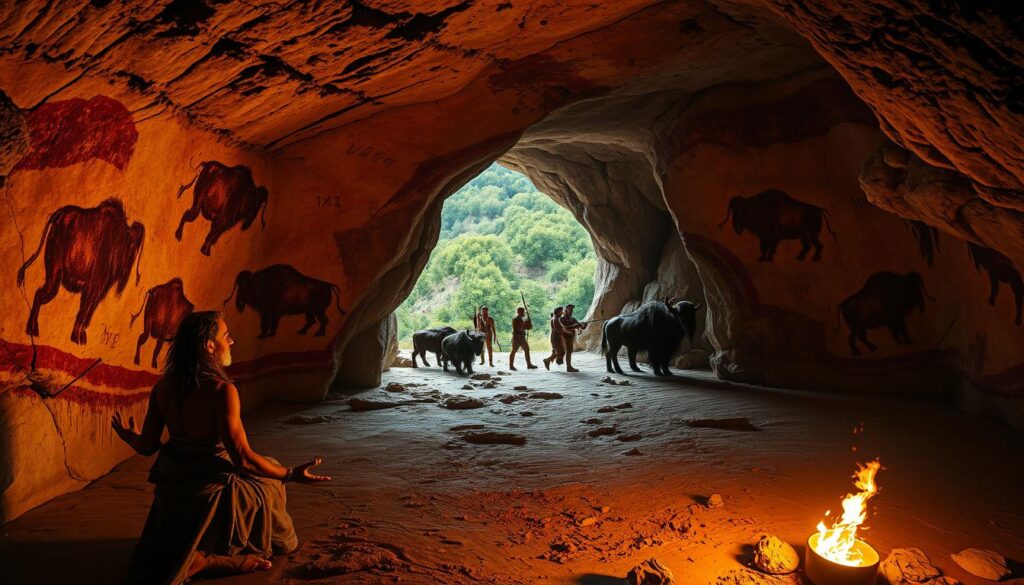
As ancient civilizations grew and changed, so did their art. The themes and techniques in cave paintings varied. They reflected the different environments and lifestyles of the people who made them. From animal pictures and hunting scenes to abstract symbols, cave art is a rich mix of prehistoric culture.
Learning about the history of cave art helps us understand our ancestors’ lives. It shows their artistic abilities and gives us a glimpse into their spiritual beliefs, social structures, and daily activities.
Famous Locations for Cave Paintings
Cave paintings are found all over the world, from Europe to Australia. These sites are not just beautiful but also hold great historical and cultural value.
Lascaux in France is famous for its well-preserved animal images. These paintings are about 17,000 years old, making them a key part of prehistoric art history.
Altamira in Spain is known for its detailed and colorful bison paintings. These paintings date back to 14,000 to 12,000 years ago, showing the skill of ancient artists.
Recently, discoveries in Indonesia and Australia have caught the world’s attention. These include ancient hand stencils and images of extinct animals. These findings show the global reach of cave art and the creativity of our ancestors.
Exploring these famous sites or learning about them is enriching. It gives us a glimpse into our ancestors’ artistic and spiritual lives. It also highlights the need to protect these sites for future generations.
Techniques Used in Cave Painting
Cave paintings were made with many techniques, showing the creativity of ancient artists. They used natural pigments like ochre, hematite, and manganese oxide. These were mixed with water or animal fat to make paint.
Artists applied paint in different ways. They used finger painting, brushes made from animal hair, and other tools. Some paintings show stencil work or engraving on the walls. This variety shows how adaptable and creative early humans were.
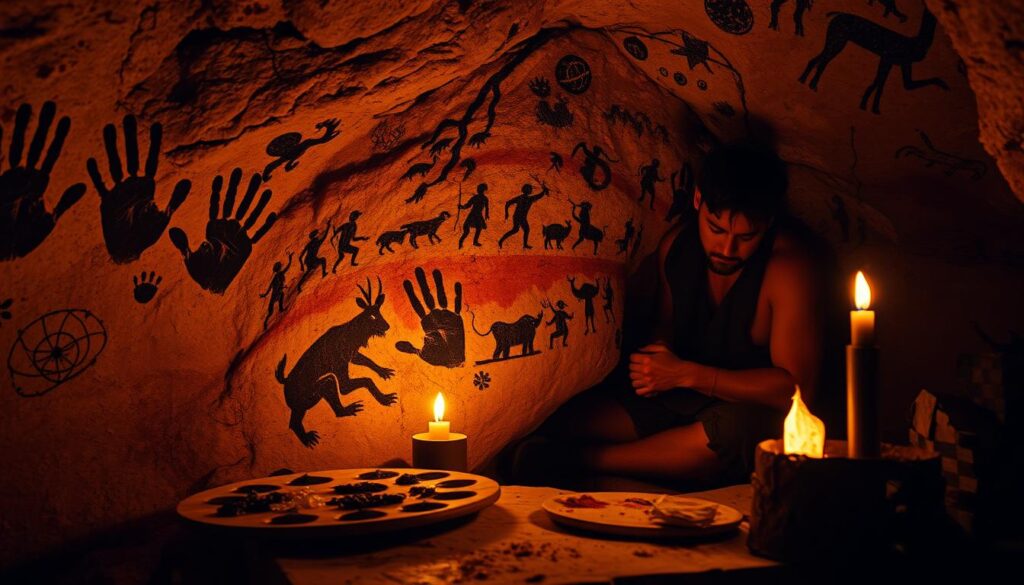
These paintings have lasted for thousands of years, thanks to the artists’ ingenuity. They used materials found in their environment to make lasting art. This art continues to amaze us today.
Learning about these prehistoric art methods helps us understand our ancestors. It shows the importance of these artworks as early human expression. Studying cave painting techniques is key to understanding our past.
Interpretation of Cave Paintings
For decades, researchers have debated the meaning of cave paintings. Theories range from hunting magic to symbolic expression. The true meaning of these ancient artworks is a topic of ongoing research and speculation.
Cave paintings, found worldwide, continue to fascinate researchers. They show a variety of subjects, like animals, humans, and abstract signs. These images have been interpreted in many ways.
Some think cave paintings were used in hunting magic and shamanic rituals. They believed these paintings helped ensure successful hunts or communicated with the spiritual world. Others see them as early narratives or symbolic expressions. They think these paintings shared messages about the lives and beliefs of prehistoric humans.
The many interpretations show the complexity of prehistoric culture. They highlight the need for more research to understand these ancient artworks. By studying the techniques and contexts of cave paintings, researchers can learn more about their significance.
Studying cave paintings gives us insight into our ancestors’ lives. It also shows the development of human culture and creativity. As new discoveries are made and prehistoric art theories evolve, our understanding of these enigmatic paintings will grow.
The Role of Archeology in Discovering Cave Art
Archeology digs deep into the world of cave art. It uses careful excavation and analysis to uncover its secrets. This work gives us a peek into the lives of early humans.
By studying artifacts and artworks, archaeologists learn about our ancestors’ lives. Archaeological techniques like radiocarbon dating help us understand when and why these paintings were made.
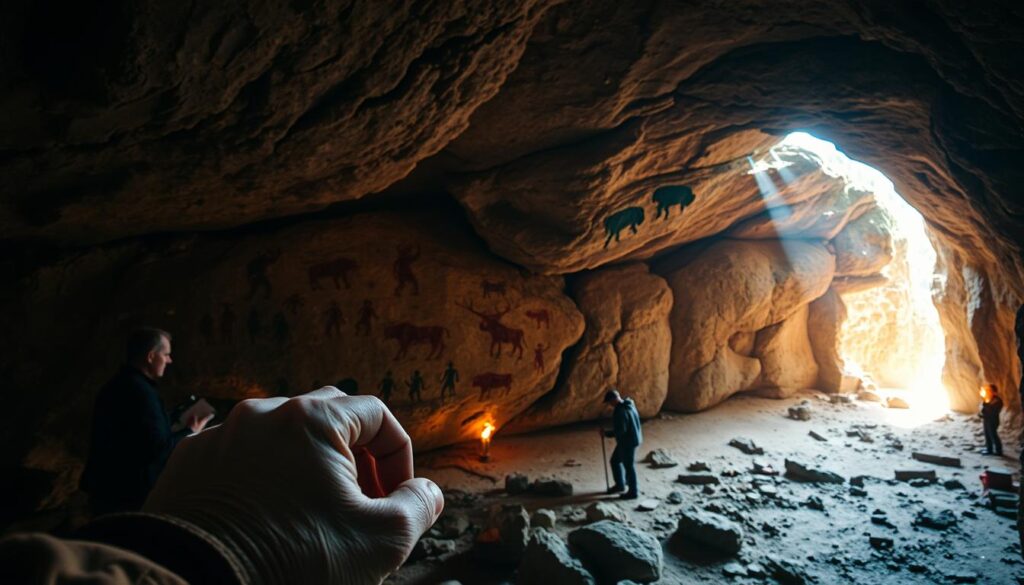
Discovering cave art is more than finding old paintings. It’s about understanding the context of these artworks. Archaeologists look at the cave environment, the materials, and the symbols used. This helps us see the cultures of our prehistoric ancestors more clearly.
Prehistoric discoveries made through archaeology amaze both the public and scientists. By protecting these sites, we make sure future generations can learn from and enjoy these ancient artworks.
The work of archaeology in finding cave art shows how important teamwork is in studying our cultural heritage. As new archaeological techniques emerge, we’ll be able to learn even more about cave art.
Modern Technology and Cave Art
Modern technology has changed how we study cave art. It lets us uncover secrets from our past. New tools in dating and analysis have made a big difference.
Dating Techniques have gotten better with radiocarbon and uranium-thorium dating. These methods help us know when cave art was made. This knowledge helps us understand the history behind these paintings.
Digital Imaging is also key in studying cave art. Tools like 3D scanning and digital enhancement let us see details without harming the art. This helps us learn more and protect these ancient paintings.
Modern tech has opened new ways to study cave art. By using new dating and analysis methods, we can learn more about these ancient works. This helps us see their importance in human history.
Preservation and Future Research are also improved by modern tech. New methods will keep helping us understand and protect cave art. This is important for our cultural heritage.
The Influence of Cave Paintings on Contemporary Art
Cave paintings have a lasting impact on today’s art. They inspire many artists, shaping different styles and movements. The raw, expressive nature of prehistoric art speaks to artists seeking primal expression.
Modern artists find the emotive quality of cave paintings inspiring. They use bold colors and abstract forms, seen in cave art, in their work. The primal energy in cave paintings pushes artists to try new techniques and forms.
Cave art’s legacy shows its big role in art history. It connects our ancient past to today, showing art’s universal language. Artists who use this legacy honor the past while innovating for the future.
In summary, cave paintings’ influence on today’s art shows their timeless appeal. As artists keep drawing from these ancient works, cave art’s legacy stays alive, guiding contemporary art.
Education and Public Awareness
Learning about cave art is key to better preservation efforts. Educational programs are vital. They show the importance of cave paintings, not just as art but as a peek into our ancestors’ lives.
“Cave art is a universal language that speaks to our shared human heritage,” a leading archaeologist said. This quote highlights cave art’s role in understanding human history and culture. Such efforts boost appreciation for these cultural gems and promote responsible tourism and conservation.
“The future of cave art lies in our ability to educate and inspire future generations about its value and significance.”
Public awareness campaigns are also key. They bring to light the challenges faced by cave art sites, like environmental damage and human impact. By spreading the word, we can get more support for preservation efforts and protect these sites for the future.
Education does more than just raise awareness. It builds a community that values and helps in cave art preservation. Through workshops, tours, and educational programs, people can learn about the history and culture behind cave art.
Also, teaching cave art in schools can spark young minds. It can inspire a new wave of conservationists and archaeologists. By focusing on education and cave art, we can protect these cultural treasures for the long term.
In summary, public awareness and education are vital for cave art conservation. As we progress, it’s critical to support and grow these efforts to protect our cultural heritage.
Cave Paintings and Climate Change
Cave paintings, some of the oldest artworks, face a new threat: climate change. Rising temperatures and environmental changes harm these delicate artworks and the caves they’re in. The concern goes beyond the paintings to the caves’ structural stability, which is at risk.
The deterioration of cave paintings due to climate change worries conservationists. As temperatures rise, these ancient artworks decay faster. Changes in humidity levels also damage the materials used in the paintings. This affects not just the paintings but also the caves, potentially causing structural instability.
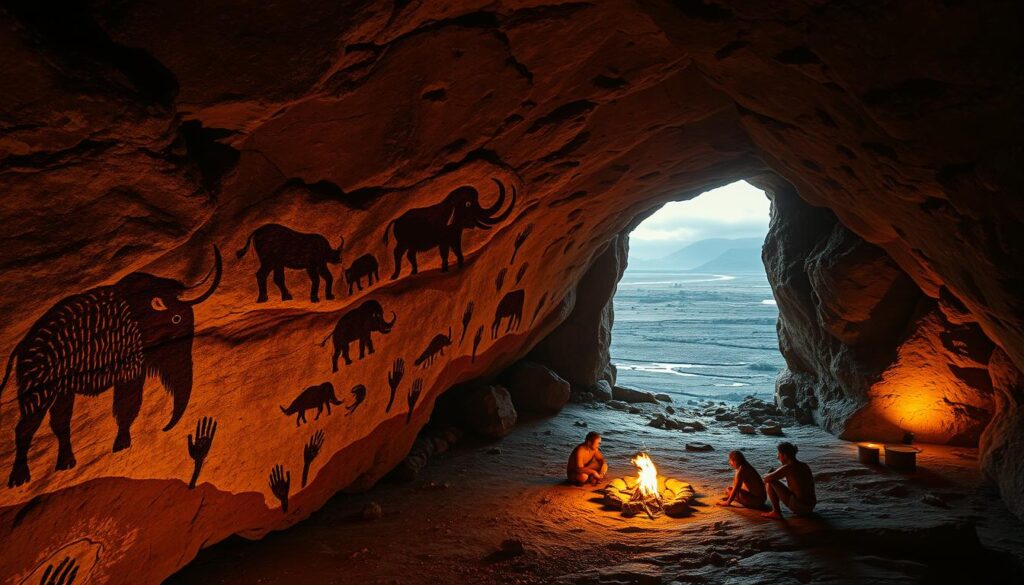
Conservation Efforts are underway to protect cave paintings from climate change. These efforts include monitoring environmental conditions, controlling visitor access, and using advanced technologies to restore damaged artworks. Yet, more needs to be done to tackle this complex issue.
The impact of climate change on cultural heritage sites like cave paintings highlights the need for global cooperation. It’s vital to raise awareness about these sites’ vulnerability. We must also implement sustainable practices to mitigate climate change’s effects.
How to Explore Cave Paintings Safely
Exploring cave paintings is an exciting adventure. But, it’s important to do it safely and responsibly. Visitors need to be careful and follow rules to protect these ancient artworks.
Before you go, learn about the cave and its rules. Many caves have areas off-limits to keep visitors and paintings safe. It’s vital to follow these guidelines for a safe and respectful visit. Also, remember to stay on paths and not touch the paintings to avoid damaging them.
Getting help from local guides and communities can make your visit better. They can share interesting facts about the paintings and help you stay safe. This way, you support responsible tourism and help keep these cultural treasures safe.
Being ready is also important for a safe trip. Wear the right clothes, bring water and a first aid kit, and know about any dangers like uneven ground or weather changes.
By being careful and informed, you can enjoy the amazing world of cave paintings. You’ll also help make sure these artworks are safe for others to see in the future.
Conclusion: The Enduring Legacy of Cave Paintings
Cave paintings are a key part of human history, showing us how our ancestors lived and created. They prove that early humans were creative and strong. This shows the power of art to connect us to our past.
Today, these paintings amaze and motivate us, linking our past to now. It’s vital to keep this legacy alive. So, future generations can also be amazed and learn from these ancient works of art.
By saving cave paintings, we protect our cultural heritage. This way, they can keep inspiring and teaching people for many years ahead.