







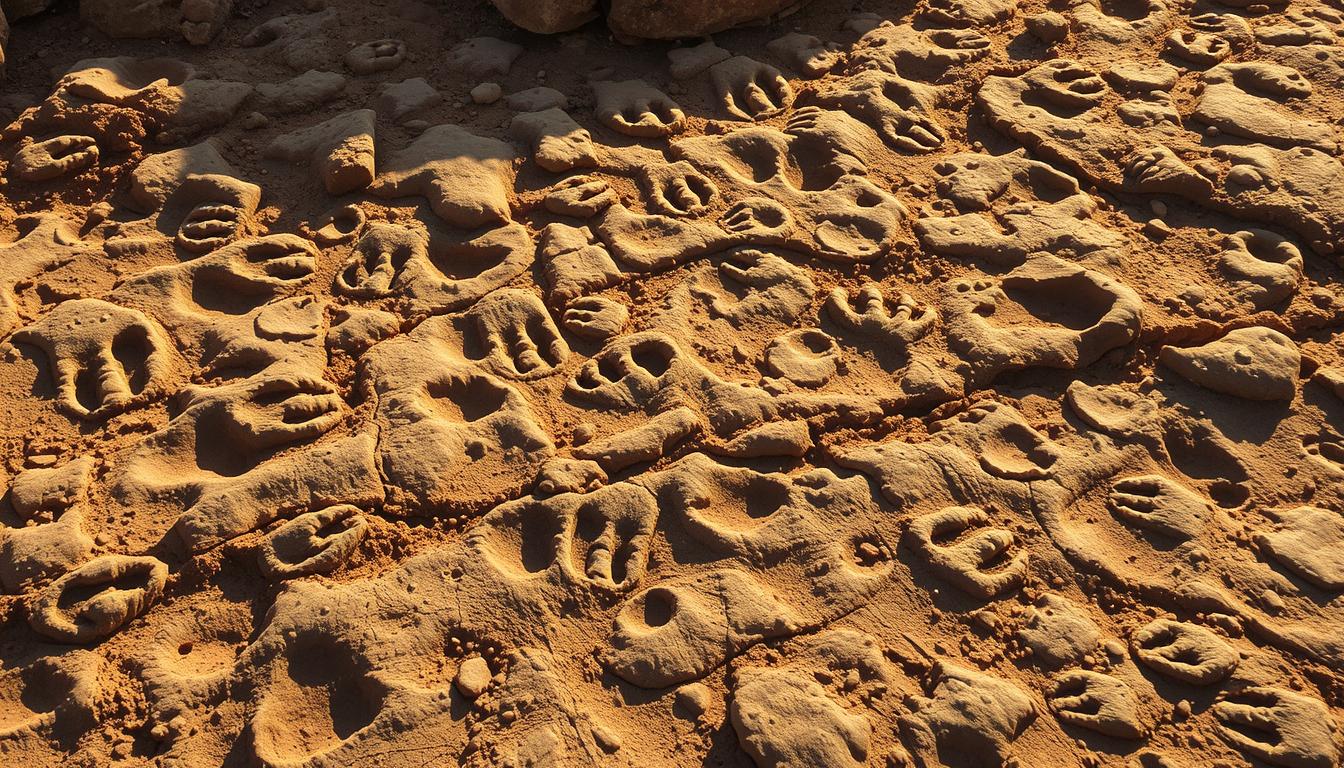
Discovering dinosaur footprints is a thrilling way to learn about ancient beasts. These fossilized tracks give us a peek into the lives of dinosaurs. They offer insights that fossilized bones alone can’t.
Preserved footprints, or ichnites, show us how dinosaurs lived and moved. By studying these fossilized tracks, scientists learn about dinosaurs’ habitats and behaviors. This helps us understand their biology and ecology better.
This journey into dinosaur footprints will explore their importance. We’ll see what these finds reveal about these incredible creatures.
What Are Dinosaur Footprints?
The study of dinosaur footprints, or trace fossils, gives us a peek into dinosaurs’ lives. These footprints, known as ichnites, show what dinosaurs did when they were alive. They are not parts of the dinosaurs but signs of their activities.
Dinosaur tracks tell us a lot about these ancient animals. They are different from body fossils, which are the dinosaurs’ remains. Instead, tracks are impressions left by the dinosaurs.
Experts called ichnologists study these tracks. They look at the shape, size, and where the tracks are found. This helps them understand dinosaurs’ behavior, where they lived, and their environments.
Studying dinosaur footprints helps us learn about their biology and behavior. It shows us how they lived, their social habits, and how they interacted with their world.
The Science Behind Footprints
To understand dinosaur footprints, we must look at the conditions necessary for their preservation. The process of making and keeping these footprints is complex. It’s influenced by many environmental factors.
The type of ground is key in making dinosaur footprints. Soft ground, like ancient shorelines or mudflats, is best for creating impressions. The texture and moisture content of the ground also affect the footprint’s clarity and depth.
Conditions Necessary for Preservation
For dinosaur footprints to last, the right conditions must happen quickly after they’re made. This means being buried fast by sediment to avoid erosion and damage. The sediment’s grain size and minerals can change the footprint’s quality.
The field of paleontology helps us learn about dinosaurs through their footprints. By studying how these footprints are preserved, scientists gain insights into dinosaurs’ environments.
Studying dinosaur footprints tells us about their behavior and habitats. It also gives us a peek into Earth’s past. By preserving these footprints, we keep learning about our planet’s history.
Famous Dinosaur Footprint Locations
Dinosaur footprint locations have long fascinated scientists and the public. They give us insights into the habitats and behaviors of these ancient creatures. These sites are key to understanding dinosaur biology and ecology.
The Red Gulch dinosaur tracksite in Wyoming, USA, is a standout. It has many fossil footprints from when the area was a prehistoric sea coast. These footprints show the variety of dinosaurs that lived there.
The Cal Orcko site in Bolivia is famous for its cliff face with thousands of dinosaur tracks. It’s special because it has many footprints from different dinosaurs. This gives us a glimpse of dinosaur life in the Cretaceous period.
Significant discoveries at these sites have changed how we see dinosaurs. For example, certain footprints tell us about the environment back then. They show us about water bodies and sea level changes.
These famous dinosaur footprint locations are not just interesting for science. They also spark the public’s interest in paleontology and natural history. They help educate and inspire, showing us the importance of our natural world.
Methods of Discovery
Dinosaur footprint discovery has changed a lot. Now, we use both old and new ways. Before, finding dinosaur footprints was all about digging carefully. Paleontologists would slowly dig up fossils from the ground.
Traditional Techniques have been key in studying dinosaurs for years. These old methods include digging by hand and brushing away dirt. It’s hard work, but it has led to many important finds. These finds have given us a peek into what dinosaurs were like.
New technology has changed how we find and study dinosaur footprints. Tools like 3D imaging and drone photos help us see footprints in new ways. 3D imaging lets scientists make detailed digital models of footprints. This way, they can study them without touching the fossils, which can get damaged.
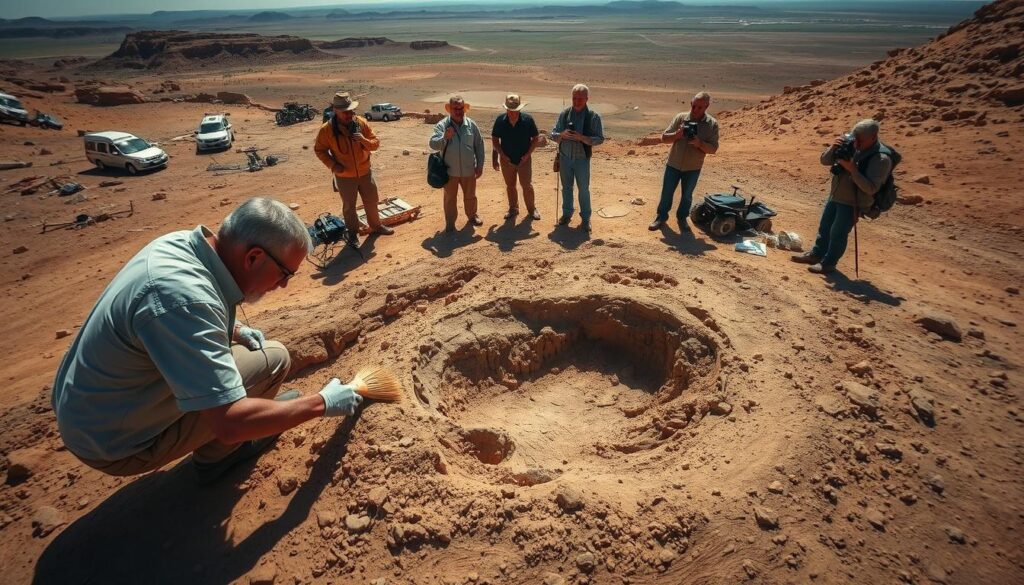
Drone photography is also a big help. It lets researchers take clear photos of footprint sites from different views. This helps document finds and understand where the footprints were found.
Using both old and new methods has made finding and studying dinosaur footprints better. This mix of techniques helps scientists learn more about dinosaurs than ever before. It’s a way to see dinosaur footprints in a new light.
As technology keeps getting better, we’ll likely find dinosaur footprints in even more amazing ways. This could lead to even more exciting discoveries in the world of paleontology.
What Can We Learn from Footprints?
By studying dinosaur footprints, we learn about their behavior, social lives, and roles in their ecosystems. Footprint analysis helps us understand how dinosaurs lived and interacted with each other and their environments.
Dinosaur tracks give us a glimpse into their past. They show us how dinosaurs moved and lived together. For example, finding many tracks together suggests some dinosaurs were gregarious creatures, traveling in groups.
Studying dinosaur footprints also helps us understand paleoecology. By looking at the tracks and the area around them, scientists can recreate ancient environments. This helps us understand how dinosaurs lived and how they went extinct.
Footprint analysis also tells us about dinosaur movement and behavior. The size and depth of tracks can show a dinosaur’s weight and how it moved. This information is key to understanding dinosaur biology and ecology.
In summary, dinosaur footprints are a treasure trove of information. By studying them carefully, scientists can uncover the secrets of these ancient creatures. This helps us learn about their behavior, social lives, and roles in their ecosystems.
The Importance of Footprint Preservation
Preserving dinosaur footprints is more than saving fossils. It’s about uncovering ancient secrets. These footprints give us a peek into dinosaurs’ lives, showing their behavior, social groups, and habitats.
The conservation efforts to protect these sites are key. Places like the Dewars Farm Quarry in Oxfordshire, England, have made big discoveries. They help us understand dinosaur ecology and behavior. By saving these sites, we keep learning and deepen our knowledge of the past.
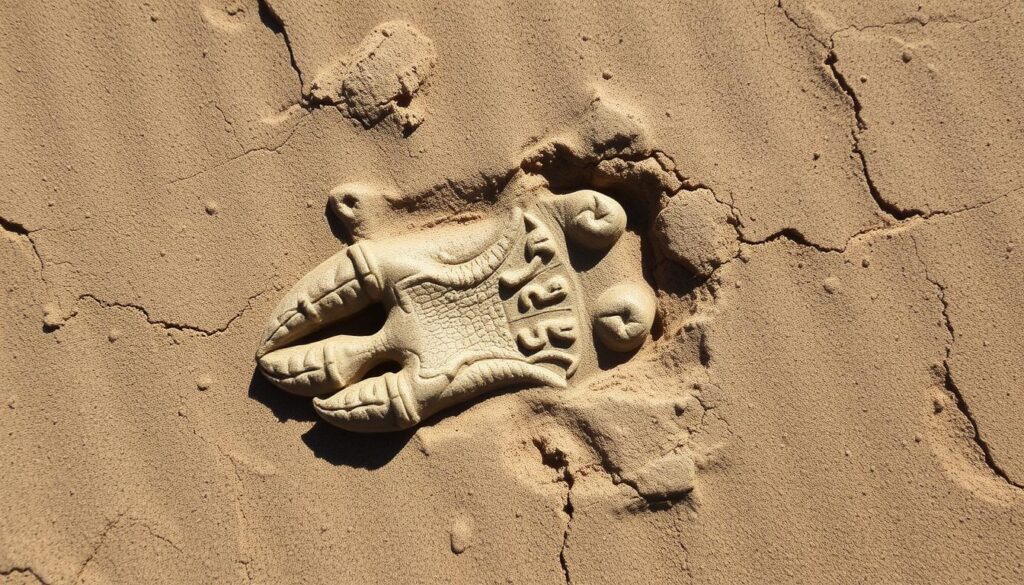
The paleontological significance of dinosaur footprints is huge. They connect us to the past, letting scientists study dinosaur populations and their environments. Preserving these footprints also helps us understand ancient ecosystems better.
Good conservation efforts mean more than just protecting the sites from erosion. It’s also about keeping them safe from human harm. This includes managing visitors, watching the environment, and using protective measures to keep the footprints intact.
In short, saving dinosaur footprints is essential for paleontology and conservation. By focusing on footprint preservation and supporting conservation, we keep these treasures alive. They help us understand the ancient world better.
How to Identify Dinosaur Footprints
To spot dinosaur footprints, you need to know the signs of different dinosaurs. Theropods, ornithopods, and sauropods left unique tracks. These clues help figure out which dinosaur made them.
Theropod footprints are long and narrow. They show sharp claws, used for hunting and defense. On the other hand, ornithopod footprints are wider and rounder. They don’t have sharp claw marks.
Sauropod footprints are huge and deep. They show five toes. These tracks are big and can have claw marks, but not always.
Looking at dinosaur footprints, the setting they were found in matters. The rocks around, other fossils, and the footprints’ state tell us about the dinosaurs.
By studying dinosaur footprints, we learn about the variety of dinosaurs. This helps us appreciate the diversity of life on Earth long ago.
Community Involvement in Discoveries
Citizen science has changed dinosaur footprint research. Scientists and the public work together to find these ancient tracks. This teamwork has led to big discoveries about dinosaurs.
Quarry workers and volunteers help find important sites. In many places, local people report new finds. Then, paleontologists study them. This public participation helps everyone learn more about dinosaurs.
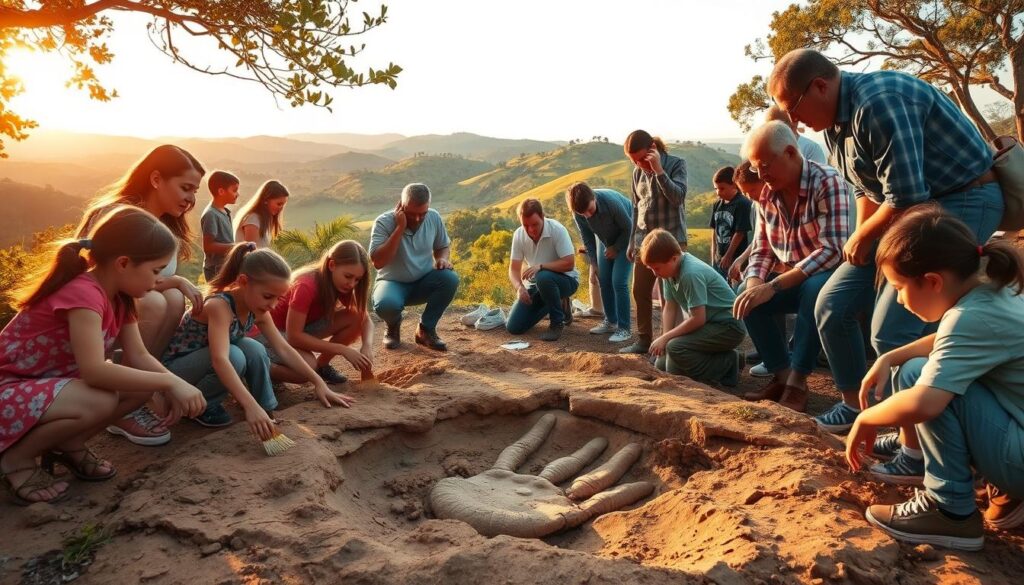
The impact of citizen science in dinosaur research is huge. It lets researchers explore more and gather more data. This teamwork has uncovered many new things about dinosaurs.
Also, community help keeps footprint sites safe. When people care about these sites, they help protect them. This ensures these important finds are here for others to see.
In short, community involvement is key in finding dinosaur footprints. It helps find new sites and teaches people about dinosaurs. So, it’s important to keep involving the public in this research.
The Role of Museums and Education
Museums show dinosaur footprints, giving us a special learning chance. They help us love paleontology more. These places are key in teaching us about dinosaur footprints through programs and outreach.
Museums as Educational Hubs
Museums are important places for learning. They let people see dinosaur footprints and understand their value. They have tours, exhibits, and programs for all ages, making learning fun.
Public outreach is a big part of what museums do. They hold workshops, lectures, and events. This helps more people learn about dinosaur footprints and their role in paleontology.
Museums and schools work together to teach more. By adding dinosaur footprints to school lessons, students learn more. This sparks their interest in paleontology.
The Future of Education
With new tech, museums are using digital tools in their teaching. This makes learning more fun and reaches more people. Now, folks worldwide can learn about dinosaur footprints.
Digital and Virtual Resources
Digital tools have changed how we see dinosaur footprints. They give us new insights into these ancient creatures. 3D modeling and virtual reconstructions let researchers study these footprints closely. This offers a fresh view on paleontology.
Digital models of dinosaur footprints help scientists understand their shape and behavior. These tools also help share data, speeding up research and discoveries.
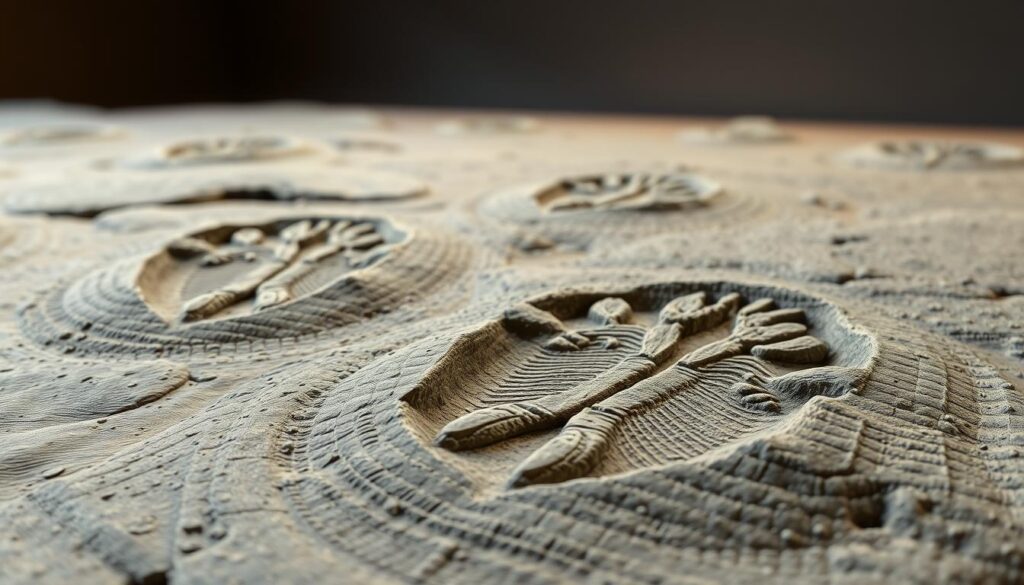
Virtual paleontology lets us see dinosaur footprints in their original place. This gives a deeper understanding of these fossils. It also helps test theories and explore different scenarios, revealing more about dinosaurs.
Using digital tools, we can share dinosaur footprints with more people. Virtual exhibitions and online platforms make learning fun and interactive. They let everyone explore and learn about dinosaur footprints in a new way.
Future of Dinosaur Footprint Research
The study of dinosaur footprints is growing with new tech and methods. We can expect to learn more about these ancient creatures soon.
New tools like 3D scanning and digital modeling are changing how we study dinosaur footprints. These tools help us analyze and keep these prints safe in more detail.
Scientists from different fields are working together too. This mix of paleontology, geology, and biology helps us understand dinosaurs better. It gives us a clearer picture of their behavior and where they lived.
With each new find and better methods, we’ll learn even more about dinosaur footprints. This will give us a closer look at the lives of these fascinating ancient animals.