







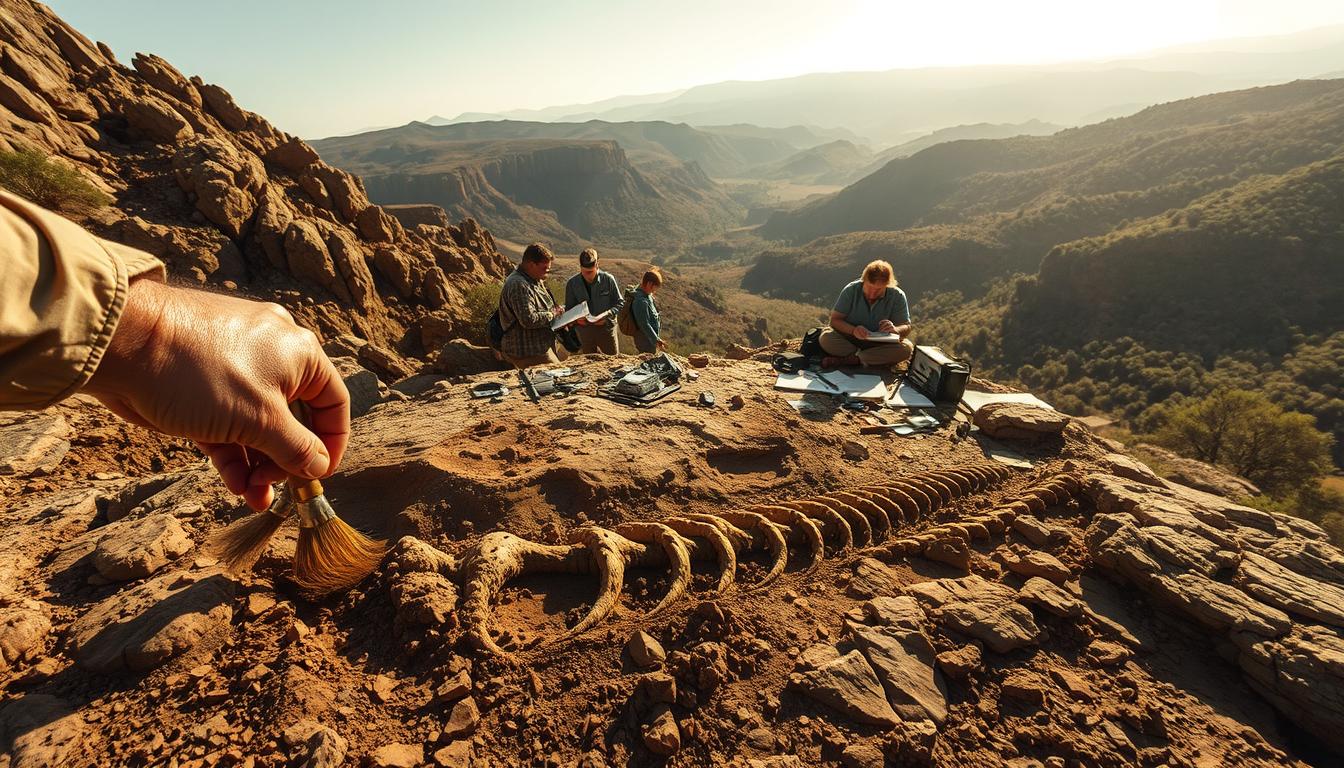
Starting a fossil hunting journey is exciting, giving a peek into the Earth’s past. For those who love history, finding shell fossils in rock formations is thrilling.
Fossil hunting is vast and interesting, with many places worldwide to explore. This guide covers the basics of finding fossils in rocks. It includes the best places to look and how to spot your finds.
Whether you’re an experienced collector or just starting, this article aims to deepen your knowledge. It helps you appreciate the ancient treasures in rock formations.
Understanding Shell Fossils: What Are They?
Shell fossils are the remains or traces of ancient sea creatures. They give us a peek into Earth’s past. These fossils help us understand how life evolved on our planet.
Formation of Shell Fossils: Fossilization is a complex process. First, the shell must be buried fast to avoid decay. Then, as more sediment piles up, minerals replace the shell, creating a fossil.
Types of Shell Fossils: Shell fossils come from different sea creatures like mollusks and ammonites. Each type tells us about the past marine ecosystems.
Shell fossils are not just for scientists. They also captivate collectors and history buffs. They offer a direct link to Earth’s ancient times.
Significance of Shell Fossils: Shell fossils help scientists learn about ancient environments and evolution. They also shed light on Earth’s climate history. This makes them a key resource for researchers and a captivating topic for natural history enthusiasts.
Common Locations for Finding Shell Fossils
Shell fossils are a window into the past. The UK is full of sites where you can find these ancient treasures. Its varied landscapes make it perfect for fossil hunting.
The UK’s coastline is rich in fossil sites. The Jurassic Coast is a top spot for finds. It runs from East Devon to Dorset, known for its history and fossils.
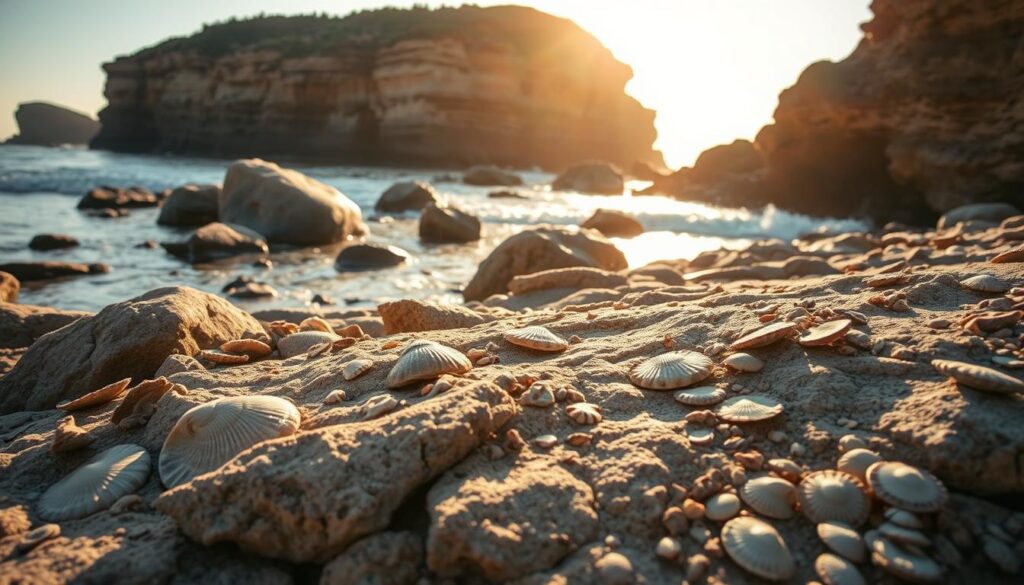
The Isle of Wight is famous for its Cretaceous fossils. Its beaches and cliffs are great places to find fossils, thanks to the sea.
Yorkshire is also known for its fossil history. Whitby and Scarborough’s coastlines are full of Jurassic fossils. The area’s geology, with limestone and shale, helps fossils form.
When looking for shell fossils, watch for exposed rock and tidal areas. The sea’s movement can reveal new finds. Always follow local rules before collecting fossils, as some places are protected.
Whether you’re new to fossil hunting or experienced, the UK has lots to offer. Its varied landscapes are full of opportunities to explore the world of shell fossils.
Tools Needed for Fossil Hunting
To start fossil hunting, you need the right tools and safety gear. The right tools make the hunt better and keep you safe.
Before you go, think about the terrain and the fossils you might find. Sturdy walking boots are key. They support your feet on different landscapes.
A rucksack is also important. It lets you carry everything comfortably. Make sure it’s big enough for your tools, safety gear, and any fossils you find.
Safety glasses protect your eyes from flying debris. Wearing gloves helps with grip and hand protection.
Choosing the Right Equipment
Choosing the right fossil hunting tools depends on the fossils and the place. A geologist’s hammer is essential for breaking up rocks to find fossils.
A hand lens or magnifying glass helps you see fossils up close. A chisel or awl is good for careful digging.
With the right equipment and safety gear, you’re set for a great fossil hunting adventure.
Best Times to Search for Fossils
Finding fossils depends a lot on when you go. You need to think about tide times and weather conditions. Knowing these can really help you find fossils.
The tide is very important. Low tide is the best time because more beach is exposed. This means you might find hidden fossils. So, it’s key to check tide times before you go. You can find this info on websites and apps.
Weather conditions matter too. Storms or heavy rain can uncover new fossils. But, it’s important to stay safe during these times. Don’t go out when the weather is really bad.
Also, think about the time of day. Early morning or late afternoon are good. The light is better, making it easier to see fossils.
In short, planning your fossil hunt well can really help. Look at fossil hunting times, including the best tide times and weather conditions. Always check the latest weather forecast and get ready for your adventure.
How to Identify Shell Fossils
Identifying shell fossils means looking at their features and matching them to known fossils. These fossils are the remains or prints of old shells saved over time. To spot them, look for special traits like ridges, growth lines, and other shapes.
Growth lines are a key sign of shell fossils. They show how the shell grew and what the environment was like. The shell’s shape, size, and patterns also help figure out what kind of fossil it is.
“Fossils are the most significant and authentic source of information about the history of life on Earth.”
Common Types of Shell Fossils
Some common shell fossils come from bivalves, ammonites, and brachiopods. Bivalves have a two-part shell that opens and closes. Ammonites have a spiral shape. Brachiopods have a unique shell with a hinge at the back.
Knowing these traits is key for anyone into shell fossil identification. By studying the fossil’s features and comparing them, we learn about Earth’s past and the variety of life long ago.
The Process of Fossil Excavation
Fossil excavation is a careful process that needs patience, skill, and the right methods. It’s about gently taking fossils out of the rock to keep them safe for study or display.
First, find a place where fossils might be found. Look for areas with exposed rock that might have fossils. After picking a site, careful planning and preparation are key to avoid harming the fossils.
How you dig out fossils depends on the rock and the fossil itself. For soft sediment fossils, you might just brush and wash them. But for harder rock fossils, you might need specialized tools like chisels, hammers, and rock saws.
One big challenge is not damaging the fossil when you remove it. You need to handle it gently and use the right materials to support it as it’s uncovered.
Once the fossil is out, it might need to be consolidated and stabilized to keep it from getting worse. This can mean applying special materials to make the fossil stronger and protect it from the environment.
Good fossil excavation needs both technical skills and respect for the fossils’ importance. By using careful methods and taking the right steps, fossil hunters can keep these important finds safe for others to see in the future.
Documenting Your Finds
Documenting fossils is more than just keeping a record. It’s about saving history. When you find a fossil, you’re uncovering a piece of the past. You also have a role in making sure it’s valuable for the future. Proper documentation means recording details and taking photos from different angles.
To begin, record the location where you found the fossil. Include GPS coordinates if you have them. Also, note the date, time, and any geological information about the site. This info is key for scientists studying your find.
Take detailed notes about the fossil. Mention its size, color, and any unique features. Photographing fossils needs patience and detail. Use good lighting and a macro lens for fine details. Take photos from various angles and include a scale or object for size reference.
After documenting, think about sharing your discovery. Many institutions want to learn about new fossils. Sharing your work helps us understand the fossil record better.
Joining Fossil Hunting Groups
Joining a fossil hunting group can really boost your experience. These groups let you meet others who love fossils, learn new things, and get tips from experts.
Being in a group means you can find new places to hunt for fossils. They often go on trips together. This way, you can see new spots and share what you find.
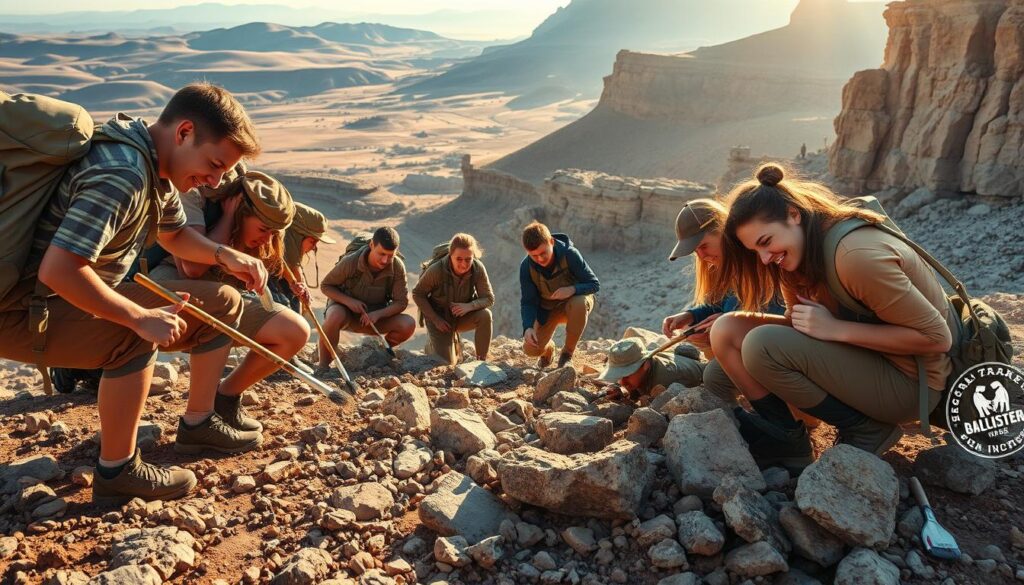
Being part of a fossil hunting community is very rewarding. You get to share your love for fossils, learn from others, and help the group grow. It’s great for both newbies and seasoned hunters.
There are many perks to joining a fossil hunting group. You’ll get better at hunting, meet new people, and find new places to explore. So, if you want to improve your fossil hunting, join a group today.
The Science Behind Fossil Formation
Fossils are not just old remains; they are also keys to Earth’s past. The process of fossil formation is detailed and involves many steps. These steps take thousands to millions of years to complete.
The journey of fossilization starts when an organism dies and gets buried quickly. This burial shields it from decay-causing factors like oxygen. As more layers of sediment pile up, the pressure grows, turning the sediment into rock.
To form a fossil, certain conditions must be met. The organism must have hard parts, like bones or shells, to be preserved. The area must also be ready for fast burial, and the sediment must protect the remains.
Also, the chemical environment must support the replacement of organic material with minerals. This process is called permineralization or petrification.
The science behind fossils also explores different fossilization methods. These include impression, compression, and replacement. Each method offers unique views into Earth’s life history. By studying fossils, scientists gain insights into species evolution, past environments, and extinction causes.
In summary, fossil formation is a complex and intriguing process. It needs specific geological and chemical conditions. Knowing about the fossilization process helps us value fossils and the history they reveal.
What to Do with Your Fossil Collection
Now that you have a fossil collection, it’s time to figure out how to display and preserve them. Storing them right is key to keeping them in good shape.
Displaying your fossils can be a fun and creative activity. Use acid-free materials to make a display case that keeps your fossils safe. A shadow box or glass case is great for showing off your favorite fossils. It protects them and adds beauty to your space.
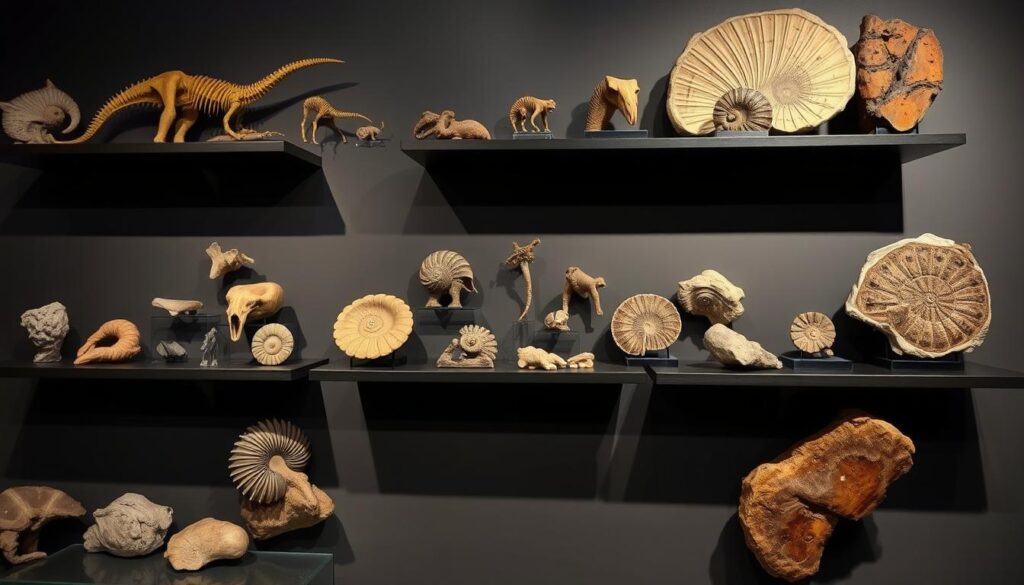
Preserving fossils needs careful handling and storage. Keep them in a cool, dry spot, away from sunlight. Using archival-quality storage materials helps prevent damage and keeps them from deteriorating.
If you’re serious about your collection, think about getting professional help. Conservation or restoration services can fix damaged fossils. This way, they’ll stay in great shape for a long time.
By taking the time to display and preserve your fossils, you can enjoy them for years. Whether you’re a seasoned collector or just starting, the joy of fossil hunting is in the hunt and in preserving your finds.
Shell Fossils in Popular Culture
Shell fossils have been symbols and motifs in art and literature for ages. Their unique shapes and historical importance have drawn artists and writers. This has led to their use in many cultural expressions.
Artistic Representations: Artists have long been fascinated by shell fossils. They see them as symbols of the past and the unknown. These fossils are often used in sculptures, jewelry, and other decorative items. They highlight their beauty and cultural importance.
Literary Works: In books, shell fossils are used as metaphors or symbols. They add depth and meaning to stories. They can represent themes like time passing, nature’s power, or the link between past and present. Authors use them to share complex ideas in a visually appealing way.
In popular culture, shell fossils inspire creativity. They appear in movies, TV shows, and music. They evoke wonder or a connection to nature. Their lasting presence in popular culture shows their timeless appeal.
Looking at shell fossils in art and literature helps us understand their cultural value. They continue to captivate people worldwide. Whether as a symbol, motif, or decoration, shell fossils hold a special place in our culture.
Resources for Further Exploration
To dive deeper into the world of fossils, there are many resources to explore. The Smithsonian Institution’s website is a great place to start. It has lots of info on finding and identifying fossils.
Local museums are also a treasure trove of knowledge. They offer expert advice and have amazing fossil collections. For example, the Natural History Museum in New York hosts cool fossil exhibits and events.
If you want to meet other fossil fans, joining online forums or local groups is a good idea. You can learn a lot and find new places to hunt for fossils.
Using these resources can really help you understand fossils better. It will also make your fossil hunting adventures even more exciting.