







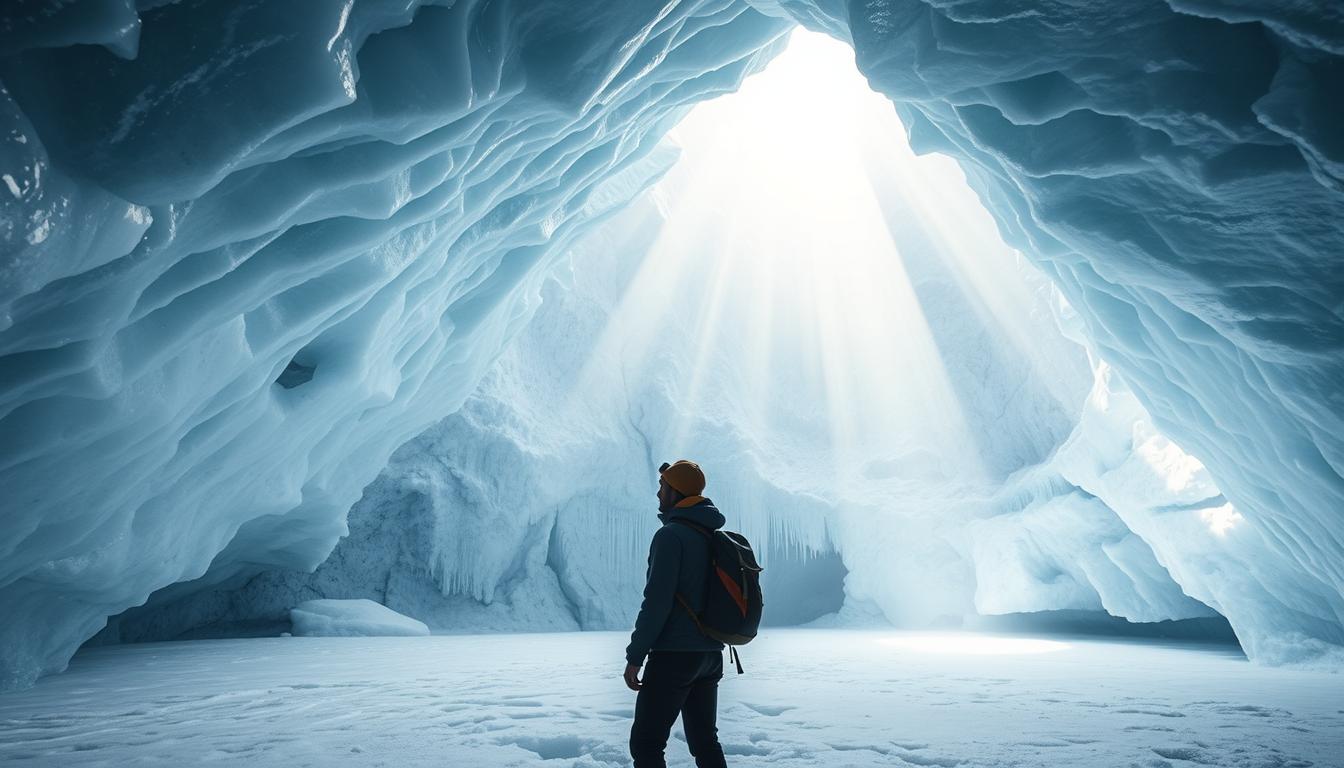
We’d been walking underground for hours, with only our headlamps lighting the way. Then, we turned a corner and saw something amazing. A huge, shining ice cave stretched out before us, its walls and ceiling covered in ice.
Seeing an ice cave is an adventure unlike any other. It gives us a peek into a world hidden beneath our feet. These wonders are created by the incredible power of nature, inside a glacier.
As we explore these icy places, we feel the excitement of cave exploration. We move through icy tunnels and caverns, places few have seen.
What Are Ice Caves?
An ice cave keeps ice all year, no matter the season. This happens because of special geological and climatic conditions. These conditions help ice form and stay.
An ice cave, also known as a glacier cave, is a hole in a glacier or ice. Ice caves form when glaciers move and melt. This melting can be due to heat from the earth or the glacier’s movement.
To be called an “ice cave,” a cave must stay cold enough for ice all year. This usually happens in caves where it’s always below freezing. The cave’s shape, height, and insulation from ice or snow help keep it cold.
Knowing about glacier caves helps us understand ice caves better. Glacier caves change with the glacier and the weather. They show us how glaciers work and how climate change affects them.
In short, ice caves are special places that need certain conditions to exist. Studying them is not only interesting but also helps us learn about the earth and climate.
Locations of Notable Ice Caves in the U.S.
The U.S. is home to many amazing ice caves. They can be found in Montana’s mountains and Alaska’s glaciers. These places draw in adventurers and nature lovers, showing off the country’s stunning landscapes.
Ice Caves in Montana are a big draw, with their beautiful formations and unique scenery. In Montana’s mountains, you can see ice walls and frozen lakes. Guided tours let you learn about these caves and how they were made.
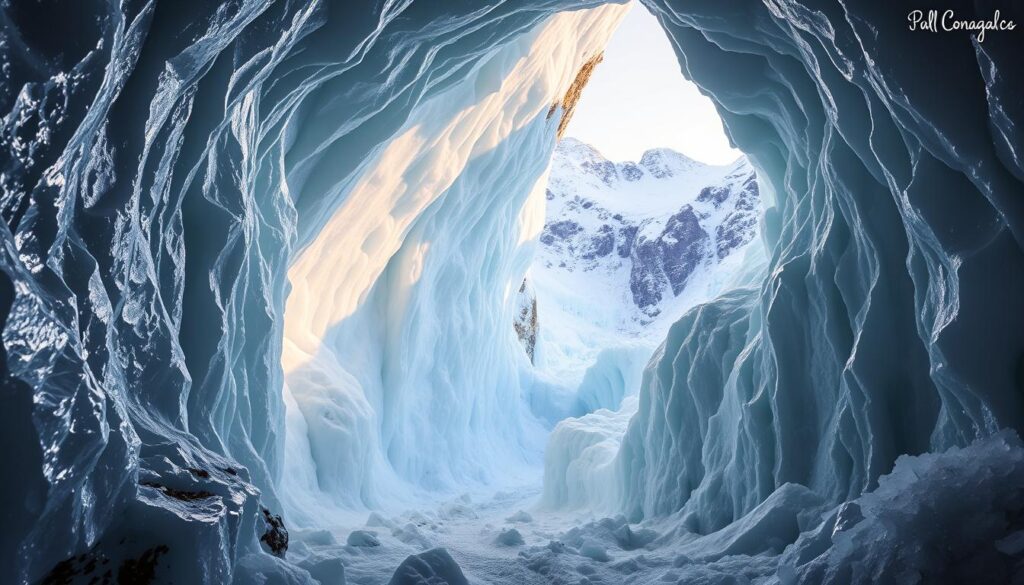
In Alaska, the Kennicott Glacier has some of the most stunning glacier caves. These caves are made by the glacier’s movement, creating beautiful ice shapes. But, you need a guide to see them because they’re hard to get to.
The glacier caves in Alaska show off the state’s untouched beauty. They also teach us about how our planet changes. People who visit these caves are amazed by their size and beauty.
Exploring ice caves in the U.S. is a special experience. You can learn about science or just enjoy the beauty. From Montana’s rugged lands to Alaska’s glaciers, each cave has its own story.
The Science Behind Ice Formation in Caves
Caves with ice are not just beautiful sights but also interesting to scientists. They form under special conditions, like cave temperature and air density.
The cave’s temperature is key for ice to form. It needs to be at or below freezing. This happens in caves with entrances that let cold air in and stay cold.
Role of Air Density
Air density is very important for ice caves. Cold air is heavier than warm air, so it falls. This helps ice caves form and stay cold.
“The denser the cold air, the more it tends to sink, which is a key factor in the formation and maintenance of ice within caves.”
Looking at air movement in caves helps us understand ice caves better. Cold air flows in through the entrance in winter. It’s heavier, so it goes to the cave’s bottom. This creates a cold spot that stays cold even when it’s warmer outside.
Learning about ice caves shows how complex and beautiful nature is. As we study ice caves, we appreciate the world’s wonders more.
Importance of Ice Caves in Ecosystems
Ice caves are home to fascinating and fragile ecosystems. They rely on specific conditions to survive. Inside these caves, unique biological communities thrive in the cold, stable environments.
Unique Species and Conditions: The cold, stable conditions in ice caves support psychrotolerant organisms. These include certain bacteria and fungi. They play key roles in their ecosystems.
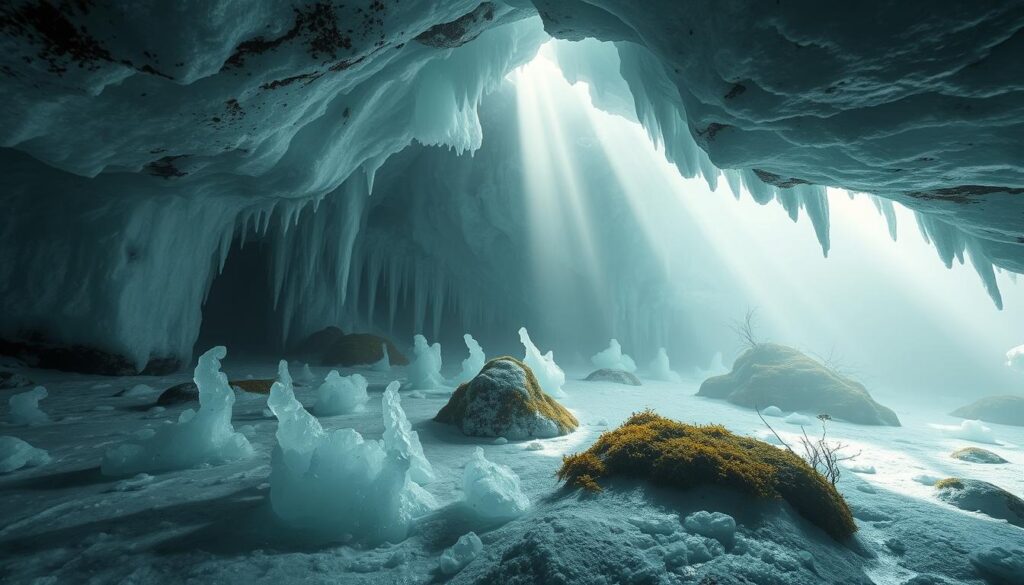
“Ice caves are ecosystems that are highly sensitive to environmental changes, making them important indicators of climate change.”
This sensitivity shows why we must protect these unique environments. Conservation efforts are essential.
Ice caves also help the surrounding ecosystems. They create cold microclimates that support various plants and animals. Saving these caves is vital for the ecosystems inside and the overall ecological balance.
Preservation and Conservation: To conserve ice caves, we must protect them from human impacts. This includes pollution, tourism, and climate change. Preserving ice caves helps protect the unique species and conditions they support.
Adventure Activities in Ice Caves
Ice caves are a playground for thrill-seekers. Caving, or spelunking, is a favorite activity. It lets explorers move through icy passages and chambers.
Exploring ice caves is more than just walking. It’s an immersive adventure that needs preparation and a sense of adventure. Many caves offer guided tours for safe exploration. These tours share insights into the caves’ geology and history.
Adventure activities in ice caves vary. They range from simple exploration to challenging caving expeditions. For the bold, some caves allow ice climbing or rappelling down icy walls.
Exploring ice caves is an unforgettable experience. The mix of adventure and natural beauty makes them a top spot for outdoor lovers.
Ice caves offer something for everyone, whether you’re an experienced caver or seeking a new adventure. Their unique landscapes and thrilling activities make a lasting impression on visitors.
Safety Tips for Exploring Ice Caves
Exploring ice caves is an exciting adventure. But, it’s important to plan and prepare carefully for a safe trip. Knowing the environment you’ll enter is key to ice cave safety.
Ice caves are dangerous because of their slippery floors, falling ice, and risk of avalanches. So, wearing the right gear is vital. This includes crampons, helmets, and ropes to stay safe.
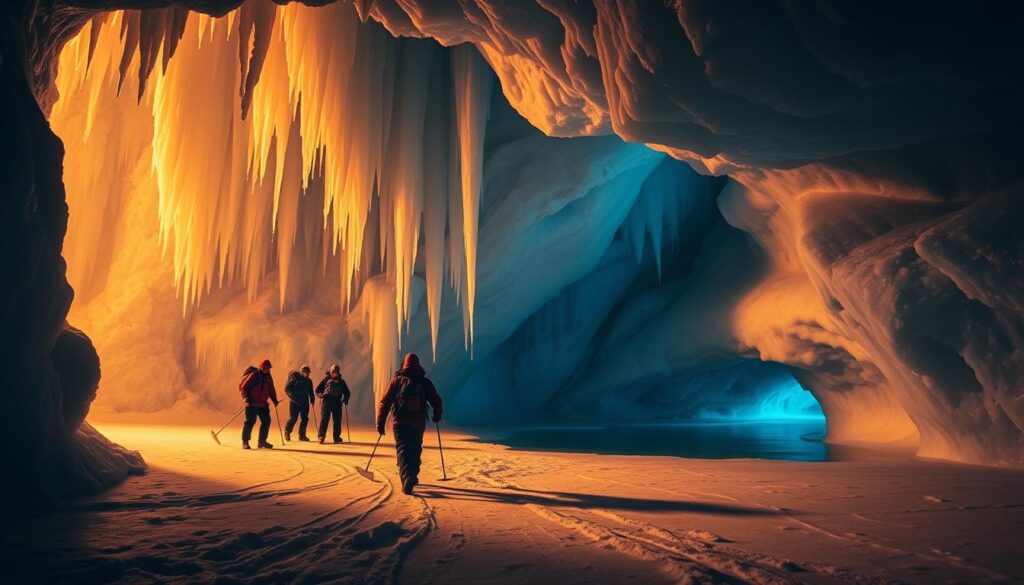
Having a certified guide for your ice cave trip can greatly improve your caving safety. Guides know the cave’s dangers and the safest paths. They also share interesting facts about the cave.
Guided tours are great for beginners. Guides check your skill level and adjust the tour. This ensures a fun and safe experience for everyone.
“The right guide can make all the difference between a good adventure and a bad one. They know the terrain, the risks, and how to mitigate them.”
With the right preparation, gear, and guide, you can enjoy a safe and memorable ice cave adventure.
How to Prepare for Your Ice Cave Visit
Getting ready for an ice cave visit means planning, research, and getting in shape. Knowing what to expect is key for a safe and fun trip. It’s important to understand the environment and challenges of ice cave exploration.
Physical conditioning is a big part of preparation. Ice caves can be tough because of tight spaces, climbing, and uneven paths. Being in good physical health is a must for this adventure.
Physical Conditioning
Ice cave trips need a good level of fitness. You’ll walk a lot and might crawl through narrow spots. Regular exercise, like cardio and strength training, boosts your fitness for caving.
Experienced cavers say, “Don’t underestimate the physical challenge of caving. Good training and conditioning greatly improve safety and fun.”
“Caving is not just about walking; it requires a full-body workout, including strength, endurance, and agility.”
Having the right gear and equipment is also essential for a safe ice cave visit. You’ll need the right clothes, helmets, headlamps, and shoes. Make sure all your gear is ready and right for the adventure.
By focusing on getting in shape and preparing well, you’ll have a safe and enjoyable experience in the ice caves. Researching the cave, understanding the terrain, and knowing hazards are also important.
Photography in Ice Caves
Ice cave photography is both challenging and rewarding. The beauty of ice caves draws many photographers. But, capturing their essence requires careful planning and technique.
One big challenge is the low light. Ice caves are dimly lit, making it hard to get clear images. Photographers need to use long exposure times or artificial lighting to brighten their shots.
Despite the hurdles, ice cave photography offers many opportunities for creativity. The caves’ unique formations and colors create a surreal setting. Caving photography here allows for capturing rare and stunning images.
To capture ice caves’ beauty, photographers should plan well. Research the cave’s conditions and prepare your gear. Using a tripod helps stabilize the camera for long shots, avoiding blurriness.
Photographers should also be careful not to damage the cave. Being respectful and prepared helps capture the magic of these wonders. This way, we can preserve them for the future.
Conservation of Ice Caves
Ice caves are fragile and face many threats that need urgent action. Their unique ecosystems are very sensitive to changes in the environment. This makes saving them very important.
The big environmental threats to ice caves are climate change, pollution, and human activities. Climate change is causing the ice to melt fast. Pollution and human actions can harm the ice and the cave itself.
Many efforts are being made to save ice caves. These include monitoring environmental conditions inside the caves. Also, steps are being taken to lessen human impact and raise awareness about their importance.
Conservation groups and local communities are teaming up. They are working on ways to visit ice caves without harming them. This includes limiting access to sensitive spots, educating visitors, and studying how climate change affects ice caves.
By preserving ice caves, we protect unique natural wonders. We also help save ecosystems. It’s a big job that needs everyone’s help. Governments, conservation groups, and the public must work together to tackle these challenges.
Myths and Legends About Ice Caves
Ice caves have always fascinated people, sparking many myths and legends. These natural wonders have captured our imagination. They are often linked to mystical and supernatural beliefs.
In many cultures, ice caves are seen as sacred or spiritual places. Their unique beauty has inspired stories about their origins and importance. For example, some tales say ice caves are homes to ancient gods or gateways to other worlds.
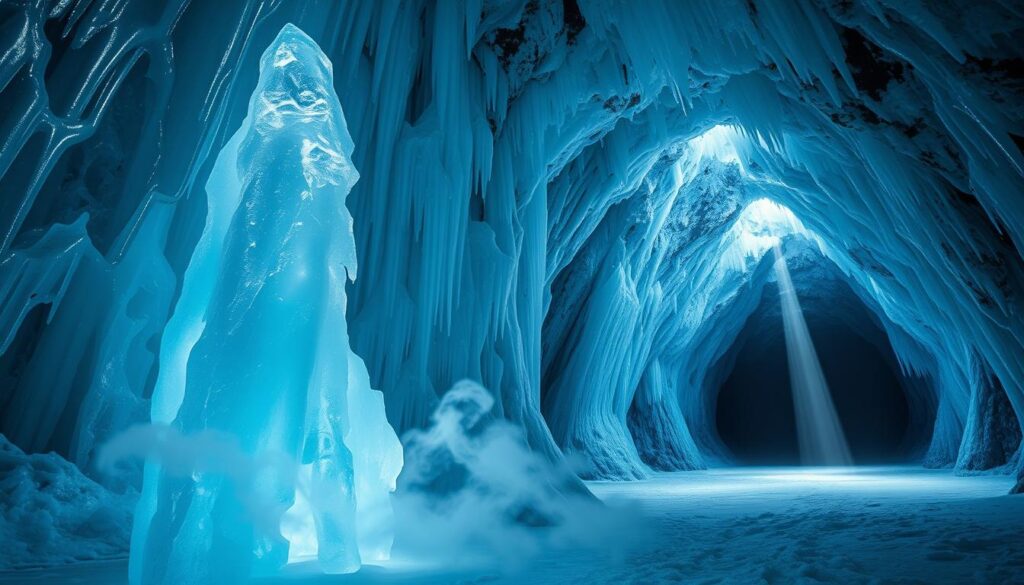
The cultural significance of ice caves is clear in local folklore and tales. These stories show our awe and respect for these formations. They also highlight the need to protect these sites for the future.
Exploring myths and legends about ice caves helps us understand our connection to them. This connection is based on our deep appreciation for their beauty and mystery. It shows why we must work to preserve them.
Future of Ice Caves
As the world faces climate change, ice caves are at risk. These natural wonders are found worldwide. They are not just beautiful sights but also vital to the environment.
The impact of climate change on ice caves is complex. Rising temperatures melt ice caves faster than ever. This danger not only threatens the caves but also harms the ecosystems around them.
It’s essential to save ice caves for the future. We need to reduce our carbon footprint and support green policies. By doing so, we can help these wonders survive.
The fate of ice caves highlights the big challenges of climate change. It urges us to act together for a greener future.
Conclusion: The Magic of Ice Caves
Ice caves are a true marvel, blending natural wonders with adventure. They amaze us with their beauty and teach us about the earth’s secrets. These icy spots are not just pretty; they hold clues to our planet’s health.
Visiting ice caves is an adventure like no other. It’s a mix of excitement and peace. Walking through icy tunnels, surrounded by blue ice, is a memory you’ll always treasure.
Ice caves are more than just pretty sights. They are vital to local wildlife and show us how the environment is changing. Keeping these places safe is key to protecting our planet’s diversity and learning about climate change.
As we explore ice caves, we must do it with care and respect. This way, we can keep their magic alive for others to see and enjoy in the future.