







Looking into historical news through old newspapers is a thrilling trip back in time. These vintage papers give us a peek into local history, big events, and our ancestors’ lives. They are key for genealogy research.
The Library of Congress’s Chronicling America database is a goldmine for history buffs and researchers. It lets us see historic newspaper pages from 1756 to 1963. By exploring these archives, we can find forgotten tales, grasp the background of historical happenings, and learn about the everyday lives of people long ago.
Uncovering the past through old newspapers deepens our grasp of history and connects us to our roots. Whether you’re into history, genealogy, or just love to learn, these resources are a great way to dive into and appreciate the past.
Understanding the Value of Old Newspapers
Old newspapers offer a peek into the past, showing us historical events and daily life back then.
They are key to understanding local history. They tell us about big events, social changes, and cultural shifts that have shaped communities.
Thanks to Google News Archive Search and Newspapers.com, finding these historical gems is easier. These news archives help researchers and fans dive deep into history.
Old newspapers give us a close look at historical events as they happened. They offer a fresh view, with eyewitness stories and quick reactions to news.
But they’re not just about big news. They also show us what life was like every day. Advertisements, for example, tell us about products, marketing, and social norms back then.
For those into local history, old newspapers are a goldmine. They have local news, events, and announcements that help us understand a community’s growth and character.
In short, old newspapers are full of details about both big historical events and everyday life. By checking out these news archives, we can learn more about the past and how it connects to today.
Types of Content Found in Old Newspapers
Old newspapers are a goldmine for those into genealogy or history. They contain birth and death notices. These are more than old items; they open doors to the past, showing us historical events, cultural norms, and personal stories.
Old newspapers have a wide range of content. News articles share insights into past events. Ads give us a peek into what life was like back then. But for genealogists, the personal notices section is the most valuable.
Birth and Death Notices
Birth and death notices are key for genealogy research. They give names, dates, and places, helping to build family histories. A leading genealogy expert says, “Newspapers are a vital resource for genealogists. They offer a wealth of information to trace family lines and understand historical contexts.”
Looking at old newspapers, pay close attention to the personal notices section. Birth notices share info on newborns, like names and parents’ details. Death notices or obituaries tell us about the deceased, their survivors, and achievements.
By studying these notices, researchers can build family histories and understand their ancestors’ lives. Old newspapers are a treasure trove of personal and historical data for anyone doing genealogy research.
Researching Your Local History Through Newspapers
Old newspapers give us a unique window into the past. They offer insights into local history that are both informative and captivating. For those who want to understand their local community’s evolution, these archives are priceless.
Examining old newspapers is a key way to research local history. Local events like festivals, parades, and big community gatherings are detailed. These events show the culture and traditions of the area and give a glimpse of life back then.
Announcements in old newspapers are also a treasure trove of information. They include marriage announcements, birth notices, and community news. These give a personal and human touch to history. By looking at these announcements, researchers can learn about the community’s social fabric.
Resources like Chronicling America and Google News Archive Search offer access to local newspapers from all over the United States. These databases are key for anyone exploring local history. They have a huge collection of newspapers to search for what you need.
When digging into local history through newspapers, it’s important to know what you’re looking for. Whether it’s details on a specific event, the growth of local infrastructure, or a family’s history, old newspapers have a lot to offer. They provide information that might be lost forever.
By using these historical resources, people can piece together their local community’s past. They gain a deeper understanding of the events and people that have shaped their area into what it is today.
How to Read an Old Newspaper Effectively
Reading old newspapers requires understanding the time they were written in. Historical context is key to grasping their content. It shows us the events, culture, and norms of the era.
It’s important to get used to the old newspaper terminology from that time. Words and phrases used then might not be familiar today. They could even have different meanings now.
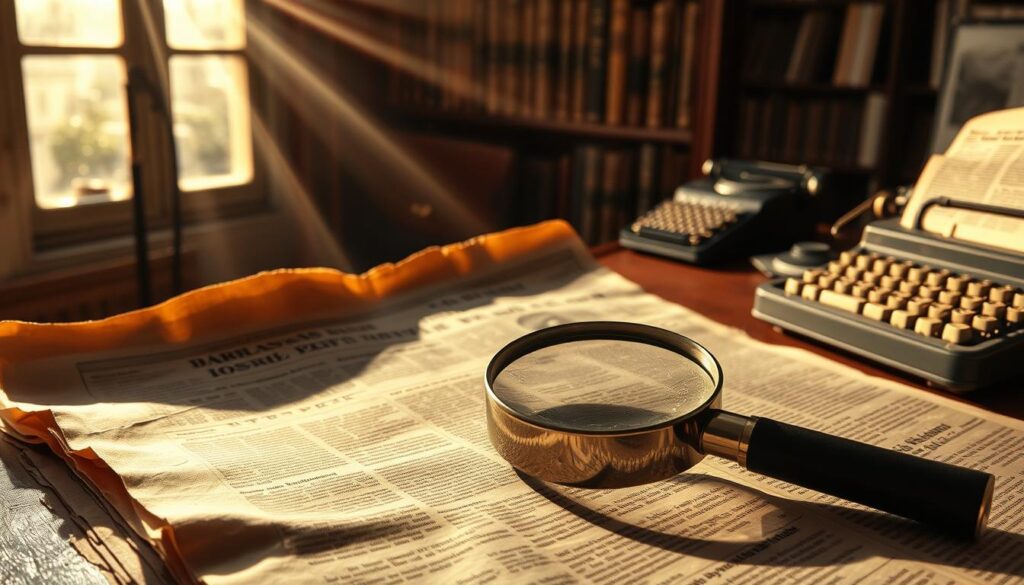
To read an old newspaper well, first find out when it was published. Knowing the big events around that time helps you understand the news, ads, and other content.
Also, notice the language and tone in the articles. The style and topics covered give us a peek into the past.
By using these methods, you can uncover the rich information in old newspapers. You’ll get a better grasp of history.
Tips for Preserving Old Newspapers
Keeping old newspapers in good shape is key. They are precious for historians and the public. They offer a peek into the past and help us understand big events.
When handling old newspapers, be gentle. Always wear gloves or wash your hands before touching them. This stops oils from your skin from harming the paper. Try to hold them by the edges or corners to avoid touching the printed parts too much.
Where you store them matters a lot. Keep them in a cool, dry spot, away from sunlight. Sunlight can make them fade and wear down. The best place is a room with controlled climate and low humidity.
Use acid-free stuff like folders and boxes for storage. This stops damage from acidic reactions. You can store them flat or rolled. Rolling is safer because it lowers the chance of creases and damage.
Also, keep them away from pollutants and pests. A clean, dust-free storage area helps a lot. For extra safety, think about digitizing them. This way, you have a backup and handle them less.
Utilizing Old Newspapers for Genealogy Research
Old newspapers are a treasure trove for those digging into their family history. Genealogy research is a journey filled with surprises, and newspapers can reveal a lot about our ancestors. They offer a glimpse into the past, helping us understand our roots better.
Newspaper archives hold a wealth of information. You’ll find news articles, obituaries, marriage announcements, and ads. These can help trace ancestors and give insight into their lives during historical times.
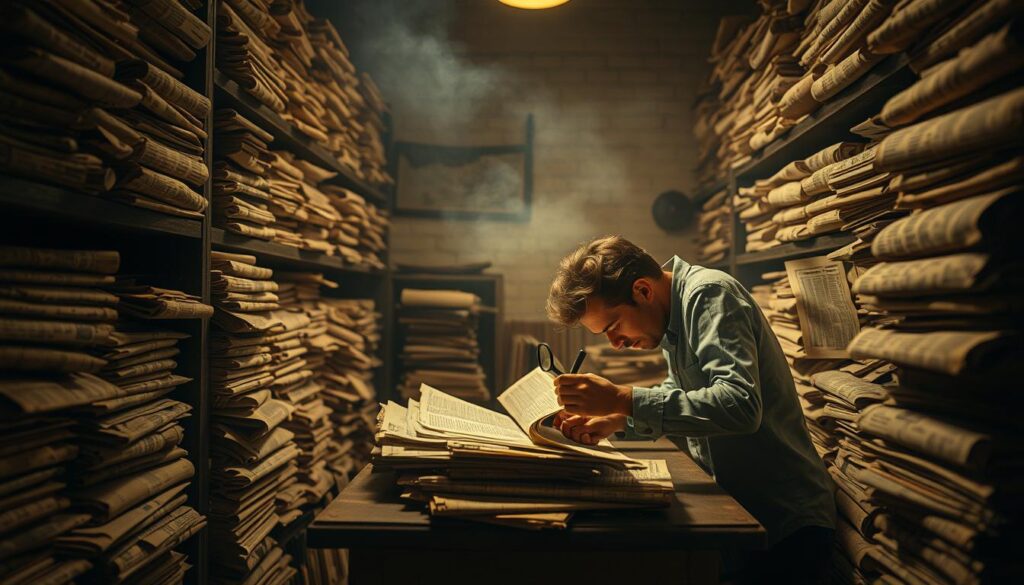
When you’re researching your family, don’t overlook local newspaper archives. They often have details not found elsewhere. Old newspapers can show us what our ancestors faced and achieved in their daily lives.
Newspaper archives also give a deeper look at historical events. They show how these events affected families and communities. This makes family history more interesting and personal.
To get the most out of old newspapers for genealogy, search archives carefully. Note down important findings and compare them whenever you can. This way, you’ll uncover more about your ancestors.
Where to Find Old Newspapers
Looking for old newspapers can take you to many online archives and local libraries. Thanks to digital technology, finding historical newspapers is now easier than before.
Online archives are a key place to start. Sites like Chronicling America, Google News Archive Search, and Newspapers.com have huge collections. You can search for articles, events, or dates from anywhere.
Local libraries are also great for finding old newspapers. They often have archives of local and national papers, both in print and digital. Checking out a library or contacting them about their collections can be very helpful.
Both online archives and libraries offer great access to old newspapers. They help researchers, historians, and anyone curious about the past. Using these resources, you can find a lot of historical information.
Analyzing Advertisements in Historical Newspapers
Looking at ads in old newspapers helps us understand how consumer culture has changed. It shows how ads have shaped our society. These ads give us a peek into the past, showing what people liked and how ads were made.
Historical advertisements are more than just old ads. They tell us about the past, showing how businesses reached out to people. For example, ads from the early 1900s show the rise of new products and mass production’s impact on daily life.
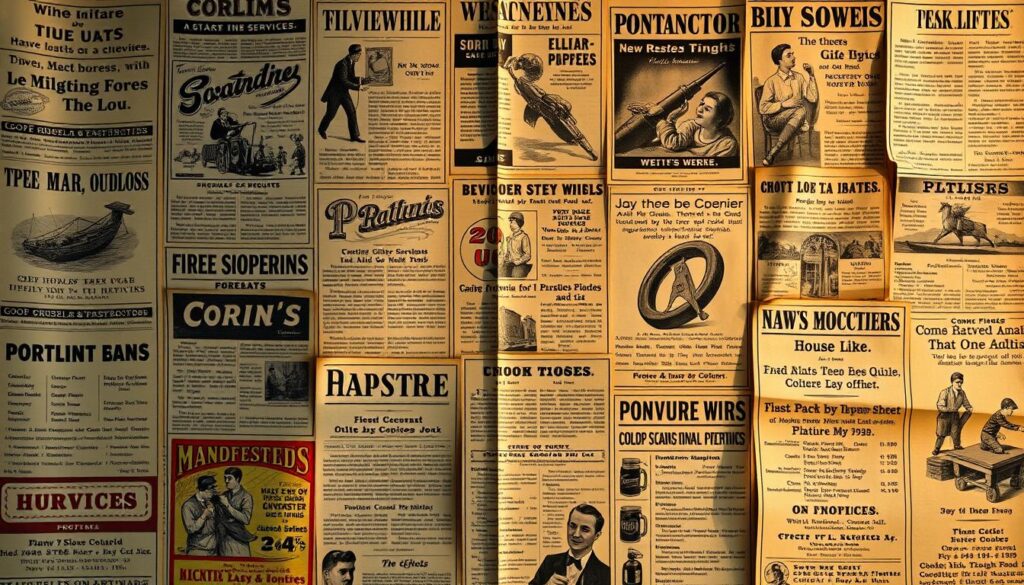
Studying advertising history through newspapers lets us see how social and cultural norms have changed. Ads can show us how people viewed gender, race, and technology back then. By looking at these ads, historians can paint a detailed picture of the past and its values.
Also, looking at old ads can teach us about the economy of the time. Ads during good times might show off fancy items, while ads in tough times might focus on saving money. This part of advertising history teaches us lessons for today’s marketers and historians.
In summary, studying ads in old newspapers is a fascinating field. It gives us a look into consumer culture, ad strategies, and the historical context. By examining these ads, researchers can better understand how societies have changed and how ads have influenced culture.
Ethical Considerations in Using Old Newspapers
Old newspapers are full of historical gems, but they raise important ethical questions. When we use them, we must think about copyright and privacy.
The copyright rules for old newspapers can be tricky. Many are not copyrighted anymore, but figuring out their status needs careful research. It’s important to remember that copyright laws differ by country. Some old newspaper content might even be copyrighted today.
Privacy is also a big issue. Old newspapers often have personal details that could be sensitive today. Researchers must find a balance between learning from history and protecting people’s privacy.
To handle these issues, researchers should follow best practices. They should check the copyright status of materials and be careful with personal info. This way, we can use old newspapers responsibly and with respect.
In summary, old newspapers are a valuable resource, but we must use them ethically. By understanding and dealing with copyright and privacy concerns, we can learn from history while respecting the law and people’s rights.
Crafting Stories from Old Newspaper Content
Historical newspapers are more than just old records. They open doors to creative storytelling. Writers can find endless inspiration in their pages.
Setting stories in the time of the newspaper is a great idea. Ads, articles, and weather reports add rich details. They take readers back in time.
An ad for a local business can show what life was like back then. A news article can set the stage for a dramatic story. Mixing these historical facts into your story makes it vivid and immersive.
Historical newspapers also spark ideas for characters and plots. A forgotten event or person can start a great story. The art of storytelling is bringing the past to life in a way that touches readers.
In short, historical newspapers are a treasure trove for writers. They offer a wealth of information for creative writing and storytelling. Writers can create stories that are both rooted in history and captivating.
The Role of Technology in Accessing Old Newspapers
The rise of digital technology has revolutionized how we look at old newspapers. No longer do we need to visit archives or libraries to find historical news. Now, we can easily access millions of newspaper pages online.
Digital archives play a key role in keeping old newspapers safe. They offer a stable and accessible place for these documents. For example, the Library of Congress’s Chronicling America database lets us see millions of pages from the 1800s for free.
Online platforms make searching through old newspapers easier. They have advanced search tools that help find specific articles quickly. This is great for genealogists and historians who need these resources for their work.
“The digitization of historical newspapers has opened up new possibilities for researchers, allowing them to explore historical events in unprecedented detail.”
But, there are challenges with digital archives. Issues like scan quality, collection completeness, and access rules can affect our experience. Yet, the benefits of digital technology in accessing old newspapers are huge. It’s a vital tool for anyone studying history.
As technology keeps improving, we’ll see even better digital archives and online platforms. These advancements will help us understand our past even more deeply.
Conclusion: The Ongoing Relevance of Old Newspapers
Old newspapers are a treasure trove for learning about history. They offer a glimpse into the past like no other. By studying these documents, we can understand important events and cultural shifts better.
These newspapers give us direct views of historical events. They help us see how the past connects to today. As technology improves, making these resources easier to find, their value in education and research will keep growing.
Looking into old newspapers helps us grasp history’s depth and its lasting effects on today’s world. So, these documents will keep being key for studying history and teaching it, for years to come.