
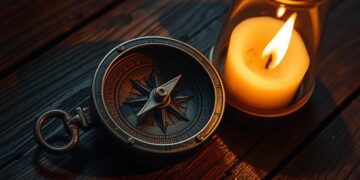






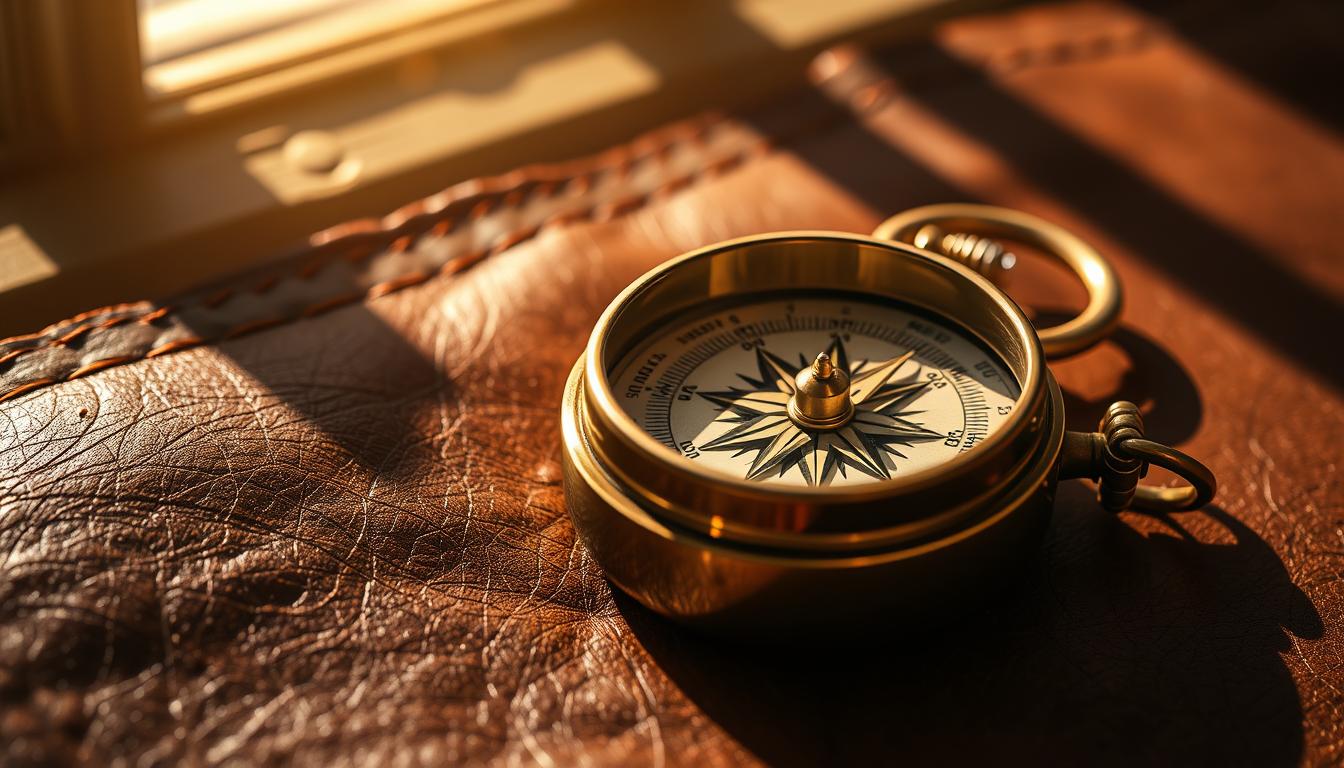
Navigating through unfamiliar terrain can be tough, but the right tools make it easier. A compass has been a trusted friend for outdoor lovers for centuries.
A compass helps with navigation and finding your way. It shows directions based on the cardinal directions. This makes it key for anyone exploring the wild.
With a compass, you can figure out where to go, even without landmarks. It’s a simple yet powerful tool. It helps you stay on track and reach your goal.
What is a Compass?
A compass is a simple yet powerful tool that shows direction based on the Earth’s magnetic field. It has a magnetic needle, a compass rose, and a direction-of-travel arrow.
The magnetic needle is key, as it points to the Earth’s magnetic north. This is because the Earth’s magnetic field acts like a giant magnet, guiding the needle.
The compass rose shows directions with cardinal points (north, south, east, and west) and degrees. It helps users understand the compass information better.
The direction-of-travel arrow is also important. It helps users figure out where they need to go. By aligning the arrow with their path and using the compass rose, they can navigate to their destination, following the magnetic north.
Types of Compasses
Compasses come in many forms, each for different needs. The right compass can greatly improve navigation, whether hiking, camping, or exploring. It’s important to choose the right one for your activities.
Baseplate Compasses
Baseplate compasses are very popular. They are simple and easy to use. They have a baseplate, a compass dial, and a direction-of-travel arrow. Baseplate compasses are great for beginners because they are easy to understand and use.
Lensatic Compasses
Lensatic compasses are more precise and used by professionals. They have a lens for accurate readings. Lensatic compasses are durable and accurate, making them a top choice for serious navigators.
Digital compasses use electronic sensors for precise directions. They also have features like data storage, altimeters, and thermometers. Digital compasses are versatile and convenient, perfect for tough environments.
Each compass type has its own benefits and is suited for different needs. Knowing these differences helps you choose the right compass for your navigation needs.
Understanding Magnetic North
When you use a compass, it’s key to know the difference between magnetic north and true north. Magnetic north is the direction towards the Earth’s magnetic field. True north is the direction towards the Earth’s geographic North Pole.
The gap between these two directions is called magnetic declination. Knowing magnetic declination is vital for precise navigation. It changes based on where you are. For example, in some places, magnetic north is east of true north, and in others, it’s west.
To adjust for magnetic declination with a compass, you need to make changes. You add or subtract the declination value from your compass reading. This depends on if magnetic north is east or west of true north in your area.
Let’s say you’re in a place where magnetic declination is 10 degrees east. You would subtract 10 degrees from your compass reading to find the true direction. If the declination is 10 degrees west, you would add 10 degrees.
Knowing and adjusting for magnetic declination helps you stay on track. It’s a key part of using a compass well, important for long trips or in places you don’t know well.
How to Read a Compass
To navigate with confidence, it’s key to know how to read a compass well. You need to understand its main parts: the compass dial and the magnetic needle.
The compass dial shows degrees and directions. It’s divided into 360 degrees. The cardinal directions (North, South, East, West) are clearly marked.
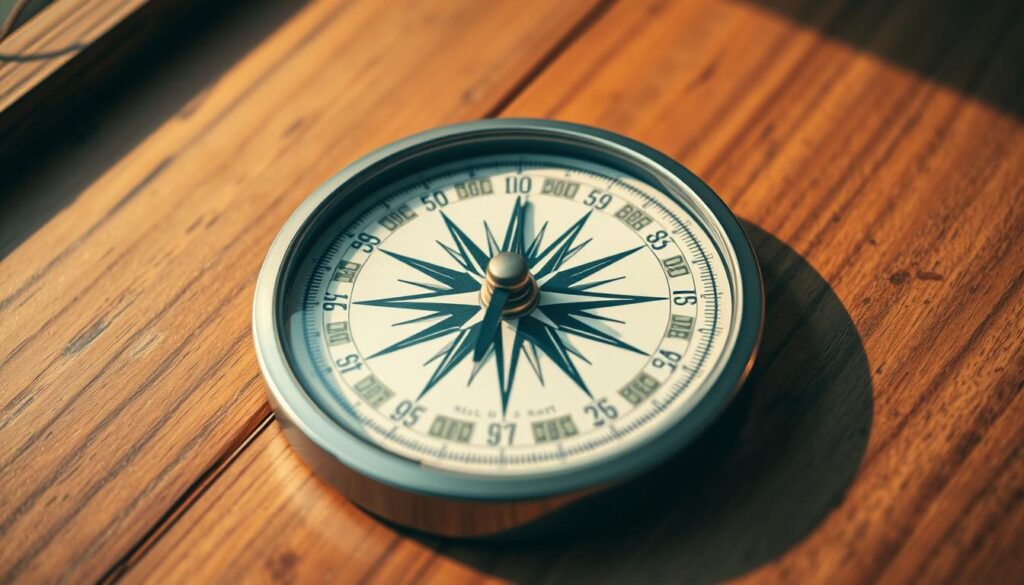
The magnetic needle is very important. It points to the Earth’s magnetic field, showing magnetic north. To read the compass, align the magnetic needle with the magnetic north indicator on the dial.
Here’s a simple guide to reading a compass:
Step 1: Hold the compass level and steady. Make sure it’s not near any magnets or metal.
Step 2: Turn the compass dial until the direction-of-travel arrow points to your destination.
Step 3: Line up the magnetic needle with the magnetic north indicator. Now, the direction-of-travel arrow shows where you need to go.
By following these steps, you can navigate with confidence in different places.
Using a Compass in Navigation
To navigate with a compass, you need to understand how it works. It’s not just about knowing the direction. It’s about using the compass to find your way and stay on course.
Taking bearings is key in compass navigation. You align the compass with your goal and read the direction-of-travel arrow. To take a bearing, hold the compass level and turn the bezel until the direction-of-travel arrow points towards your destination. Then, read the bearing from the degree markings on the bezel.
Following a course means keeping the direction the compass shows. It’s important to check your bearing often to stay on track. Using landmarks like rivers, mountains, or trails can help you verify your course and make adjustments as needed. A seasoned navigator says, “The key to successful navigation is not just in the tools, but in understanding the terrain and using it to your advantage.”
“Navigation is not just about reaching a destination; it’s about understanding where you are and where you’re going.”
Good navigation also means knowing your surroundings. This includes recognizing natural features to guide your journey. By combining compass readings with observational skills, you can navigate with confidence.
Mastering the skills of taking bearings and following a course lets you navigate confidently. Whether hiking, backpacking, or exploring, a compass is essential for finding your way.
Caring for Your Compass
Your compass is a vital tool that needs regular care to stay accurate. Keeping it in good shape ensures it works well when you need it. This care helps your compass last longer and gives you reliable readings.
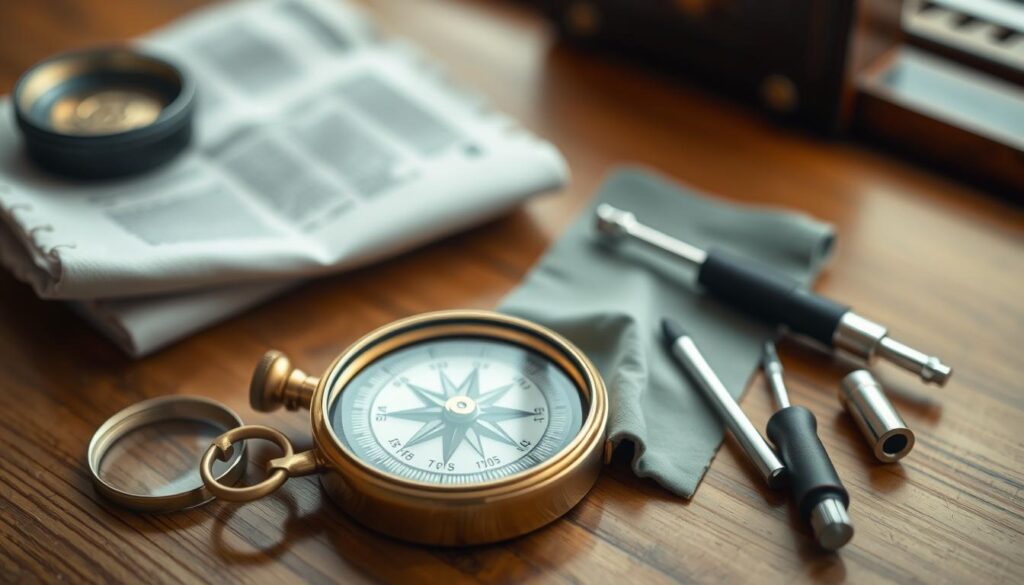
To keep your compass in top shape, keep it clean and dry. Water can harm the inside parts. If it gets wet, dry it with a soft cloth right away. Don’t use harsh chemicals or rough materials that could scratch it.
Storage is also key. Store your compass in a protective case or pouch to protect it from dust and damage. Keep it away from other metal objects to avoid magnetic interference.
Magnetic interference can mess with your compass’s accuracy. Stay away from things that can interfere, like electronic devices, metal jewelry, or other compasses. If you must use it near these, check its accuracy with another compass or a known bearing.
Do maintenance checks regularly. Look for wear or damage and make sure the bezel and dial work smoothly. If you find problems, follow the manufacturer’s advice or get it fixed by a pro.
Compass Navigation in Different Environments
Using a compass requires knowing your surroundings. It’s key for trekking, desert crossing, or mountain climbing. But, terrain and weather conditions can change how well it works.
In dense forests, seeing the sun or stars is hard. This makes a compass even more important. But, metal objects or electrical interference can mess with magnetic readings. So, take bearings carefully and check them often.
Open terrains like deserts or tundras are easier to navigate. Yet, weather like sandstorms or heavy snow can reduce visibility. Knowing how to use your compass with other methods, like dead reckoning, is very helpful.
Weather conditions greatly affect compass use. Near the poles, a compass might not point to magnetic north. Knowing how to adjust for these variations is key.
To navigate well, be flexible and prepared. Understand your compass’s limits and how the environment affects it. Also, learn to use it with other tools and methods. This way, your compass will always guide you, no matter the terrain or weather.
The Role of Technology in Navigation
Modern technology has changed how we navigate, using electronic compasses and GPS. It has made finding our way more efficient and accurate. Now, we don’t just rely on the traditional compass anymore.
An electronic compass has many benefits over the old compass. It’s more accurate and gives digital readings. These devices work well with GPS, making navigation easier.
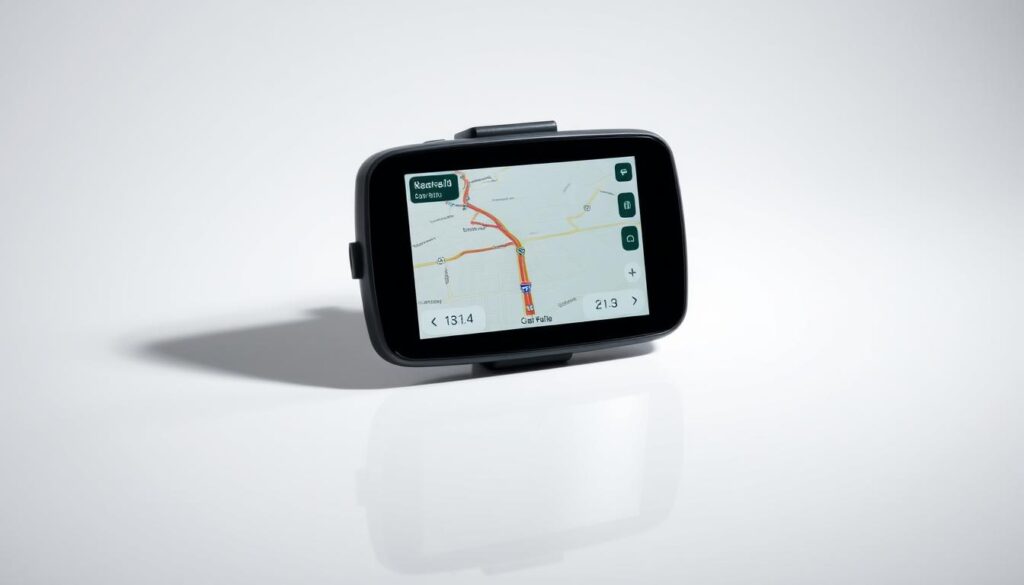
GPS (Global Positioning System) has changed navigation by giving exact location info worldwide. GPS devices are useful for many activities, like hiking and flying.
But, technology has its limits. For example, GPS signals can be blocked by trees or valleys. So, it’s important to know how to use these tools well. And always have a backup, like a traditional compass, ready.
In summary, technology has greatly improved navigation. By learning to use electronic compasses and GPS, we can navigate better and safer.
Historical Significance of Compasses
The compass has been a key tool in history, changing how we navigate and explore. It has greatly influenced human history, helping explorers and navigators find new places.
The Early Use of Compasses in navigation was a big change from using the stars and landmarks. The first compasses were made from lodestone, a magnetized iron ore. The Chinese used them as early as the Han Dynasty (206 BCE – 220 CE). The introduction of the compass to Europe in the 12th century changed sea travel. It helped in trade and cultural sharing between countries.
The role of compasses in exploration is huge. They were vital for explorers in the Age of Discovery. They helped them travel the world more accurately. Explorers like Christopher Columbus and Vasco da Gama used them to find new paths and trade routes.
The historical significance of compasses goes beyond just navigation. They show human creativity and the drive for knowledge. Today, compasses are important for outdoor lovers and professionals, showing their lasting impact.
Tips for Beginners
Starting with compass navigation means learning the basics and practicing a lot. Beginners should focus on the fundamentals and keep practicing. This will help them get better over time.
One common mistake is not holding the compass right. Make sure it’s level and steady for accurate readings. Also, stay away from metal things that can mess with the compass needle.
Practicing in different places is key. Begin in places you know well and then try harder terrains. This helps you learn how to use your compass in different situations, like near metal or in areas with strong magnetic fields.
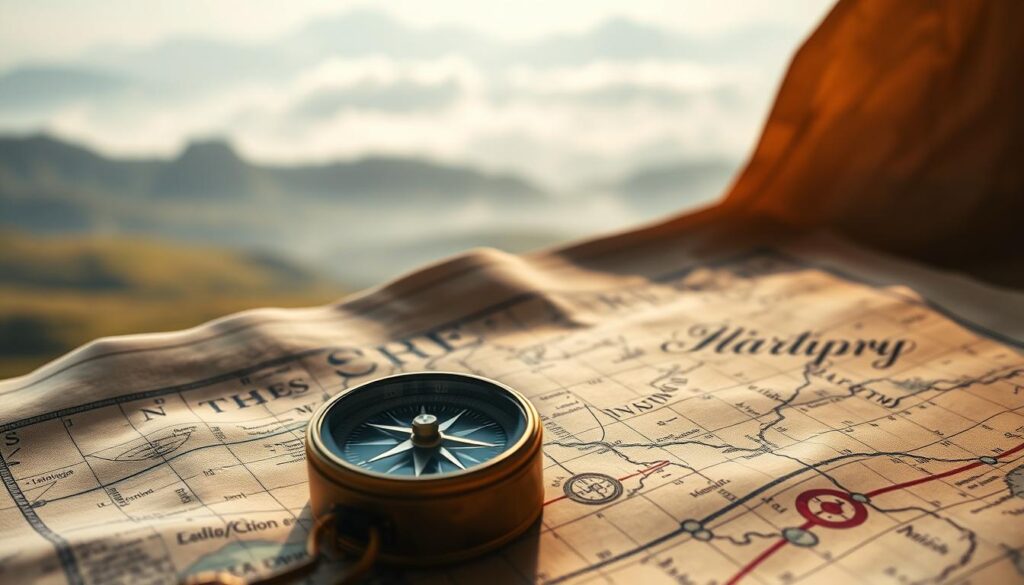
Always use a map with your compass. It helps you understand the area and plan your path better. Using both tools a lot will make you much better at navigating.
Lastly, think about joining a navigation class or group. Experienced navigators there can share valuable insights and tips. This can really speed up your learning.
By following these tips and practicing a lot, beginners can quickly get better at using a compass. They’ll feel more confident and able to navigate well.
Conclusion: The Timeless Utility of Compasses
Compasses are key for finding your way, helping you navigate unknown places. Learning to use a compass is vital for good navigation.
Compasses have a big role in history. They helped ancient sailors and today’s explorers find new places. They’ve been a trusted friend for many.
Even with new tech like GPS, compasses are important. They work without batteries or signals. This makes them a reliable tool for finding your way.
In wrapping up our look at compasses, we see they’re more than just tools. They connect us to the past and inspire new adventures. They keep the spirit of exploration alive.