







Creating a writing plan is key to making content clear and organized. Outlining helps organize ideas and structure content in a logical way. It helps authors clarify their thoughts and find gaps in their research.
A good outline acts as a roadmap for your content. It makes sure your content flows well and stays focused. By spending time on content planning, you can greatly improve your writing quality.
Good outlining makes it easy to share ideas clearly and simply. This makes it easier for readers to follow and understand what you’re saying.
What is Outlining?
Outlining is a flexible way for writers to organize their thoughts. It helps make sure their content is clear and well-organized. By breaking down content into smaller parts, writers can arrange their ideas in a logical order.
The outlining process is more than just listing topics. It’s about creating a guide for your writing. This guide keeps writers on track with their main points and ensures content flows well.
Effective outlining works for all types of writing. Whether it’s a novel, research paper, or blog post, outlining helps you reach your goals. It’s a tool that fits the writer’s needs and the project’s demands.
Using outlining in your writing routine can improve clarity and coherence in your work. It helps spot missing parts in your argument and ensures ideas are backed up. You can also make changes before starting to write.
In short, outlining is a key technique for organizing ideas and improving your writing. By creating a detailed outline, you can make content that is engaging, well-structured, and effective in sharing your message.
Types of Outlines
Writers have many ways to organize their ideas. The choice depends on the writer’s style, the project’s nature, and the writing genre.
Mind mapping is a visual method that connects ideas with diagrams. It’s great for brainstorming and helps writers organize their thoughts visually.
Mind Mapping
Mind mapping starts with a central idea and then branches out. It’s good for those who think visually and see how ideas connect. It’s also flexible, making it easy to change ideas as the project grows.
Diagramming creates a visual structure of content. It’s useful for complex topics, breaking down information into smaller parts. It shows how different parts relate to each other.
Diagramming and Flowcharting
Flowcharting uses diagrams to show a process or decision-making. It’s common in technical writing and instructional design. Flowcharts help organize thoughts and make information clear and simple.
Knowing the different outlining techniques helps writers pick the best one for their project. Whether it’s mind mapping, diagramming, or flowcharting, the goal is to improve the writing process and content quality.
How to Create an Outline
To make a good outline, first figure out what you want to say and how much. Creating an outline is key to organizing your thoughts and meeting your writing goals.
Start by knowing your content’s purpose and scope. This means understanding your writing goals and what your topic covers. It helps you stay focused and keep your content short and to the point.
Next, think of all the ideas you have about your topic. Don’t worry if they seem crazy at this point. This brainstorming phase is important for exploring all sides of your topic.
After you’ve got a bunch of ideas, organize them in a logical order. Group your ideas, decide their order, and make sure your content flows well. A good outline is essential for clear and interesting writing.
Lastly, review and tweak your outline. Check if it’s clear, makes sense, and is consistent. Make changes if needed to help guide your writing.
By following these outlining steps, you can make a useful outline. It boosts your writing’s quality and makes it easier for readers to follow your message.
The Importance of Structure
A clear and organized outline is key for top-notch content. It’s the base of the content creation process. This ensures the final piece is clear, well-organized, and grabs the reader’s attention.
Organizing Ideas is a big plus of outlining. It breaks down big topics into smaller parts. This makes it easier for writers to see the content’s flow and make changes before writing.
Outlining also helps spot gaps in research. It makes writers think about every part of their topic. This can show where more research is needed. It saves time and boosts content quality.

A good outline makes information flow smoothly. It organizes content in a way that’s easy to follow. This is key for educational or technical content, where complex info needs to be simple to understand.
In short, structure is vital in content creation. Spending time on a detailed outline greatly improves content quality. It makes the content more engaging and easy for the audience to follow.
Outlining for Different Writing Styles
Outlining isn’t the same for everyone. It changes based on the type of writing you do. Each genre and writing style needs its own approach to keep you focused and create great content.
Fiction writers often like a flexible outline. This lets them change their story or characters as they write. A strict outline might block their creativity, so they prefer something more open.
Non-fiction writers need a detailed outline. They aim to share information clearly and quickly. A solid outline helps them organize their ideas and research.
Writers of academic or technical content use outlines as guides. They help organize complex info into a clear structure. This is key in fields where being precise and clear is critical.
Adapting Outlining Techniques to Your Writing Style
It’s important to adjust your outlining method to fit your writing needs. Think about your genre, the complexity of your topic, and your writing style. This will help you decide how detailed your outline should be.
Choosing the right outlining method boosts your productivity and writing clarity. It also helps ensure your work meets your goals.
Tools for Outlining
Writers have many tools to help them organize their ideas. These range from simple apps to complex software. They aim to make writing easier and more productive.
Mind mapping software is very popular. Tools like MindMeister and XMind let writers visually organize their thoughts. This makes it easier to see how ideas connect.

Writing apps also offer great outlining features. Scrivener and Ulysses let writers manage their outlines within the app. They make it simple to move sections around.
For a simpler approach, note-taking apps like Evernote and OneNote work well. They help writers list ideas and work together in real-time.
Choosing the right tool depends on your needs. Some like simple interfaces, while others need more features. It’s all about finding what works best for you.
Using these tools can make writing easier and more efficient. It helps writers create better content.
Tips for Effective Outlining
A well-crafted outline is key to a successful writing project. It acts as a guide, keeping you organized and focused. This is vital for your writing journey.
To make a great outline, start with your main topic or thesis statement. This keeps you on track with your core message. Breaking down your topic into smaller, manageable sections is also key. It helps you cover all points and keep things logical.
Being flexible is a best practice for outlining. Your outline should evolve with your research and ideas. Don’t hesitate to make changes when needed. Also, use a consistent structure for your outline. This makes it easier to follow and understand.
When outlining, prioritize your points. Put the most important information in the most visible spots. This highlights the key aspects of your topic.
Using outlining tools can boost your productivity. There are many software options, from simple to complex, to help manage your outlines.
By following these outlining tips and best practices, you can create a solid outline. It will guide your writing and help you produce quality content.
Common Mistakes in Outlining
Creating a good outline is essential for writing well. But, many mistakes can slow you down. One big error is failing to clarify the purpose and scope of your content. Without a clear goal, your outline can get messy and hard to follow.
Another mistake is not organizing your ideas well. A good outline should move smoothly from one idea to the next. This makes it easier to turn into a solid piece of writing. If your ideas don’t connect, your outline will be confusing.
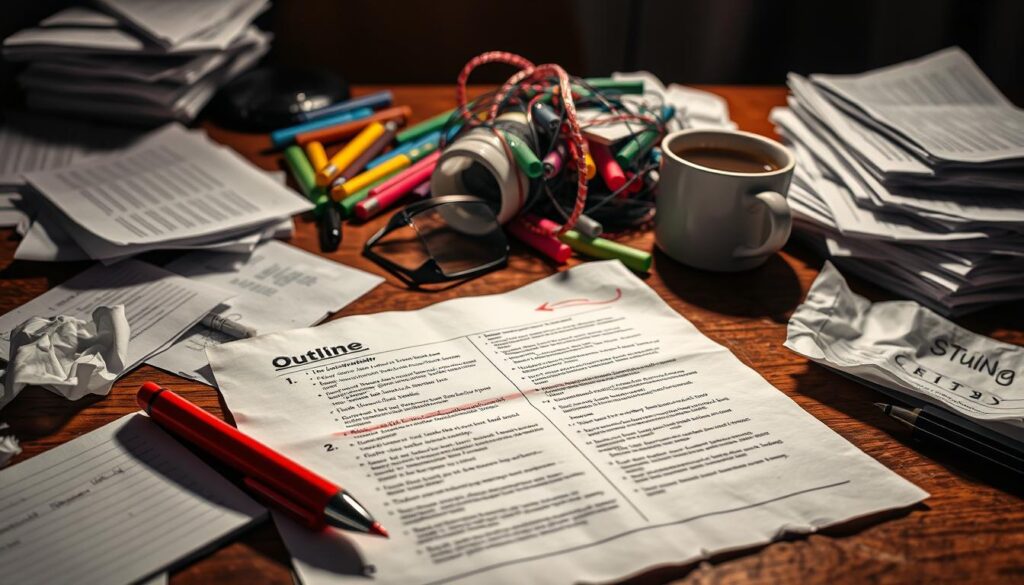
Not updating your outline when needed is another big mistake. As your project grows, your outline might need changes. If you don’t update it, your final work could feel disjointed.
Knowing these common outlining mistakes helps you avoid them. Make it a habit to check and revise your outline often. This keeps it relevant and useful.
Understanding these pitfalls can make your outlining better. It leads to clearer and more organized writing.
Adapting Outlines During the Writing Process
Outlining is a flexible process that changes as you write. Your first outline might need updates as your research and ideas grow. This ensures your content stays on track.
Revising outlines is key to keeping your content aligned with your ideas. You’ll review your initial outline, spot what needs tweaking, and make those changes. This keeps your writing focused and clear.
As Anne Lamott said, “You can’t wait for inspiration. You have to go after it with a club.” This shows the need to actively refine your outline. It helps keep your writing on course and achieves its goals.
“The best way to get good ideas is to get a lot of ideas.” – Linus Pauling
Refining outlines means making changes that improve your content’s quality and flow. It’s about building a solid structure that supports your writing goals.
Being open to changes and new insights makes your writing better. It leads to a more cohesive and effective piece.
Real-Life Examples of Effective Outlining
Looking at real-life examples shows how outlining helps writers succeed. Many authors, in fiction, non-fiction, and academic writing, have mastered this skill.
Case Study: John Grisham – Known for thrillers like “The Firm” and “A Time to Kill,” Grisham is a master of outlining. He spends months on detailed outlines before writing. This has helped him create engaging, well-structured novels.
“I spend a lot of time on the outline… It’s like building a skeleton that I can hang the story on.”
Grisham’s method keeps him organized and focused on the story’s flow and character growth. Authors like Stephen King also value a solid outline, even if it changes as the story evolves.

In non-fiction, Malcolm Gladwell uses outlining to organize his books. For “The Tipping Point,” he researched and took notes, then made a clear outline.
These outlining examples show its value in various writing styles. By learning from these cases, writers can improve their own work.
Outlining can make a big difference, whether you’re writing a novel, a research paper, or a blog post. It boosts productivity and quality.
Conclusion: Making Outlining Work for You
Outlining is a powerful tool for writers. It helps improve writing and reach goals. By knowing the different types of outlines, writers can create clear and precise content.
Using outlines requires discipline and consistency. But the benefits are huge. A good outline can greatly improve a writing project’s success.
Adding outlining to your writing routine can make your process smoother. It helps you stay focused and create content that connects with your audience. Outlining is key for writing a novel, blog post, or research paper.