





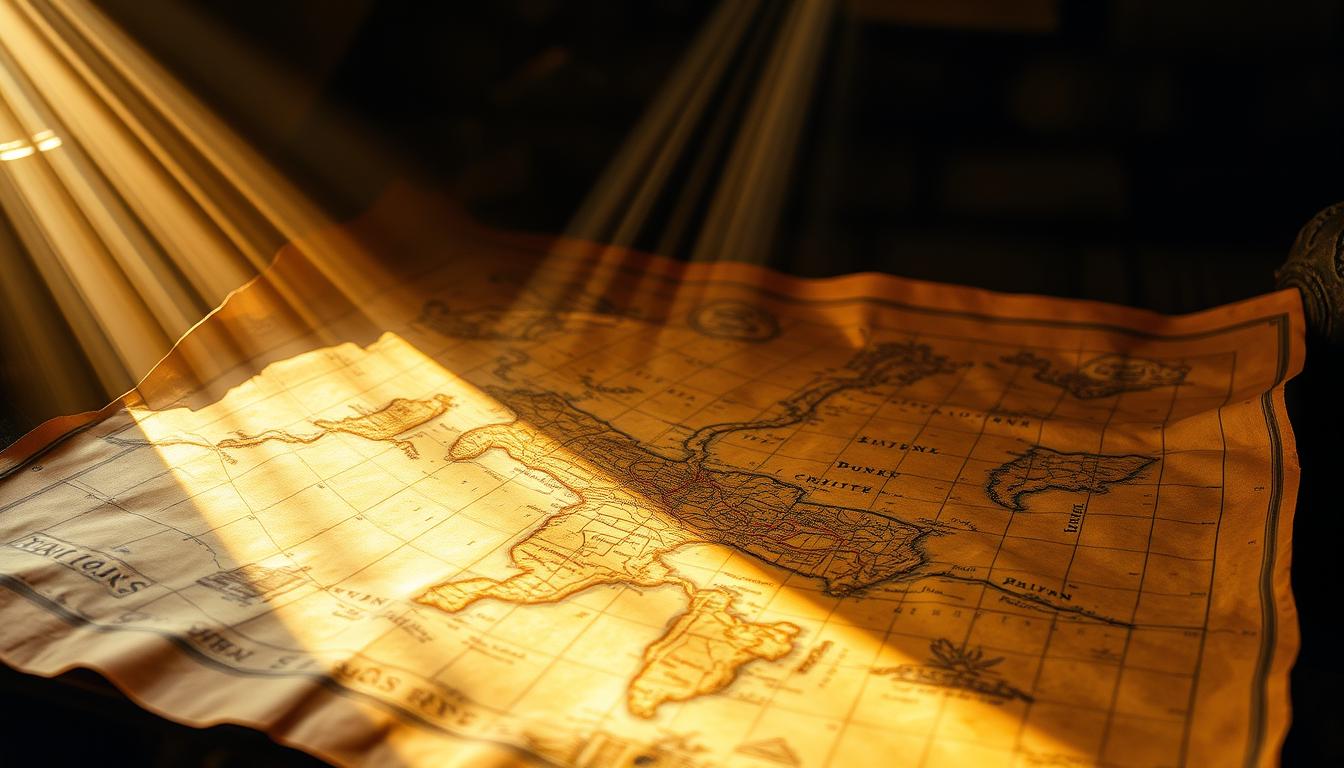
Imagine finding an antique map in your attic. It sparks a sense of adventure and curiosity. This idea comes from “The Map in the Attic” by Jolyn Sharp, in the Annie’s Attic Mysteries series.
Discovering a mysterious map in the attic is more than a story. It opens doors to history, family secrets, and the importance of such maps.
These maps are not just about places. They can reveal our past, telling stories of love, loss, and adventure. As we explore the idea of a hidden map in the attic, we encourage you to search your own attics. Look for the secrets that are waiting to be found.
Discovering the Untold Stories Hidden in Your Home
Hidden in your attic are stories waiting to be shared. Many people don’t know their attics hold more than old items. They hold pieces of family history and heritage.
When you find old artifacts and documents, you uncover your ancestors’ stories. These can be simple things like old photos or important documents. Each item can reveal a part of your family’s story, making exploring your home a journey of discovery.
Finding these stories can be thrilling and emotional. It’s not just about old things; it’s about connecting with your ancestors. For example, an old letter or diary can show what your ancestors went through. These forgotten artifacts connect you to your past, making your family’s history real and personal.
It’s important to keep these items safe. By taking care of them, you make sure their stories are not forgotten. This isn’t just about storing them right; it’s also about understanding and sharing their importance. This way, you can pass on these home stories to future generations, keeping your family’s history alive.
As you explore your home, remember each item can tell a story. Whether it’s furniture, a letter, or a photo, each one adds to your family’s history. By embracing these discoveries, you learn about your heritage and create a legacy for those who come after you.
A Journey Through Time: What is a Hidden Map?
Throughout history, hidden maps have been key in navigation, discovery, and secrecy. A hidden map is a chart or document that’s hidden or not easy to find. It often holds great historical or personal value.
The definition of a hidden map can change, but it usually means a map that’s not obvious or has been hidden. These maps can take many forms, like old documents or secret messages on objects.
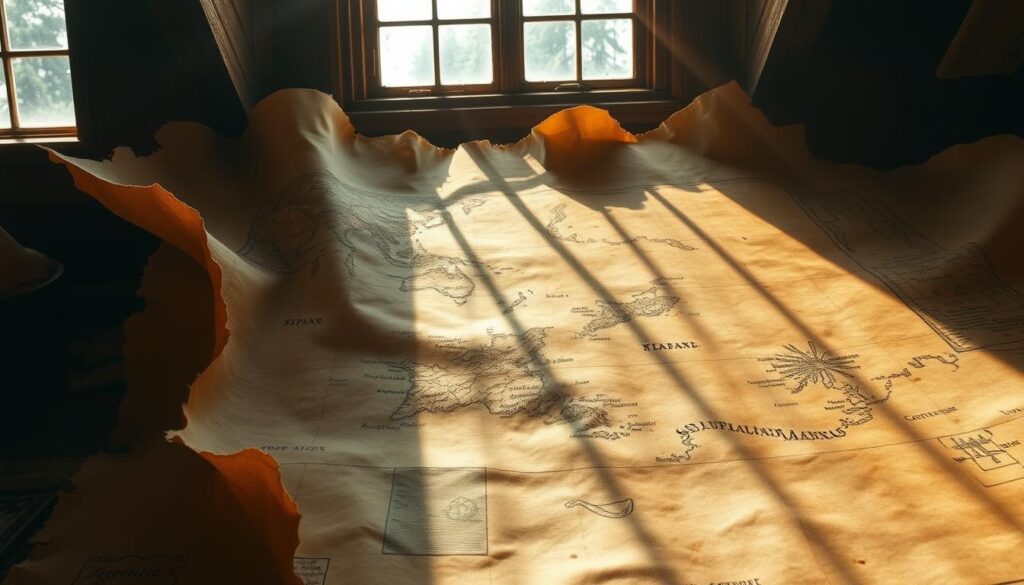
Types of hidden maps include treasure maps, charts used by famous people, and maps carved into ancient walls. These maps have been used for many things, like finding places, decorating, and spying.
One cool thing about historical hidden maps is they tell stories from the past. For example, some maps have led to finding lost cities or showing us what historical figures were like.
These maps are more than just old pieces of paper. They make us curious and imagine new things. Whether you love history, collecting, or just old maps, learning about hidden maps can lead to exciting discoveries.
Digging Deeper: How to Find Hidden Maps in Your Attic
To find hidden maps in your attic, start by preparing. Finding hidden maps needs a plan.
First, clear a space in your attic. Get your tools for searching ready, like a flashlight, gloves, and a ladder. Make sure the area is bright and safe.
Then, use some smart attic search tips. Check old trunks, boxes, and furniture. These might hold maps. Look for hidden spots or secret drawers.
Also, search through old family papers and photos. Maps can be hidden in books or albums. Don’t miss the spots under insulation or behind wall linings.
Be careful and thorough when searching. Take your time and check everything. If you find a map, handle it gently. If unsure, get a professional’s help.
By following these steps and using the right tools for searching, you’ll find any hidden maps in your attic. Remember, being patient and persistent is key.
What to Look For: Identifying Authenticity
Checking if a hidden map is real means looking closely at its material, ink, and other details. This careful check is key to knowing the map’s history and value.
Material is a big clue for a real map. Old maps were printed on top-notch paper or vellum. These can show aging signs like yellowing, foxing, or tears. Cartography experts say, “The material’s quality often shows a map’s age and if it’s real.”
Signs of Age
When you look at a hidden map, search for signs of aging. These signs can tell if it’s real. Look for:
- Discoloration: Older maps might have uneven color changes from light or aging.
- Ink Bleeding: The ink in old maps can spread into the paper, a sign hard to fake with today’s printing.
- Wear and Tear: Real old maps often have signs of use like folds, creases, or tears.
Reproductions or fakes can be tricky to spot. But, some clues can reveal if it’s not the real deal:
- Paper Quality: Modern copies are printed on paper that’s not as good as old paper.
- Printing Techniques: Old maps have a unique printing quality that’s different from today’s digital prints.
- Inconsistencies: Check for oddities in the map’s details, like place names or symbols that don’t fit the map’s supposed time.
As
“A genuine map is not just a piece of cartography; it’s a window into the past, showing us historical events, cultural practices, and how people understood geography back then.”
By carefully looking at these points, you can tell if a hidden map is real. This helps uncover its true historical value.
The Stories Behind Old Maps
Old maps are more than yellowed paper; they open doors to the past. They show us family heritage and historical secrets. These maps give us a peek into our ancestors’ lives, their travels, and the big events that changed their world.
When you find an old map, it’s not just a piece of history. It’s a personal and intriguing find. For example, an old map might show the paths your ancestors took to new lands. Or it might point out key events that greatly affected your family’s story.
These maps also give us a look at the past’s geography, climate, and culture. They help us understand the world as it was back then. Plus, old maps can uncover historical secrets. They might show us places and events that history books often miss.
Looking into the stories of old maps is a fulfilling journey. It lets you connect with your heritage in a special way. By studying these maps, you can learn more about your family’s history and the events that influenced their lives.
As you explore the tales of old maps, you’ll see the past in a new light. It’s a mix of personal and historical stories. This can help you appreciate your family’s history even more.
Preserving Your Findings
Finding a hidden map is just the start. Keeping it safe is just as key. Using the right storage techniques is vital to keep your map in top shape.
First, keep your map in a cool, dry spot, out of the sun. Sunlight can make the map fade, and moisture can cause tears or mold. Use acid-free stuff for storage to avoid damage. A map storage box or folder made from archival materials is a good choice.
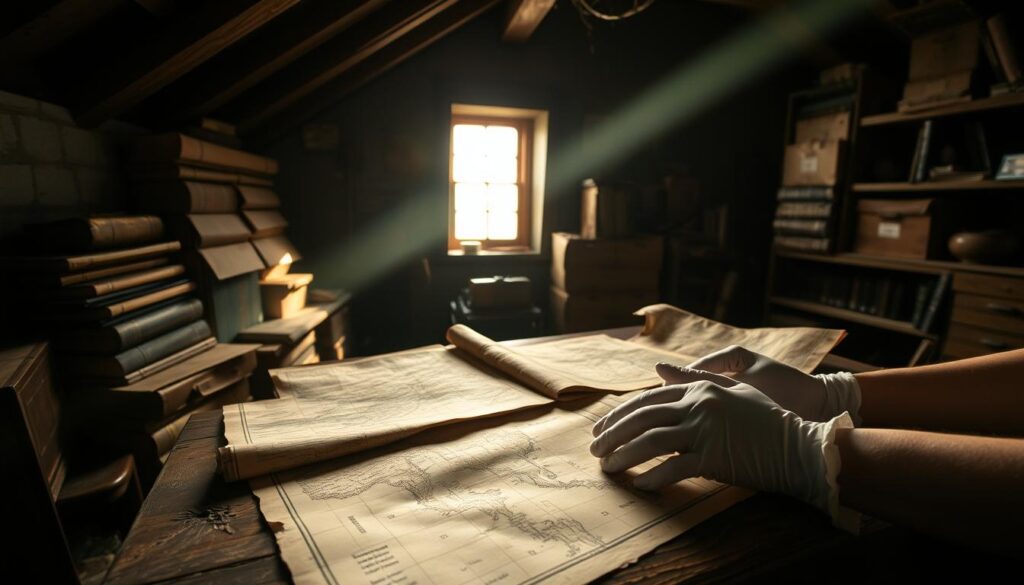
If your map is damaged, map restoration can help. This might mean fixing tears, removing tape, or flattening rolled maps. You can get help from pros or do simple fixes yourself.
Best Practices for Map Preservation
Always handle your map with clean, dry hands or gloves. This stops oils from your skin from harming the map. Try not to touch the map too much to avoid wear and tear.
By sticking to these preservation techniques, your hidden map will stay in great shape. This lets you enjoy your find for many years.
How to Display Your Hidden Map
Displaying your hidden map is more than just hanging it. It’s about sharing its story. When you find history in your attic, you want to show it off right.
Framing is a great way to display a hidden map. Choose a frame that matches the map’s era and style. For example, an old map might look good in a fancy, vintage frame. A newer map could fit well in a simple, modern frame. Framing ideas can range from simple to elaborate, based on your taste and the map’s history.
There are also creative ways to showcase historical maps. You could use backlighting to highlight parts of the map. Or, try a shadow box to add depth with other artifacts.
If you want something different, consider digitizing your map. Display it on a digital frame to share it with more people. This is great if the map is delicate. You can also add digital notes or history to help viewers understand and appreciate it more.
How you display your hidden map should tell its story. Whether you choose a classic frame or something new, aim to share its history and mystery. This way, you’ll not only keep the map safe but also keep its story alive for many years.
The Value of Hidden Maps: Collectible or Personal Treasure?
When we talk about the value of a hidden map, we look at two things: its money value and its emotional worth. These maps are special because they can be valuable in both ways.
Money-wise, a map’s value depends on how rare it is, its condition, how old it is, and if collectors want it. Maps that are rare, in good shape, and wanted by many can sell for a lot at auctions. For example, a map signed by someone famous or showing a big event can be very valuable.
But, the emotional value of a map is just as important. These maps can connect families to their past or to important historical events. They can make us feel nostalgic and curious, linking us to history.
Assessing the worth of a hidden map means looking at both its money value and its emotional and historical importance. Whether it’s something to collect or a family treasure, finding a hidden map can make our lives richer in many ways.
In the end, the real value of a hidden map is in the stories it tells and the connections it makes. It’s a treasure for both collectors and families.
Share the Adventure: Involving Family and Friends
Discovering a hidden map is more fun when you share it with others. It’s a chance to bond and make memories that last a lifetime.
Hosting a family map reveal is a great way to share your find. Get everyone together and unveil the map with a big reveal. You can add to the excitement by telling a story or creating a special ceremony.
Another fun idea is to throw a map-themed gathering. Decorate with vintage maps and serve food inspired by the map’s destinations. Ask guests to share their own map stories, making it a memorable event for all.
Get your friends and family involved by asking for their input on the map. They can help guess where it might lead or what it might mean. This makes the experience more fun and helps you learn more about the map.
You can also share your adventure online. Write a blog post or make a video about your map. This way, you can excite more people and maybe even find others who have had similar experiences.
Inviting others into your adventure makes it even more special. So, go ahead and share the excitement of your hidden map find with your friends and family.
Next Steps: What to Do with Your Hidden Map
When a hidden map is found, figuring out what to do with it can be tough. Getting an expert to check it out is key. They can tell you if it’s real and how much it’s worth.
Cartography experts or antique dealers can give you the lowdown on the map’s history and value. This info helps you choose: keep it, sell it, or give it away.
If you want to sell your map, places like Christie’s or Sotheby’s might be a good fit. Or, you could donate it to a place like the Library of Congress. This way, it’s saved for others to see in the future.
Either way, finding a hidden map is an exciting journey. You can share it with loved ones, starting fun talks and tales.