








The lost key has always fascinated many. It’s more than just an object. It’s a doorway to the unknown, a mystery waiting to be solved.
Arun found an old key in Room 306. Amelia Reed searched everywhere for a key in Graystone Manor. Kate and Olive also had their own key-related adventures.
These stories are not just fun. They also show the deep meaning of finding something lost. It helps us understand the characters and their stories better.
Understanding the Concept of a Lost Key
A lost key is more than just a small problem; it holds deep meaning in literature and culture. Losing a key can symbolize forgotten memories, hidden secrets, or missed chances. In stories, a lost key opens up deeper meanings and themes.
The stories of Arun and Room 306, and Amelia and Graystone Manor, show how a lost key sparks discovery. For Arun, the key to Room 306 was a gateway to the unknown. It was a challenge to find secrets behind a locked door. For Amelia, the key to Graystone Manor was a symbol of her past and her heritage.
In literature, a lost key’s symbolism varies but often deals with access or barriers. It might be a physical barrier, like a locked door, or a metaphor for a character’s emotional state. The lost key narrative device lets authors dive into themes of discovery, loss, and the human condition.
Also, the idea of a lost key speaks to our shared experiences of loss and discovery. It’s a universal symbol that crosses cultural lines. It speaks to our curiosity and desire to find what’s hidden.
The Symbolism of Keys in Literature and Culture
Literature and culture are full of keys symbolizing power, freedom, and knowledge. Keys mean more than just unlocking doors. They carry deep meanings in stories and cultural practices.
In folklore and mythology, keys unlock hidden realms or secrets. For example, Hades in Greek mythology had a key to the underworld. This showed his control over the dead. Keys in many cultures also mean magical powers or revealing truths.
The Cultural Significance of Keys in Folklore and Mythology
Keys in folklore and mythology have many meanings. They symbolize power, freedom, and moving between different places. In some cultures, giving a key is a way to give power or responsibility.
“The key to the kingdom” is a common idiom that symbolizes the granting of power or authority. This phrase means a big responsibility or access to special knowledge.

In literature, keys help move the story forward or show character traits. For example, in “The Yellow Wallpaper” by Charlotte Perkins Gilman, the narrator’s focus on a key shows her desire for freedom.
The symbolism of keys is a powerful tool in literature and culture, representing themes that are both universal and deeply personal. Looking at keys in different contexts helps us understand their importance. They shape how we see power, freedom, and knowledge.
“A key is not just a tool to unlock a door; it is a symbol of the power to reveal, to discover, and to transform.”
The Physical and Emotional Impact of Losing a Key
Losing a key can cause a lot of emotional and physical reactions. Stories from Arun, Amelia, Kate, and Olive show this. It’s not just a small problem; it can make you feel frustrated, anxious, and lost.
Arun lost his office key and had a stressful morning. He had to change locks and make new keys. This emotional struggle is as tough as being locked out. Amelia lost her house key and frantically searched for it. This shows how losing a key can mess up your day and make you really upset.
Kate got locked out of her apartment and had to stay at a neighbor’s. This shows the practical problems of losing a key. “I felt so helpless standing there in the rain, unable to get into my own home,” Kate said, highlighting the immediate effects of losing a key.
“The key is not just a tool to unlock doors; it’s a symbol of access, freedom, and security. Losing it can make one feel vulnerable and insecure.”
Olive felt a deep sense of loss and insecurity after losing her key. Her story shows that losing a key affects more than just your physical state. It can also mess with your sense of safety and happiness.
In conclusion, losing a key can have big emotional and physical effects, as seen in Arun, Amelia, Kate, and Olive’s stories. It’s not just about being locked out. It’s about the stress, anxiety, and feeling of insecurity that comes with it. Understanding these effects can help us find ways to deal with them.
Creative Solutions When You’ve Lost a Key
Arun and Amelia’s stories show how resourcefulness helps when you lose a key. It’s key to think outside the box and look for different ways to solve the problem.
Start by going back over your steps and searching where you’ve been. This method often finds the lost key. Arun says, “I went back over my steps from the day before and found my key in an unexpected spot.”
If that doesn’t work, look into other options. Amelia recommends, “I looked into spare keys and keyless entry systems. They fixed my problem and offered a lasting solution.”
“The best way to get started is to quit talking and begin doing.” – Walt Disney
Using creative problem-solving can also help. You might use technology like key finder devices or get help from locksmiths. They can offer expert advice and help.
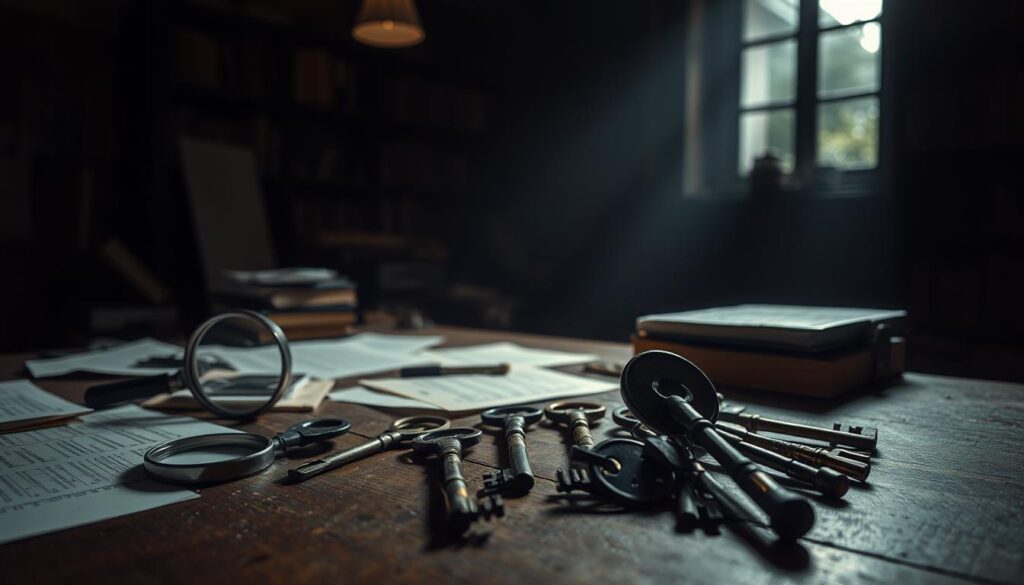
Losing a key can lead to finding new, better solutions. Being proactive and resourceful can make a bad situation better. It turns a problem into an opportunity for improvement.
Historical Context of Lost Keys
The history of locks and keys is closely linked to the problem of lost keys. This issue has been a challenge across many cultures. It shows how security measures have evolved over time.
In ancient Egypt, around 4000 years ago, the first locks were made of wood. They used pins to keep doors secure. These early locks needed big, clumsy keys that were easy to lose or misplace. Keys were not just for opening doors; they also symbolized power and authority.
As time went on, locks and keys got better. The Romans, for example, used iron locks and keys that were stronger and more complex. But, the problem of lost keys kept happening, showing up throughout history.
The Middle Ages to Modern Era
In the Middle Ages, locksmithing became a respected craft. Locksmiths made locks and keys that were both useful and beautiful. The art of locksmithing kept getting better, with big steps forward during the Industrial Revolution.
Today, we have electronic locks and digital security systems. These changes have changed how we think about keys and locks. But, the basic problem of lost keys is not gone. Now, it shows up as forgotten passwords or lost keycards.
The story of lost keys through history shows our ongoing search for security. Knowing this history helps us understand how to make locks and keys better and easier to use.
The Science of Key Making and Replacement
Understanding key making and replacement is key to seeing how complex modern security measures are. It involves knowing about locking systems and how locksmiths make new keys.
Locksmithing is both an art and a science. It needs precision and knowledge of many locking systems. Making replacement keys means figuring out the pattern of the original key, which can be hard, even for simple locks.
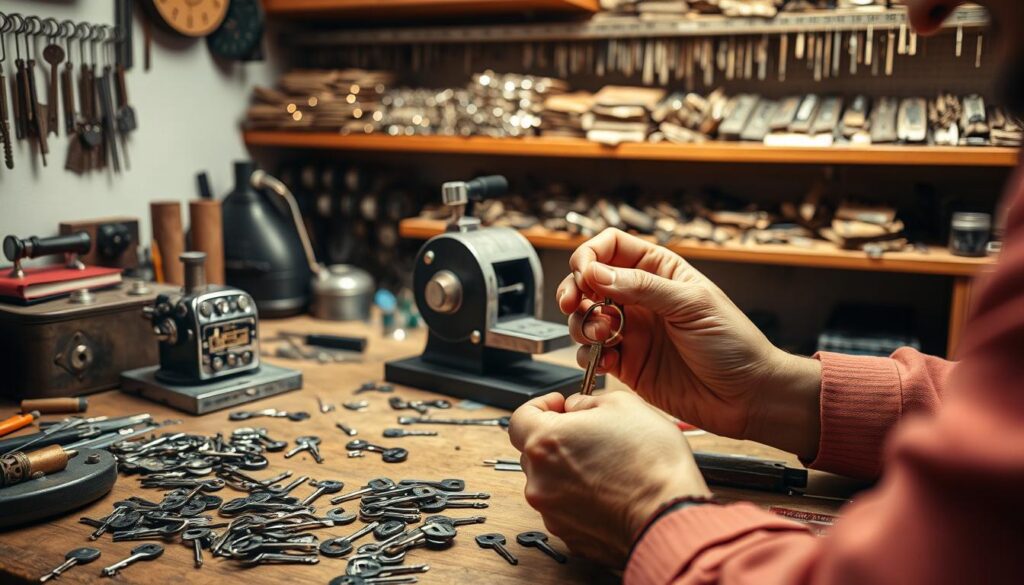
The methods for key making change with the lock type. For example, making keys for traditional pin tumbler locks is different from electronic locks. Locksmiths must know how to work with many lock types to make good replacement keys.
One important part of locksmithing is making sure the new key works right and keeps the lock secure. This means using top-notch materials and exact cutting to copy the original key.
New security measures have led to advanced locks that are hard to copy. These locks need special tools and training for locksmiths to make replacement keys.
In summary, key making and replacement is a complex field. It mixes old locksmithing skills with new tech for better access control. As security measures get better, locksmiths’ role in making replacement keys stays important.
Personal Stories of Lost Keys
A lost key can unlock more than just a door; it can unlock a part of oneself. For many, losing a key sparks personal growth, self-discovery, and change.
Arun’s story shows this well. He lost his house key and had to face his love for routine. This led him to explore new places, finding adventure again. Arun says, “Losing that key was like breaking free from a shell; it allowed me to discover new aspects of myself.”
Amelia’s story is deeply emotional. She lost the key to her grandmother’s diary, a family treasure. Searching for it brought back memories and strengthened her family ties. Her story shows how a lost key can connect us to our past and loved ones.
Kate’s tale is about staying strong when things get tough. She lost her office key and had to deal with getting a new one. This taught her patience and flexibility. Kate says, “It was a challenging experience, but it taught me to approach problems with a calm and level head.”
“The loss of a key can be a metaphor for the transitions we face in life. It’s a reminder that sometimes, we must let go of what’s familiar to move forward.”
Olive’s story adds more depth. Losing a key meant letting go of old attachments for her. The key unlocked a storage unit full of memories from the past. Olive felt free, ready to move on. Her story shows how lost keys can symbolize change in our lives.
These stories show how losing something small can lead to big changes. They remind us that sometimes, it’s the smallest things that can have the biggest impact on us.
Preventive Measures Against Losing Your Keys
Keeping your keys organized is key to avoiding lost keys. A few simple steps can help keep your keys in the right place.
Designate a spot for your keys, like a hook by the door or a drawer. Make it a habit to always put your keys there. This makes it easier to find them.
“The way to get started is to quit talking and begin doing.” – Donald Trump
Using a key organizer is another smart move. These tools hold many keys and are easy to carry. Some even have extras like flashlights or bottle openers.
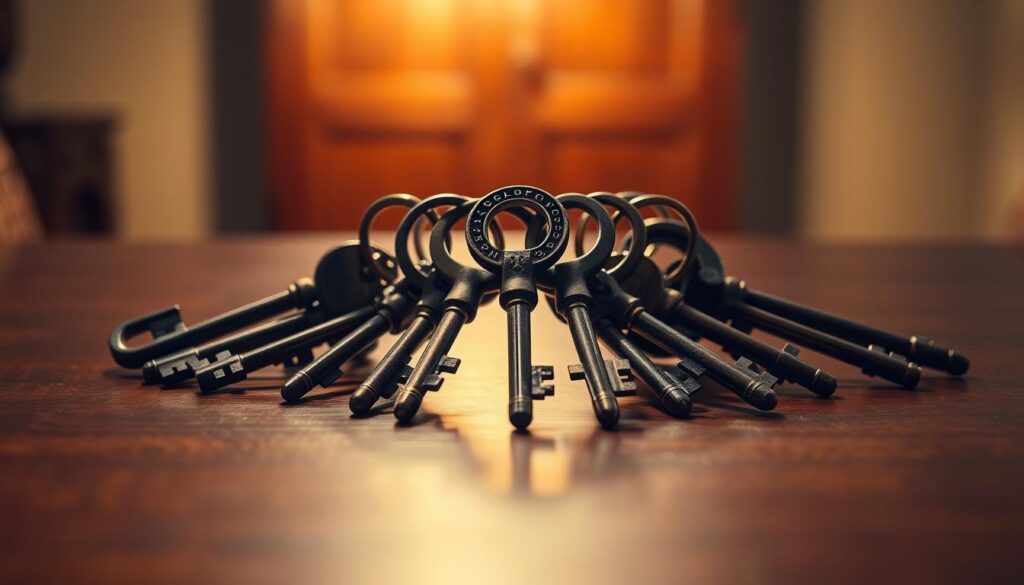
Managing your keys means having fewer of them. Remove any keys you don’t need. Or, consider a keyless entry system.
It’s also wise to have a backup plan. Keep a spare key somewhere safe or give one to a trusted friend. Today, you can even get smart locks that work without keys.
By following these tips, you can greatly lower the chance of losing your keys. It’s all about making good habits and using the right tools.
The Role of Keys in Home Security
Keys play a big role in home security. They help lock and unlock doors and give us a sense of safety. Keys are a key part of home security systems, acting as the first defense against intruders.
Homeowners use different locks, from old pin tumbler locks to new electronic ones. The type of lock affects a home’s security. Electronic locks, for example, have cool features like keyless entry and remote monitoring.
Keeping keys safe is important for home security. This means storing spare keys well and controlling who has access. Lost keys or unsecured spare keys can let intruders in.
Today, homes use smart locks and keyless systems for better security. These systems let homeowners control who gets in, even when they’re not home.
Keys are very important for home security. They help keep our homes safe and our belongings secure. By choosing the right locks and managing keys well, we can make our homes safer.
Conclusion: Finding Your Way Back to the Lost Key
Looking at the stories of Arun, Amelia, Kate, and Olive, we see that a lost key is more than a simple item. It sparks insight and reflection.
Their tales show how losing a key affects us emotionally and physically. They also highlight the creative ways to solve these problems.
Learning about the meaning and cultural importance of keys helps us value them more. They open doors and unlock memories.
As we wrap up our journey with the lost key, we realize its true worth. It’s not just the key itself, but the experiences and connections it brings.
Reflecting on our own lost key stories can change our view of these small, often forgotten items.