








Have you ever looked up at the sky and felt like you got a personal sign or message from above? The idea of a cloud message might seem poetic. But it’s based on the interesting world of cloud formation and weather forecasting.
Here’s your sign! If you’ve never seen a message in the clouds, the sky’s shapes and patterns are amazing. They spark curiosity and awe. Studying these formations helps us understand weather better. It also connects us to the sky’s ever-changing beauty.
Decoding Nature’s Sky Canvas
Clouds turn the sky into a dynamic canvas, inviting us to understand their meanings. The changing patterns and shapes of clouds are both mesmerizing and thought-provoking. As we look at this sky canvas, we get to explore the stories and messages nature shares through these aerial formations.
Interpreting clouds is more than just a hobby; it’s a way to connect with nature’s rhythms. By watching the shapes, sizes, and movements of clouds, we learn about weather and the environment. This practice helps us appreciate nature more and feel wonder at the nature’s message in the sky.
When we decode the sky canvas, we see more than just beauty in clouds. We understand the complex atmospheric processes they show. This knowledge makes our experience of nature richer, turning cloud watching into a meaningful connection with the environment. Through cloud interpretation, we see the world more clearly and understand our planet’s systems better.
The Science Behind Cloud Formation
Understanding cloud formation is key to knowing how Earth’s atmosphere and weather patterns interact.

Clouds come from a series of steps tied to the water cycle. This cycle is vital for spreading water across the globe.
The Water Cycle in Action
The water cycle never stops. It moves water from the Earth to the sky and back again. This cycle is essential for life and affects the weather.
Temperature and Dew Point Relationships
The link between temperature and dew point is key to cloud formation. When air cools to its dew point, it gets full of moisture. This leads to clouds forming.
As air goes up and cools, it can’t hold as much moisture. This causes water vapor to turn into droplets, making clouds. This shows how temperature and dew point shape cloud cover and weather.
The Cloud Message: Nature’s Communication System
Clouds change constantly, sharing important info about the weather. They act as nature’s own way of talking to us. By looking at cloud shapes, heights, and how they move, we can figure out short-term forecasting clues and see big seasonal patterns.
Clouds come in different types, each telling us something about the weather. For example, cumulus clouds usually mean good weather, while stratus clouds might mean it will be cloudy. Knowing these types helps us understand weather changes.
Short-Term Forecasting Clues
Watching how clouds change over a short time can give us clues about the weather. For example, if clouds get taller and thicker fast, a storm might be coming. Noticing these changes helps us make smart choices about what to do each day.
Seasonal Pattern Recognition
Cloud patterns also change with the seasons, showing us big weather trends. Knowing these patterns helps us get ready for seasonal changes. For instance, some clouds show up more during certain times of the year, telling us about temperature and rain changes.
By understanding the cloud message, we can see how our atmosphere works. This helps us make better choices in our daily lives, from planning outdoor fun to understanding big environmental changes.
The Language of Cloud Types
Learning about clouds starts with knowing the different types that fill our skies. Clouds are grouped into main categories based on their shape, height, and other features.
The International Cloud Atlas lists ten basic types of clouds, like cirrus, cumulus, stratus, and nimbus. Each type can be broken down further. For example, cumulus clouds can be cumulus humilis for clear skies or cumulus congestus for rain.
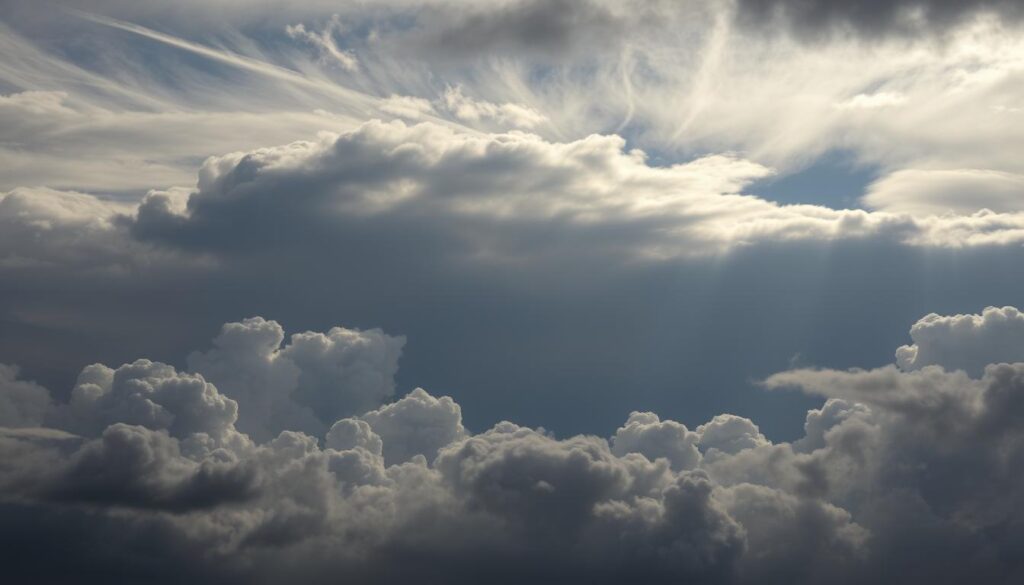
Cirrus clouds are thin and wispy, showing fair weather but also a storm’s approach. Cumulus clouds are the “fair-weather clouds.” Stratus clouds cover the sky, sometimes bringing light drizzle.
Nimbus clouds are linked to rain and thunderstorms. Knowing these cloud types helps us understand weather patterns.
By identifying and classifying clouds, we can better appreciate the sky’s changes. It also helps us read nature’s signs more accurately.
Cultural Interpretations of Clouds Throughout History
Clouds have a rich history filled with myths and legends. They carry meanings that show the beliefs and values of different cultures around the world.
In ancient times, clouds were seen as homes for gods and supernatural beings. For example, in ancient Greece and Rome, clouds were linked to their gods. They believed these gods lived in or controlled the clouds.
Greek and Roman Cloud Deities
In Greek mythology, Nephele, a cloud nymph, was very important. She represented the cloud. The Romans also had cloud gods, influenced by Greek myths. These gods showed the power and mystery of clouds.
Eastern Philosophical Perspectives
But, Eastern philosophies like Buddhism and Taoism see clouds differently. They see clouds as symbols of change and the short life we live. Clouds teach us about the fleeting nature of life and the need to let go.
These views show how complex and important clouds have been in human culture. By looking at these perspectives, we learn about the human experience and how clouds have been seen and valued.
Studying cloud meanings across cultures helps us understand human history and beliefs. It also shows our ongoing interest in the sky and its changing beauty.
Weather Forecasting: Reading Tomorrow in Today’s Skies
The art of weather forecasting is closely linked to cloud observation. It gives us a peek into what tomorrow’s skies might look like. By knowing the different cloud types and their features, we can predict the weather ahead.
Cloud reading needs patience and practice. First, watch the cloud’s shape, height, and how it moves. For example, a thick, anvil-shaped cloud might mean a thunderstorm. On the other hand, high, wispy clouds often signal good weather.

Sky observation is key to forecasting the weather. Look at the sky’s color and if there’s wind. A red sky at sunset usually means good weather. But, a windy sky with fast clouds might mean a weather change.
By mixing cloud reading and sky observation, we can make smart guesses about the weather. This method isn’t perfect, but it’s helpful for planning our day.
Even as we get better at weather forecasting, traditional methods are important. Learning to read the skies helps us appreciate nature more. It also makes us better at predicting the weather.
Unusual Cloud Phenomena and Their Messages
Rare and extraordinary cloud phenomena often carry significant messages about our environment. These unusual clouds can signal changes in weather patterns, alert us to natural disasters, or inspire awe with their beauty.
The Morning Glory cloud is a rare tubular cloud that appears in the morning. It’s often linked to severe weather. “The appearance of such clouds is not just a wonder to behold but also an indicator of atmospheric instability.” The Kelvin-Helmholtz cloud looks like a breaking wave and shows turbulence in the atmosphere.
These rare clouds are not just visually striking; they also help us understand and predict weather. For example, certain cloud formations can signal the approach of a storm or a temperature change.
“Clouds are like letters from the sky, telling us stories of the atmosphere’s mood and its changes.”
Understanding these unusual cloud phenomena can make us appreciate nature more. By studying these clouds, we can learn about the Earth’s atmospheric conditions. This knowledge can help improve weather forecasting.
Clouds as Artistic Inspiration
The sky has always inspired artists, with clouds playing a key role. Artists have been drawn to clouds’ beauty for centuries. They use clouds as subjects, metaphors, and for abstract ideas.
Artists like John Constable have created dreamy landscapes with clouds. Today, cloud art shows how our views of nature and the sky have changed. Clouds inspire not just visual artists but also writers and musicians, symbolizing hope and change.

Clouds’ fleeting nature makes them perfect for artists capturing the moment. This has led to sky art as a unique genre. Artists keep finding new ways to see and interpret the sky.
Looking at how clouds inspire art helps us understand nature’s role in creativity. It shows how artists have used clouds throughout history.
Cloud Watching as a Mindful Practice
Cloud watching is a simple yet powerful way to practice mindfulness and connect with nature. By focusing on the shapes and movements of clouds, individuals can cultivate a sense of calm and presence.
To practice cloud watching mindfully, find a comfortable spot outdoors where you can see the sky clearly. Lie down or sit comfortably, and begin to observe the clouds without judgment. Notice the shapes, sizes, and textures of the clouds, and watch how they change over time.
As you observe the clouds, allow yourself to let go of distracting thoughts and worries. Focus on the sensation of the air on your skin, the sounds around you, and the sensation of your body touching the ground. This practice can help reduce stress and increase feelings of relaxation and well-being.
Regular cloud watching can also foster a deeper appreciation for the natural world and encourage a sense of connection to the environment. By incorporating this practice into your daily routine, you can cultivate a greater sense of calm and clarity in your daily life.
Climate Change and Evolving Cloud Patterns
Evolving cloud patterns show us the effects of climate change. As the world gets warmer, clouds change how they form and behave. This can lead to different weather patterns and make climate change worse.
The link between climate change and cloud patterns is complex. Clouds help control Earth’s temperature by reflecting sunlight and trapping heat. But, as the planet warms, clouds change, affecting the climate.
Watching evolving clouds helps us understand climate change. New satellite tech and models let scientists track cloud changes. This gives us important info about Earth’s climate.
Studying these changes helps researchers understand weather patterns and extreme weather. Knowing this is key to fighting and adapting to climate change.
Embracing the Ephemeral Wisdom Above
The sky is always changing, giving us a chance to learn from clouds. Looking at the clouds moving across the sky, we remember life’s fleeting moments. It teaches us to live in the present.
Clouds show us how to be flexible and strong, like they change with the wind and temperature. This sky wisdom helps us see the beauty and complexity of our atmosphere.
Clouds have inspired many, from artists to weather forecasters. They carry deep symbolism and meaning. The wisdom of clouds keeps us connected to nature.
By learning from clouds, we grow our sense of wonder and awe. We appreciate the changing world and the beauty above us.