








Making characters relatable and vivid is key to keeping readers hooked and moving the story forward. Ernest Hemingway once noted, “When writing a novel, a writer should create living people; people not characters. A character is a caricature.”
To make a story come alive, it’s important to create characters with depth. They should have their own traits, flaws, and reasons for acting. This is why character development is so important in storytelling.
By focusing on interesting characters and their stories, writers can grab the reader’s attention and feelings. This makes the story more powerful and memorable.
Understanding the Importance of Characters
Characters are key in storytelling. They carry the story forward. Their actions, decisions, and interactions shape the narrative.
Some stories start with a character, while others begin with a plot. This shows how vital character development is in a good narrative.

Creating well-rounded characters makes a story engaging and memorable. They help the audience feel the story. This makes their development essential to the narrative‘s impact.
Knowing how important characters are helps writers craft stories that connect with readers. It’s through characters that we feel the story. This proves the character importance in storytelling.
Types of Characters to Explore
The world of storytelling is full of different character types. Each one offers unique ways to tell a story. Writers can create a diverse cast that adds depth and complexity to their tales.
Character archetypes are patterns of behavior that represent certain types of people. Examples include the hero, the villain, the sidekick, and the mentor. These archetypes help writers start building characters that are relatable yet unique.
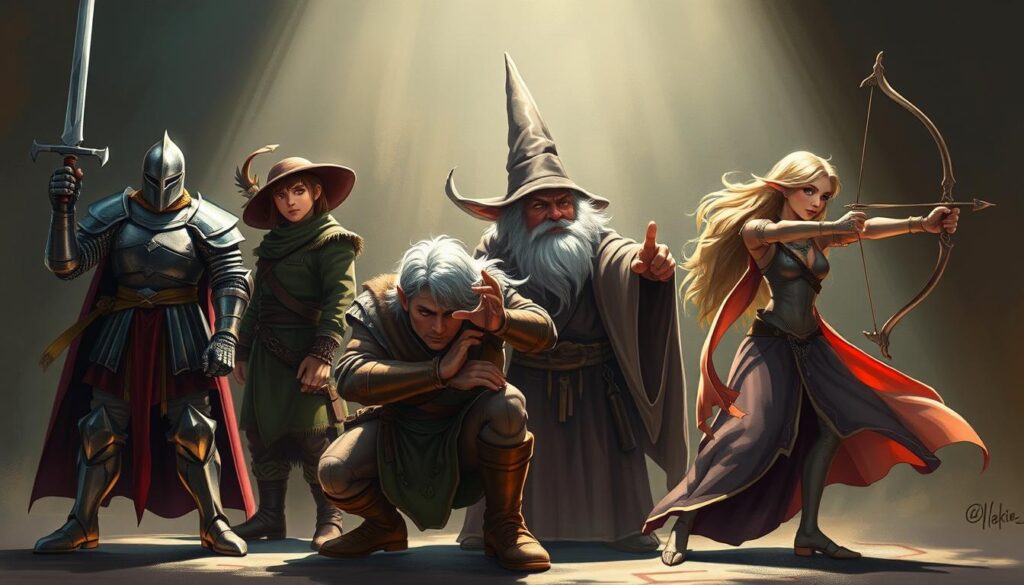
Exploring different character types can make a story richer. It brings in various perspectives and experiences. By using different archetypes, writers can create characters that connect with their audience. For example, the hero archetype can show courage and determination, while the mentor archetype can share wisdom and guidance.
Common Character Archetypes
Some common character archetypes include:
The hero, often the main character, who drives the story with their actions and decisions.
The villain, who opposes the hero, creating conflict and tension in the story.
The sidekick, who supports the hero, often adding comic relief or a different view.
The mentor, who guides the hero, sharing advice and wisdom.
Knowing these archetypes and how to mix them allows writers to create complex characters and stories. By using these character types, writers can make stories that engage and inspire their audience.
In conclusion, exploring different character types and archetypes is key to character development. By understanding and using these elements, writers can craft compelling stories that captivate and inspire their audience.
Building Character Backstories
A character’s journey is shaped by their backstory. This history influences their actions and decisions. It’s the foundation of their personality and motivations.
Creating a detailed backstory is key to making characters feel real. It lets writers explore their fears, weaknesses, and goals. This way, characters’ actions become more believable and consistent.
Crafting a Compelling Backstory
To create a great backstory, start with important events in your character’s life. These could be big changes, traumatic experiences, or achievements. Think about how these events have shaped their personality and actions. For example, a character who lost someone close might fear being left alone.
Also, consider their family, social environment, and key relationships. These can deeply affect their outlook and behavior. A supportive family can make a character more optimistic, while a tough background might make them more guarded.
When writing a backstory, aim for balance. Too much detail can overwhelm the story. Focus on the key events and traits that define your character. The goal is to enrich the story, not to clutter it with too much info.

In conclusion, a well-crafted backstory is essential for character development and a better story. By understanding and using a character’s backstory, writers can make their characters more engaging and real.
Developing Character Traits
Character traits are the foundation of a character’s identity. They shape their actions and how they interact with others. These traits make a person stand out and influence how they are seen by others.
Creating well-rounded characters is key, and traits are essential. Traits can be physical characteristics, personality attributes, or behavioral tendencies. Together, they form a character’s unique persona.

Writers can make characters unique and relatable by highlighting their traits. For example, a character’s optimism or resilience can greatly impact their story. It shapes their choices and relationships.
Character traits also drive personality development. As characters grow, their traits can change, showing new sides of their personality. This change is vital for a compelling story.
A detailed character description, including their traits, helps readers connect. It’s important to strike a balance. The traits should be consistent and believable in the story.
In summary, developing character traits is a critical part of creating characters. By carefully crafting these traits, writers can make their characters come alive. This makes stories more engaging and memorable.
Creating Dynamic Relationships
Dynamic relationships between characters are key to a good story. How characters talk to each other adds depth and emotion. Writers make stories better by making these interactions real and interesting.
Using a character relationship map is helpful. It shows how characters affect each other, leading to conflicts and tension. Dynamic interactions between characters can surprise and keep readers hooked.
In storytelling, character relationships change as the story goes on. Writers should think about how past experiences and traits shape these interactions. This creates a complex web of relationships that enrich the story.
By focusing on character relationships, writers can craft a story that readers connect with. It’s about making interactions believable and engaging. This brings the story to life.
The Art of Character Arcs
The art of creating a character arc is about showing a character’s change in a way that feels real and interesting. A character’s arc is their journey of growth or change in the story. It’s a key part of making characters come alive.
A believable character changes as the story moves along. They grow and adapt, just like people do in real life. This growth makes the story more engaging and meaningful.
To create a strong character arc, show how experiences shape the character. It’s about making a narrative progression that feels true and grabs the reader’s attention.
As characters face challenges, they show their ability to grow and change. This change can be small or big, but it must fit the character and the story.
By mastering the art of character arcs, writers can make characters that readers connect with. The goal is to make the character’s growth feel natural and fit the story’s flow.
Visualizing Your Characters
Seeing your characters in your mind can make your story richer. Even if you’re writing a novel, pictures or descriptions can help bring your characters to life.
Using images or descriptions can help you see your characters more clearly. This can affect how they look, act, and feel in your story. It’s great for creating complex characters with deep stories.
Character visualization is more than just looks. It’s about their personality, how they move, and how they interact with others. Using pictures can make your characters more real and interesting.
Creating a mood board or a character bible is a good way to see your characters. These tools help you gather images, colors, and textures that match your character’s vibe. They guide your writing and keep your story consistent.
Seeing your characters also helps with their storylines and relationships. Having a clear image of your characters helps you understand their goals and struggles. This leads to more detailed and engaging stories.
Maintaining Consistency in Characters
Character consistency is key to a great story. It makes characters feel real and relatable. It’s what turns a character into someone you care about.
To keep characters consistent, writers need to know their backstory and what drives them. They must create a clear character profile. This guides how the character acts and decides in the story. Keeping characters consistent is important for narrative coherence. It builds trust with readers and keeps them interested.
Writers face the challenge of making characters grow in a way that feels true to them. Character development should feel like a natural step, not a sudden change. This requires careful planning and understanding the character’s deep motivations.
To keep character consistency, writers can use tools like character journals and detailed backstories. They can also make sure the character’s dialogue stays true to their personality. These methods help keep the story believable and engaging.
In short, character consistency is essential for creating characters that grab your attention. By keeping character development coherent and actions true to their traits, writers can make stories that resonate with their audience.
Engaging Your Audience with Characters
Crafting characters that readers can relate to is key to a captivating story. By making characters real and complex, writers grab their audience’s attention. This emotional connection makes the story more impactful.
Our characters drive the plot and bring the story to life. They make the tale more memorable and fun to read. To do this, writers need to focus on creating characters that engage and resonate with the audience.
Creating lasting impressions on readers is the goal. Effective character development is essential. It requires understanding what makes characters tick and how they interact with their world.