







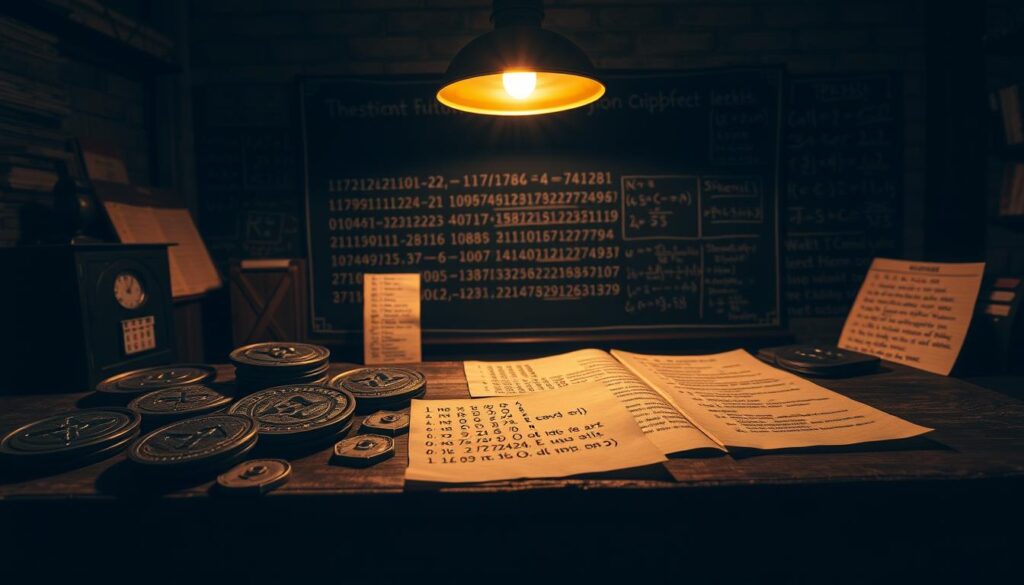
Ever found a cryptic note or coded message and wondered what it said? The art of decoding secret messages has captivated us for centuries.
Decoding secret messages means solving the mystery behind encrypted info. We use many techniques and tools to do this. With the growth of cryptography and ciphers, knowing how to decode messages is key in our digital age.
This article will cover the types of secret messages, how to decode them, and the tools to help you find the hidden secrets.
What is a Secret Message?
Secret messages have been used by many, from military to individuals, to share private info. A secret message is a coded or hidden message meant for one person. It keeps the info safe and private.
The idea of secret messages isn’t new. They’ve been around for ages. Secret messages helped military and diplomatic groups keep info safe. They’ve played big roles in history, showing their value.
Encryption is key in making secret messages. It turns plain text into unreadable code. This way, even if someone catches the message, they can’t read it.
Secret messages can be simple or very complex. The choice depends on how secure it needs to be and what tools are available. Today, digital encryption is used a lot, making messages very secure.
Secret messages are important today, not just in history or military. In our digital world, people and groups use encryption and secret messages to keep their talks safe. Knowing about secret messages helps keep our online talks private.
Types of Secret Messages
The art of secret messaging uses many cryptographic techniques. These include substitution and transposition ciphers. They have helped keep messages safe for centuries, making sure only the right person can read them.
Substitution ciphers swap each letter or symbol for another. The Caesar cipher is a well-known example. It shifts each letter a set number of places down the alphabet. For example, “A” becomes “D” and “B” becomes “E” with a shift of three.
This method was said to be used by Julius Caesar to talk to his generals.
Transposition ciphers change the order of letters or symbols based on a pattern or key. The scytale used by ancient Spartans is a great example. It involved wrapping parchment around a cylinder and writing on it. When unwrapped, the message looked like a mess, but could be read by someone with the right cylinder.
Both substitution and transposition ciphers have been used in many ways. They’ve been used in military messages and personal letters. Learning about these methods shows how cryptography has evolved and how people have always sought to communicate safely.
The Art of Decoding
Decoding secret messages is an art that needs patience, persistence, and a sharp eye. It involves using different techniques to figure out the coded message. One of the best ways is through frequency analysis.
Frequency analysis helps crack codes by looking at how often letters or symbols appear. It’s based on the fact that some letters or symbols show up more often than others in a language. By spotting these patterns, you can start to unravel the code.
Using Frequency Analysis to Crack Codes
To use frequency analysis, first count how many times each letter or symbol appears in the message. Then, compare these counts to the known frequencies of letters in the language. For instance, in English, “E” is the most common, followed by “T” and “A”. By matching these frequencies, you can start replacing the coded letters with their plain text counterparts.
Step-by-step guidance on frequency analysis includes:
First, collect the coded message and count each letter or symbol’s occurrence. Next, compare these counts to the standard frequency tables for the language. After that, start replacing the coded letters with their plain text versions, starting with the most common ones.
Experts say studying popular codes and being patient are key to decoding secret messages. Persistence is essential because decoding can take a lot of time.
With frequency analysis, you can break many types of codes, including substitution ciphers. This method is a powerful tool in decoding, helping people uncover hidden messages.
Famous Secret Messages from History
Throughout history, secret messages have been key in shaping events. They were used by many to share information not meant for everyone.
Julius Caesar is famous for his secret message method. He used a substitution cipher, known as Caesar’s cipher. It replaced each letter with another a set number of places down the alphabet.

The ancient Spartans also had a secret message trick. They used a scytale, a transposition cipher. They wrapped parchment around a cylinder, wrote the message, and then unwrapped it. This made the message look random.
These historical examples show how people used to hide information. They help us understand how encryption has evolved.
The use of secret messages has been common across history. Different cultures used various methods to keep secrets safe.
How to Create Your Own Secret Message
To make a secret message, you need to know the basics of cryptography. The main way is by using ciphers. These are special codes for hiding messages.
There are two main types of ciphers: substitution and transposition. A substitution cipher swaps each letter with another. A transposition cipher changes the order of the letters.
For a substitution cipher, pick a pattern for swapping letters. You could move each letter a set number of spots in the alphabet. For a transposition cipher, decide how to mix up the letters.
For example, write your message in a grid. Then, read the columns to get the secret message. Trying out different ciphers makes your secret messages more fun and tricky.
Popular Tools for Decoding Messages
In today’s digital world, many decoding tools help reveal hidden messages. These tools vary from simple online decoders to advanced software.
Online decoding websites are easy to use. They provide different decoding methods like Caesar cipher and Vigenère cipher. This makes it simple for users to decode messages without needing to know a lot about technology.

For tougher decoding jobs, there’s specialized software. Tools like CrypTool and Cryptool Lite have advanced features. They include frequency analysis and differential cryptanalysis. These tools are great for complex encryption.
Choosing the right decoding tool is key. It depends on the encryption type and complexity. With the correct tool, you can quickly decode messages and find the information you need.
The Role of Encryption in Message Sending
Encryption is key to secure messaging, keeping data safe from prying eyes. In our digital world, keeping messages private and safe is a must.
The third source points out encryption’s role in message security. It shows how encryption techniques protect our sensitive info. These methods go from simple ciphers to advanced algorithms.
Encryption turns plain text into unreadable code. This code can only be read with the right key. So, even if messages are caught in the middle, they stay secret.
A cryptography expert says, “The art of encryption is not just about hiding information; it’s about ensuring that the information remains intact and confidential.” This shows encryption’s role in keeping messages safe and whole.
“Encryption is not just a tool for secrecy; it’s a fundamental component of secure communication in the digital era.”
Encryption’s role in today’s communication is huge. With more digital talk, keeping data safe is more important than ever.
Types of Encryption Techniques
Today, we use many encryption methods. These include symmetric, asymmetric encryption, and hashing. Each has its own use and helps keep our digital talks safe.
In short, encryption is essential for secure messaging. Its importance will keep growing as we use digital ways to talk more.
Real-Life Applications of Secret Messaging
In today’s world, secret messaging is key for keeping information safe. Businesses and diplomatic groups use it to guard their secrets and work smoothly.
Secret messaging is used in many ways, like in business deals and diplomatic talks. Companies send encrypted messages to keep their secrets safe. Diplomatic groups use it to share sensitive info without risking their missions.

The role of secret messaging in business is big. It keeps ideas and plans safe. This is very important in big deals like mergers, where secrets are shared.
In diplomacy, secret messaging helps governments share sensitive info. This keeps diplomatic relations strong and helps solve problems quietly.
In summary, secret messaging has many uses in real life. As technology gets better, so do the ways to keep secrets safe.
Tips for Secure Communication
To keep your messages private, it’s key to follow best practices for secure communication. This means using strong encryption and being careful with sensitive info.
Using secure encryption methods is a big part of keeping messages safe. Encryption keeps your messages away from prying eyes, so only the right person can see them.
“The second source advises being patient and persevering when decoding secret messages.”
Being patient and not giving up is important for decoding secret messages and setting up secure chats. It’s important to check who you’re talking to and use safe ways to share info.
When you share sensitive stuff, be careful and think about the risks. Using secure communication protocols and being smart about what you share can lower the chance of your messages being caught or hacked.
By sticking to these best practices for secure communication, you can make sure your messages stay private. And your chats will be trustworthy.
Conclusion: The Future of Secret Messaging
The world of secret messaging is changing fast. This is thanks to new cryptography and trends in secure talk. As tech gets better, so do the ways we hide and reveal messages.
New cryptography and ciphers are key to secret messaging’s future. Researchers are finding and using better encryption. This makes our private info safer.
Looking ahead, secret messaging will stay important for safe talks. Trends like AI and machine learning in cryptography will make it even better. This will make secret messages more secure and easy to use.
The future of secret messaging looks bright. It will be used in business, government, and personal talks. It will be exciting to see how it adapts to new challenges and chances.