





Exploring the outdoors is exciting, even more so for kids. We went North to find spring and had an unforgettable adventure.
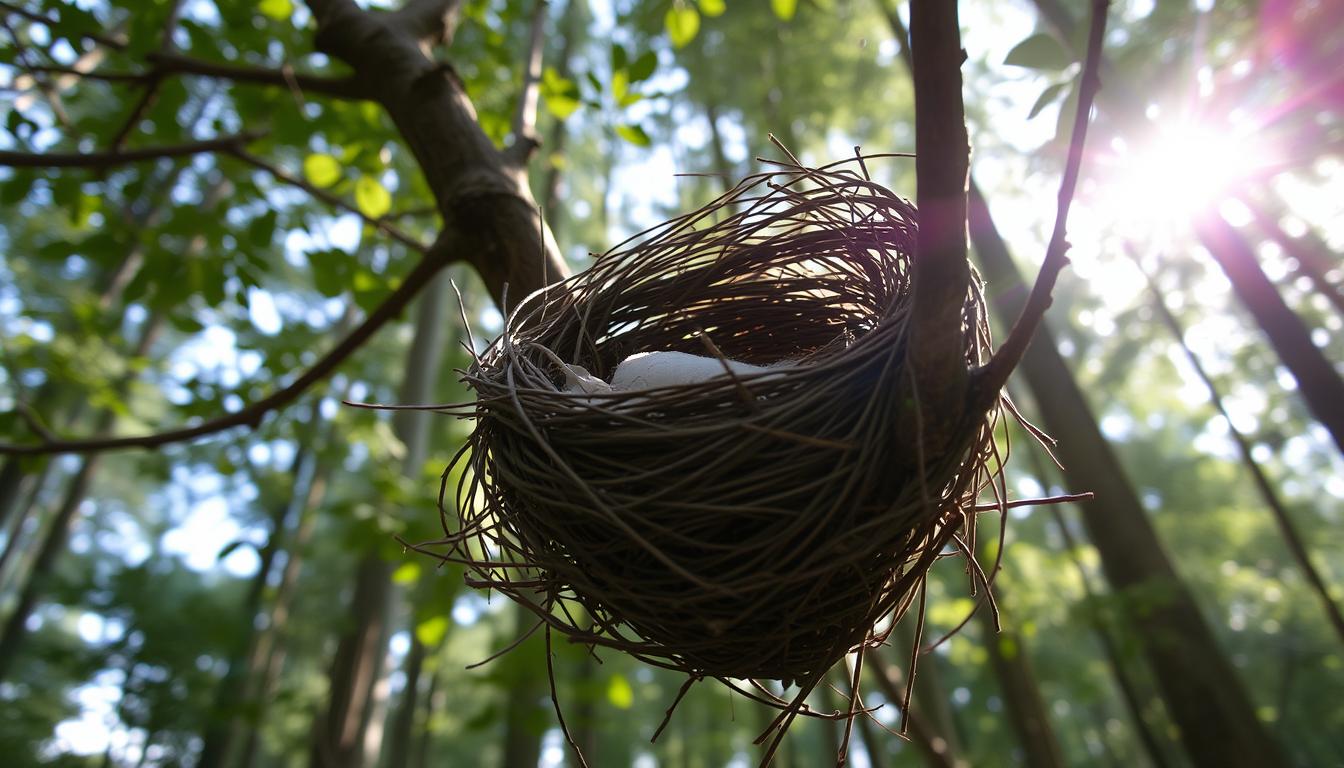
In the woods, we saw a bird’s nest in a tree. My kids were thrilled, drawn in by its beauty.
Finding a bird nest is more than just seeing nature. It teaches kids to love wildlife. It’s a simple way to show them the beauty of nature.
This moment was a reminder that simple things can be the most memorable. The joy of nest discovery made our trip special, leaving a lasting impact on my kids.
The Fascinating World of Birds’ Nests
Exploring the world of birds’ nests shows us their amazing diversity. These nests are not simple homes; they are complex structures that show birds’ ingenuity. I’ve seen their beauty and featured them in my children’s book ‘Whose Home is This?’
Birds use different materials and designs for their nests. Some use twigs and leaves, while others build more complex homes. The variety is astounding. Finding these nests can be an exciting adventure, whether on bush walks or in our gardens.
I’ve seen many interesting nests in our garden and on walks. Some are built high in trees, while others are in shrubs or on the ground. This shows how birds adapt to their surroundings and why we must protect their habitats.
Studying birds’ nests gives us a peek into their lives. It shows their behaviors, preferences, and challenges. By exploring bird nests, we learn to appreciate these creatures and their ecosystems. This reminds us of the need for conservation and our role in protecting these amazing species.
The Purpose of Nests
Nests are vital for birds, serving many purposes. Nesting is a complex behavior. It involves building a safe, elaborate structure for eggs and chicks.
Birds’ nests protect eggs and chicks from predators and harsh weather. They also provide a comfortable environment for the young to grow. This is essential for their development.
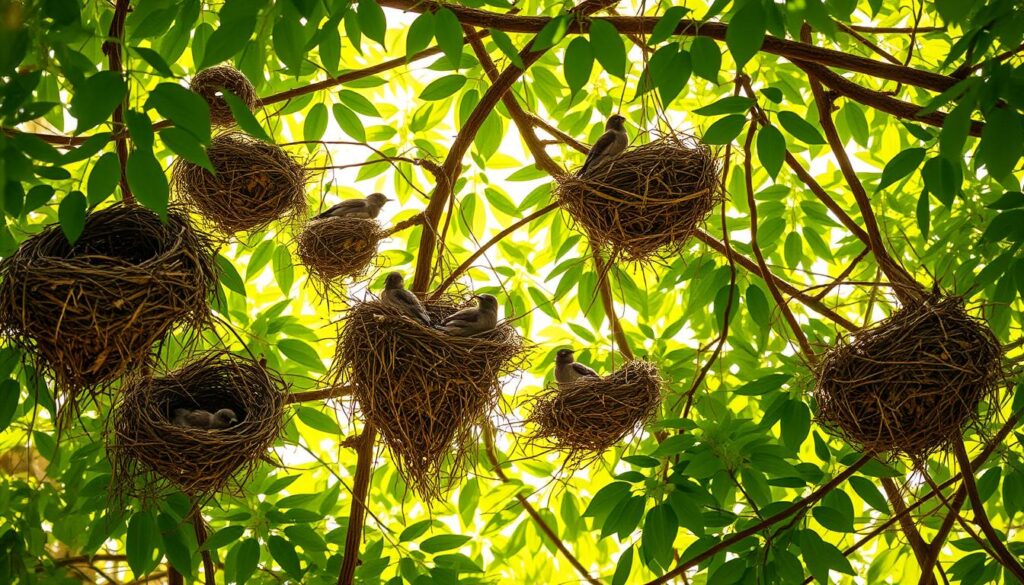
In many bird species, nests are key to their reproductive success. Building a nest is a team effort between the mating pair. They work together, gathering materials and building the nest. This strengthens their bond and boosts their chances of successful breeding.
Most small birds don’t reuse old nests. It’s legal and safe to remove nests in Canada and the US, unless they’re active. Always check local laws before removing a nest. This shows the importance of nests during breeding seasons and the need to respect them.
The purpose of nests in the ecosystem is significant. After birds leave, nests can become homes for other creatures. This adds to biodiversity. Understanding nests’ role in nature highlights the importance of preserving them, mainly during breeding seasons.
Common Nest Materials Used by Birds
Birds use many different materials to build their nests. These materials often match the local environment. They include twigs, grasses, and other plant fibers.
Birds pick these materials with their beaks and talons. They choose what’s best for building their nests. Then, they press and weave these materials together to make a strong nest.
Twigs and branches help make the nest’s frame strong. Grasses and softer materials line the nest. This makes it cozy for the eggs.
Each bird species picks its own nest materials. This shows how they adapt to their surroundings. Learning about these materials helps us understand bird behavior and their roles in nature.
Where to Find Bird Nests
Watching birds and their nests can be fascinating. Start by thinking about the season and where birds like to nest.
In the spring, birds are busy building homes. If you’re quiet, you might see them carrying twigs and leaves. This can help you find their nests.
After a stormy night in autumn or winter, look for nests that might have fallen. This is a good way to spot hidden nests.
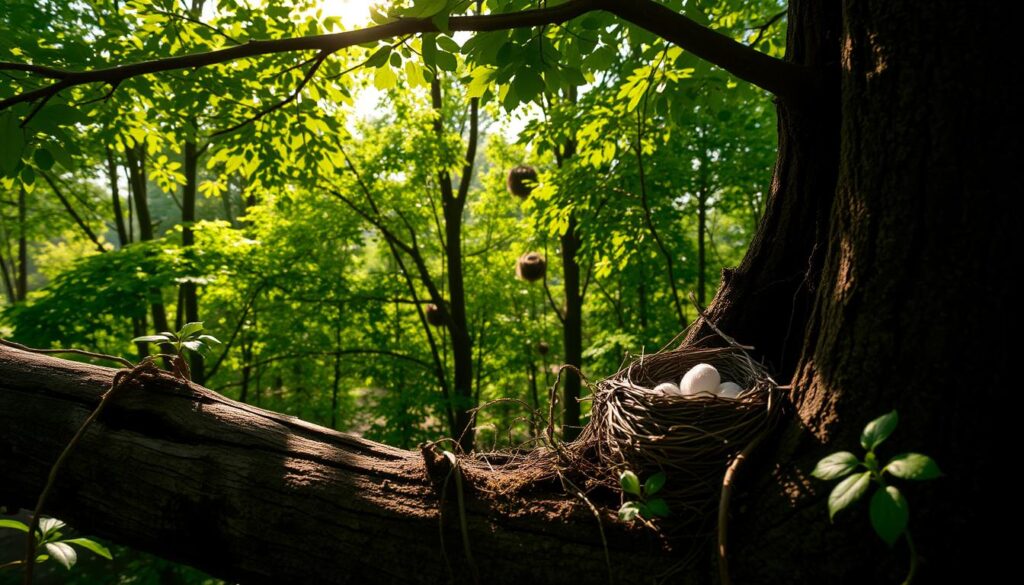
When looking for nests, be patient and quiet. Different birds nest in different places. Knowing your local birds can help you guess where they’ll nest.
By learning about local birds and being careful, you can find nests in many locations all year.
The Nesting Process
The process of building a nest is complex and varies among bird species. It includes several steps. Birds pick the right materials and build a safe, comfy home for their young.
Birds use different methods to build their nests. This depends on their species and where they live. Some make strong nests with twigs and branches. Others use softer stuff like grasses and feathers.
Shaping the Nest
After building the nest’s basic shape, birds often make it smoother. They do this by turning around as they build. This makes the surface smooth and comfy. Some birds even use their beaks to make the nest just right.
The nesting process is key for the eggs and chicks to survive. A good nest protects them from predators and bad weather. This helps the young birds have a better chance of making it.
Learning about the nesting process shows us the complexity and beauty of bird behavior. It’s amazing to see how much effort birds put into building a nest and shaping the nest.
The Importance of Nests in Ecosystems
Bird nests are key to keeping ecosystems in balance. They are more than just homes for birds; they are vital for many species’ survival. They also help make an area more diverse.
Bird nests support many bird species. They offer a safe place for birds to raise their young. This is important for bird populations to keep going. Birds help control insects and spread seeds, which is good for the environment.
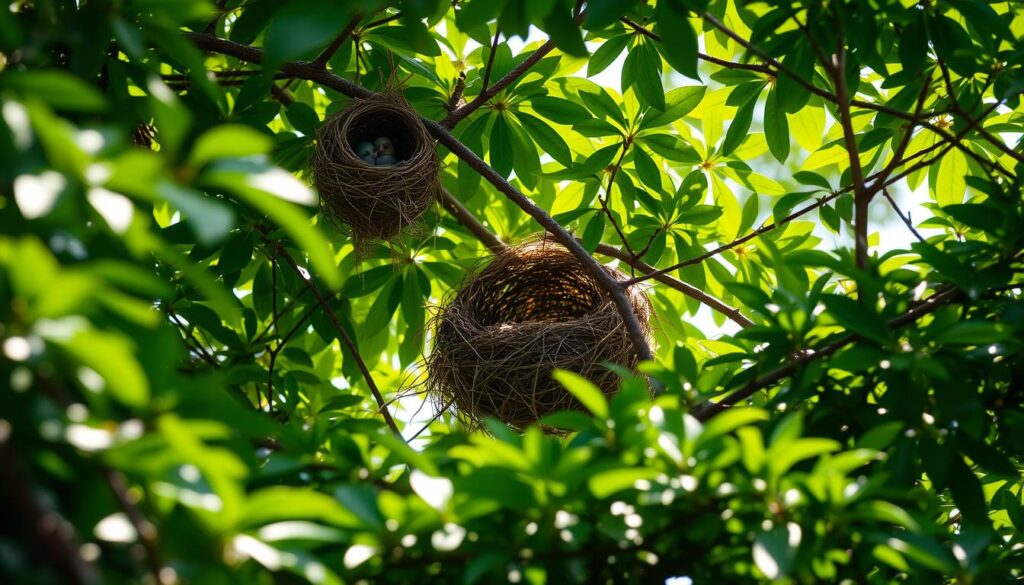
But, bird nests can also harm human-made structures. Bird droppings can corrode buildings and other man-made things. Knowing how nests help ecosystems can guide conservation efforts and reduce damage.
In summary, bird nests are important for many reasons. They support biodiversity and face challenges for human structures. By understanding their role, we can help keep ecosystems healthy.
Bird Nesting Behavior
Birds show amazing behaviors when nesting, driven by instinct and their environment. Choosing where to nest is key for their survival and their young’s success.
Birds look for food, water, warmth, shelter, and safety from predators when picking a nest site. The availability of these resources greatly affects their nesting habits. For example, birds often choose places with plenty of food nearby. This reduces the need for long foraging trips that could attract predators or put them at risk.
The nesting process varies by bird type. Different species have unique preferences for nesting sites. Some, like robins, nest in trees or shrubs, while others, such as killdeer, nest on the ground. Birds use twigs, grasses, mud, and more to build their nests.
The timing of nesting is also key. Many bird species nest when food is plentiful. This timing ensures their chicks have enough to eat when they hatch.
In conclusion, bird nesting behavior is complex and influenced by instinct, environment, and survival needs. Learning about these behaviors helps us appreciate birds more. It also guides conservation efforts to protect these species and their homes.
How to Safely Observe Nests
To enjoy bird nests without harm, learn to observe them safely. Watching bird nests is a joy, giving us a peek into bird lives. But, we must not disturb the birds or their homes.
When you see a nest, be careful. Keep a distance to not stress the birds. If you must touch the nest, do it gently to avoid breaking it. Safely observing nests means watching carefully and being aware of pests.
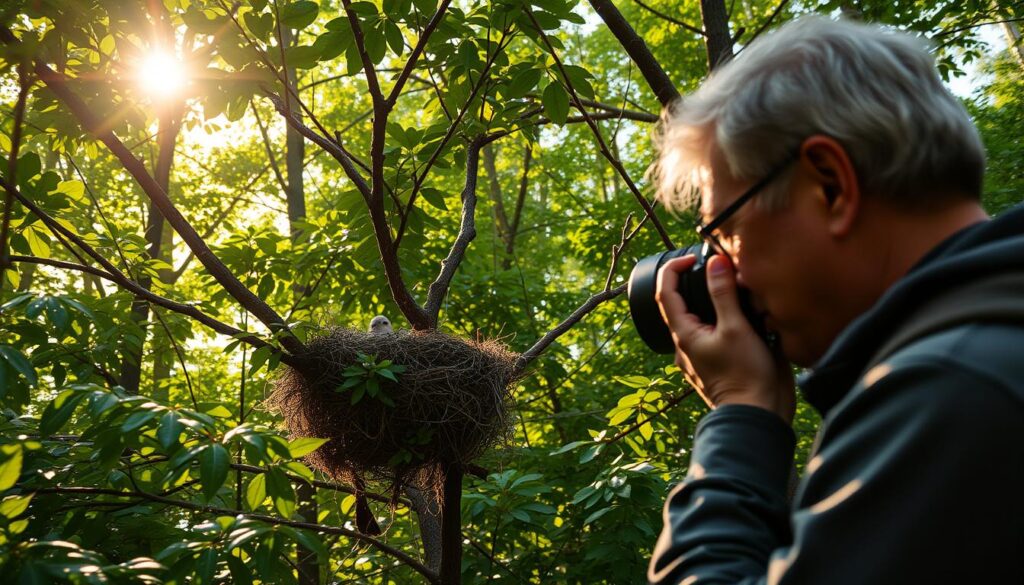
If you’re worried about bugs or fleas in the nest, freeze it in a plastic bag. The cold will kill any pests. This way, you can observe nests safely without pests.
By following these tips, you can watch observing nests while caring for the birds and their homes. Always be cautious and respectful of nature.
Educating Children About Bird Nests
Seeing a bird’s nest can make kids curious, helping them love nature more. Activities about bird nests teach them about birds and the natural world.
Looking at bird nests is a fun way for kids to learn about the environment. They can see how birds live, what they need, and the problems they face.
Learning about bird nests mixes biology, ecology, and conservation. It helps kids learn to observe, think critically, and care for the planet.
A parent shared, “My kids loved learning about bird nests. It was easy and a great way to see nature.” This shows how bird nest exploration can be educational.
To teach kids about bird nests, make it fun and hands-on. Try nature walks, bird-watching, and talks about nests’ role in nature.
Exploring bird nests helps kids connect with nature. It’s not just about learning facts. It’s about loving and protecting our world.
The Future of Bird Nests and Conservation
Exploring the world of birds’ nests is fascinating. It’s important to think about their future and the birds that build them. Protecting bird populations and their homes is key to keeping ecosystems balanced.
If we find a nest of protected birds, we must not disturb it. Letting the birds leave on their own is best. This way, we protect the birds and their nests, helping them to live well in their natural places.
The future of bird nests depends on conservation. This means keeping the places where birds live and breed safe. By supporting conservation, we help ensure the survival of bird nests and the birds that need them.