







The art of storytelling has been key in human communication. It has captured audiences and shared complex ideas for centuries.
Jane Friedman, a seasoned publishing expert, says narrative is vital for writers. It helps them share their message clearly.
Storytelling, whether spoken or written, has the power to engage and inspire. It connects people in a special way.
Let’s dive into the different forms of storytelling. We’ll see how it shapes our lives.
The Power of Narrative in Human Communication
The power of narrative in human communication is clear. It lets us share complex ideas in a way that’s both engaging and easy to understand. Storytelling is key to how we connect with each other, sharing our experiences, feelings, and knowledge.
Narrative helps us form emotional connections with others. It builds empathy and understanding. By sharing our stories, we find common ground, bridging gaps between cultures and societies.
In many areas, like literature, film, and daily talks, storytelling grabs our attention and conveys important messages. The story’s structure helps organize and share ideas clearly and interestingly.
Using narrative power can improve our communication. It makes our messages more relatable and memorable. As seen in reading aloud, finding your own voice is key to good storytelling. This shows how narrative is vital for connecting with others deeply.
The Evolution of Storytelling Through History
Storytelling has changed a lot, from oral traditions to written records. The history of storytelling shows how important it is to us.
Oral storytelling has always been key in sharing stories. It helped cultures keep their cultural heritage alive. They passed down history, myths, and legends through generations.

When we started writing stories, it changed everything. Written stories let us share complex tales over long distances and through time. This move from oral traditions to writing made stories more diverse and detailed.
Different cultures use stories to keep their cultural heritage alive. For example, indigenous cultures tell stories to keep their histories and traditions alive. Written records have also helped civilizations leave a lasting legacy for future generations.
The history of storytelling is full of twists and turns. As we grow, so will our ways of telling stories. This ancient art will stay alive and meaningful to us.
The Fundamental Elements of Compelling Stories
Compelling stories have well-developed characters, structured plots, and effective narrative techniques. These elements captivate audiences and leave a lasting impression.
Character development is key to making a story relatable and engaging. Characters should be multi-dimensional, with their own motivations, conflicts, and backstories. According to the third source, creating memorable characters is essential for engaging stories.
Creating Memorable Characters
To create memorable characters, writers should focus on unique personalities, distinct voices, and nuanced traits. This can be achieved through dialogue, description, and the characters’ actions throughout the story.
Character Arcs and Growth
Character arcs refer to the transformation or growth that characters undergo as the story progresses. A well-crafted character arc adds depth to the narrative and makes characters more relatable and endearing.
In addition to character development, plot structure is vital in keeping the audience engaged. A well-structured plot should have a clear beginning, middle, and end, with twists and turns that keep the reader invested.
Narrative techniques such as dialogue, description, and pacing are also essential. Effective use of these techniques creates a rich and immersive experience for the reader.
“The storyteller’s job is to create a world that is so vivid, so real, that the reader is transported into it.”
By mastering these fundamental elements, writers can craft compelling stories that resonate with their audience. Whether through written or oral storytelling, the key to a great narrative lies in its ability to engage, inspire, and leave a lasting impact.
Oral Storytelling: The Original Art Form
For thousands of years, oral storytelling has been a key way to share stories and connect people. It has amazed audiences worldwide, giving storytellers a chance to engage, entertain, and inspire.
The performance part of oral storytelling is key. It’s not just about the story but how it’s told. Storytellers use voice, pauses, and gestures to make their stories come alive. This creates a deep bond between the storyteller and the audience, making the experience more engaging.
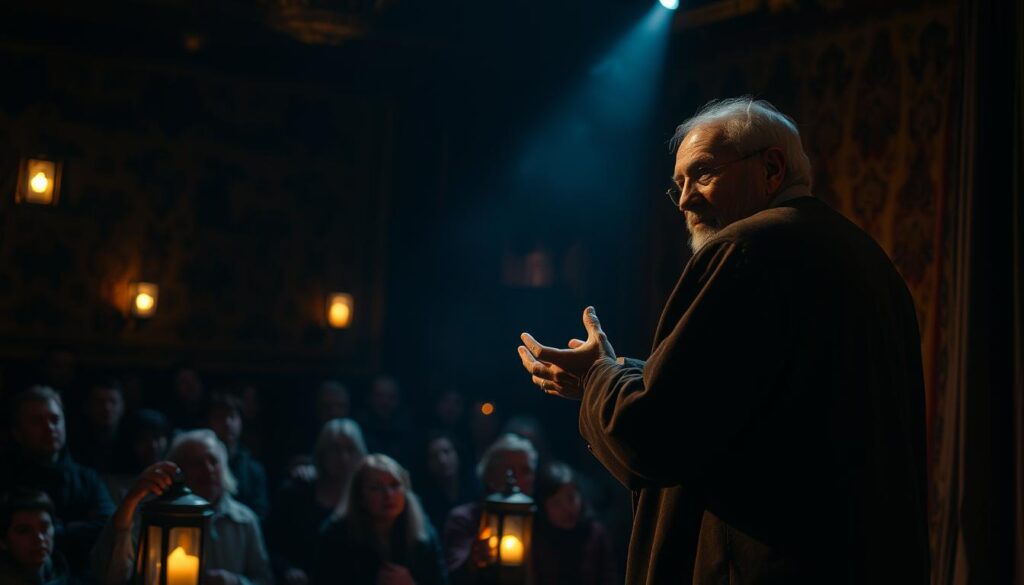
Oral storytelling shines because it allows for improvisation. A good storyteller can change their story based on the audience’s reactions. This makes each performance special and more personal, as the storyteller can match the audience’s mood.
It also lets the audience get involved, either directly or as part of a shared experience. This involvement can strengthen social bonds and create a sense of community. It shows how oral storytelling can unite people.
In summary, oral storytelling is a lively and engaging art form. It can captivate audiences and build community. By mastering performance, audience interaction, and improvisation, storytellers keep this ancient tradition alive and inspiring.
Written Storytelling: Capturing Words on the Page
The art of written storytelling is a mix of the writer’s creativity and the reader’s view. It’s about making a story that grabs, teaches, and holds the reader’s attention.
Using descriptive language is key to good storytelling. It helps paint vivid pictures in the reader’s mind. With sensory details and powerful descriptions, writers can pull the reader into the story.
Jane Friedman says reading your work out loud is vital. It helps refine your narrative voice and spot awkward parts. This method lets you check the story’s flow and make it smoother.
Writing techniques like showing instead of telling and using active voice make stories better. They also help create a dynamic reading experience. By using these methods, authors can make a story that stands out and connects with readers.
The narrative voice is also very important. A good voice can share feelings, build tension, and guide the reader. Developing a unique and engaging voice helps writers connect with their audience and leave a strong mark.
In summary, written storytelling is a complex art. It needs a deep grasp of storytelling techniques, descriptive language, and narrative voice. By mastering these, writers can craft stories that engage and touch readers.
The Art and Science of Storytelling
Storytelling is both an art and a science. It uses techniques that touch our emotions. The art of telling stories is closely linked with the science of how we think and feel.
Good storytelling techniques mean knowing how people react to stories. By using narrative psychology, storytellers make stories that grab and stay with us.

The secret to great storytelling is emotional resonance. When we feel a story, we remember it and let it shape us. This feeling comes from characters, plot, and themes.
Also, knowing how to connect with the audience is key. Storytellers can make their stories hit home by understanding their audience. This mix of art and science makes stories powerful.
Reading out loud, as in finding the “music in words,” boosts a story’s emotional impact. It helps storytellers perfect their craft. Their stories then touch our hearts as well as our ears.
Cultural Differences in Storytelling Traditions
Storytelling traditions vary worldwide, showing the unique histories and values of cultures. Storytelling is a universal language, but it’s expressed differently in each culture. This is due to their distinct cultural, social, and historical backgrounds.
In many indigenous cultures, folklore and mythology are key in storytelling. They carry cultural values and historical events. For example, Native American stories explain natural wonders and the world’s creation. These tales often include animals and supernatural beings.
Western cultures, on the other hand, value written storytelling. Literature is a big part of their cultural heritage. Written stories help keep historical accounts, myths, and legends alive, shaping how stories are shared.
The cultural differences in storytelling also show in how stories are told. In Africa, oral storytelling is a treasured tradition. Stories are passed down through generations by word of mouth. They’re often told with music and dance.
Learning about these storytelling traditions and their cultural roots helps us appreciate the many ways stories are shared. By embracing these differences, we can build a stronger connection with cultures beyond our own.
Digital Storytelling in the Modern Age
The rise of digital media has opened new ways for storytellers to connect with their audience. Digital storytelling is now a key tool, allowing creators to craft stories with multimedia, interactive features, and immersive experiences.
Digital storytelling lets creators reach more people online. They can share their stories on social media, blogs, and dedicated websites. This makes it easier to connect with readers and viewers all over the world. The use of multimedia narratives makes the story richer, combining text, images, audio, and video.

Interactive stories are a big part of digital storytelling. They let the audience take part in the story, making it more immersive. This can be simple choices that change the story or complex, branching narratives with many endings.
But digital storytelling also has its challenges. It’s hard to keep the audience engaged in a crowded online space. It’s also important to make sure the story doesn’t get lost in all the multimedia elements. Yet, when done right, digital storytelling can lead to more online engagement. People are more likely to share and interact with dynamic, interactive content.
In conclusion, digital storytelling is a big step forward in the art of telling stories. By using digital platforms and multimedia, storytellers can create engaging, interactive experiences that grab the attention of today’s audiences.
Practical Exercises to Enhance Your Storytelling Skills
To become a skilled storyteller, you need to practice often. This means doing different storytelling exercises. These exercises help you tell stories better and connect with your audience.
Improving your storytelling starts with vocal techniques. Work on changing your tone, pitch, and volume. Try recording yourself and listen to find ways to get better.
Voice and Delivery Exercises
Exercises that focus on voice and delivery are key. Practice speaking in front of a mirror. Pay attention to your facial expressions and body language. This helps make your storytelling more engaging and expressive.
Improvisation Skills
Developing improvisation skills is also important. Improvisation lets you think quickly and handle unexpected moments. It makes your storytelling more dynamic and interesting.
To better engage your audience, tell stories to different groups. Watch how they react. This helps you adjust your storytelling to fit different audiences, making your stories more impactful.
By adding these storytelling exercises to your routine, you’ll get better at captivating your audience. Remember, the secret to mastering storytelling is to keep practicing and be open to improving.
Crafting Your Unique Storytelling Voice for Future Tales
Creating a unique narrative identity is key for great storytelling. Your voice makes your stories stand out and memorable. Studies show that reading out loud helps writers find and improve their voice.
Try out different storytelling styles to find what fits you and your audience. Being true to yourself in your stories helps you connect with readers. This connection is what makes your stories special.
Your unique voice is a powerful tool. It can captivate and inspire your audience. By staying true to yourself, you’ll create stories that really resonate with readers.