





Volcanic landscapes have amazed people for centuries. They show the Earth’s power and beauty. At the center of these landscapes is the volcano crater. It’s a bowl-shaped area made by volcanic activity or other geological events.
A crater is more than a geological feature. It’s a peek into the Earth’s inner workings. By studying volcanic craters, scientists learn about the Earth’s past. They understand how our planet has changed over millions of years.
Let’s dive into the world of volcanoes and their craters. We’ll look at the science behind these wonders. And we’ll talk about the adventures of those who explore them.
What is a Volcano?
Volcanoes are landforms that happen when magma from inside the Earth comes to the surface. This results in eruptions. These formations are not just amazing but also shape our planet’s surface.
A volcano is a vent or fissure in the Earth’s crust. It lets magma, gases, and ash out. Volcanoes can look different, from shield volcanoes to stratovolcanoes. Each type has its own look and way of erupting.
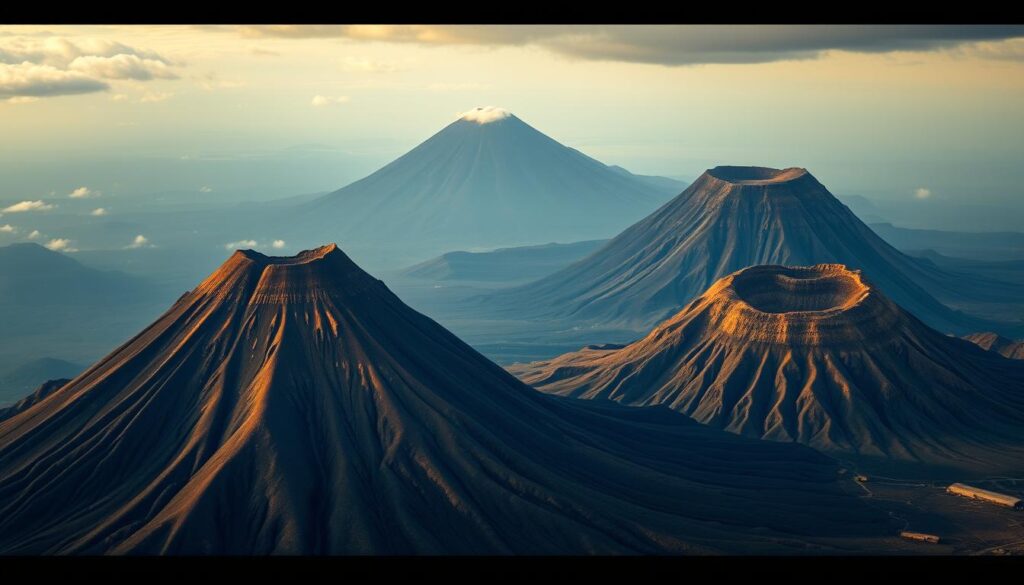
There are main types of volcanoes like shield volcanoes, stratovolcanoes, and cinder cones. Shield volcanoes are big and look like a shield. They form from fluid lava flows. Stratovolcanoes are tall and have layers of lava, ash, and more. Cinder cones are small and steep, made from ash and cinder.
Volcanoes create craters, which can be big or small. Some craters are deep and steep, others are wide and shallow. Knowing about volcanoes helps us understand their craters and how they form.
Studying volcanoes is complex. It involves understanding geological processes and predicting eruptions. By learning about different volcanoes, we appreciate our planet’s dynamic nature.
Why Study Volcanoes?
Studying volcanoes is key to understanding the Earth’s inner workings and reducing volcanic risks. Scientists learn about the Earth’s inside and can forecast eruptions by studying volcanoes.
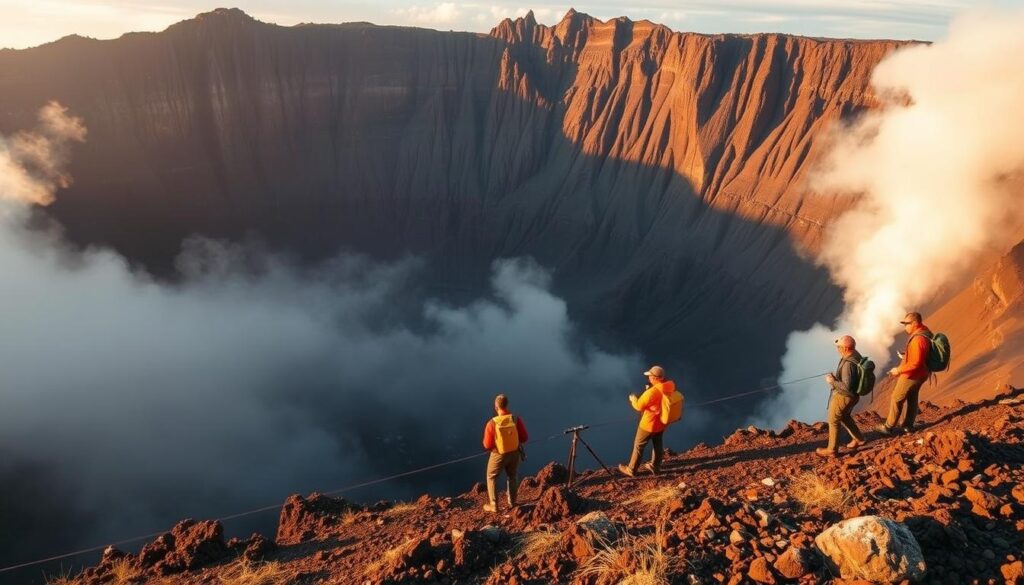
Volcanologists closely watch volcanic activity. They use methods like flying over volcanoes to study lava lakes. For example, Mount Erebus in Antarctica is closely monitored to predict its future.
Predicting eruptions is a major goal of volcanic research. Scientists look at volcanic activity data to spot patterns that might mean an eruption is coming. This helps save lives by evacuating people and preventing disasters.
Volcanoes also help us understand the Earth’s history. By studying volcanic rocks and volcano structures, researchers can piece together the Earth’s past. This knowledge helps us understand how our planet has changed over time.
“Volcanoes are a window into the Earth’s interior, showing us how our planet is shaped.”
Famous Volcanoes in the United States
The U.S. is home to a wide range of famous volcanoes. These landmarks have shaped the country’s landscape and are part of its culture.
Mount St. Helens in Washington State had a major eruption in 1980. It caused a lot of damage and loss of life. Now, it’s a key place for studying volcanoes.
Kilauea in Hawaii has been erupting non-stop for over 40 years. Scientists study it to learn more about volcanoes and the Earth’s surface.
The Meteor Crater in Arizona is another notable site. It’s 1.2 kilometers wide and 175 meters deep. It draws visitors from everywhere.
The U.S. has many volcanoes, each unique. Alaska’s Katmai National Park and Hawaii Volcanoes National Park are just a few examples. They show us the power of nature.
Volcanic Landmarks and Tourism
Volcanoes in the U.S. are not just geological wonders. They’re also big tourist spots. They offer hiking, camping, and science adventures. This helps local economies and teaches people about volcanoes.
By studying these volcanoes, we learn more about our environment. We also understand the dangers of volcanic activity.
The Journey to a Volcano’s Crater
Getting to a volcano’s crater is a test of courage and curiosity. The path is tough, needing physical fitness and mental toughness.
Before you start, check the volcano’s activity. The United States Geological Survey (USGS) updates volcano conditions daily. You can find this info on their website or through webcams near the volcano. This is key for a safe trip.
Preparation is Key
Preparing for a volcano visit means more than just checking the weather. You need to know the terrain, dangers like toxic gases and ash, and how to handle tough landscapes.
Safety firstshould guide all your decisions. Wear sturdy boots, masks, and layers for changing weather.
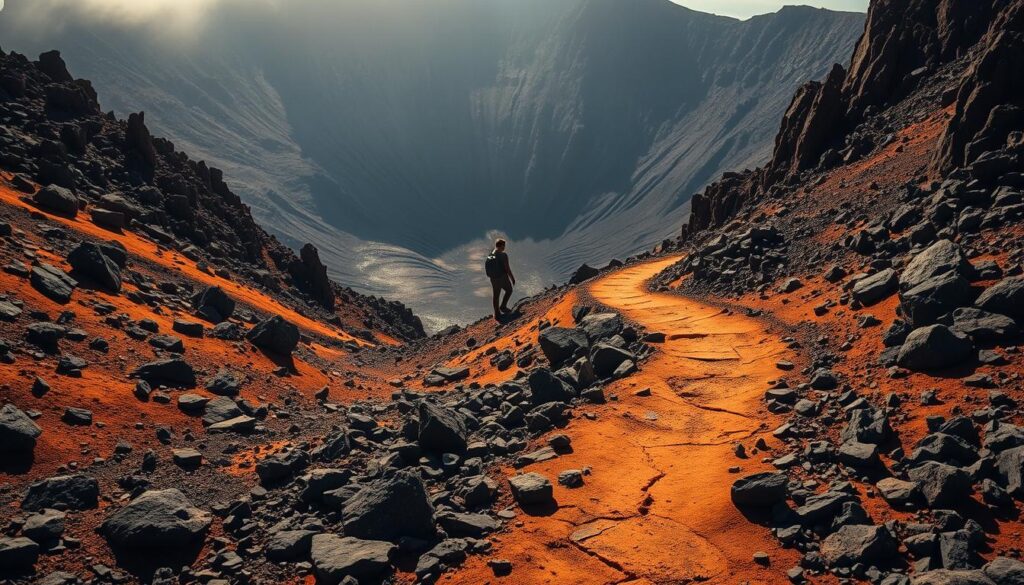
Volcanic activity can change fast. Knowing this is vital. The USGS updates on volcanoes and what to expect during a visit. This includes gas emissions, ash fall, and eruptions.
Being ready and informed makes for a safe and rewarding visit. The trip to a volcano’s crater is about the journey and learning, not just reaching the end.
Exploring volcanoes deepens our respect for them. The journey to a volcano’s crater is a discovery of the landscape and ourselves.
Exploring the Crater’s Geography
Volcanic craters are formed when rocks and materials burst out. This process is complex, involving magma and other materials from deep inside the Earth.
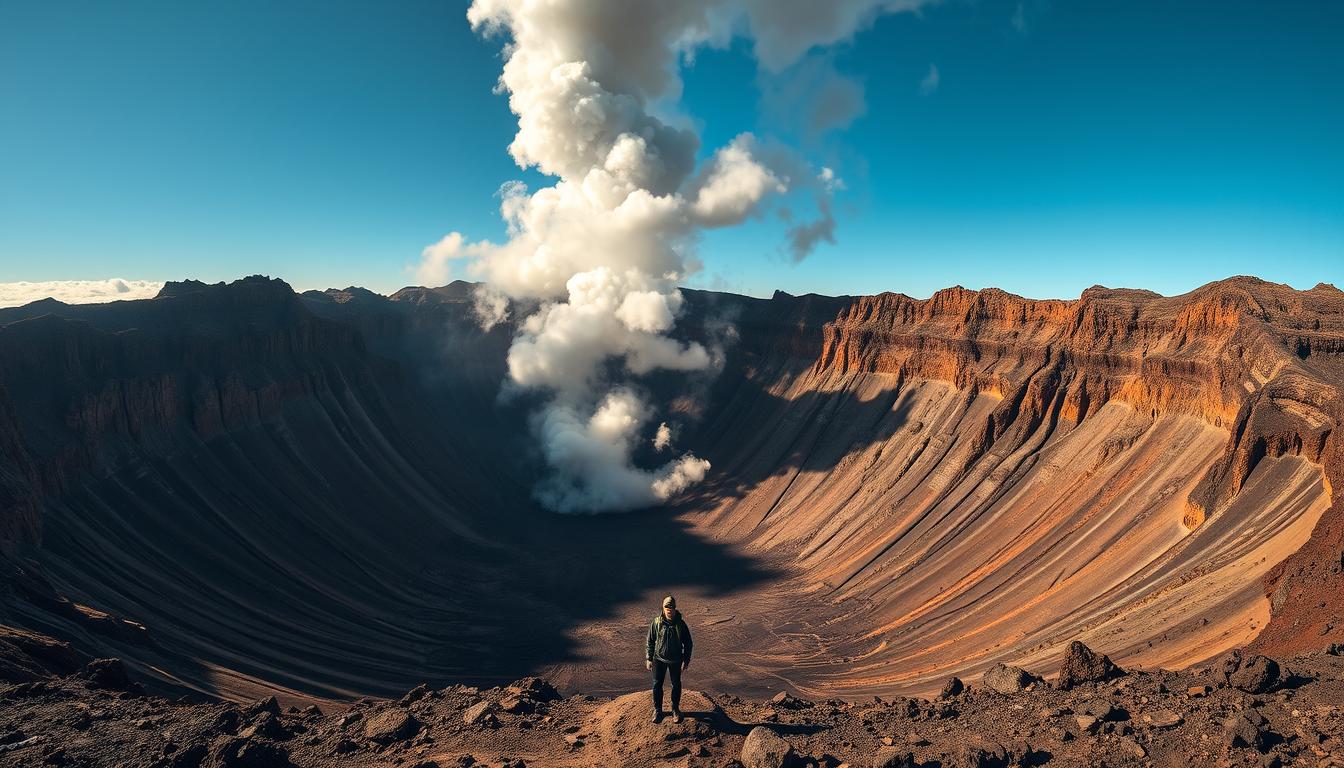
The shapes and sizes of volcanic craters vary a lot. Some are deep and narrow, while others are wide and shallow. Inside these craters, you can find lava lakes, volcanic ash, and unique landforms shaped by eruptions.
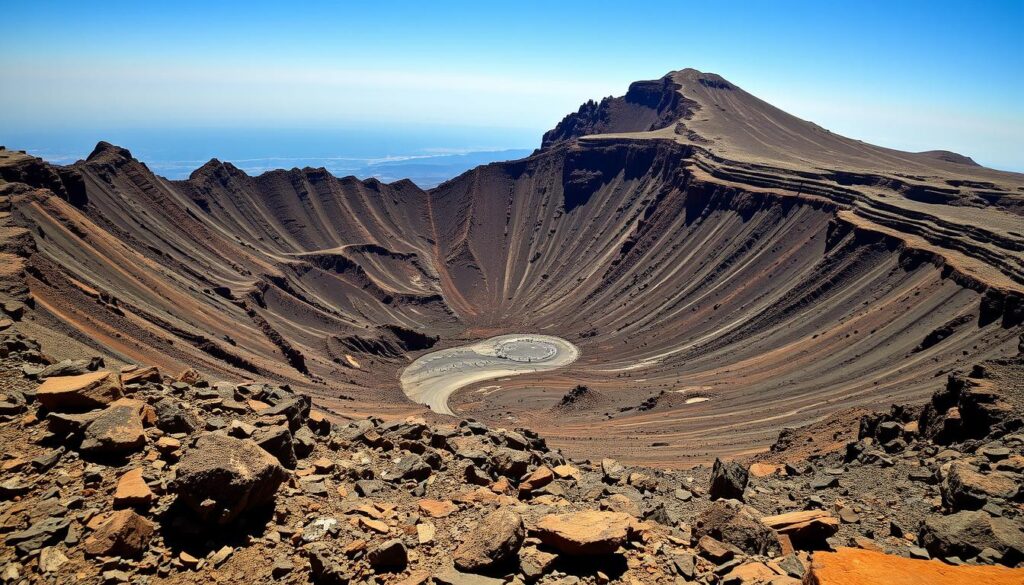
Lava lakes are a fascinating sight in volcanic craters. These large pools of molten lava offer scientists a peek into volcanic activity and the Earth’s inner workings.
Craters also have fumaroles, which release steam and gases, and layers of volcanic ash. These features help scientists understand the volcano’s past and future.
In summary, studying volcanic craters is a rich field that reveals much about the Earth. By looking at the different features inside craters, scientists can learn a lot about volcanoes and how they shape our planet.
Volcanic Activity and Monitoring
Volcanologists use advanced methods to watch volcanic activity. This helps us predict eruptions better. Volcanoes erupt in bursts, making it hard to keep track.
Volcanic activity monitoring uses many techniques. These include seismic monitoring, gas analysis, and measuring ground changes. These help scientists understand volcanoes and spot signs of eruptions.
Predicting volcanic eruptions is tough because volcanoes are hard to predict. But, new monitoring tools have made forecasting better. By looking at data from different methods, scientists can spot patterns that mean an eruption might happen.
The role of monitoring volcanoes is very important. It gives us vital info for keeping people safe. Good monitoring can save lives and lessen the damage from eruptions.
Even with the hurdles, scientists keep working to better predict eruptions. By mixing data from various sources and using advanced models, they can give more accurate warnings. This helps everyone stay safe.
Cultural Significance of Volcanoes
Volcanoes have deeply influenced human culture, from ancient rituals to today’s practices. They inspire awe and reverence, shaping myths, art, and spirituality globally.
In Hawaiʻi, the Kīlauea eruption is a sacred reminder. It has changed the landscape and deeply impacted native Hawaiian culture. The volcano is seen as a sacred site, home to the goddess Pele.
Volcanoes’ importance goes beyond Hawaiʻi, affecting cultures worldwide. They symbolize power, fertility, and destruction. Myths and legends about them have been passed down, showing our complex bond with volcanic landscapes.
Today, volcanoes inspire art, literature, and film. They represent natural power and the sublime. Volcanic imagery conveys emotions and ideas, from nature’s beauty to human fragility.
Studying volcanoes’ cultural significance helps us understand our relationship with nature. It reveals how humans perceive and interact with volcanic landscapes through history, myths, and modern culture.
The Future of Volcano Research
New technologies are changing how we study volcanoes. Fields like remote sensing, geophysics, and data analytics help scientists watch volcanoes better. They can now predict eruptions more accurately.
Emerging Technologies in Volcanology
Remote sensing technology is a big leap forward. Satellites with advanced sensors track volcanic activity from space. They give real-time info on gas emissions, heat, and ground changes. A top volcanologist says,
“The mix of satellite data with ground observations boosts our eruption forecast skills.”
Volcano research is also getting better through teamwork. Scientists from geology, physics, chemistry, and computer science work together. This team effort helps create detailed models of volcanic behavior. It’s key to grasping the complex reasons behind eruptions.
New tech and methods will keep improving our volcano knowledge. A famous scientist notes,
“Volcanology’s future looks bright, with new tech and methods set to greatly aid our volcano studies.”
This shows the promise of new findings and the need to keep funding volcano research.
Visiting a Volcano Crater Safely
Exploring a volcano crater can be exciting, but it’s important to plan carefully. You need to know about the dangers like volcanic fumes and sudden collapses. Also, watch out for hidden cracks.
Make sure to stay away from closed areas marked by ropes and signs. These warnings are there to keep you safe from volcanic dangers. By following the rules, you can enjoy the crater’s beauty safely.
Learn about the volcano’s hazards before you go. Wear protective gear and stick to the trails. Also, keep an eye on the weather. Being prepared makes your visit safe and memorable.