







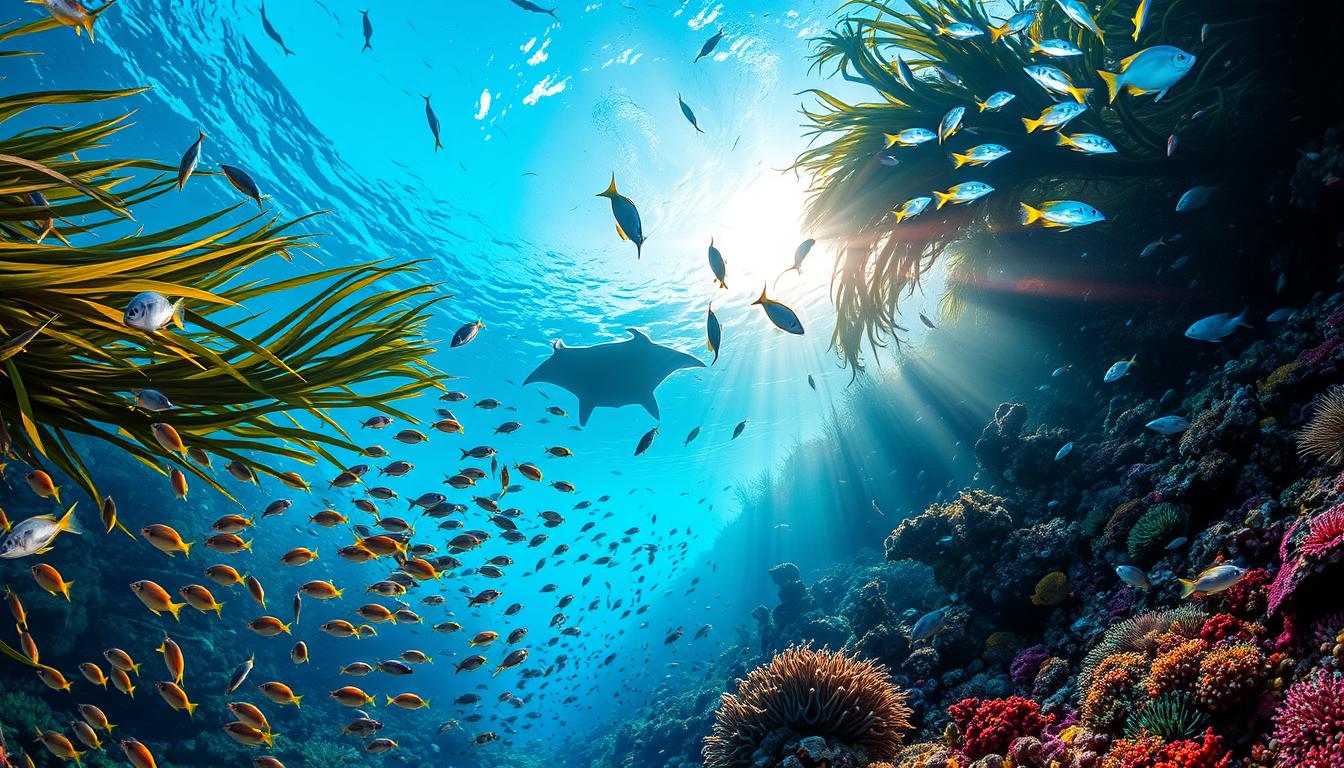
The world’s oceans are filled with a wide variety of marine life. From the vibrant coral reefs to the enigmatic deep-sea creatures, they are breathtaking. Exploring these underwater worlds shows their beauty and stresses the need for ocean conservation.
When we dive into the ocean, we find an amazing range of species and ecosystems. They are both captivating and delicate. The article “Sea Creatures: Discovering God’s Underwater Wonders” by a team of experts highlights the beauty of the underwater world. It also emphasizes the importance of saving these treasures for the future.
By learning about marine life and their habitats, we gain a deeper appreciation. This understanding helps us see why ocean conservation is so critical.
What Lies Beneath: An Introduction to Underwater Exploration
The deep sea has always fascinated us. It calls us to explore its secrets. Underwater exploration is a unique adventure, showing us a world full of beauty and mystery.
The Seven Underwater Wonders project by CEDAM International shows us amazing places under the sea. Places like hydrothermal vents and coral reefs are stunning. They are home to many different sea creatures, making them great for diving and snorkeling.
The Allure of the Deep
The ocean’s depths are captivating. Maybe it’s the excitement of finding hidden treasures or learning about these unique places. Whatever it is, underwater exploration keeps pulling us in, promising amazing experiences.
There are many dive spots around the world. Places like the Caribbean’s coral reefs and the Mediterranean’s shipwrecks offer unique views. The Seven Underwater Wonders project shows us just how diverse and beautiful these places are.
Exploring the ocean’s depths helps us find new species and understand their habitats. It also teaches us about the need to protect our oceans. The deep sea is not just for adventure; it’s also about caring for our planet’s last frontier.
The Fascinating World of Marine Life
The underwater world is teeming with life, showing a wide variety of species. From simple plankton to complex dolphins and whales, marine life is incredibly diverse.
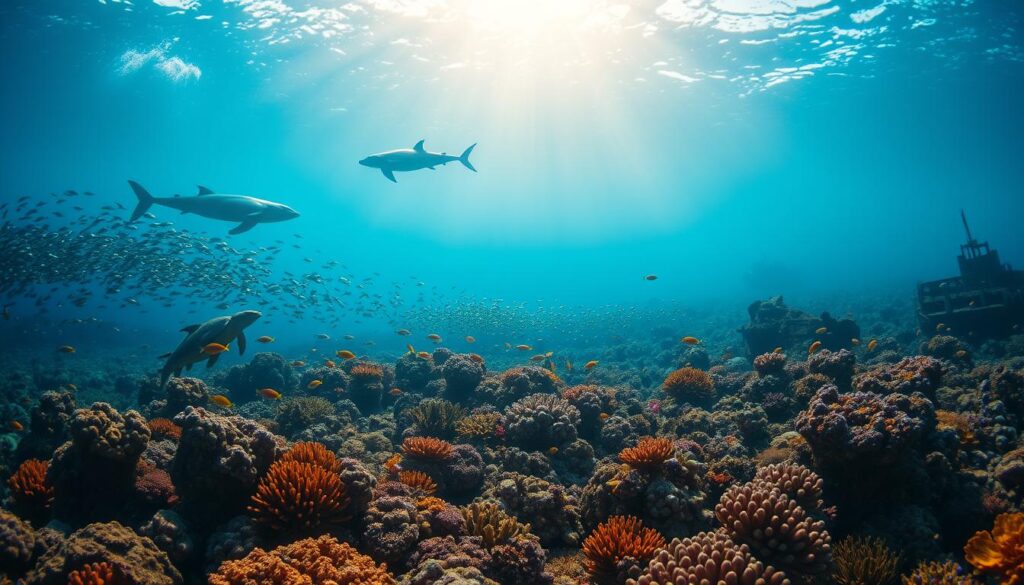
Sea creatures have amazing adaptations for living underwater. Some fish glow to communicate or hide from predators. Others have strong tails to swim through the ocean.
These species are key to the ocean’s health. They help keep the ocean balanced. For example, coral reefs are homes for many species and protect coastlines.
Oceanic research keeps discovering new marine life and ecosystems. This research helps us understand how humans affect the ocean. It also guides efforts to save marine life.
Exploring the ocean shows us its complexity and beauty. Studying sea creatures and their homes expands our knowledge. It also fills us with wonder and a need to protect our oceans.
Underwater Photography: Capturing the Depths
Underwater photography is more than just taking pictures. It’s about sharing the story of the underwater world and its amazing creatures. With the right gear and safety steps, divers can take stunning photos that show the beauty and complexity of marine life.
To do well in underwater photography, you need the right equipment. This includes a quality underwater camera, strobes or lights for light, and a strong housing that can handle water pressure.
Your safety is key. Always check your gear, plan your dive, and know your surroundings to stay safe. Safety considerations are essential, making sure your dive is fun and safe.
It’s also important to understand marine life. Photographers should learn about the creatures they want to capture. This way, they can respect their home and avoid harming them.
By using your technical skills and knowing the underwater world, you can take amazing photos. These photos not only show the ocean’s beauty but also help protect marine life.
The Science of Underwater Ecosystems
Underwater ecosystems, like coral reefs, are key parts of the ocean. They house a wide variety of marine life. This includes fish, invertebrates, and algae. The complexity of these ecosystems shows their rich biodiversity.
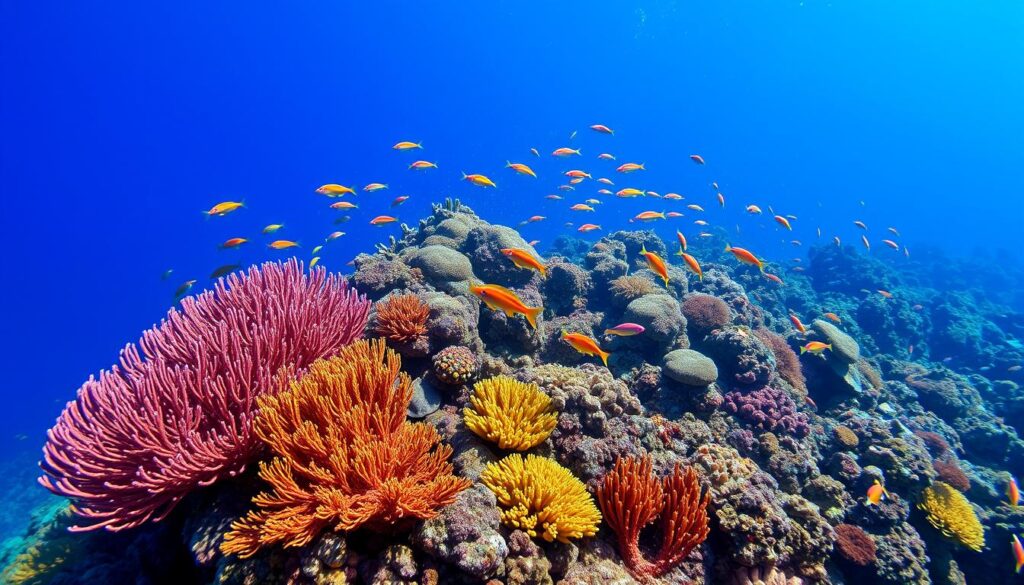
The role of underwater ecosystems is huge. They give food and jobs to millions and protect coastlines. Coral reefs, in particular, are vital for the ocean’s health. They support a quarter of marine species, despite covering a small part of the ocean.
Threats to Coral Reefs
Coral reefs face many dangers. Climate change is a big threat, causing sea temperature rises that lead to coral bleaching. Pollution, overfishing, and destructive fishing also harm them.
“Coral reefs are not just beautiful to look at; they are critical ecosystems that support a vast array of marine life and protect coastlines. It’s imperative that we take action to conserve these ecosystems.” – Dr. Jane Smith, Marine Biologist
Conserving coral reefs and other underwater ecosystems is a big challenge. It needs global cooperation and local action. We must reduce pollution, create marine protected areas, and support sustainable fishing. Understanding these ecosystems and their threats helps us see why ocean conservation is so important.
In summary, underwater ecosystems like coral reefs are more than just wonders. They are vital for our planet’s health. Protecting them is a shared responsibility. We must work together to tackle the challenges they face.
Diving into Adventure: Popular Dive Destinations
Exploring the ocean reveals its beauty and diversity. Our planet’s oceans offer many diving experiences. From colorful coral reefs to deep lakes, each is unique.
CEDAM International’s Seven Underwater Wonders project highlights top dive sites. The Belize Barrier Reef is a standout. It’s a vibrant coral reef ecosystem, full of life.
Lake Baikal in Russia is another gem. It’s the largest and deepest freshwater lake. Its clear waters and unique species make it a must-see for divers.
Diving in these places is exciting and teaches us about ocean conservation. Divers help protect our oceans. They show us why we need to care for these places for the future.
These dive spots inspire awe and wonder. Each offers a glimpse into the underwater world. Whether it’s a coral reef or a freshwater lake, they are all special.
Underwater Sports: From Diving to Snorkeling
Snorkeling and diving are more than just sports; they open doors to the ocean’s secrets. These activities let us see the colorful world under the sea, full of life.
Snorkeling is perfect for beginners. It needs just a mask, snorkel, and fins. You can float and watch the marine life without going deep.
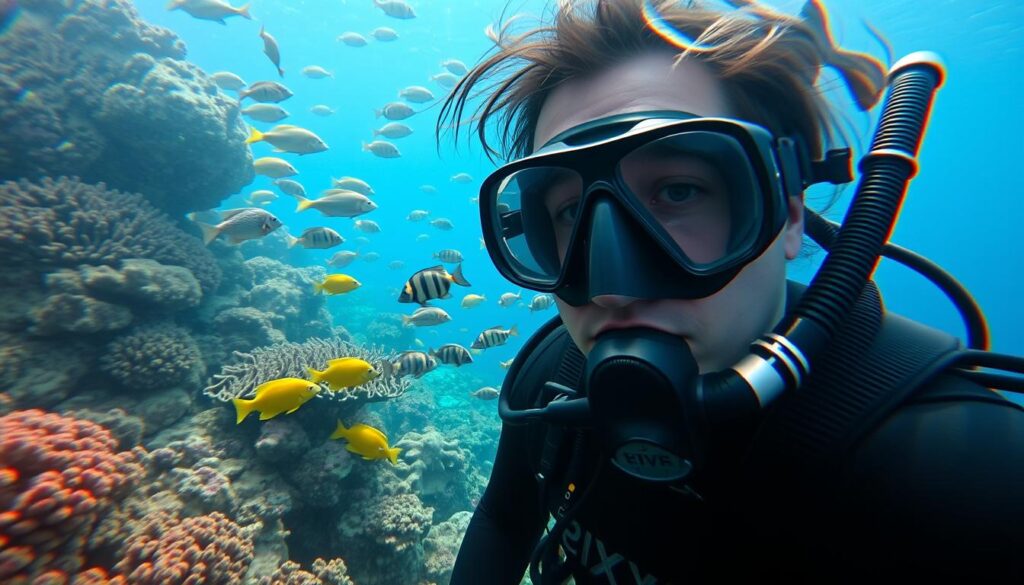
To get more out of snorkeling, learn to clear your mask underwater. Exhale softly through your nose to remove water from your mask. This keeps your view clear.
Another skill is navigating underwater currents. Knowing how to use currents can make snorkeling easier and more fun.
Diving takes you deeper, letting you see the ocean’s depths up close. You can explore coral reefs and shipwrecks, diving into new worlds.
Whether you dive often or snorkel sometimes, these sports connect us with the sea. It’s important to care for our oceans and use sustainable practices.
The Art of Underwater Filmmaking
Underwater filmmaking is more than just filming the ocean floor. It’s about telling a story that encourages us to protect our oceans. Through these films, we see the beauty and complexity of marine life in its home.
This art form combines technical skills with a love for nature. It creates films that teach and motivate people all over the world. Filmmakers face many challenges, like water pressure and limited visibility, to capture the ocean’s wonders.
Specialized equipment, like underwater cameras and lights, is key in this field. Filmmakers must also learn about marine animals to get real and captivating footage.
The theme of ocean conservation is common in these films. They show the ocean’s beauty and its need for protection. This encourages viewers to help save our oceans and its creatures.
Thanks to new technology, underwater filmmaking is now more accessible. This means more people can create films that highlight the need to protect our oceans for the future.
Mysteries of the Deep: Unexplored Underwater Areas
Most of the ocean is a mystery, waiting to be explored. Projects like the Seven Underwater Wonders show the ocean’s beauty. They also highlight how much we don’t know yet.
The ocean’s depths are not just beautiful; they hold scientific secrets. Underwater exploration has helped us understand ocean ecosystems. But, there’s so much more to discover.
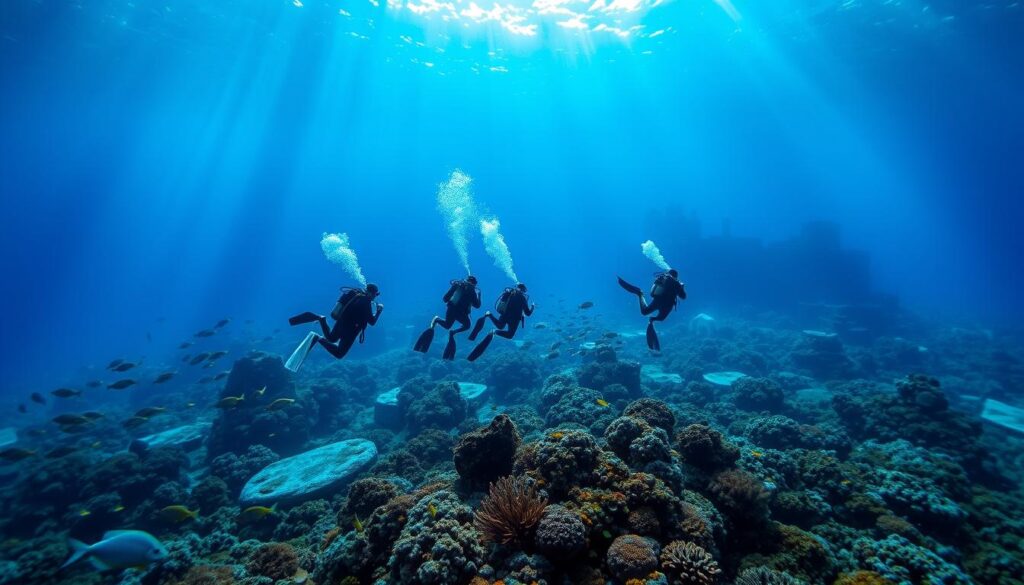
Exploring these unknown areas is more than just an adventure. It’s about understanding and protecting our oceans. Oceanic research in these places can uncover new species and ecosystems. It can even give us insights into Earth’s history.
The challenge of exploring the ocean’s depths is big. But the rewards are worth it. As we explore more, we learn more. We also inspire others to protect our oceans for the future.
Cultural Significance of the Ocean
The ocean holds deep cultural value, showing its role in history, spirituality, and daily life globally. It inspires, supports livelihoods, and sparks wonder, shaping cultures in countless ways.
In coastal areas, the ocean is closely tied to local traditions and myths. For example, in Hawaiian culture, the sea is seen as a family ancestor, embodying the spirit of ‘Aumakua, or ancestral guardians. In Japan, the ocean is celebrated for its abundance and beauty, with many festivals and rituals focused on fishing and the sea.
The ocean’s economic role also adds to its cultural importance. Industries like fishing, tourism, and shipping create jobs and shape local identities and traditions. For instance, in Norway, fishing is not just a job but a cultural tradition, with traditional methods passed down through generations.
The ocean also holds spiritual significance for many communities. The idea of marine conservation is tied to cultural and spiritual beliefs. Efforts to protect sacred marine sites highlight the need for ocean conservation that respects both the marine environment and cultural heritage.
In today’s world, the ocean’s cultural importance is growing. Modern societies are realizing the importance of marine life and the need to protect it. This is shown in the support for marine protected areas and sustainable practices that keep marine ecosystems healthy.
In summary, the ocean’s cultural significance is a complex mix of history, spirituality, and economics. As we look to the future, it’s vital to respect this significance and work towards ocean conservation that protects our planet’s vital marine resources.
The Future of Underwater Exploration
Underwater exploration is on the verge of a big change, thanks to new technologies. These advancements will help us understand the ocean better and protect it too.
Autonomous underwater vehicles (AUVs) are leading this change. These robots can dive deep and gather data for a long time. A study found that AUVs have changed how we explore the ocean, allowing us to map the seafloor with great detail.
“The use of AUVs has opened up new avenues for oceanographic research, enabling scientists to study the ocean in ways that were previously impossible.”
Other technologies like advanced sonar, underwater sensors, and ROVs are also helping a lot. They help us learn more about ocean ecosystems and protect marine life. Dr. Jane Smith, a top oceanographer, says, “These technologies are vital for ocean conservation.”
Conservation is very important. The ocean faces many dangers, like pollution, overfishing, and climate change. We need to keep working on ways to protect it. This includes saving marine habitats, cutting down on plastic, and supporting sustainable fishing.
Looking ahead, combining new technologies with conservation efforts is key. This will help us understand and protect the ocean for future generations. With a focus on innovation and sustainability, we can make the future of underwater exploration bright.
Underwater Conservation: Protecting Our Oceans
The health of our oceans is key for the planet. Underwater conservation is vital in keeping this balance. Our oceans face threats like pollution, overfishing, and climate change. This makes conservation efforts more important than ever.
Establishing marine protected areas (MPAs) is a key strategy in ocean conservation. These areas offer a safe space for marine life to grow. They are free from human activities that can harm them. MPAs are essential for keeping biodiversity and ensuring our oceans stay healthy.
Community Involvement in Conservation
Community involvement is key to successful marine conservation. By getting local communities involved, we can spread the word about ocean protection. This encourages them to join in conservation efforts.
People can help with underwater conservation in many ways. They can join beach cleanups, support ocean conservation groups, and make eco-friendly choices. Every action helps, and together we can make a big difference.
As we go forward, supporting ocean protection efforts is critical. By working together, we can create a healthier, more sustainable future for our planet.
Resources for Further Underwater Exploration
If you’re excited to learn more about underwater exploration, there are many resources out there. The National Oceanic and Atmospheric Administration (NOAA) and the Ocean Conservancy have lots of info. They cover marine life, conservation, and underwater ecosystems.
Looking to improve your skills? Check out online courses and certification programs. They teach underwater photography, filmmaking, and diving techniques. Guides from experts share tips on capturing the beauty of the ocean.
Whether you’re an experienced diver or just beginning, these resources will aid your journey. They offer a wealth of knowledge about the underwater world.