




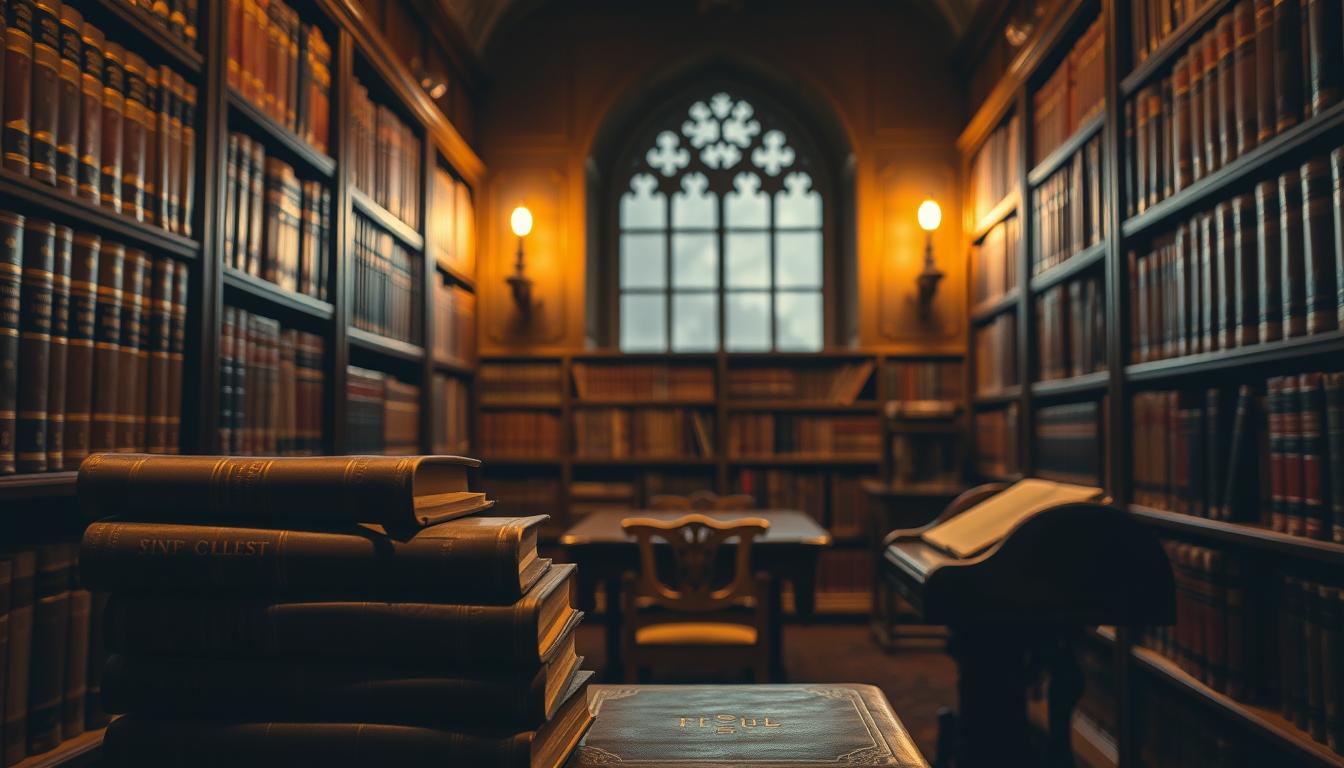
Discovering rare books is exciting for book lovers. The thrill of the search is a big part of the fun. You never know what hidden gems you might find.
The idea of hidden books in a library is intriguing. It shows the vast resources waiting to be found. Searching through these collections can be rewarding. It offers insights into history, literature, and printing’s evolution.
The Treasure Hunt: What Makes Books “Hidden” in a Library
Exploring a library can feel like a big challenge, like finding a needle in a haystack. This is true when searching for ‘hidden books’.
Some books are “hidden” because they are very valuable or sensitive. For example, the Library Cave at Dunhuang was found in the early 1900s. It had thousands of ancient manuscripts hidden for centuries, giving us a peek into the past.
Other books are kept hidden because they have sensitive or controversial information. The Ben Ezra synagogue in Cairo had a special room for old texts. This room was not to be destroyed, and it eventually became a treasure trove of historical documents.
Misclassification also plays a role. When books are misplaced or cataloged wrong, they can stay hidden for years. This shows how important a well-organized library collection is.
“The discovery of these hidden texts can be a thrilling experience, akin to uncovering a hidden treasure.”
The hunt for rare books and hidden texts is very exciting. Librarians and archivists are key in keeping these texts safe and sharing them with the public.
In summary, the idea of “hidden books” in libraries is complex. It involves history, access, and cataloging. Knowing about these aspects can make exploring library collections even more rewarding.
Understanding Your Local Library System
Exploring your local library can seem overwhelming at first. But, learning its system opens up a world of possibilities. At the core is the Dewey Decimal System, a way to organize books and materials using numbers.
The Dewey Decimal System breaks down into ten main categories, from 000 to 900. It covers everything from general knowledge to history and technology. This makes it easy to find books on similar subjects together.
“The Dewey Decimal Classification system is used in 200,000 libraries in at least 135 countries.” –
Libraries also have a library catalog to help you find books or authors. This digital database lists all the library’s materials, including where they are and if they’re available.
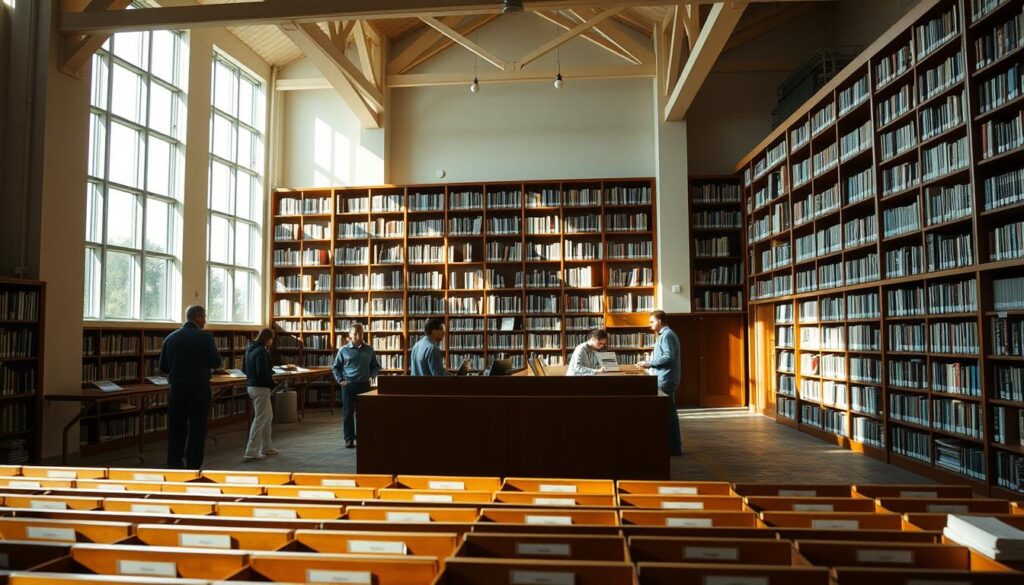
Knowing how to use the library catalog and the Dewey Decimal System makes your visits better. It helps you find books quickly and discover new ones that catch your interest.
By understanding these basics, you can dive into a sea of knowledge. And make your library visits more rewarding.
Navigating the Dewey Decimal System Like a Pro
Learning the Dewey Decimal System opens up a world of books in your local library. It’s a way to organize books and materials by numbers. This makes it simple to find what you’re looking for.
The system breaks down into ten main classes, from 000 to 900. These cover everything from general works to history and geography. Each class gets even more specific, helping you find exactly what you need.
The Dewey Decimal System also makes a big difference between fiction and non-fiction. Fiction books usually have their own section, not using the Dewey Decimal System. Non-fiction books, on the other hand, are sorted by their subject.
For example, a historical novel might be in the fiction section. But a book about history would be in the 900s.
Specialty Classification Systems
Some libraries also use specialty classification systems for certain books. This includes biographies, local history, or large print books. These systems help you find specific types of books more easily.
For instance, a library might have a special section for biographies. This makes it easy to find books about famous people.
By getting good at the Dewey Decimal System, you can explore your library better. You’ll find new books and discover interesting topics.
The Library Catalog: Your Digital Map to Hidden Treasures
The library catalog is more than a list of books. It’s a digital map that reveals the library’s hidden gems. Modern catalogs are advanced tools that help you find new titles and authors.
With a library catalog, you can search for books in many ways. You can look by title, author, subject, or keyword. This lets you refine or expand your search as you like. You can also filter by date, language, or format to find what you need.
Digital catalogs have big advantages over old ones. They’re always current, available anywhere with the internet, and easy to use. They’re key for anyone wanting to explore a library’s collection.
Using a library catalog can lead you to hidden gems. Advanced search features or recommended readings can introduce you to books you might not have found on your own.
In short, the library catalog is a powerful tool for finding hidden books. It lets you discover new authors, topics, and interests. This makes your reading experience richer and more exciting.
Special Collections: Where Unique Books Hide
Libraries have more than just regular books. They have special collections with rare books, manuscripts, and unique materials. These collections are full of history, culture, and literature.
Special collections include everything from ancient texts to modern first editions. For example, the Vatican Secret Archives and the Private Case in the British Library are famous. They have rare books and historical documents.
To see these special collections, you often need an appointment. Librarians take care of these collections, keeping them safe for the future. Exploring these collections lets you find unique books you can’t find anywhere else.
Special collections are important because they show us the past. They offer original materials that are great for research and learning. Whether you’re a historian, researcher, or book lover, visiting a library’s special collections is a great adventure.
Befriending Librarians: Your Secret Weapon in the Library
Librarians are more than just book checkers. They are experts who can guide you to your next favorite book. By building a relationship with your local librarians, you unlock a treasure trove of knowledge about the library.

These dedicated professionals love literature and are eager to share their insights. They can help you find books in the vast collections. They also inform you about upcoming events and programs.
Preparing Your Questions
To get the most from librarians, prepare your questions in advance. Think about what you’re looking for. Are you into a specific genre or books like a favorite? Being clear helps librarians give you better recommendations.
Following Up on Recommendations
After getting book suggestions, make sure to follow up. Share your thoughts on the books they recommended. Ask for more suggestions based on your feedback. This helps librarians understand your tastes better and makes your experience more engaging.
By befriending librarians and using their knowledge, you can greatly improve your library experience. You’ll discover new authors and titles you might have missed.
Digital Resources Your Library Offers
The modern library is a center of digital innovation. It offers e-books, online databases, and more. These digital tools have changed how we get information, letting us explore a wide range of materials from anywhere.
E-books are a big hit. Libraries have a huge collection of e-books that you can borrow and read on devices like e-readers, tablets, and smartphones. This is great for those who like reading on screens or need books that aren’t in print.
Libraries also have online databases covering many subjects. You can find everything from science and history to literature and art. These databases are key for research, giving you access to journals, news, and more that you might not find elsewhere.
Other digital resources include online learning platforms, digital magazines, and streaming services for music and movies. These options meet different interests and ages, making the library a lively community spot.
To use these digital resources, you need a library card. After logging in, you can dive into the library’s digital collection. You’ll find a wealth of information right at your fingertips.
Exploring the Stacks: Physical Browsing Strategies
Browsing in a library is an art that can lead to discovering new books and authors. With the right strategies, a simple visit can turn into a thrilling journey of literary discovery.
First, get to know your library’s layout. Libraries use systems like Dewey Decimal or Library of Congress to organize books. Knowing these systems helps you find books faster. For example, history books are in the 900s section in Dewey Decimal.
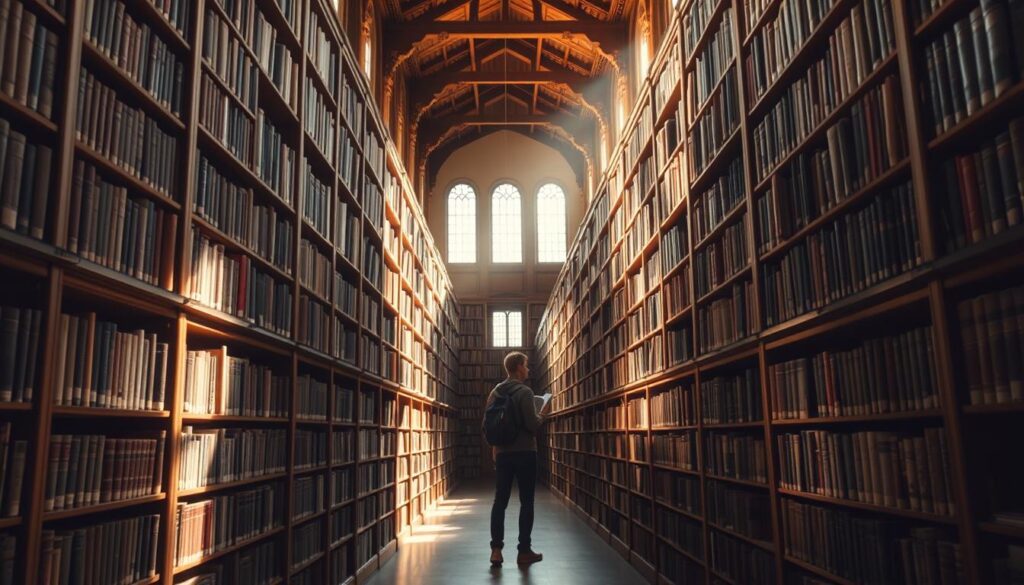
Browsing adjacent shelves can also uncover new finds. If you like a book, check out the ones next to it. They often deal with similar subjects and might introduce you to new authors or topics.
Try exploring different library sections too. Sometimes, stepping out of your comfort zone can lead to serendipitous discoveries. You might discover a book that broadens your view or introduces you to a new genre.
Lastly, don’t shy away from asking librarians for recommendations. They know about new books, popular titles, and hidden gems. By using these strategies, you can improve your browsing and make the most of your library visits.
Library Events and Programs That Reveal Hidden Gems
The modern library is a lively place where library events and programs connect books and people. These events are more than fun; they’re chances to find new authors, genres, and topics. You might discover things you never knew you’d like.
Author readings are a big part of library programs. Here, authors talk about their books, sharing their writing journey and the ideas behind their stories. It’s a special way to dive deeper into literature.
Book clubs are also key. They’re where readers meet to talk about books, sharing their thoughts and views. Joining a book club can lead you to new books and authors you might not have found on your own.
A library patron said, “Going to library events has shown me a whole new world of books. I’ve found authors I love and met other book lovers.” This shows how library events can change readers’ lives.
“Libraries are not just about books; they’re about the people and the community. Events and programs are key to this.”
In short, library events and programs are great for finding hidden treasures. By taking part, you grow your love for books and join a lively community of readers and writers.
Community Knowledge: Tapping Into Collective Wisdom
To find the best in a library, you need to use community insights. Today’s library experience is more than just looking at books or using digital tools. It’s about tapping into the wisdom of everyone around you.
Online platforms and local groups are key in this effort. They offer a place for readers, writers, and library fans to share tips, talk about books, and learn about new authors.
Goodreads and Library-Focused Communities
Goodreads is a great example of an online community that changes how we find books. It has groups for all kinds of genres and topics. Users can find and join discussions that match their interests. Library-focused groups on Goodreads share book lists, talk about unknown authors, and discuss new releases.
Local Social Media Groups
Local social media groups, like those on Facebook or Nextdoor, are also very useful. These groups are made up of people who love books and libraries. They share book tips, talk about library events, and sometimes plan book clubs or meet authors.
By joining these communities, you get access to a lot of knowledge beyond what libraries offer. It’s about being part of a bigger conversation that makes your library visit better.

Using community knowledge is a great way to make your library visit richer. It’s not just about finding a book. It’s about connecting with others who like the same things.
The Joy of Serendipitous Discovery in Libraries
Discovering new books in a library is a joyful experience. The thrill of finding a hidden gem is special. As you look through the shelves, you might find a book that speaks to you.
This chance discovery is key to the library experience. It lets you explore new genres and authors easily. By trying new things, you discover more and grow to love reading even more.
The library is more than books; it’s a doorway to new experiences. As you keep exploring, you’ll find that finding new things is a big part of the library. It changes your reading journey in a good way.