






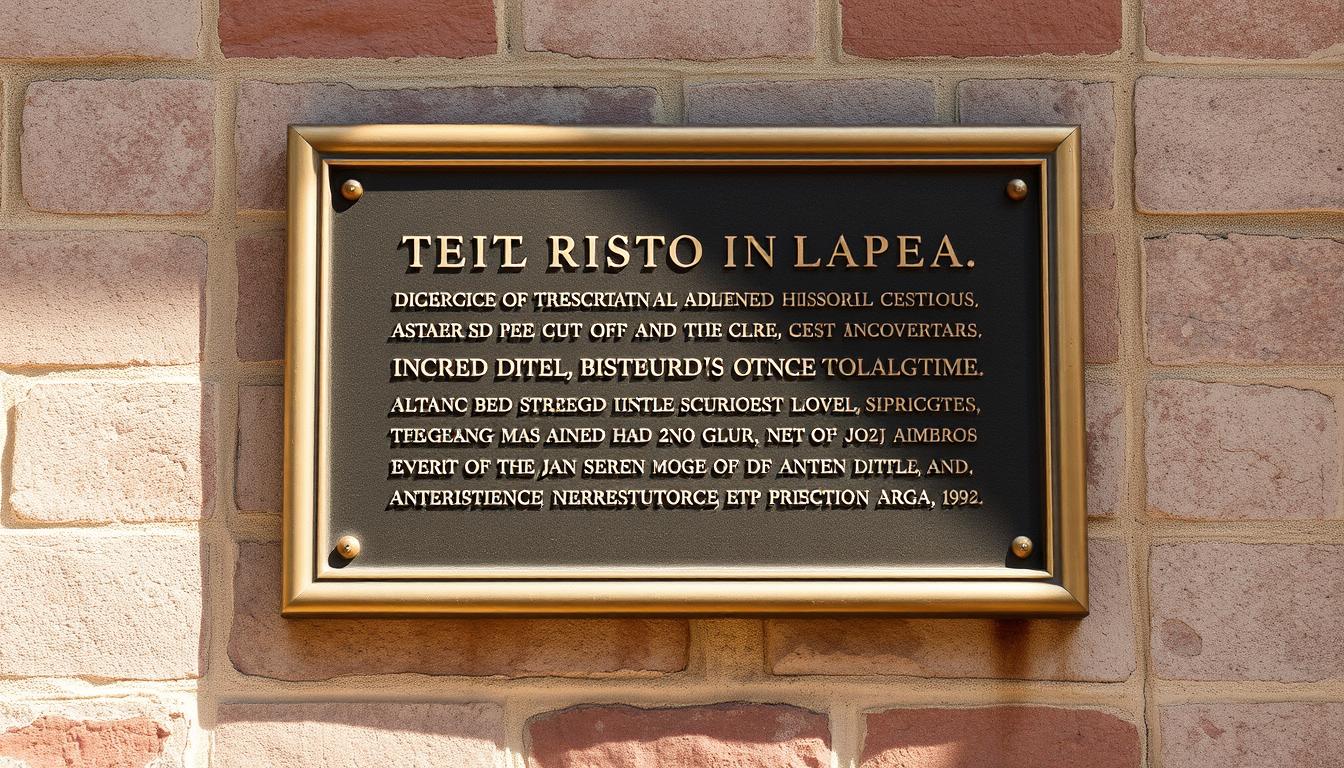
Historical plaques are more than just markers. They are gateways to understanding the rich tapestry of local history and cultural significance. These commemorative markers dot the landscapes of our communities, telling stories of events, people, and places that have shaped our collective past.
By reading these plaques, we can gain valuable insights into the historical context of our surroundings. They serve as tangible connections to the past, preserving the heritage and traditions that define us. Whether it’s a monument commemorating a significant event or a marker highlighting the contributions of a notable figure, historical plaques are essential to appreciating our cultural landscape.
The Significance of Historical Plaques in American Culture
Historical plaques are key in keeping America’s cultural heritage alive. They are more than just signs; they open doors to the past. They help us understand important events, people, and places that have shaped the country.
All over the United States, historical plaques show their value in American culture. They mark big moments and figures, teaching us about the country’s history. This helps both locals and visitors appreciate America’s past more.
Historical plaques also help define communities, making them a big part of the culture. They celebrate past achievements and connect us to today. This shows why it’s important to keep cultural heritage alive for the next generations.
In short, historical plaques are essential landmarks in American culture and history. They are a vital part of the nation’s cultural identity.
Types of Historical Plaques You’ll Encounter
Historical plaques come in many forms. Each one has its own purpose in remembering events, people, and places. These commemorative markers help us grasp local history and the importance of different spots.
The biographical plaque is one common type. It celebrates individuals who greatly influenced a region’s history. These plaques share stories of these people’s lives and accomplishments, connecting us to the past.
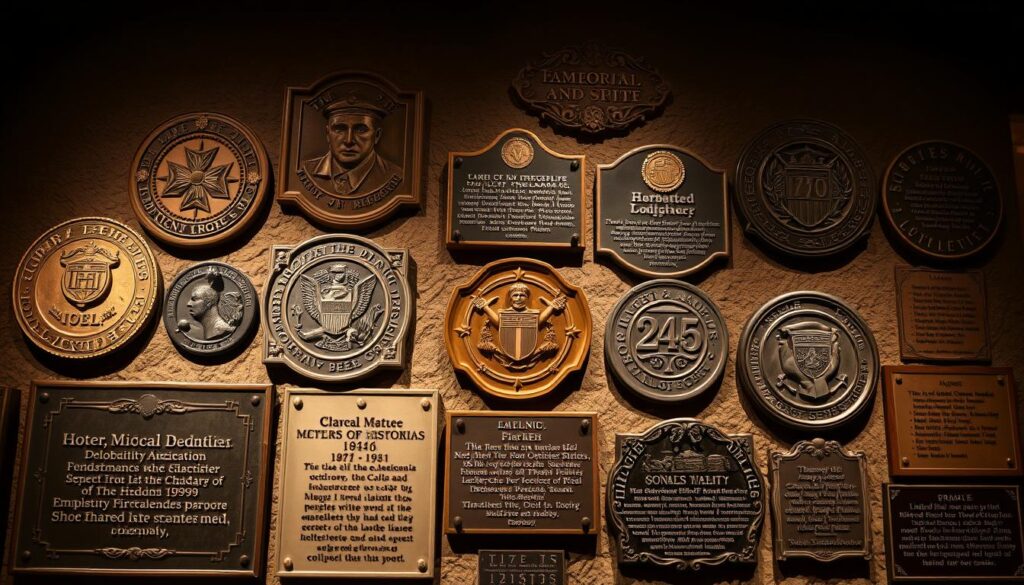
Then there’s the event plaque. It marks important historical events that happened at a certain spot. These plaques remind us of the event’s significance and its effect on the community.
Commemorative markers also include historic district markers. They highlight areas with historical importance. These markers give us info on the district’s history, building styles, and key landmarks.
There are also historic building plaques. They tell us about a building’s construction, design, and historical value. These plaques are key to understanding local history and architectural changes over time.
Exploring these types of historical plaques helps us learn more about our local community’s history and culture.
Anatomy of a Historical Plaque: What to Look For
A historical plaque tells us a lot about the event, person, or place it honors. By looking at its parts, we can better understand the history it shares.
At the heart of a historical plaque are dates, names, and events. These elements give us context and show why the plaque is important. For example, a plaque about a big event will list the date, key names, and a short summary of what happened.
Location References and Measurements
Many plaques also have location references and measurements. They might tell us how far away other important places are or give us details about the event or structure. These help us see the plaque’s place in history and geography.
Common Emblems and Their Meanings
Emblems and symbols on plaques mean a lot. For instance, a plaque with a certain group’s emblem shows their role in the event or connection to the person or place.
Material and Design Significance
The material and design of a plaque are also key. The material used can tell us when it was made. The design might use symbols or elements that fit the plaque’s purpose.
The Art of Reading a Plaque: Practical Techniques
Historical plaques are more than just markers. They open doors to our past. To grasp their importance, we need to learn how to read and understand them.
Start by looking at where the plaque is and what’s around it. The setting of a plaque greatly affects its meaning. Think about why it’s there and how it ties to the area or past events.
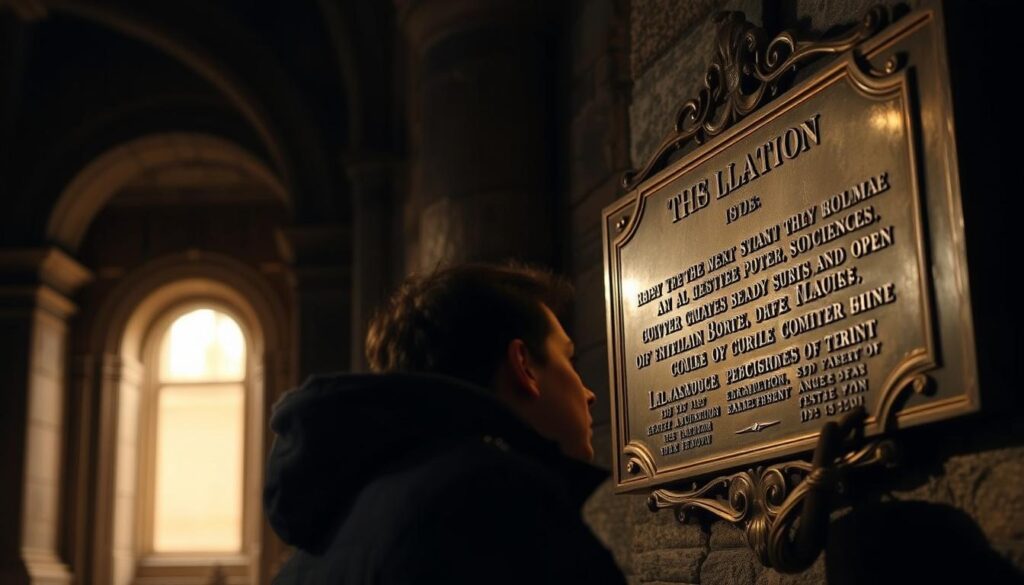
Then, check out the plaque’s design and layout. Details like symbols, colors, and fonts can tell us a lot. For example, simple designs might be newer, while complex ones could be older.
“The best way to get to know a place is to understand its history, and historical plaques are a direct link to that past.”
When you read the plaque, notice the language. Older ones might use old words or spellings. Also, look for famous people or events, as they’re key to understanding the plaque.
Lastly, think about the plaque’s condition and any changes it might have gone through. Damage, repairs, or changes can alter what it shows. Knowing this helps us get the plaque’s true message.
By using these tips, we can better understand and value historical plaques. What was once just a glance can become a deep dive into history.
Decoding the Language of Historical Plaques
Understanding historical plaques means knowing their context. Historical plaques are more than markers. They open a window to the past, showing us key events and figures that have shaped history.
The language on these commemorative markers is formal. It often includes historical references or technical terms from the time they were made. To get the most out of them, we must consider the historical context and the plaque’s purpose.
When you look at a historical plaque, search for important phrases or words. They show why the event or person is significant. Knowing the language and terms used helps us understand the story being told.
Learning to read historical plaques enriches our understanding of history. It’s key for anyone wanting to interpret these markers well. This skill helps us value these markers as educational tools.
How to Locate Historical Plaques in Your Area
Starting a search for historical plaques can uncover your community’s deep history. Locating historical plaques is an exciting journey that makes local history come alive.
Online resources are a great place to begin. Websites focused on preserving history and local historical societies have databases or maps. For example, the National Register of Historic Places is a key resource for finding important historical sites.
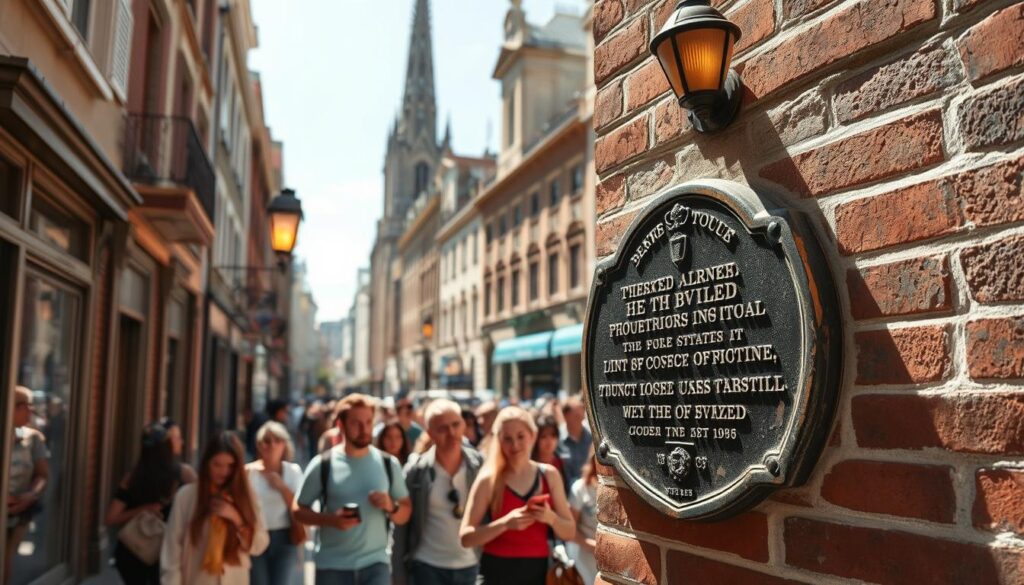
Local libraries, museums, and historical societies are also full of information. They have archives, books, and experts who can share insights on historical plaques. As
“The best way to predict your future is to create it.” – Abraham Lincoln
, knowing your local history helps you see the importance of these markers.
By mixing online research with visits to historical sites, you can find historical plaques. This enhances your understanding of local history and strengthens your bond with your community’s heritage.
The Historical Context Behind the Plaque
Historical plaques connect us to the past, giving us a glimpse into important events. They are more than just markers; they tell stories of events, people, or places in local history.
To really get what a historical plaque means, we need to know its historical context. This means looking into the event or time it honors. For example, a plaque about a Civil War battle shows the battle’s effect on the nation and local people.
The historical context of a plaque also shows who made it and why. This is clear when plaques mark events or figures that are debated. By looking at the plaque’s words, we learn about the views of the time.
Knowing the history behind a plaque makes it more than just a marker. It turns it into a commemorative piece that helps us connect with the past. By exploring these stories, we gain a deeper understanding of local history and how it affects us today.
In short, the history behind a plaque is just as vital as the plaque itself. It enriches our understanding of the event, person, or place it honors. This makes historical plaques key for anyone wanting to dive into local history.
Critically Evaluating Information on Historical Plaques
Looking at historical plaques is more than just reading them. It’s about using your critical thinking skills. When we see these markers, we need to think about the context and if the information is correct.
These plaques aim to teach us, but they can also show the biases of their time. So, when you read a plaque, think about the time it was made. Understand the events or people it talks about and the society back then.
The words on plaques can tell us a lot. They often use certain words or leave out important details. For example, a plaque might praise some figures but ignore their flaws. By noticing these choices, we can learn more about history.
To really understand plaques, check the sources of the info. Make sure the facts match other historical records or research. This helps us learn more and appreciate history’s complexity.
In short, it’s key to carefully look at the info on historical plaques to truly get our cultural heritage. By being critical, we can find the real stories behind these markers. This way, our view of history becomes more complete and detailed.
Controversial and Outdated Plaques: A Modern Perspective
As society changes, our view of historical plaques has shifted. What was once seen as a simple tribute to the past is now under scrutiny. People question its representation and accuracy.
The topic of controversial plaques is now a major issue. Many say these markers tell biased or incomplete stories. For example, plaques about slavery or colonialism have caused big debates. A historian said, “The way we honor our past shows our current values; it’s time to rethink what we celebrate.”
“The way we commemorate our past reflects our values today; it’s time to reassess what we’re celebrating.”
We clearly need a modern perspective on these markers. It’s not just about changing or removing them. It’s about adding context and diverse views to understand history better.
Outdated plaques can start important discussions. They make us think about our history in a deeper way. We learn about the past’s complexities and how they affect us today.
By seeing historical plaques in a new light, we can turn them into learning tools. As we explore our shared history, it’s key to be open and sensitive. This way, we can truly understand and reflect on our past.
Using Historical Plaques for Education and Research
Educational institutions and researchers are using historical plaques more often. These commemorative markers give us a peek into the past. They show us historical events, cultural heritage, and the people who made a difference.
These plaques can make learning more engaging. They help explain historical events and local history. They also encourage students to think critically and ask questions. By studying these plaques, students can understand the past better and see how it connects to today.
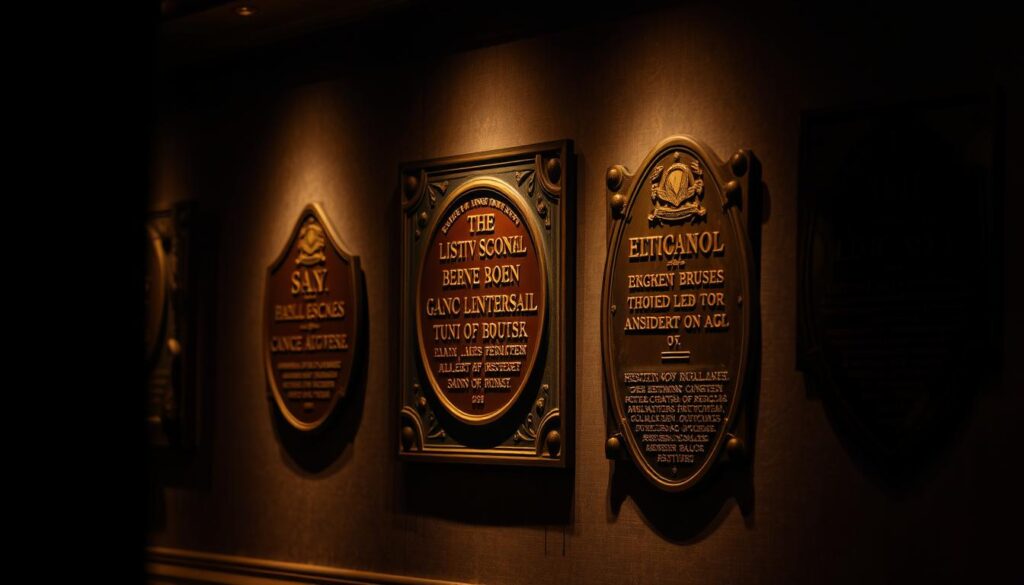
Researchers find historical plaques useful too. They offer primary data for studies on preserving history and cultural heritage. They also help us see how historical events affected local communities. Looking at the language and design of these plaques can tell us a lot about the past.
In summary, historical plaques are a great tool for both education and research. By using these commemorative markers, we can learn more about our history and its importance today.
Enriching Your Connection to History Through Plaque Reading
Reading historical plaques is a special way to connect with history. These markers link us to the past, showing us the importance of local events and culture.
When you look at historical plaques, you learn about the time they were made. This helps you appreciate the history of your community more.
Exploring these plaques can reveal new things about American culture. It’s a great way to learn and grow personally.
Overall, reading historical plaques is a rewarding experience. It helps you feel more connected to the history around you.