






Writing a process essay or instructional content can seem hard. But, with the right help, it’s easy. The secret to good how-to writing is to break down big tasks into simple steps.
It’s important to know what your audience needs. This way, you can make your instructional writing fit their needs. It makes your content more interesting and helpful.
Good instructional writing gives a clear, easy-to-understand guide. It shows how to do something or understand a process. By using a step-by-step method, your content will be both useful and easy to follow.
The Purpose and Power of How-To Writing
Instructional writing is a flexible and powerful way to help people take action. It gives clear, step-by-step guides. This way, people can learn new skills and grasp complex ideas.
The purpose of how-to writing is wide-ranging. It educates and makes hard tasks simple. This makes it a key asset for teachers, marketers, and writers. Good how-to writing turns hard info into easy-to-understand content. This boosts reader interest and understanding.
Instructional writing connects the writer’s knowledge with the reader’s grasp. It helps readers use what they’ve learned in real life. This makes how-to writing a strong way to share knowledge and help people grow.
In short, how-to writing informs, educates, and empowers. By getting good at it, writers can make engaging content. This content connects with people and leads to real results.
Understanding Your Audience’s Needs
Knowing what your audience needs is key to making great how-to content. You must understand their pain points, interests, and skill levels. This lets you craft content that meets their needs, making it more engaging and helpful.
Audience analysis is vital in how-to writing. It helps you know who your readers are, what they want, and what problems they face. You can then make content that speaks to them directly.

To really get to know your audience, look at their demographics, goals, and challenges. This info helps you make targeted content that fits their needs. Doing this makes your how-to content more effective and valuable to your readers.
When you understand your audience’s needs, your how-to content becomes both informative and fun. This approach improves the reader’s experience and shows you’re an expert in your field.
Planning Your How-To Content
Planning is key to making how-to guides that connect with your audience. It’s a foundational step for effective how-to writing. As Joe Pulizzi, founder of the Content Marketing Institute, said, “Content is the only way to build a relationship with your customer.”
To plan your how-to content, first define your goals. What do you aim to achieve with your guide? Do you want to educate, inform, or drive sales? Clear goals help you stay on track and ensure your content serves its purpose.
Then, it’s important to know your audience. Understand their needs, likes, and challenges. This lets you make content that meets their expectations. As Ann Handley, Chief Content Officer of MarketingProfs, notes, “Know your audience, and you will be relevant to them.”
Deciding what to cover in your content is also essential. Will your guide be wide-ranging or focused on a specific area? Make sure the scope fits your goals and what your audience wants.
“The goal is to create content that is not only informative but also engaging and accessible to your audience.” –
By planning well, you can make guides that are both useful and engaging for your audience. This means setting clear goals, understanding your audience, and choosing the right scope for your content.
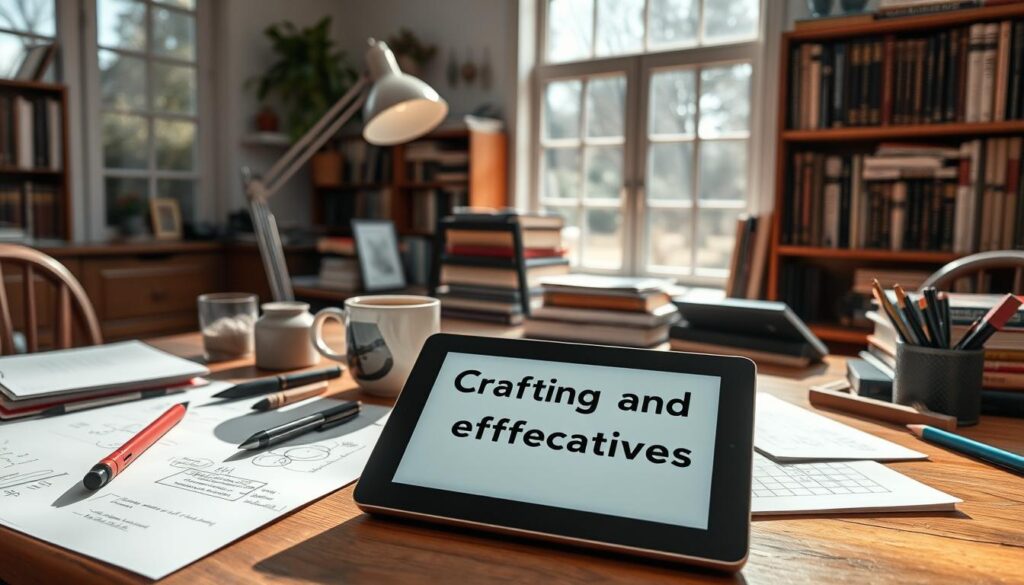
Crafting Clear and Effective Titles
When writing how-to guides, a clear and effective title is key. Your title is the first thing readers see. It’s vital for grabbing their attention.
A good title should tell what your guide is about and make readers curious. It should be descriptive, concise, and relevant to what you’re writing about.
Using relevant keywords in your title can help more people find your content. But, don’t overdo it. Too many keywords can make your title seem spammy.
To make a great title, focus on the main idea of your guide. Use action verbs and questions to make it engaging. This way, you’ll attract readers and make them want to dive into your content.
The Essential Structure of How-To Writing
Creating a how-to guide needs a clear understanding of its parts. A well-structured guide is key for instructional writing. It helps readers follow complex steps easily.
The guide’s structure includes an introduction, step-by-step instructions, and a conclusion. The introduction explains the guide’s purpose and scope. It tells readers what to expect.
The step-by-step instructions are the guide’s core. They break down complex tasks into simple steps. Each step should be clear and easy to follow.
The conclusion summarizes the guide’s main points. It may also offer additional resources or next steps. A good conclusion leaves readers feeling accomplished.
In how-to writing structure, clarity is key. Using clear headings, concise paragraphs, and visuals makes the guide better. This structure helps writers create instructional writing that’s both useful and interesting.
Also, a structured approach makes the content easy to follow. This is why it’s a vital skill for sharing knowledge or instructions.
Writing Clear and Actionable Instructions
To get the best results from how-to writing, focus on making instructions easy to follow. Clear and actionable instructions are key. They help readers do things with confidence.
Crafting Clear Instructions means using simple, clear language. Break down big tasks into smaller steps. This makes each step easy to understand. For example, in a cooking guide, say “add 2 cups of flour and 1 teaspoon of salt” instead of “add ingredients.”

The Importance of Actionable Steps is huge. These steps guide readers clearly, cutting down confusion and mistakes. Use verbs like “click,” “select,” or “download” to tell readers what to do.
To make instructions clearer, try these tips:
- Use numbered lists or bullet points to organize steps.
- Provide examples or illustrations to support complex instructions.
- Anticipate questions or obstacles and answer them in the guide.
By focusing on writing clear and actionable instructions, you help your readers succeed. This improves their experience and builds trust in your content. It makes your content a valuable resource for them.
In summary, the skill of how-to writing improves with clear and actionable instructions. By using the strategies mentioned, you can make your guides more helpful and accessible to your readers.
Mastering the Art of How-To Writing
Learning to write how-to guides takes time and effort. It requires skills like making complex info simple and clear. You also need to tailor your writing for different people.
Understanding your audience is key. You must know what they need, their skill level, and what they want to get from your guide.
To get better at how-to writing, aim for clear and actionable steps. Break down hard tasks into easy steps. Use examples or analogies to explain tricky ideas.
Also, keep practicing and refining your style. Read your work out loud to check if it flows well. Use feedback from readers to make your writing even better.
By sticking to these tips and practicing, you can master the art of how-to writing. You’ll create content that is engaging and meets your readers’ needs.
Enhancing Your How-To Content with Visuals
Visual elements are key for clear, actionable how-to content. By adding visual aids, you boost reader understanding and interest.
There are many visuals you can use in how-to content. Photos and screenshots are great for showing real examples and software steps.
Photos and Screenshots
Photos and screenshots help readers see what you mean. For example, a software screenshot can show menu options and button locations.
“A picture is worth a thousand words,” as the saying goes. It’s true, a good image can share a lot of info fast.
“The right image can simplify complex information and make your how-to content more accessible.”
Diagrams and Illustrations
Diagrams and illustrations are also great for how-to content. They explain complex ideas, show processes, and guide step-by-step.
By mixing text with visuals, you make your content more engaging and helpful. The goal is to use visuals that help explain your instructions.
In summary, adding different visuals to your how-to content makes it more effective. Photos, screenshots, diagrams, or illustrations all help make your content easier to follow and more interesting.
Testing and Refining Your Instructions
Creating reliable how-to guides requires thorough testing and refinement. “A guide is only as good as its ability to be followed,” says a renowned expert in instructional writing. It’s essential to test your instructions to ensure they are clear, concise, and effective.
Testing your instructions means putting them into practice to find any unclear parts. This helps you see how your audience will use your content. You can then make your instructions more user-friendly.
One good way to test is to have someone new to the task follow your instructions. Watch where they struggle and update your content. This iterative process makes sure your final guide is strong and easy to follow.
Improving your how-to content is a continuous effort. As you get feedback, you can keep making your instructions better. This not only makes your content more useful but also builds trust in your brand.
“The art of creating clear instructions is not a one-time task but a continuous process of refinement and improvement.”
By focusing on testing and refinement, you can greatly improve your how-to content. This makes it more valuable to your audience.
Common Mistakes in How-To Writing to Avoid
To make your how-to writing a hit, you must dodge common mistakes. Good how-to content is clear, precise, and well-organized. Knowing these pitfalls helps you create content that your audience will love.
One big mistake is ambiguity. Unclear instructions can confuse and upset readers. Use simple words and explain any tricky terms. For example, if you’re teaching about a complex software, break it down into easy steps.

Another common mistake is poor structure. A good how-to guide should flow smoothly, with each step leading to the next. Use headings and subheadings to help readers follow along. Bullet points or numbered lists can also make complex info easier to understand.
Avoiding errors means knowing your audience well. Write for their level of knowledge and use examples to explain things. If you’re writing for beginners, skip the technical jargon.
Lastly, test and improve your how-to content. Try it out with a few users to spot any unclear parts. This way, you can fix issues and make your content better, improving the reader’s experience.
From Novice to Expert: Your Path Forward in Instructional Writing
Becoming good at how-to writing takes hard work, practice, and a desire to learn. To get better, focus on making content that meets your audience’s needs.
Writing instructions well means you can explain complex things simply. Get feedback from readers and use it to make your writing better.
It’s important to keep learning new things about instructional writing. This way, you can always get better at your craft.
By following these tips and keeping at it, you can become a skilled how-to writer. You’ll be able to create content that really connects with your audience.