







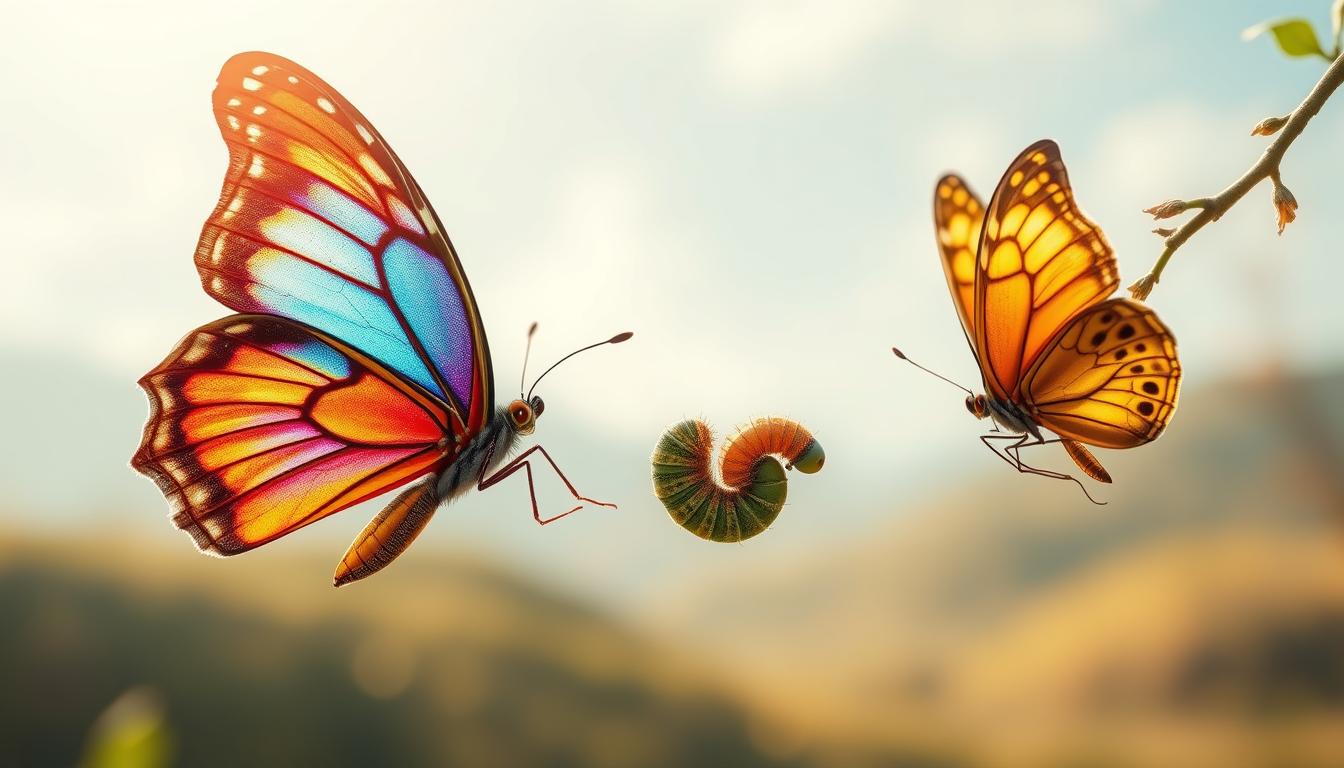
The change from a butterfly caterpillar to a flying beauty is a symbol of hope and change. This change, called metamorphosis, is more than just biology. It’s a powerful symbol for change in our lives too.
Photographing these creatures can be very rewarding. It teaches us about patience and observing closely. The life of a butterfly goes through many stages, from egg to larva, pupa, and then the adult stage.
Learning about these creatures can inspire us to help protect them. This way, future generations can also enjoy their beauty.
What is a Butterfly?
Butterflies are fascinating creatures. They have unique anatomy, a wide range of species, and go through an amazing transformation called metamorphosis.
Butterflies are insects in the order Lepidoptera, which also includes moths. There are over 20,000 known Butterfly Species worldwide. They vary in size, color, and where they live. Studying them shows a complex life cycle that is both interesting and educational.
The Butterfly Anatomy is known for its large, colorful wings and a long proboscis for drinking nectar. Their life cycle is a perfect example of Insect Metamorphosis. It has four stages: egg, caterpillar (larva), chrysalis (pupa), and adult butterfly.
“The transformation of a caterpillar into a butterfly is a miraculous process, involving dramatic changes in form and structure, as the caterpillar’s body is reorganized into the adult butterfly.”
The metamorphosis process is complex. The caterpillar stage is all about growing. The chrysalis stage is where the transformation into a butterfly happens. This shows the wonders of nature.
Exploring the world of butterflies shows their beauty goes beyond their appearance. Their unique life cycle and diverse species make them a fascinating subject for study and appreciation.
The Benefits of Butterflies in Ecosystems
Beyond their striking colors and graceful flight, butterflies play a key role in healthy ecosystems. They are not just beautiful to watch; they are vital indicators of ecosystem services and biodiversity.
Butterflies contribute to ecosystems in several ways. One of their most significant roles is in pollinator conservation. Like bees, butterflies help pollinate flowers as they feed on nectar. This process is essential for the production of fruits, seeds, and new plants, supporting the food chain and ecosystem balance.
The presence of butterflies in an ecosystem is a strong indicator of its overall health. Butterflies are sensitive to environmental changes. Their populations can signal broader ecological issues. For instance, a decline in butterfly populations may indicate habitat destruction, pollution, or climate change, prompting conservation efforts to protect not just butterflies but the entire ecosystem.
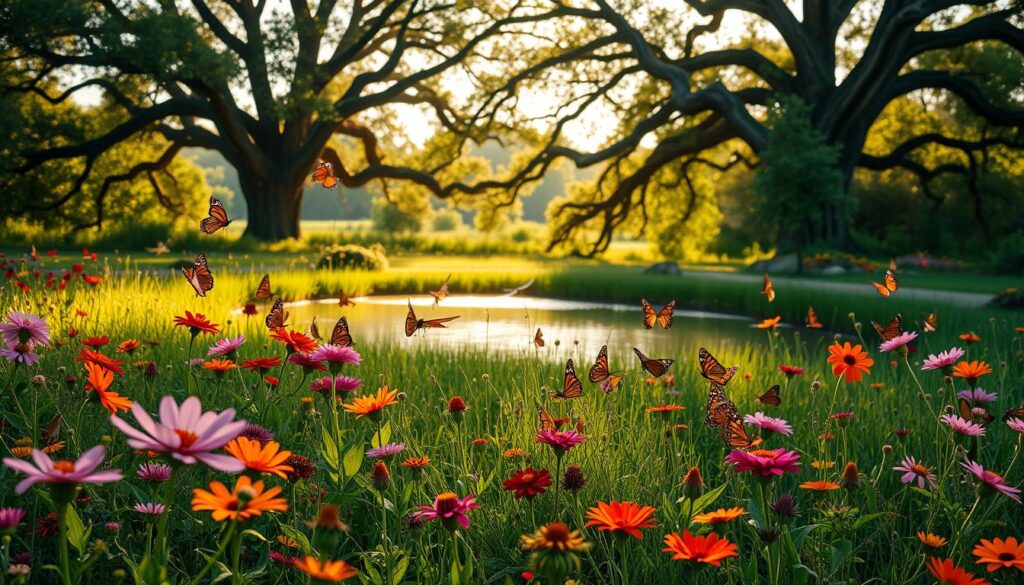
Butterflies are also a food source for various animals, including birds, bats, and spiders. They are an integral part of the food web, supporting the survival and diversity of wildlife. By maintaining healthy butterfly populations, ecosystems can sustain a richer variety of life, enriching biodiversity.
In conclusion, the benefits of butterflies in ecosystems are multifaceted. They range from pollination and serving as a food source to indicating ecosystem health. Protecting butterfly populations through pollinator conservation efforts is essential for maintaining ecological balance and promoting ecosystem services. By doing so, we can preserve the natural beauty and functionality of ecosystems for future generations.
Common Species of Butterflies in the United States
In the United States, butterfly lovers can see many species. The monarch butterfly is one of the most famous. It has bright orange and black wings.
The monarch butterfly is known for its amazing migration. Every year, millions migrate from Canada and the U.S. to Mexico. They travel thousands of miles to their winter homes.
Xerces Society, “The monarch butterfly migration is a complex process involving multiple generations, with some individuals traveling up to 3,000 miles to reach their destination.”
This journey shows how strong these butterflies are. It also shows why we must protect their paths.
Characteristics and Habits
Monarch butterflies are special for their migration and habits. They eat nectar from flowers to fuel their long trips. Their caterpillars only eat milkweed, which helps them grow and protects them from predators.
Other common U.S. butterflies include the Painted Lady and the Red Admiral. Each has its own look and migration. Knowing about these helps us understand and appreciate butterflies.
The variety of butterflies in the U.S. shows why we must protect them. By learning about monarch butterflies and others, we can help nature.
The Importance of Butterfly Conservation
Conserving butterflies is more than saving a species. It’s about keeping our planet healthy. Butterflies are key to ecosystems, helping with pollination and showing us how well the environment is doing.
The decline of butterfly numbers is a big worry. It’s mainly because of habitat loss and climate change impact. When natural places are destroyed or changed, butterflies can’t find the plants they need to survive. Climate change also messes with the timing of their life cycles and food availability.
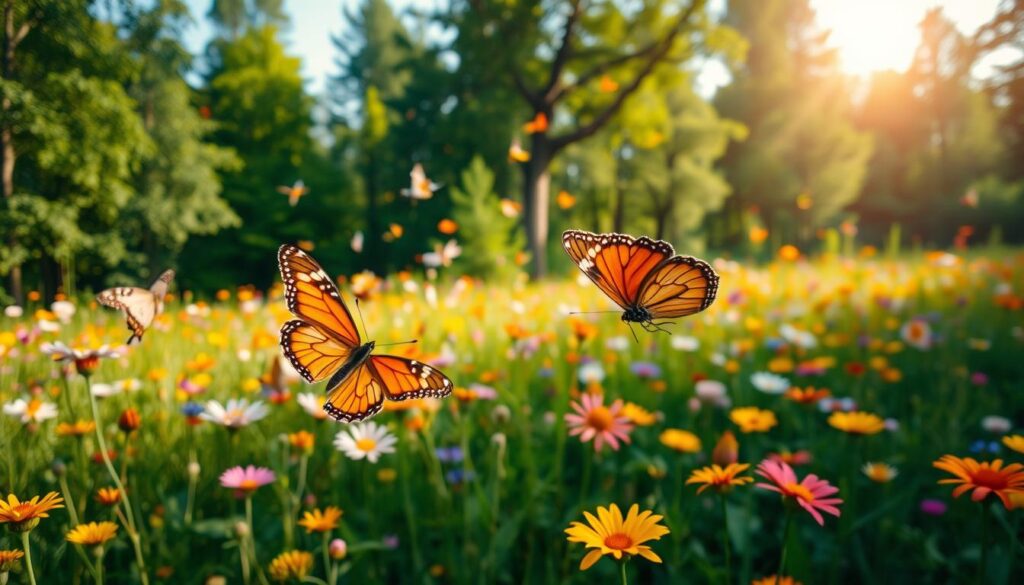
Efforts to save butterflies are ongoing. They include fixing natural habitats, making gardens for butterflies, and studying what different species need. People can help by planting native plants, using fewer pesticides, and backing conservation groups.
Butterfly conservation is not just about the butterflies. It’s also about protecting the ecosystems they live in. This broad approach to conservation is vital for keeping biodiversity and ensuring our planet’s health for the long term.
In summary, saving butterflies is a complex task that needs a wide range of actions. By understanding their challenges and supporting their conservation, we can help these beautiful creatures survive and thrive.
Butterfly Habitats
To have a thriving butterfly population, we need to understand their habitat needs. Planting the right plants is key to supporting these beautiful creatures.
Butterflies love gardens with native plants and flowers that offer nectar. Milkweed is vital because it’s the only food for monarch butterfly caterpillars. Adding these plants to your garden helps with habitat restoration.
When planting for butterflies, pick flowers rich in nectar and host plants for their larvae.
“Planting native flowers and milkweed is key to attracting butterflies and supporting their life cycle.”
This not only makes your garden look beautiful but also helps local biodiversity.
To make a butterfly-friendly habitat, consider these tips:
– Plant a mix of flowers that bloom at different times for a steady nectar supply.
– Add native plants and milkweed to your garden.
– Stay away from pesticides, as they harm butterflies and other helpful insects.
By following these tips and engaging in butterfly gardening, you help with habitat restoration. You also support the local butterfly population.
The Beauty of Butterfly Behavior
Butterflies have always amazed people with their beautiful behaviors. From their grand migrations to their complex social interactions, they are truly fascinating. The monarch butterfly, for example, makes an incredible journey every year across North America. This journey is thousands of miles long and spans generations.
Migration Patterns are key to many butterfly species’ lives. The monarch’s migration is more than just moving from one place to another. It’s influenced by genetics, the environment, and learning from others.
Butterflies also show interesting social behaviors. Even though they seem alone, many species interact in complex ways. Some gather in large groups for safety or to find a mate.
Studying animal behavior in butterflies helps us understand their role in nature. They are vital pollinators and show us how healthy the environment is.
Learning about butterflies’ behavior helps us protect them. By studying their migrations, social habits, and where they live, we can better care for these creatures and their homes.
Creating a Butterfly Garden
A butterfly garden is more than a pretty spot in your yard. It’s a safe place for these beautiful creatures. To make such a garden, pick plants that butterflies love. Butterfly attractors offer nectar, food for caterpillars, or both.
When planning your garden, mix plants that bloom at different times. This ensures nectar is always available. Using native plants is key, as they draw in local butterflies. Some great butterfly attractors are milkweed, butterfly bush, and lantana.
The way you arrange your garden matters a lot. Mix sun and shade spots, as butterflies like different areas. Also, add a shallow dish with fresh water and rocks for landing.
To keep your garden healthy, avoid using pesticides. They can harm or kill butterflies. Instead, use natural methods to keep your garden balanced. This way, you’ll attract butterflies and help your local environment.
Butterfly Art and Culture
Butterflies have amazed people with their colors and flight. They have influenced art and stories. Their beauty, change, and symbolic meanings are seen in many cultures.
In art, butterflies show transformation and renewal. They are found in paintings, sculptures, and more. They are not just pretty but carry deep meanings. In some cultures, they symbolize the soul or messages between the living and dead.
“The butterfly counts not months but moments, and has time enough.” – Rabindranath Tagore
In books, butterflies stand for change, hope, and freedom. They show up in poetry and stories. They represent our wish to grow and the beauty of nature. The meanings of butterflies vary by culture, showing how we see the world differently.
Butterflies in folklore show their importance. In many stories, they represent life and death. Their change from caterpillar to butterfly inspires stories and beliefs passed down through time.
Today, butterflies inspire artists, writers, and designers. Their image is used in fashion and design. This shows their lasting appeal and the wide range of meanings they carry.
Butterflies have a big impact on us. Through art, stories, and folklore, they inspire us. They teach us about beauty, change, and the complex meanings they hold across cultures.
Educational Resources about Butterflies
There are many ways to learn about butterflies. People of all ages can find something interesting. You can find books, documentaries, and online content.
Butterfly Books are a great place to start. They have lots of info on different butterflies. Kids can enjoy books with bright pictures and simple words.
Online Learning sites make learning fun. They have games, quizzes, and lessons. You can also watch videos on YouTube to see butterflies up close.
Using these Educational Resources helps us love butterflies more. It’s good for students, teachers, and anyone who loves butterflies. There’s something for everyone to learn.
Fun Butterfly Facts
Butterflies are full of surprises, from their incredible migrations to their unique life cycles. They have been fascinating humans for centuries with their beautiful colors and intriguing behaviors.
One of the most interesting Butterfly Facts is their migration patterns. Some species migrate thousands of miles each year, crossing entire countries. For example, the Monarch butterfly migrates from Canada to Mexico, a journey of over 3,000 miles.
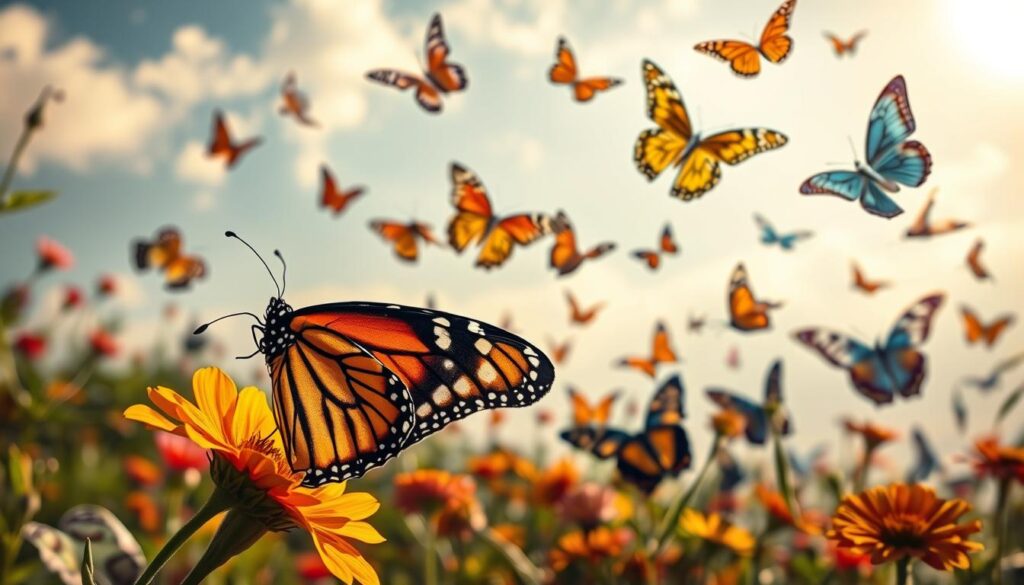
Butterflies taste with their feet, which helps them detect the sweetness or bitterness of a substance. This unique ability is key for finding the right plants to feed on. It’s one of the many Interesting Insects facts that show their adaptability.
Another fascinating fact is that butterflies go through four stages of life: egg, larva, pupa, and adult. This process, known as metamorphosis, is a remarkable Nature Trivia that continues to captivate scientists and nature enthusiasts alike.
Butterflies are also important pollinators. As they feed on nectar, they transfer pollen between flowers, helping plants reproduce. This role in ecosystems highlights the importance of conserving these delicate creatures.
Butterfly Festivals and Events
Communities worldwide celebrate butterflies through festivals and events. These gatherings not only show the beauty of butterflies but also highlight the need to protect them. They raise awareness about the importance of conservation.
Butterfly Festivals help in saving these delicate creatures and their homes. They show how vital butterflies are and encourage people to help protect the environment. This way, communities can inspire others to take action.
Many groups and organizations join these events. They offer educational materials and activities that support butterfly conservation. By going to these events, people can learn how to help butterflies and their habitats.
In summary, Butterfly Festivals and Events are key in raising Environmental Awareness. They inspire communities to work together in conservation efforts. By celebrating butterflies, we can all help protect these amazing creatures and their homes.