






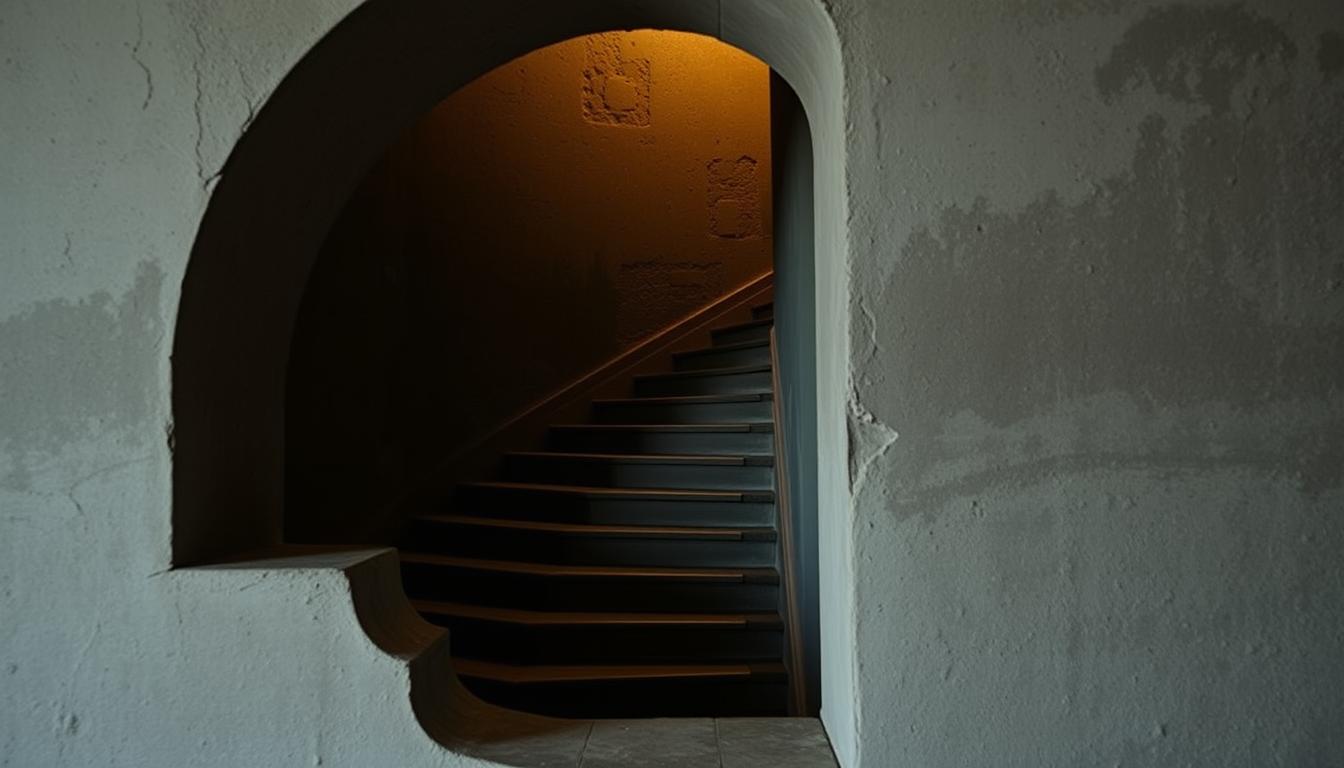
For centuries, concealed staircases have fascinated people. They are seen in designs on Pinterest and by architects like James McNeal Architecture & Design.
These hidden features have served many purposes over time. They add surprise and intrigue to buildings. A secret staircase can reveal a new space, making the building more interesting.
Today, hidden stairs are found in modern designs. They add unique and fascinating spaces. These hidden paths inspire architects and homeowners, whether for looks or function.
The Allure of Hidden Passages
Hidden passages have fascinated people for centuries. These secret paths, hidden behind walls or in buildings, create mystery and intrigue.
Hidden passages and secret staircases are common in stories and movies. They stand for secrets, adventures, and sometimes danger. They make stories more complex and exciting.
The charm of secret passages is their power to take us on a journey of discovery. They can be found in old castles or new homes. These hidden spots connect us to history and show our ancestors’ cleverness.
Adding hidden passages to our buildings honors architectural traditions. It also makes our spaces magical and full of wonder.
Historical Origins of Secret Staircases
Secret staircases have been key in history for escape routes and hiding spots. They were made to hide from view, keeping users safe from harm.
Priest Holes and Escape Routes
Records show secret staircases were priest holes and escape paths during persecution times. They helped priests and others avoid capture, hiding safely until it was safe to come out. The making of these secret spots was very detailed, with hidden doors and clever hiding spots.
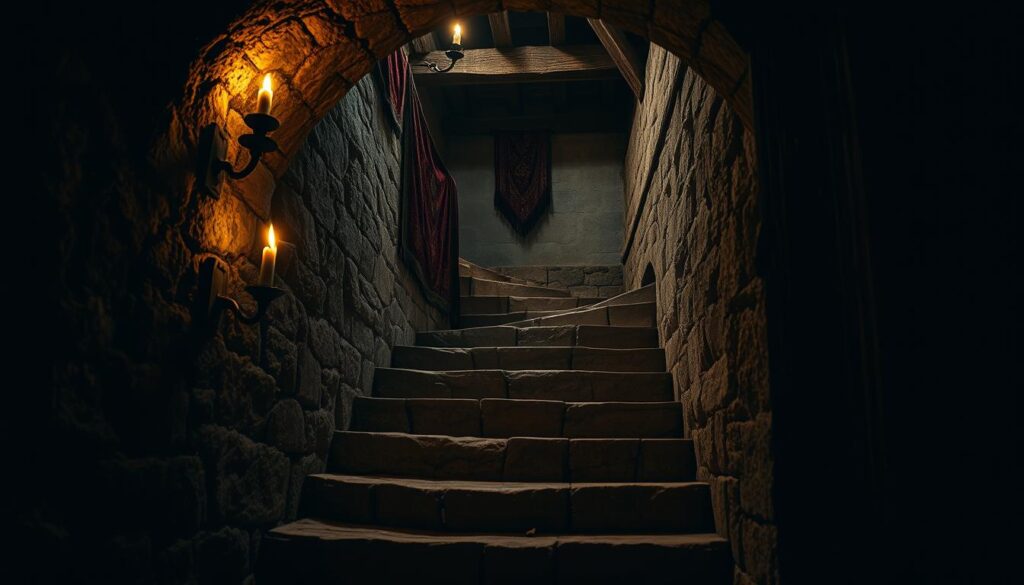
Secret staircases were also part of defensive architecture. They let people escape from attackers or move quietly in a building. This shows how important security was in building design back then.
Secret staircases in buildings mix function and secrecy. They show the need for safety and hiding in uncertain times. These hidden passages from history are fascinating, giving us a peek into the past and how people survived.
The Secret Staircase Through the Ages
Secret passages and hidden staircases have fascinated people for centuries. They appeal to homeowners and architects. The idea of staircase architecture has grown, shaped by privacy, security, and beauty.
Servant Corridors and Class Separation
In old homes, hidden designs helped keep servants and families separate. Servant corridors and secret stairs let staff move unseen. This kept the house looking elegant and seamless.
The skill of aesthetic concealment was key in secret staircase design. Architects used clever tricks to hide these stairs. They made them almost invisible with sliding panels and bookshelves that opened as doors.
Secret staircases were not just useful; they added mystery to homes. As staircase architecture evolved, so did the ways to hide them. This showed how tastes and needs changed over time.
Architectural Considerations for Hidden Stairs
Creating hidden staircases needs careful planning and a good grasp of architectural rules. Architects must think about several important factors. This ensures these secret paths are both useful and blend well with the building’s design.
Weight-Bearing Calculations
One big worry is making sure hidden staircases can handle the weight they need to. Architects do detailed math to figure out how much weight the stairs and the building can hold. As architectural rules say, “the structural integrity of a hidden staircase is key to its safety and use”
“The structural integrity of a hidden staircase is key to its safety and use.”
Space Utilization
Using space wisely is also very important. Hidden staircases must fit into tight spots without ruining the area’s look. Architects find creative ways to use space well and keep the staircase hidden.
One common way to hide staircases is with bookcase doors. These doors look like part of the decor, making it hard to spot the staircase entrance.
Panel and Molding Disguises
Another smart trick is using panel and molding disguises. By matching the staircase entrance to the building’s design, it can be hidden from sight.
In short, making hidden staircases is all about finding the right balance. Architects use smart planning, careful math, and creative hiding spots. This way, they make staircases that work well and look good too.
Famous Secret Staircases in History
Historical landmarks around the world have some of the most fascinating hidden passages. These secret staircases show off architectural genius. They also give us a peek into the past, showing how people lived, hid, and escaped.
Château de Chambord’s Double Helix
The Château de Chambord in France is famous for its double helix staircase. It’s said to be designed by Leonardo da Vinci. This staircase lets two people go up and down without crossing paths, making it both useful and intriguing.
Edinburgh Castle’s Hidden Passages
Edinburgh Castle sits atop Castle Rock and has secret passages. These hidden staircases have been used for military tactics and secret escapes. They show the castle’s complex history and its architectural changes.
The Winchester Mystery House in California is known for its complex layout. It has secret staircases and doors that open into walls. Built by Sarah Winchester, it’s a wonder of oddity and architectural wonder.
Prohibition-Era Speakeasy Access
During Prohibition in the U.S., secret staircases were common in speakeasies. They let people sneak in and out without being seen. These hidden paths made these secret bars even more appealing and exclusive.
These examples show the importance and charm of secret staircases. They can be found in grand homes and hidden bars. Their mystery and beauty continue to fascinate historians, architects, and everyone else.
Hidden Staircases in Literature and Film
In books and movies, hidden staircases bring mystery and intrigue. They add depth to stories and make them more engaging.
Jane Eyre and Thornfield Hall
In Jane Eyre by Charlotte Brontë, a hidden staircase leads to Bertha Mason’s attic. It symbolizes the secrets of Thornfield Hall. This staircase adds to the novel’s dark and suspenseful feel.
The Mysteries of Udolpho
Ann Radcliffe’s The Mysteries of Udolpho is full of secret passages and staircases. These features are typical of Gothic fiction, making the story more mysterious and exciting.
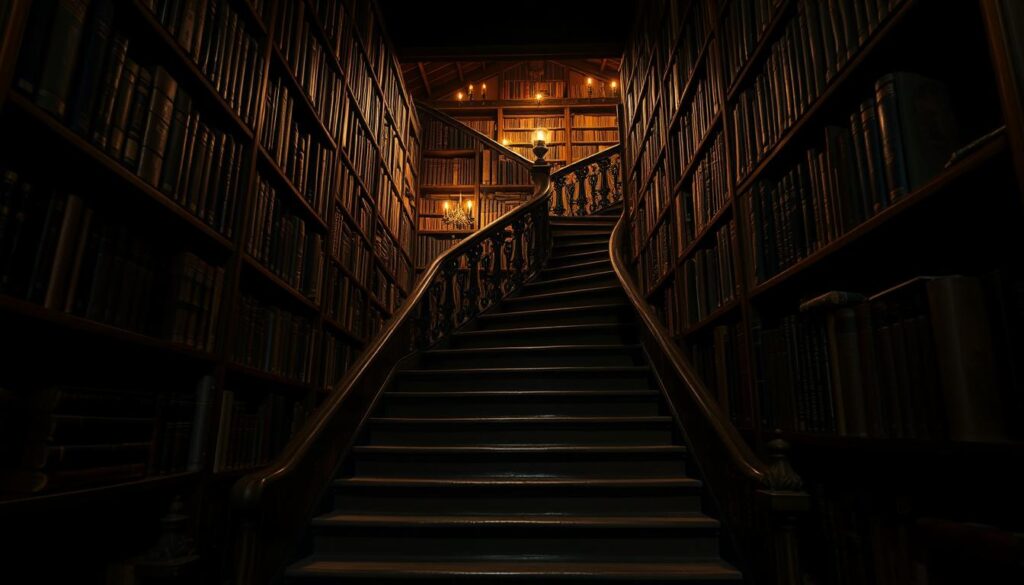
In J.K. Rowling’s Harry Potter series, magical staircases change their layout. They show the magical and ever-changing world of Hogwarts.
Nancy Drew and Hidden Passages
The Nancy Drew series often includes hidden passages and staircases. These elements help move the mystery and suspense along.
Hidden staircases are key in literature and film. They are not just architectural details but essential parts of the story.
Practical Purposes of Concealed Stairs
Concealed staircases serve many practical uses, from safe rooms to tiny home designs. They have been around for centuries, improving building functionality and safety.
Safe Rooms and Panic Areas
Concealed staircases are key in creating safe rooms and panic areas. They offer a quick and secure way out or a safe place in emergencies. Safe rooms are built to be very secure, with strong doors and walls. The hidden staircases leading to these areas are vital for keeping people safe.
Historical Escape Examples
Concealed staircases have been used for escape during wars and crises. For example, secret passages and hidden staircases helped during the American Civil War and World War II. These examples show how important they are for safe escapes.
Today, concealed staircases are used in tiny home designs. As tiny homes become more popular, designers use them to save space and create unique areas. These designs not only save room but also add surprise and joy to small living spaces.
Multi-Functional Designs
Concealed staircases are also used in designs that serve many purposes. For instance, a staircase can be hidden behind a bookshelf or a sliding panel. This design is not only useful but also makes the space more interesting.
Modern Design Trends for Hidden Staircases
Smart home technology is changing how we see hidden staircases. Now, they come with modern twists that look great and work well. New designs and tech are making hidden staircases a key part of homes.
Floating and Invisible Stairs
Floating and invisible stairs are big in modern design. They make the staircase look like it’s floating or hidden. This magic happens thanks to smart materials and engineering.
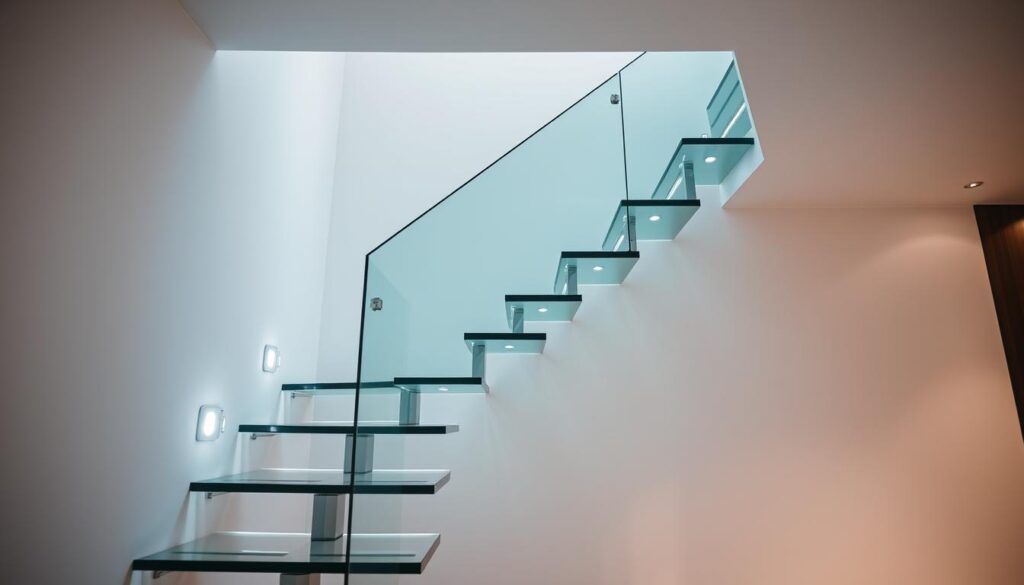
Another cool trend is hidden staircases with cabinetry. They blend with the furniture, keeping your space tidy and simple. This design hides the staircase and adds storage too.
Motion-Activated Mechanisms
Smart home technology has brought us motion-activated hidden staircases. With a simple move, the staircase pops out or hides. It’s convenient and looks like something from the future.
“The future of home design lies in the seamless integration of technology and architecture, and hidden staircases are at the forefront of this innovation.”
Voice-Controlled Access
Now, some hidden staircases come with voice-controlled access. You can make them appear or disappear with just your voice. It’s perfect for homes with smart systems.
In short, modern hidden staircases are all about innovation. They mix beauty, function, and tech in exciting ways. With designs like floating stairs, hidden cabinetry, and voice controls, they’re changing what hidden staircases mean in today’s homes.
DIY Guide: Creating Your Own Secret Staircase
Building a hidden staircase can add mystery to your home. It’s a fun DIY project. With the right steps, you can make a secret staircase that’s both functional and interesting.
Measuring and Mapping
Start by measuring and mapping the space for your secret staircase. Precise measurements are key to a perfect fit. Think about the area’s height, width, and depth, and any obstacles.
Choosing the right spot for your secret staircase is important. Pick a place that’s both useful and safe. Look for areas not often used or hidden from main living spaces. Make sure it meets local building codes too.
By following these steps and thinking about the practical side of secret staircase construction, you can make a unique and useful feature. Whether it’s a hidden passage or a cleverly hidden staircase, careful planning is essential for success.
Legal and Safety Considerations
When building a hidden staircase, safety and legal rules are key. It’s important to follow local building codes and rules.
Permit Requirements
Getting the right permits is a must before starting. These permits change based on where you live. They usually include building permits and sometimes electrical permits for stairs with lights.
Inspection Processes
Regular inspections are needed to check if the staircase is safe and meets standards. Inspections happen at different times during the project.
Fire safety is very important. Make sure the staircase doesn’t block fire exits. Also, use materials that won’t catch fire easily.
Child Safety Measures
If you have kids, extra safety steps are needed. Install gates at the top and bottom of the stairs. Also, make sure the hidden staircase opener is safe and kids can’t reach it.
Real-Life Stories: Discovering Hidden Staircases
Many homeowners have found hidden staircases while fixing up their homes. These finds reveal secrets from the past. They not only make the property more valuable but also give us a peek into history.
Renovation Revelations
Home renovations often surprise us with unexpected finds. For example, a homeowner in Boston found a hidden staircase behind a wall in their 19th-century home. This staircase led to a secret room thought to be part of the Underground Railroad.
Looking into historical homes can also uncover hidden staircases. A famous example is a secret staircase found in a medieval castle in Europe. It was hidden behind a tapestry and opened up a hidden passage.
“The discovery of hidden staircases is a thrilling experience that combines history, mystery, and adventure.” – Historian’s Account
These stories show how exciting and significant hidden staircases are. Whether found during renovations or while exploring old homes, these discoveries always fascinate us.
The Timeless Appeal of Stairs Behind Walls
Secret staircases have always fascinated us, shaping both old and new designs. They bring mystery and intrigue to buildings, making them unique. This makes them stand out from the usual.
In today’s designs, secret staircases are getting a fresh look. Architects are adding hidden stairs to their plans. They use new materials and methods to make these spaces both unique and useful.
The charm of stairs hidden behind walls is undeniable. They spark a sense of discovery and awe. Whether in an old mansion or a modern house, these secret staircases keep inspiring and pleasing us. They prove their lasting value in architecture and design.