







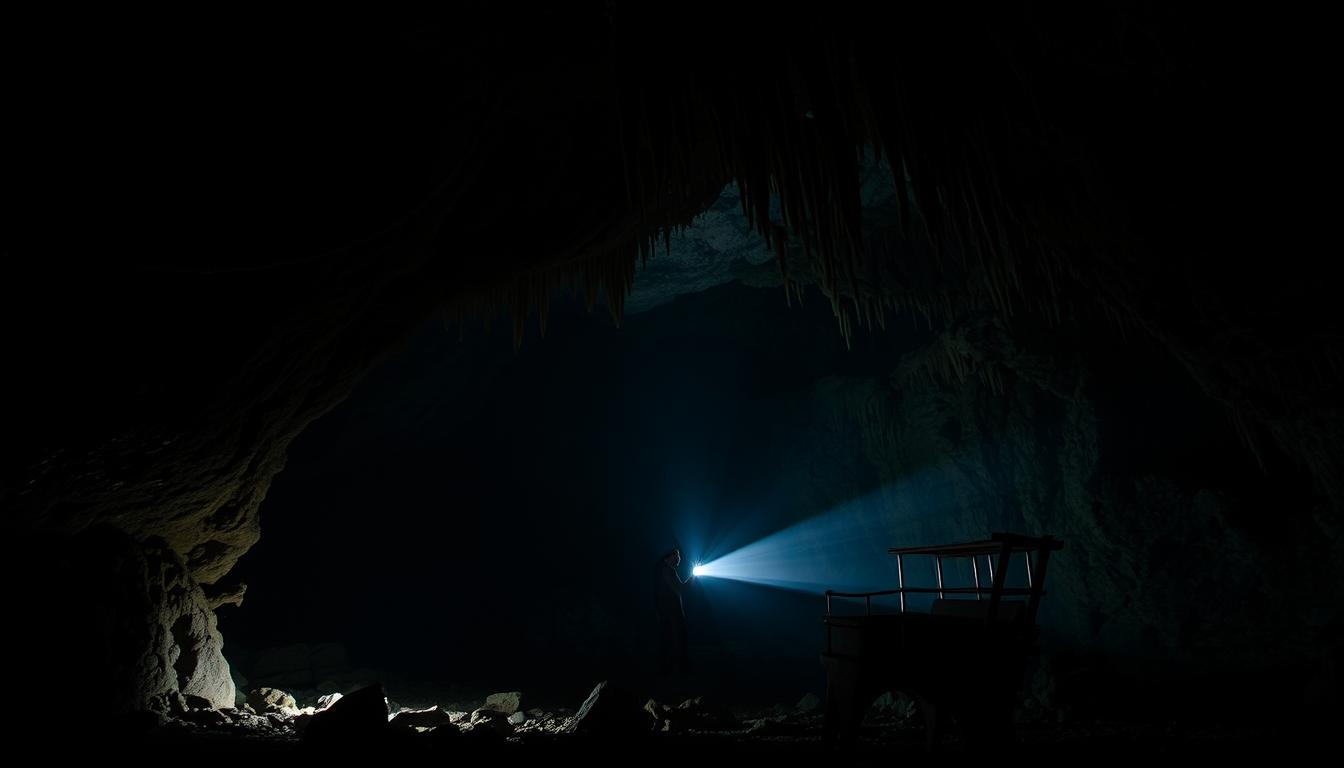
Exploring a dark cave is an exciting adventure. It’s a chance to find hidden wonders and explore new places. This journey is full of thrills and discoveries.
The darkness of a cave represents the unknown. This journey can change you in amazing ways. You might learn new things about yourself and the world.
Exploring caves is more than just seeking thrills. It’s also about learning about the earth and its history. By venturing into dark caves, we appreciate nature and our role in it more.
What is a Cave?
A cave is more than just a hole in the ground. It’s a peek into the Earth’s past. Caves are natural openings in rocks, shaped by complex geological processes.
Caves have always fascinated people. The study of caves, called speleology, explores how they form and change. It combines geology, hydrology, and biology to understand these special places.
A cave is a big hole in the Earth’s crust. It shows us the planet’s history. Caves are made by erosion and weathering, which break down rocks.
These processes are influenced by water, chemical reactions, and tectonic activities. Caves are not just interesting geologically. They also support unique life forms and hold cultural and historical value.
In short, caves are not just holes. They are complex geological wonders that reveal the Earth’s history, support biodiversity, and have cultural importance. By studying caves through geology and speleology, we gain a deeper appreciation for these natural marvels.
The Formation of Caves
Caves form slowly, shaped by geology and erosion. They don’t appear overnight. Instead, they take thousands to millions of years to develop.
Speleogenesis is key in cave formation. It’s the process of caves being created and changing. This happens through chemical reactions, water flow, and tectonic activities. Wikipedia explains, “Speleogenesis involves a complex interplay of geological, chemical, and biological processes.”
“The development of caves is a complex process that involves the interaction of various geological factors, including rock type, structure, and hydrology.”
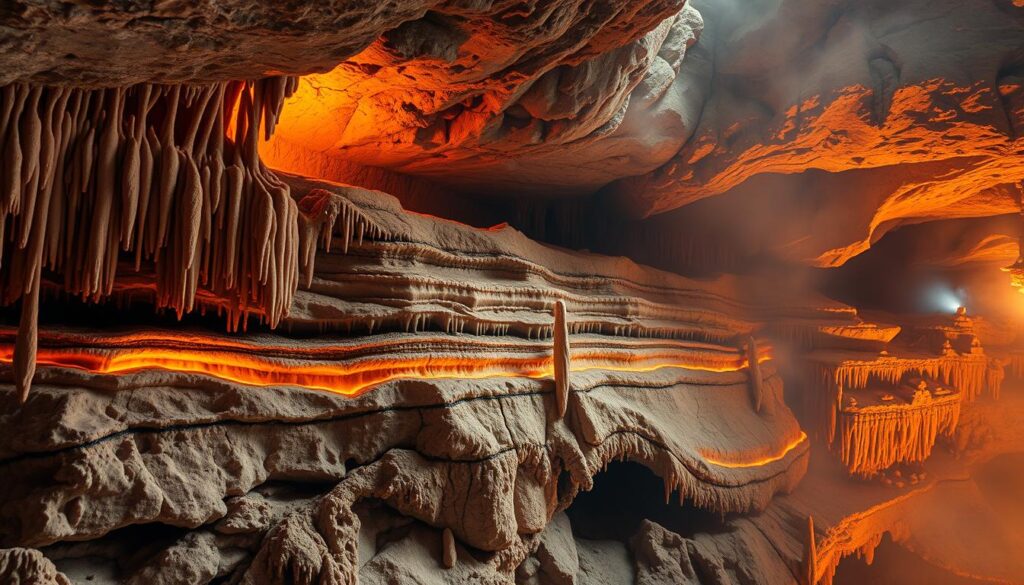
Erosion is vital in cave formation. Water is a major force in this. It dissolves minerals and carries away rock, making passages and caverns bigger. This process can create large cave systems over time.
Factors Influencing Cave Formation
Many things affect how caves form. Rock type, fractures or faults, and local water flow are important. For example, limestone caves form easily because it dissolves in acidic water.
Learning about cave formation helps us understand our planet’s history. It also shows why we must protect these unique places. Exploring caves teaches us about the complex and interesting ways our planet is shaped.
Famous Caves in the United States
The US is home to some of the world’s most amazing caves. Places like Carlsbad Caverns and Kentucky’s cave systems draw millions each year. They offer everything from guided tours to thrilling explorations.
The Carlsbad Caverns in New Mexico are a must-see. They have stunning limestone chambers and a fascinating history. You can explore them on various trails, including the Bat Flight Amphitheater. Here, thousands of bats fly out at dusk in summer.
Mammoth Cave National Park in Kentucky is another highlight. It’s the longest known cave system, with over 400 miles of passages. The park has tours for all, from easy walks to challenging caving adventures.
In Nevada’s Great Basin National Park, Lehman Caves offer a peek into the region’s past. They feature limestone formations like stalactites and stalagmites, shaped over millions of years.
Cave tourism in the US is more than just cave exploration. It’s about enjoying the natural beauty and wildlife around them. Many caves are in national or state parks, with activities like hiking and camping.
For those who love adventure travel, US caves are a goldmine. Whether you’re an experienced caver or just looking for something unique, these caves will impress you.
Preparing for Cave Exploration
Before you head into a cave, it’s key to get ready well. This means focusing on safety and having the right tools. Cave exploration, or caving, can be risky if you’re not prepared.
Essential Gear
The right gear is vital for a safe and fun cave trip. Essential equipment includes a helmet, headlamp, gloves, sturdy boots, and the right clothes. These help you move through tight spots and keep safe from the weather.
“Caving is not just about exploring the unknown; it’s also about respecting the environment and ensuring your safety,” as emphasized by experienced cavers. A helmet is key for protecting against falling rocks or injuries from hitting your head on low-hanging formations.
A reliable headlamp is another vital piece of equipment, providing light in the dark cave environments. It’s also wise to carry extra batteries to ensure you don’t get stuck in the dark.
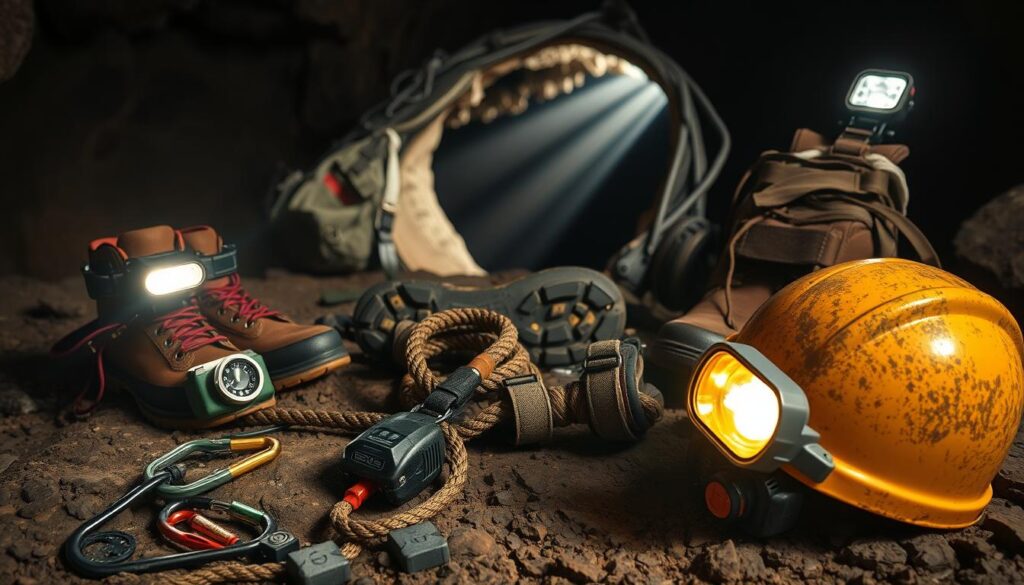
Also, having the right safety equipment is essential, like ropes, harnesses, and first aid kits. This depends on the cave’s complexity and type. Knowing how to use this gear is just as important.
Preparation also means knowing the cave’s environment. This includes dangers like fast-moving water, narrow passages, and wildlife habitats. Being aware of these can help reduce risks.
“The key to a successful caving expedition lies in thorough preparation and a deep respect for the natural environment you’re about to explore.”
In conclusion, getting ready for cave exploration is more than just having the right gear. It’s about a full safety approach. This includes knowledge, the right equipment, and understanding the cave environment.
Wildlife in Caves
Caves are home to a wide variety of life, from bats to tiny microorganisms. These places are dark, have steady temperatures, and are very humid. This makes them perfect for many species that live in the dark.
Bats are a big part of cave life. They use caves as a safe place from predators and bad weather. Some caves have millions of bats, helping to keep insect numbers down.
Other creatures like insects, salamanders, and fish also live in caves. They have special features to help them survive in the dark. These might include better senses or no color.
The variety of life in caves is amazing, with many species found nowhere else. We need to protect these places from harm. This includes stopping pollution, saving habitats, and fighting climate change.
Studying cave life helps us understand how these ecosystems work. It shows us how important they are for all life. This knowledge helps us find ways to keep these special places safe for the future.
Cave Ecosystems and Biodiversity
Caves have unique ecosystems that are both fragile and fascinating. These places support a wide range of life, including species found nowhere else. This makes caves important for biodiversity.
The conditions in caves are different from the outside world. They have constant temperatures, high humidity, and no light. This has led to the evolution of special species that live in the dark. These species have unique senses and physical features.
Conservation efforts are key to protecting these ecosystems. Human activities like mining, construction, and tourism can harm caves. It’s important to use sustainable practices and protect these areas.
The role of cave conservation is huge. Saving cave ecosystems helps preserve biodiversity and keeps our planet healthy. This requires scientific research, community involvement, and policies to reduce human impact.
In summary, cave ecosystems are essential for our planet’s ecological diversity. By using sustainable conservation practices and understanding cave ecology, we can protect these unique places for the future.
The Cultural Significance of Caves
Caves have a deep cultural meaning, showing their importance in history, spirituality, and art. They have been sacred places, homes, and art spaces for many cultures. This shows their value in human life.
Historical Importance of caves is clear in their use as burial sites, ceremonial places, and historical records. For example, the cave paintings in Lascaux, France, and Altamira, Spain, are famous. They show us what life was like for early humans.
Caves also have spiritual importance. Many believe they connect us to the spiritual world or are places of divine messages. In some cultures, caves are sacred. They host rituals and ceremonies passed down through generations.
“Caves are not just geological formations; they are repositories of cultural heritage, holding the stories of our ancestors and the history of our planet.”
From an anthropological view, caves give us a peek into human culture and behavior. The artifacts and art in caves help us understand ancient migration, beliefs, and daily life.
In conclusion, caves are a rich mix of history, spirituality, and anthropology. Exploring them helps us appreciate their role in shaping human culture and society.
Exploring Cave Formations
The world of cave formations shows us the slow work of geology. Over centuries, these formations grow, making stunning structures. They draw visitors from all over.
Cave formations, or speleothems, vary in shape and size. They form mainly from minerals deposited by water. Water drips or flows, leaving behind mineral particles like calcite. These particles build up, creating stalactites and stalagmites over time.
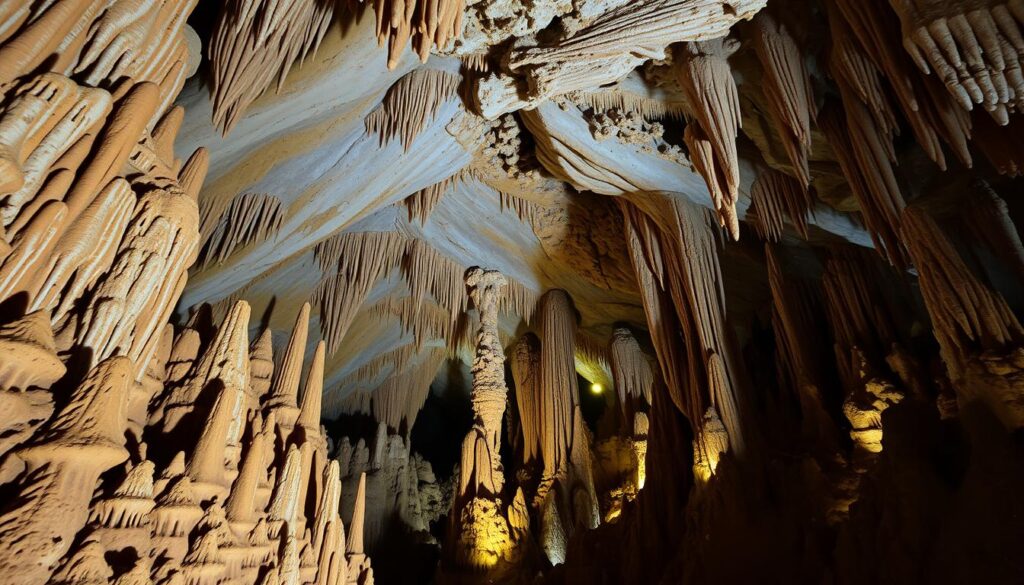
Stalactites look like icicles hanging from caves’ ceilings. Stalagmites are cone-shaped and grow from the floor. Sometimes, they meet to form a column. These formations are not just beautiful; they also tell us about the cave’s history.
Studying cave formations is part of geology and mineralogy. Scientists learn about the cave’s past by analyzing these formations. They discover how the environment and processes have changed the cave.
Seeing cave formations is a special experience. It shows us the natural world’s beauty and complexity. Whether you’re a scientist or just curious, cave formations have a lot to show us.
The Benefits of Cave Exploration
Cave exploration is a unique adventure that boosts both physical and mental health. It challenges you physically and offers the calm of nature. This mix is great for your well-being.
Exploring caves improves your heart health. You get to crawl, climb, and walk, which is good exercise. Adventure therapy, which includes cave exploration, helps keep you active and engaged.
Cave exploration also benefits your mind. It can be calming, helping you feel peaceful in the dark. This therapy reduces stress and anxiety, helping you grow.
It also makes you feel connected to nature. You learn to face challenges and grow in confidence. This boosts your self-esteem and confidence.
Adding cave exploration to your life can greatly improve your health. It combines physical activity with the calm of nature. This leads to better physical and mental health.
Photography in Caves
Cave photography is an art that needs patience, technical skill, and a deep understanding of cave environments. Photographers face challenges like low light and complex formations to capture stunning images.
Lighting is a big challenge in cave photography. Caves are dark, so photographers use artificial light or adjust camera settings. This helps to light up their subjects.
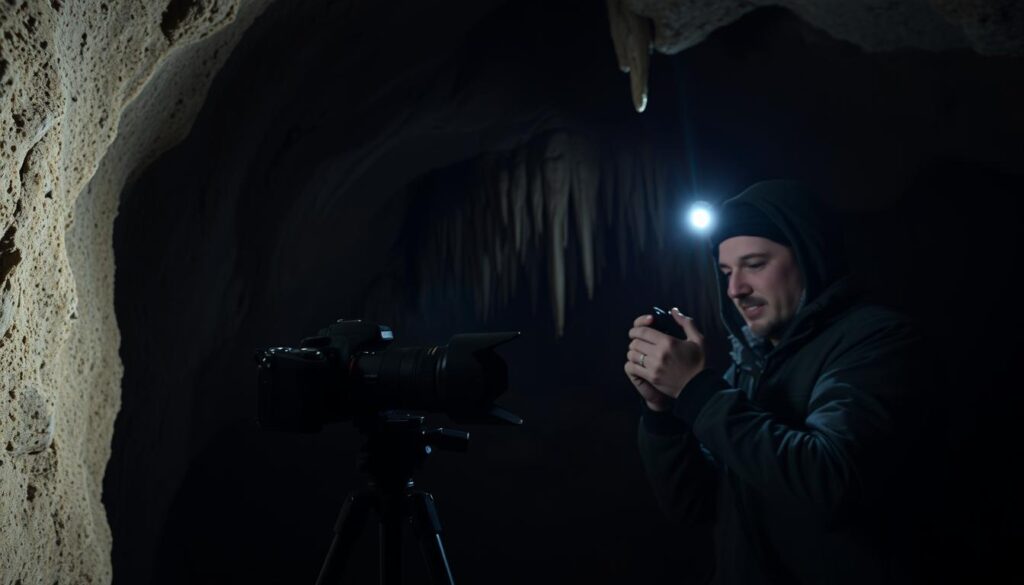
Composition is also key in cave photography. Photographers must use the cave’s formations and textures to create beautiful images. They might try different angles or use the cave’s features to frame their shots.
Photography expert says, “The art of photography is not just about capturing an image; it’s about telling a story through that image.”
“A good photograph is one that communicates a fact, touches the heart, and leaves the viewer changed forever.”
In cave photography, it’s about capturing the essence and beauty of these underground places.
To get high-quality images, photographers need to know their equipment and the cave’s environment. They should understand how cameras work in low light, use the right lenses, and watch out for the cave’s temperature and humidity.
By mastering cave photography techniques, photographers can create amazing images. These images show the beauty and complexity of caves. Whether for work or personal projects, cave photography is a rewarding challenge.
The Role of Technology in Cave Exploration
Technology is key in modern cave exploration, boosting safety and fun. Advanced equipment and techniques let explorers go deeper into caves safely.
Lighting systems have seen big improvements. Modern LED lights are brighter and use less energy. They help explorers move through dark caves easily. Plus, they’re small and light, making them easy to carry.
Innovation in communication has helped cave explorers a lot. Two-way radios and other tools keep teams connected, even in deep caves. Some devices even have GPS, making it easier to find your way.
Technology has also changed how we map caves. With 3D scanning and other tools, we can make detailed maps. These maps help with navigation and also support cave conservation.
In short, technology has changed cave exploration for the better. It makes expeditions safer and more efficient. As caving technology keeps improving, we can look forward to even more exciting discoveries.
Future of Cave Exploration
Cave exploration is getting more popular. This means we must focus on conservation and sustainability. It’s vital to keep caves in balance for their ecosystems.
Protecting caves is key. Environmental protection and eco-tourism play big roles. By being sustainable, explorers and tour operators can reduce harm to caves. This way, we keep them safe for the future.
Exploring caves and protecting them go hand in hand. This balance lets us enjoy these wonders while keeping them intact. It’s a win-win for everyone.
Looking ahead, we must keep up the good work in sustainability and conservation. Supporting efforts to protect caves and the people around them is essential. Together, we can make a difference.