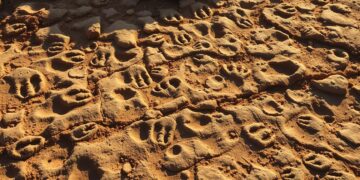







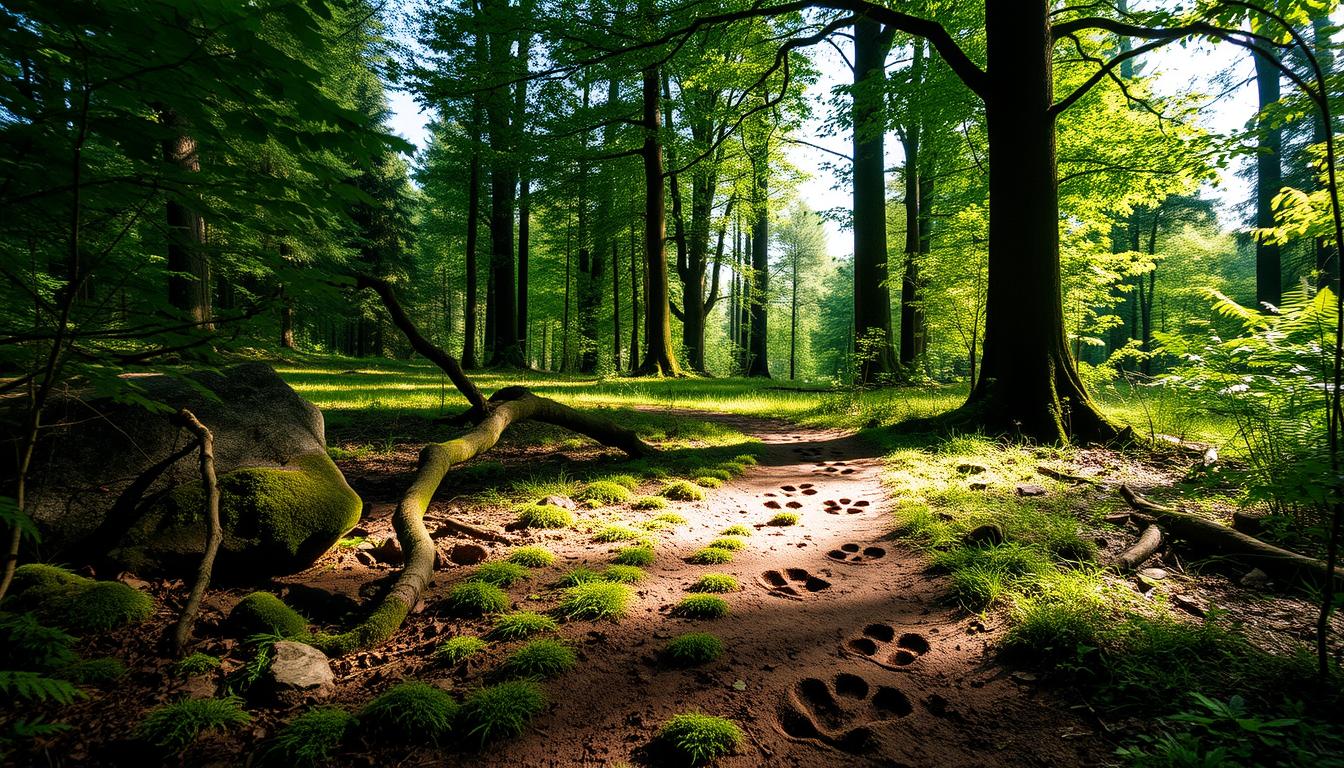
Exploring the outdoors can be exciting, and learning to spot wildlife tracks makes it even better. It helps you connect with nature and see the world in a new way. You’ll appreciate the small details of the environment more.
Identifying animal tracks lets you understand different species’ behaviors and homes. It’s great for both experienced naturalists and curious newcomers. Tracking opens up a new view of the outdoors, encouraging you to see things differently.
Introduction to Animal Tracks
Animal tracks give us a peek into the secret lives of wildlife. They show us patterns and behaviors we can’t see. By learning to identify these tracks, we can understand the world around us better.
The study of animal tracks is more than just seeing footprints. It’s about understanding the complex world of ecosystems. Each species has its own unique tracks. These tracks tell us about their presence, behavior, and numbers in an area.
Whether you’re an experienced tracker or just someone who loves nature, learning about animal tracks is rewarding. It helps you connect more with the environment. It also makes you appreciate the wildlife that lives there.
As we dive into the world of animal tracks and tracking, we’ll look at different types of tracks. We’ll learn how to identify them and why this skill is important. It helps us understand and protect our natural world.
Common Types of Animal Tracks
Animal tracks offer a peek into the natural world. They show us the presence of wildlife in an area. By learning about different tracks, we can understand the behavior and habitats of various species.
Identifying Canine and Feline Tracks
Canine and feline tracks are common. Canine tracks, like those from dogs, wolves, and foxes, are rectangular with four toes and claw marks. On the other hand, feline tracks, from cats, bobcats, and mountain lions, are rounded and often don’t show claw marks because their claws retract.
Looking at the size and how the animal moves helps tell canine from feline tracks. For example, felines usually have a direct register gait. This means their hind foot steps into the front foot’s print. Canines, though, have a more varied gait.
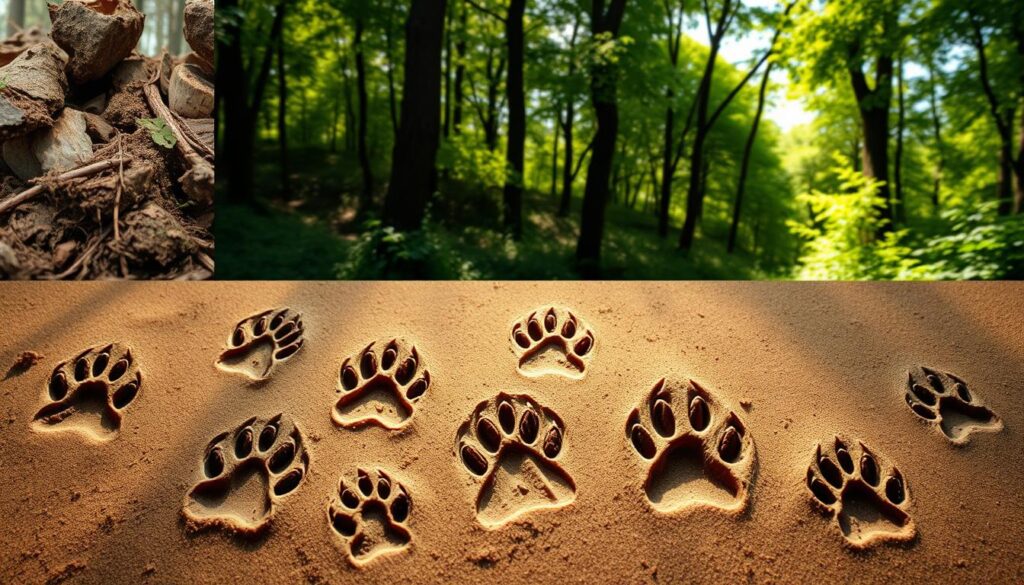
Wildlife expert Jim Lowery says, “Tracking is not just about identifying the animal; it’s about understanding the story behind the tracks.”
“The tracks we see in the wild are more than just footprints; they are a narrative of the animal’s journey, its struggles, and its interactions with the environment.”
By noticing the small details in track shape and behavior, we can get better at animal identification. This skill makes our outdoor experiences richer. It also helps us appreciate wildlife and work towards its conservation.
Whether you’re an experienced tracker or just starting, learning to identify and understand animal tracks is a valuable skill. It deepens our connection with nature.
Identifying Different Animal Tracks
Knowing how to spot different animal tracks is key for anyone who loves nature. Whether you’re exploring the woods or just your backyard, recognizing animal tracks can make your connection with nature stronger.
Hoof tracks are a big clue. They’re made by animals like deer and horses. Hoof tracks can look very different, depending on the animal. For example, deer tracks are smaller and more heart-shaped. Horse tracks are bigger and more rectangular.
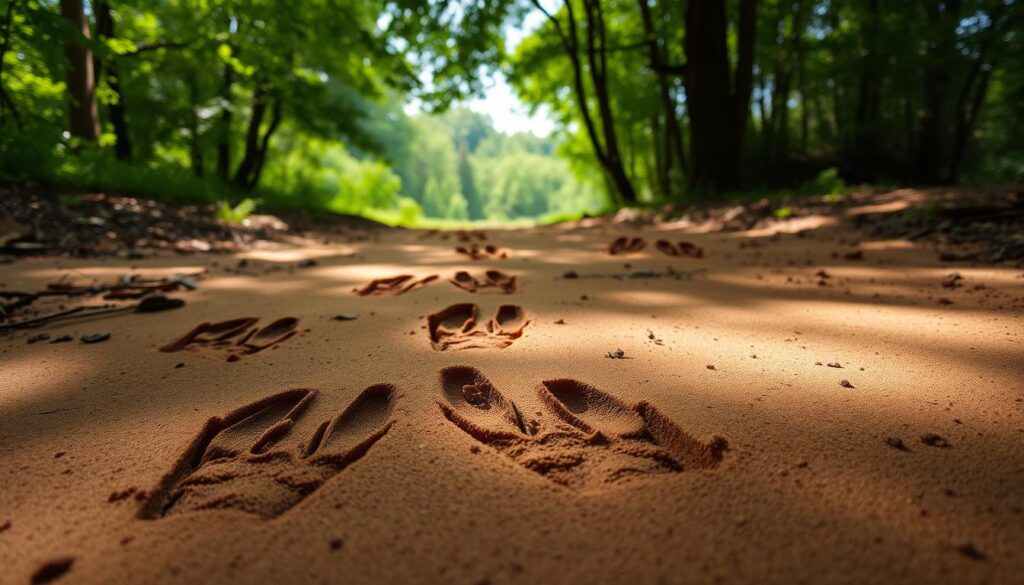
Bird tracks, on the other hand, have a three-toed pattern. Many birds, like songbirds and raptors, leave tracks that can be identified by their unique toe arrangements and scratch marks. Knowing these patterns helps figure out which bird made the tracks.
“The tracks of animals are like signposts on the trail of life, guiding us through the wilderness of the natural world.” – John Muir
To really know what animal made a track, you need to look closely. The size, shape, and pattern of the tracks give clues. Also, the habitat and other signs, like scat or nests, help identify the animal.
Learning to identify animal tracks, including hoof and bird tracks, deepens your understanding and love for wildlife. This skill makes nature walks and hikes more rewarding. It also helps you see the world around you in a new way.
Reading the Signs: Trails and Patterns
Tracking animals involves understanding their trails and patterns. It’s key for anyone who loves wildlife, whether you’re experienced or just starting out.
Animal trails show more than just where they’ve been. They reveal their behavior, where they live, and how they move. By studying these trails, you can learn about their daily lives, like what they eat and where they go.

Walking patterns are important in tracking. Each animal has its own way of moving. For example, deer jump a lot, while coyotes or foxes move smoothly.
The signs animals leave behind can tell you a lot. Like, how big they are, how old, and where they were going. A deep trail might mean a big animal, while a light trail could be a small or young one.
Learning to read these signs takes time and practice. You need to watch trails in different places and weather. This helps you understand them better.
Getting good at tracking can make your time in nature even more special. It lets you connect with animals on a deeper level and appreciate their lives more.
Seasonal Changes in Tracking
Knowing about seasonal changes is key for good animal tracking. It affects how easy it is to see tracks and how animals behave. Each season brings different conditions that can help or hinder tracking.
In winter, snow makes tracks stand out, making it easier to follow them. But, the cold weather can also hide tracks. Spring and summer bring thick vegetation, making tracks harder to spot.
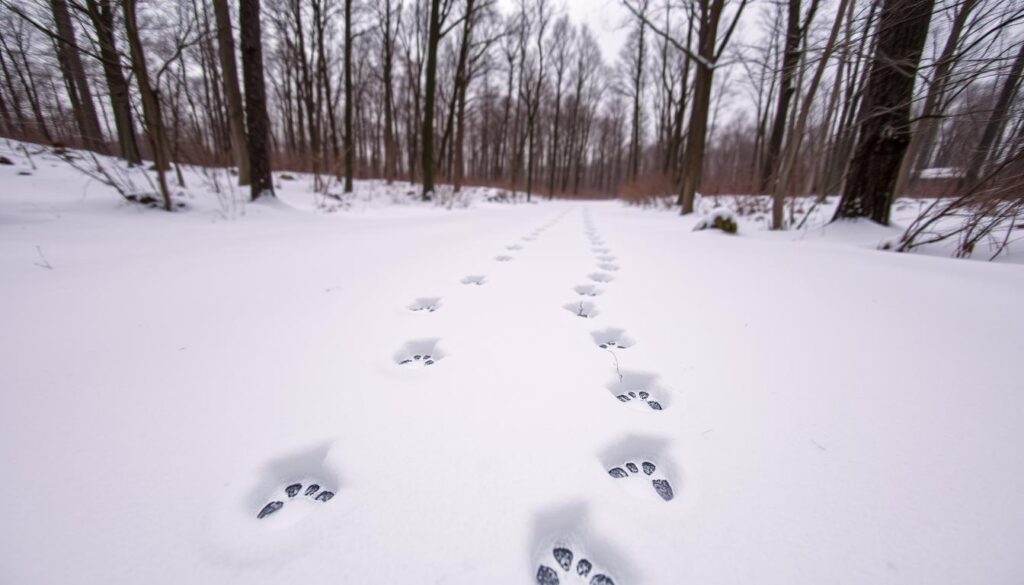
Seasonal changes also change wildlife behavior. For instance, during mating seasons, animals move more and travel far. This changes their tracking patterns. Knowing these changes is essential for tracking success.
By adjusting to seasonal changes and understanding their impact, enthusiasts can improve their tracking skills. This also deepens their connection with nature.
Tools for Tracking Animals
Tracking animals is an art that uses various tools to understand their paths and habits. Whether you’re an experienced naturalist or just love the outdoors, the right gear can make tracking better.
A field guide is key for tracking. It shows pictures and descriptions of animal tracks. This helps you know which animal you’re tracking, like a deer or another animal.
Camera traps are also great for tracking. They have sensors that take pictures of animals as they move. This is super helpful for seeing animals that are hard to find, like those that are active at night.
You’ll also need binoculars to watch animals from far away. And GPS devices or smartphone apps to track your path and mark important spots, like where you saw an animal.
“The best way to observe wildlife is to be patient and stay calm, letting the animals come to you.”
Using these tools well takes time and patience. For example, setting up camera traps means knowing how animals behave. And using a field guide well means being able to tell apart similar tracks, a skill that gets better with practice.
By using these tools and knowing about animal behavior and habitats, you can learn more about the wildlife around you. Whether you’re tracking in your backyard or a far-off place, the right tools can greatly improve your outdoor adventures.
Ethical Tracking Practices
Ethical tracking is key to exploring nature without harming wildlife. Enthused explorers must respect the natural world deeply. This way, they can enjoy the outdoors while keeping it safe.
At the heart of ethical tracking is reducing disturbance to animals and their homes. Trackers need to be mindful of their surroundings. They should keep a safe distance from the wildlife they’re tracking. This helps avoid stressing out the animals.
In protected or sensitive areas, following local rules is essential. These rules help keep nature’s balance and ensure tracking is done sustainably. It’s a way to protect the outdoors for the future.
Also, ethical tracking means learning about ecosystems. By doing this, people help in wildlife conservation. They ensure the outdoors remains safe for generations to come.
Learning from Experts
To get good at animal tracking, learning from experts is key. Those who have spent years in the wilderness know a lot about wildlife behavior. They can teach you a lot about tracking.
Joining guided tours or workshops is a great way to learn. You get to practice and learn from people who know a lot about expert tracking techniques. This helps you improve your skills and appreciate nature and the outdoors more.
Reading books and articles by experienced trackers is also helpful. You can also join tracking communities or forums. There, you can share your experiences and learn from others.
By practicing and getting advice from experts, you can become skilled at animal tracking. This not only makes you better at tracking but also helps you connect more with wildlife and the environment.
Conclusion: Connecting with Nature Through Animal Tracking
Animal tracking lets us connect with nature in a special way. It helps us understand the outdoors better. By learning to read animal tracks, we appreciate the wildlife around us more.
Exploring nature through animal tracking helps us slow down. We notice the small signs left by animals. This connection to nature builds respect and care for our environment.
Animal tracking is great for anyone, whether you’re experienced or new. It helps us understand the natural world and our role in it. By embracing animal tracking, we gain a deeper connection to nature.