




Imagine standing at the edge of a vast, shimmering expanse of ice. The air is crisp, and the landscape stretches far. Glacier exploration is a mix of adventure and science, attracting many.
The beauty of ice formations is stunning. Glaciers like the Erebus Glacier in Antarctica show nature’s incredible beauty and complexity. We’ll look into glaciers’ scientific value, beautiful landscapes, and fun activities.
What is a Glacier?
Glaciers are huge, lasting masses of ice that form on land. They grow as snow piles up and gets pressed down over time. These ice masses are key to the Earth’s cryosphere and play a big role in the global climate.
The process of glacier formation is slow. It starts when snow in winter doesn’t all melt in summer. This lets snow layers build up and get pressed together, turning into ice.
Glaciers are not just big chunks of ice. They move because of their own weight. This movement is driven by gravity and can be affected by the slope of the land and meltwater at the base. Studying glaciers, or glacier science, helps us understand these movements and their effects on the landscape.
Glaciers are more than just landscape shapers. They are also important signs of climate change. Changes in glacier size and mass can show us global climate trends. Scientists closely watch glaciers to learn about climate change’s effects on these sensitive systems.
In short, glaciers are complex, moving parts of our Earth’s system. They are affected by and affect climate conditions. Knowing about glaciers helps us understand climate change and predict future environmental changes.
The Beauty of Glaciers
Glaciers are not just huge ice masses; they are also stunning natural wonders. They attract both adventurers and scientists. Their beauty comes from ice formations and complex cave systems. This beauty draws visitors from all over the world.
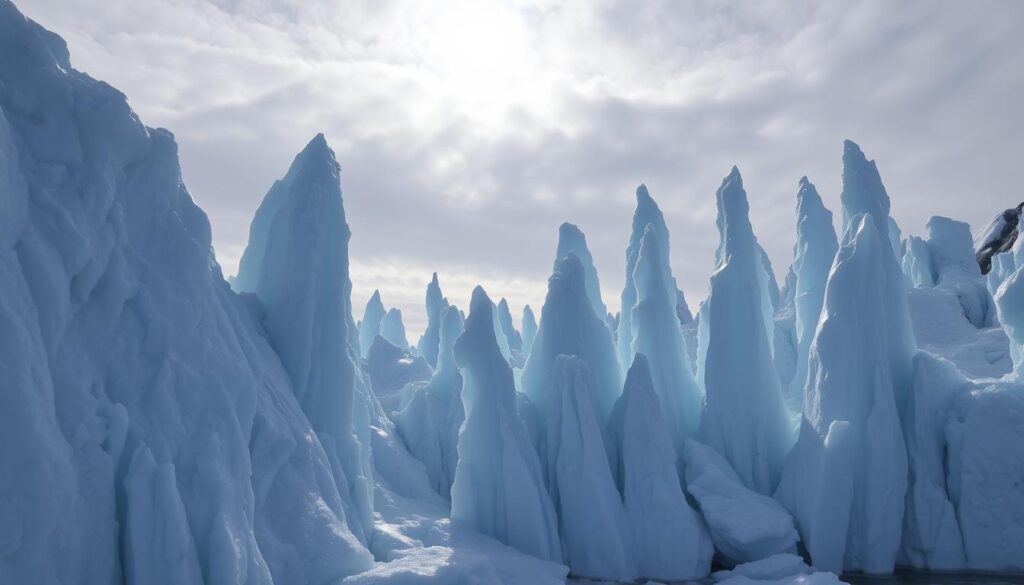
Exploring glaciers is fascinating. You get to see the detailed structures within these icy landscapes. Glacier caves, for example, are amazing. Their walls reflect a variety of blues, thanks to the way meltwater carves through the glacier.
Exploring Glacier Caves and Moulins
Glacier caves and moulins make glaciers even more interesting. Moulins are vertical shafts that form when meltwater finds a weak spot in the ice. They offer a glimpse into how glaciers change over time.
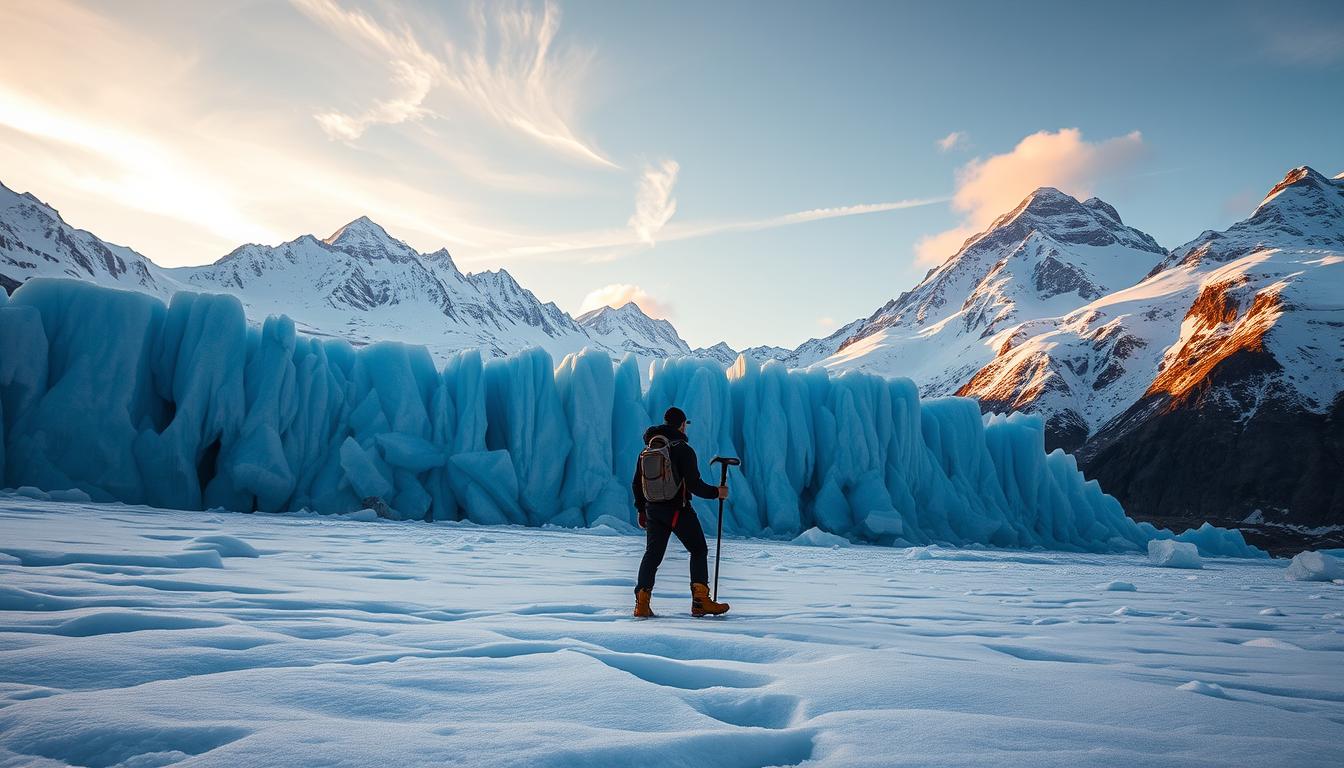
Hiking on a glacier is an unforgettable experience. Surrounded by serene beauty, you see towering ice formations and sometimes a moulin or cave. This glacier exploration shows the beauty of these wonders and why we must protect them for the future.
Popular Glaciers to Visit in the U.S.
Glacier fans can see some of the world’s most amazing glaciers in U.S. national parks. These places offer a chance for glacier hiking and glacier exploration. Visitors get to see the beauty of these slow-moving ice rivers.
Alaska’s Glacier Bay National Park is a top spot, with its stunning glaciers and landscapes. You can go on guided tours to see the Grand Pacific Glacier. Mount Rainier National Park in Washington also has many glaciers, like the Nisqually Glacier. It has trails for hikers of all levels.
Glacier National Park in Montana is a key place to visit, with over 70 named glaciers. The park has trails for all, from easy day hikes to tough multi-day treks. You can also take boat tours on the lakes to get up close to the glaciers.
For glacier hiking, you need the right gear and guides. Many national parks offer guided tours. This makes sure your trip is safe and fun.
Visiting these glaciers is an adventure you won’t forget. It also shows how important it is to protect these natural wonders. As you enjoy the beauty, you’ll learn about climate change and the need to save these places.
Adventure Activities on Glaciers
Exploring glaciers is a unique experience that combines adventure with natural beauty. Glacier hiking is a favorite activity, allowing you to see these wonders up close.
Guided glacier hikes are led by experts who provide the right gear. They make sure you’re safe and have fun. These tours are exciting and teach you about the glacier’s history and geology.
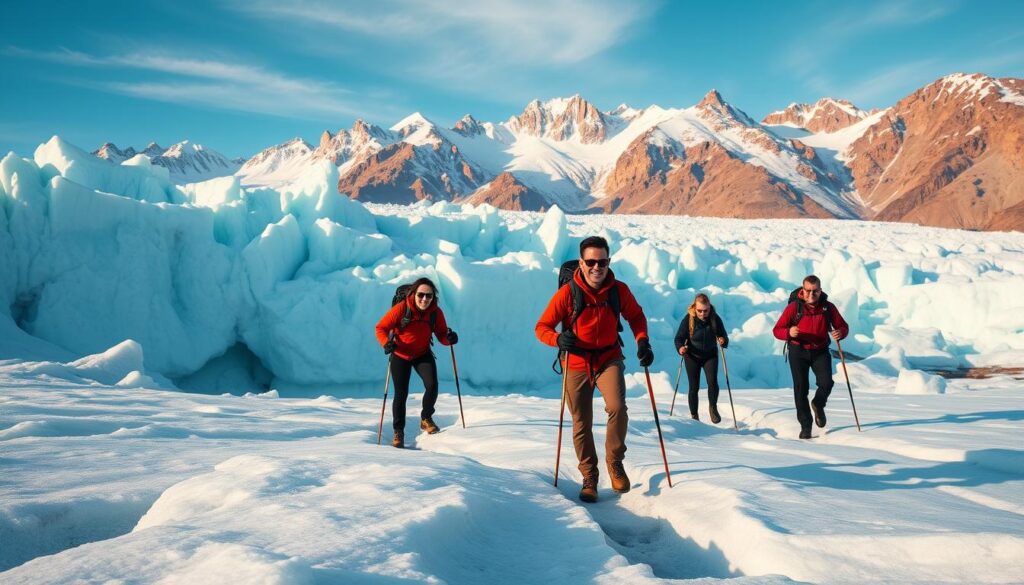
Glacier exploration is thrilling but must be done safely. The terrain is dangerous, with crevasses and slippery ice. Always go with certified guides who know how to handle these risks.
Safety equipment is key for glacier hiking. Crampons help you grip the ice, and ice axes can save you if you fall. Harnesses and ropes keep you safe in crevassed areas, tied to your guide.
It’s also important to know the weather and glacier conditions. Guides plan the safest path based on these. Be ready for weather changes, as they can affect your hike’s safety and fun.
In summary, glacier hiking and exploration are exciting adventures. By focusing on safety and following experienced guides, you can have a thrilling and safe time on these natural wonders.
The Science Behind Glacier Movement
Glacier movement is a complex process. It’s driven by the ice’s weight and external factors like meltwater. Gravity plays a key role in this movement, pushing the ice downhill.
The temperature also affects glacier movement. When temperatures rise, the glacier’s surface melts. This creates meltwater that seeps to the glacier’s base. This meltwater acts as a lubricant, making it easier for the glacier to move.
“The underside of glaciers is a critical area of study, as it reveals complex interactions between glaciers and ocean water,” says Britney Schmidt, highlighting the importance of understanding glacier dynamics.
Research on the Erebus Glacier Tongue shows that glaciers and ocean water interact significantly. Warm ocean water can melt the glacier from beneath. This accelerates the glacier’s movement.
The movement of glaciers affects sea levels. As glaciers melt and move, they raise sea levels. Understanding glacier movement is key to predicting sea level changes and fighting climate change.
In conclusion, glacier movement involves gravity, temperature, and meltwater. Continued research in glacier science is vital. It helps us understand how glaciers impact our planet.
Wildlife Around Glaciers
Exploring the wildlife around glaciers shows us a complex and intriguing world. Glaciers, often seen as barren and lifeless, actually host a variety of unique and adapted species.
The Erebus Glacier Tongue is a great example. It has unique life forms and ecosystems, even in subglacial environments. These places have extreme conditions, like low temperatures and high pressures. Yet, life thrives there in amazing ways.
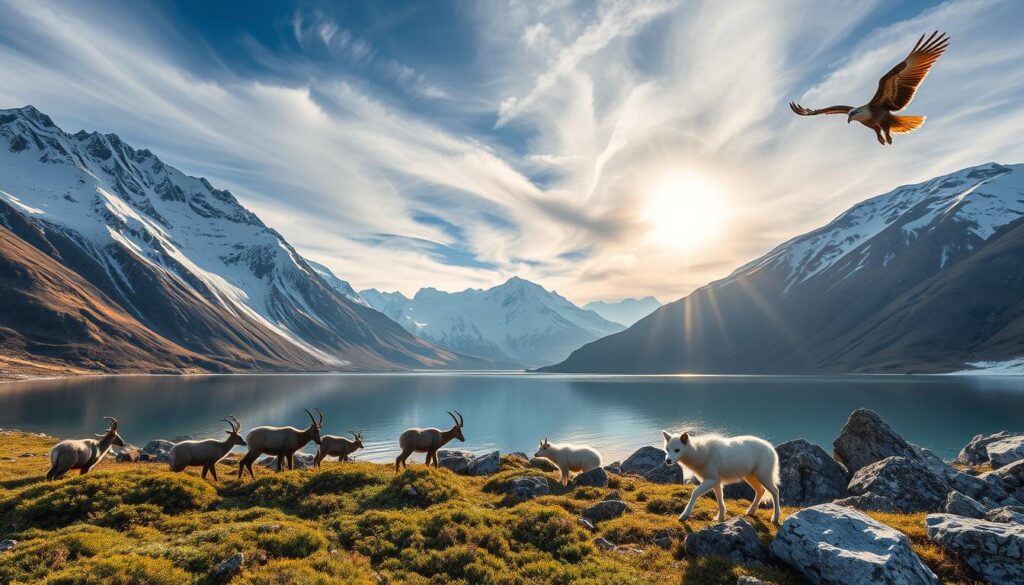
Organisms living in and around glaciers have developed specialized adaptations to survive. For example, some microorganisms can live in the cold, dark conditions beneath the glacier. They play a key role in the ecosystem. Studying these organisms is part of glacier science, which aims to understand the complex relationships between glaciers and life.
It’s vital to preserve these ecosystems. They are not just important for the wildlife that depends on them. They also help maintain biodiversity and show us the effects of climate change. As glaciers melt and change, the wildlife that relies on them faces big challenges.
In conclusion, the wildlife around glaciers is fascinating and fragile. We must keep exploring and understanding these ecosystems. This is to protect them for future generations.
The Impact of Climate Change on Glaciers
Glaciers are key indicators of our planet’s health. They are showing alarming signs of decline due to climate change. The warming of the Earth is causing them to shrink and thin, leading to sea level rise and changes in ecosystems.
The Thwaites Glacier in Antarctica is a prime example. It’s known as the “Doomsday Glacier” because its melting could raise global sea levels. Studies show it’s losing ice faster, adding to sea level rise.
Glacier melting has far-reaching effects. It disrupts local ecosystems by changing water availability and quality. It also leads to changes in weather and increases the risk of glacial lake outburst floods.
It’s vital to tackle climate change to protect glaciers. Cutting down greenhouse gas emissions can slow glacier melting. This helps preserve these natural wonders for future generations. Studying glacier science and climate change impacts is key to saving them.
Research on glaciers and climate change is essential. It guides local management and global climate policies. By monitoring glaciers, scientists offer vital insights into our planet’s health.
Protecting Glacial Environments
Keeping glacial environments safe is key for our planet’s health. Glaciers help control Earth’s climate. Losing them could harm us a lot.
Conservation Efforts are in place to fight climate change‘s effects on glaciers. We’re working to cut down carbon emissions and promote green tourism. This helps reduce our impact on these areas.
“The ice sheets and glaciers are not just water reservoirs; they are also indicators of the health of our planet. Protecting them is critical for our future.”
To safeguard glaciers, we’re setting up protected zones and encouraging eco-friendly travel. We’re also funding research on glaciers and climate change.
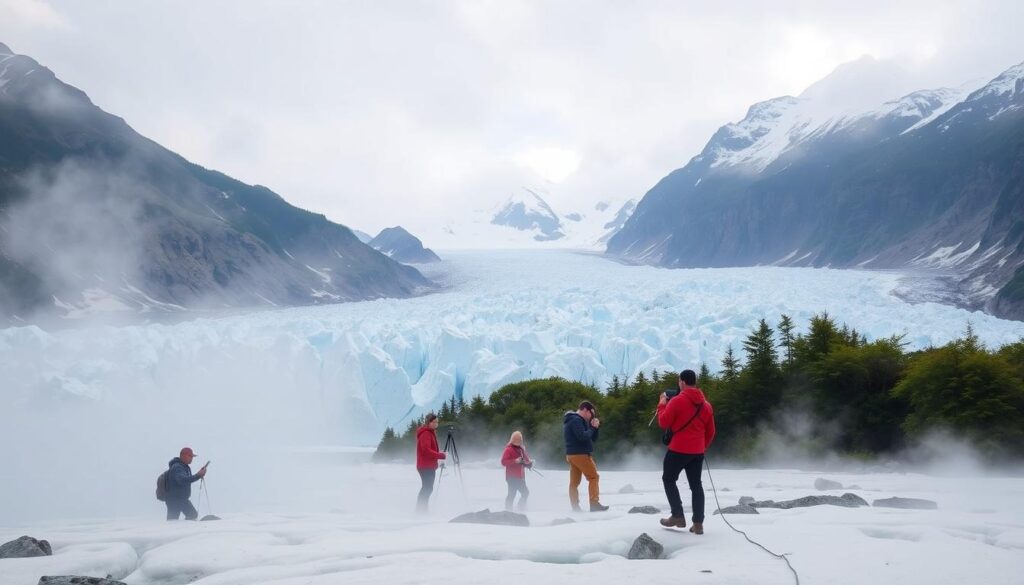
Protecting glaciers is a big task that needs everyone’s help. It’s about working together and caring for our planet.
Reducing Human Impact is vital for glacier conservation. We can do this by using green practices during visits. Supporting groups that protect glaciers is also important.
How to Prepare for a Glacier Adventure
Getting ready for a glacier hike is more than just packing the right stuff. You need to know about glacier safety and how they work. Glacier hiking is both exciting and a bit scary, so getting ready is key for a fun and safe trip.
First off, you need the right gear. This includes crampons, ice axes, and harnesses. These are must-haves for moving safely on glaciers. Safety is always first, and the right gear is the first step to a safe trip.
Choosing the Right Guided Tour
Joining a guided tour is a great way to get ready for a glacier adventure. Guides know the terrain and share important safety tips. The Icelandic Mountain Guides tour highlights the need for the right gear, guides, and safety.
A guided tour makes the trip safer and more interesting. It teaches you about the glacier’s world and its geology. When picking a tour, look for ones with a good safety record and skilled guides.
In short, getting ready for a glacier adventure means planning, the right gear, and sometimes, expert guides. By choosing a trusted tour and focusing on safety, you can enjoy the stunning beauty of glaciers safely.
Fascinating Glacier Facts
Glaciers are not just huge ice blocks. They are dynamic systems that have amazed people for centuries. Their beauty and science are truly captivating.
The Erebus Glacier Tongue in Antarctica is a stunning example. It stretches into the Ross Sea and is known for its unique ice crystals and ice caves.
Glaciers are also key to understanding Earth’s climate history. They store information in their ice layers. Scientists study glaciers to learn about past climates and the effects of global warming.
Glacier ice holds a record of the atmosphere over thousands of years. Ice cores from glaciers help us understand past climates and predict future changes.
Glaciers also support unique ecosystems. The harsh conditions around glaciers have led to the evolution of special plants and animals. These are adapted to these extreme environments.
In summary, glaciers are treasures of natural and scientific significance. Their size, structure, and ecosystems make them fascinating subjects for study and exploration.
Engaging with Glacier Education and Research
Glacier science is always changing, with new discoveries about these natural wonders. Scientists like Britney Schmidt lead the way, studying how glaciers interact with their surroundings.
There are many ways to learn about glaciers. You can join educational programs or citizen science projects. These help us understand glaciers and their role in nature.
Getting involved in glacier research and education can deepen your respect for these icy giants. It shows us the impact of climate change on them. This knowledge can motivate us to take action and protect our planet.
As we learn more about glaciers, we see why they’re so important. They’re a treasure for our future. By joining in glacier education and research, we play a key role in preserving them.