







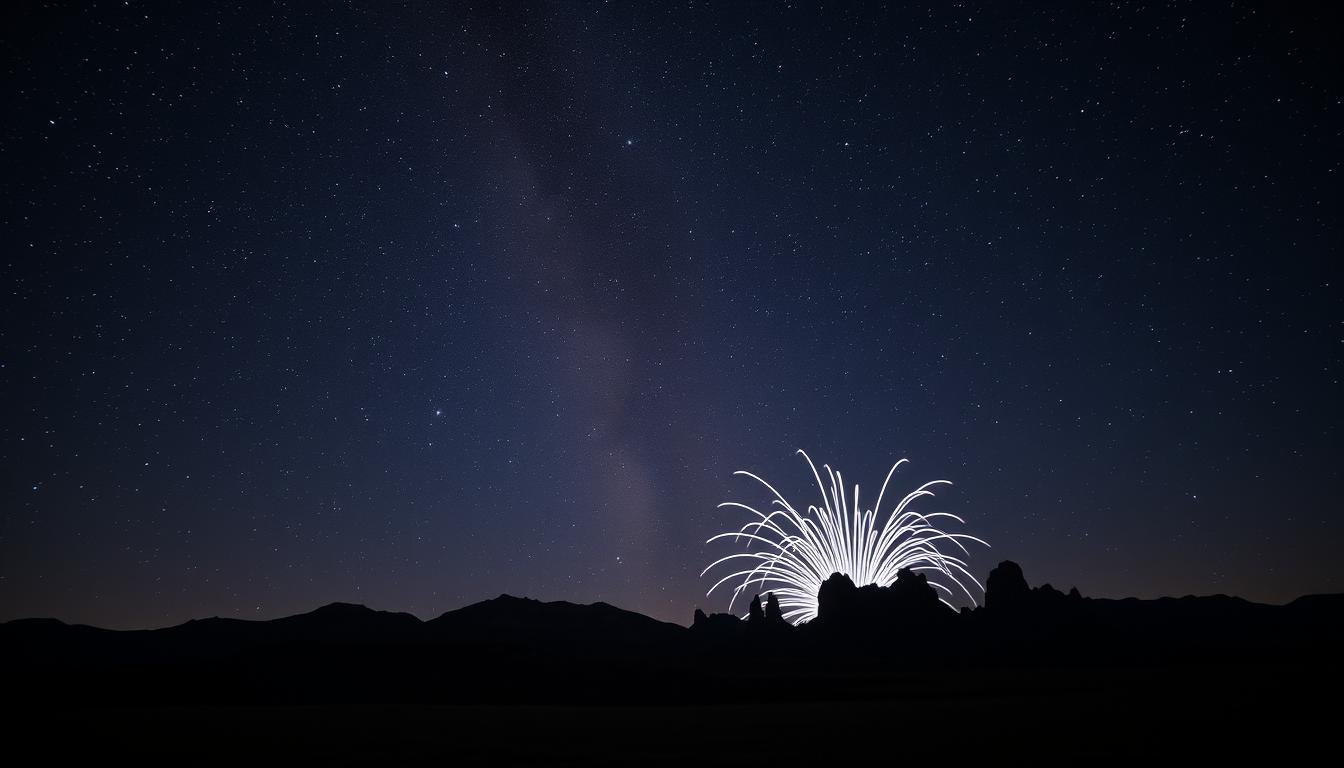
Scientists in Utah are searching for a meteorite that fell in the Salt Lake Valley. A KSL TV viewer’s dash camera caught the fireball behind the mountains in Ogden. This has sparked a lot of interest.
Finding a meteor is thrilling and rewarding. With the right tools and knowledge, you can spot a meteoroid entering our atmosphere. A meteor was seen in Utah, showing how vital it is to know about these objects and their paths.
What is a Meteor?
A meteor, also called a shooting star, is a small piece from space that burns up in our atmosphere. This happens when a meteoroid, a small rock or piece of debris, enters our atmosphere.
To understand meteors, it’s key to know the related terms. A meteoroid is a small body in space. When it enters our atmosphere, it becomes a meteor. If it lands on Earth, it’s called a meteorite. A very bright meteor is called a fireball, which might even explode in the sky.
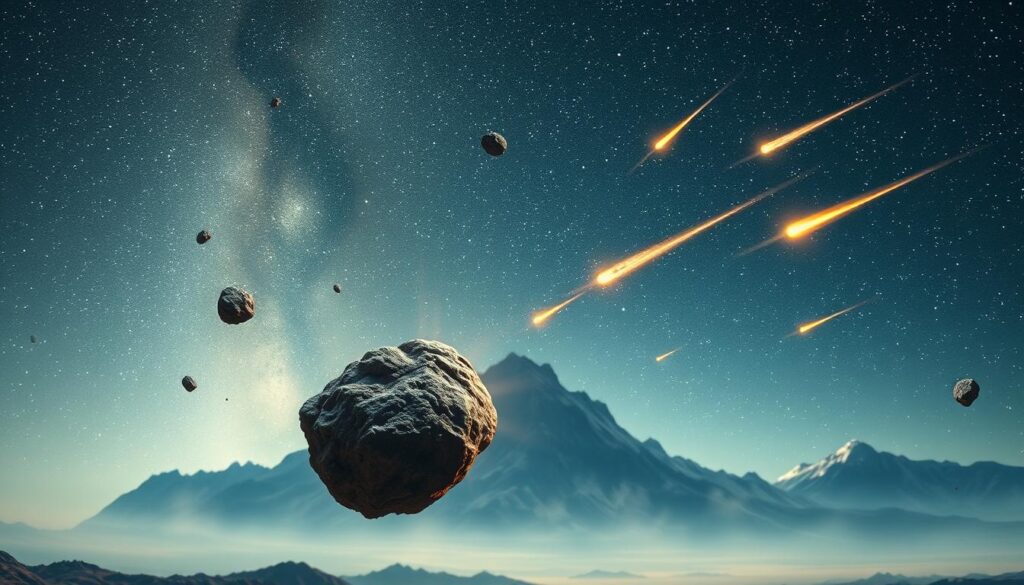
Astronomers say, “Meteors are fragments of asteroids or comets that, upon entering the Earth’s atmosphere, create spectacular displays.” Knowing these terms helps us appreciate meteors and their place in the universe.
Studying meteors and their terms not only deepens our understanding of space. It also gives us insights into our solar system’s composition and origin. By learning about meteoroid, meteor, meteorite, and fireball, we gain a better grasp of these brief, yet fascinating, events in the sky.
The Science Behind Meteor Showers
The Earth’s journey through trails of comet or asteroid debris leads to the amazing sight of meteor showers. These happen when the Earth meets a meteoroid stream. This causes the particles to burn up in the atmosphere, creating a bright streak in the sky.
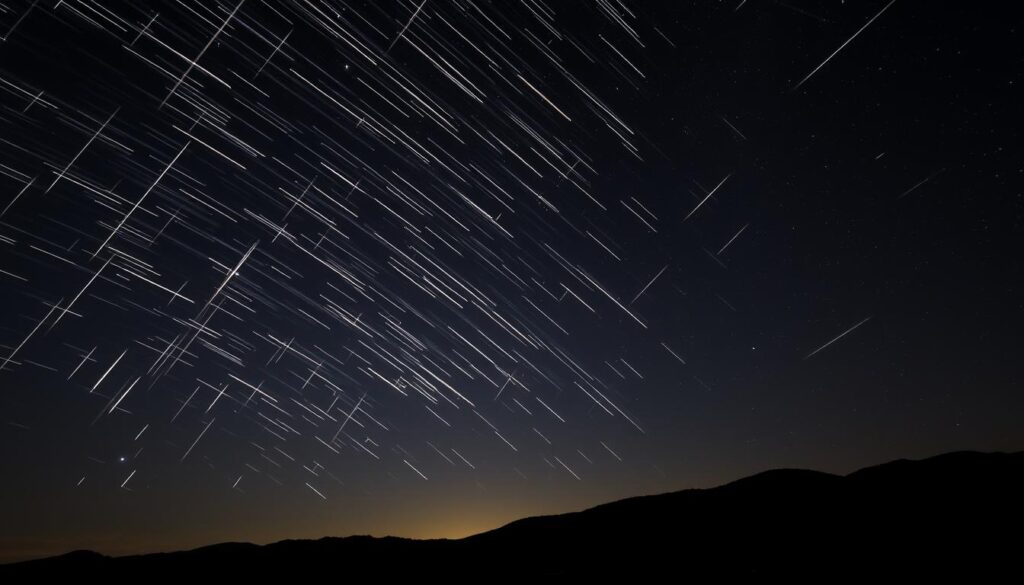
Meteor showers are not random. They are linked to the trails left by comets and asteroids. For example, the Eta Aquariid meteor shower peaks in early May. It’s caused by the Earth passing through Halley’s Comet‘s debris trail. This shower is very active and known for its many meteors.
Causes of Meteor Showers
The main reason for a meteor shower is the Earth’s meeting with comet or asteroid leftovers. When the Earth goes through these trails, the particles burn up, lighting up the sky. The
“The Perseid meteor shower, one of the most popular showers, is caused by the Earth passing through the debris trail of Comet Swift-Tuttle.”
This shows how comets and asteroids are connected to meteor showers.
Learning about the science behind meteor showers makes us appreciate them more. By understanding the role of comets and asteroids, we can enjoy these beautiful events even more.
The Best Places to View Meteors
To see meteors, you need to find dark skies away from cities. City lights make it hard to see meteors, so light pollution is a big problem for fans.
National parks and remote spots are great for meteor gazing. They have little artificial light, keeping the sky dark. This lets your eyes see meteors better.
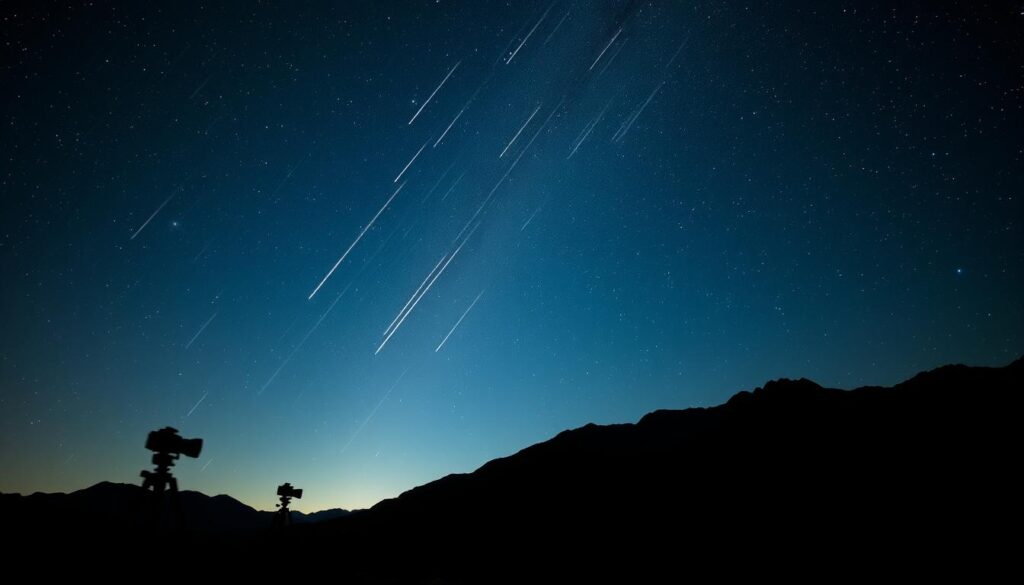
When meteor showers are at their best, these places are even better. Dark skies and peak meteor activity make for perfect viewing. Always check the weather first, as clear skies are essential.
Top spots for meteor watching include Death Valley National Park and Big Bend National Park in the U.S. They have very dark skies. Also, look for International Dark Sky Association (IDA) Dark Sky Parks.
In short, finding a spot with dark skies and little light pollution is key. Choose the right place and time for the best meteor viewing.
Meteor Hunting: Getting Started
Starting your meteor hunting journey means knowing what you need to see the night sky. You’ll need some key equipment to get going.
Essential Equipment for Meteor Hunting
First, get a camera that can capture the night sky. It’s great for recording meteor trails and spotting meteor showers. Also, a pair of binoculars can help you see more in the sky than your eyes alone.
A star chart or planisphere is also essential. It helps you find constellations and meteor showers’ radiant points. For serious hunters, NASA’s All Sky Fireball Network offers valuable data on fireballs and meteors.
Joining online groups or using apps for meteor forecasts can make hunting more fun. These tools keep you updated on the best times and conditions for viewing.
Tips for Beginners
Beginners should start in a dark place to see more meteors. Wear warm clothes for long nights outside. Being patient and ready for weather changes will help you catch more meteors.
Understanding Meteor Composition
Studying meteor composition helps us learn about the birth and growth of celestial bodies. Meteorites, which are pieces of meteors that have fallen to Earth, fall into three main categories: stony, iron, and stony-iron.
Stony meteorites are the most common. They are mostly made of silicate minerals. These meteorites give us clues about the early solar system’s makeup.
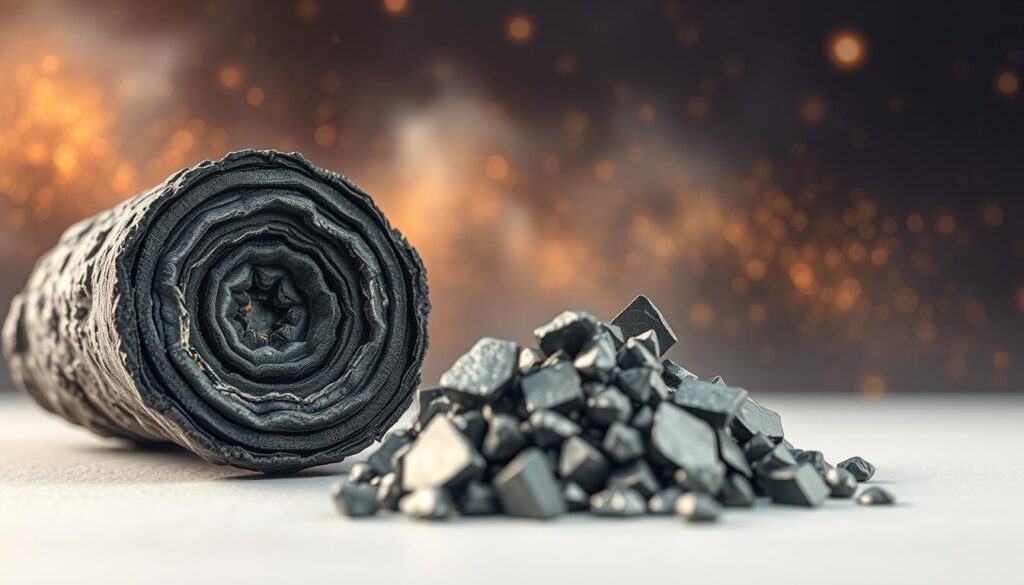
Iron meteorites are mostly iron and nickel. This shows they came from the cores of planets that were destroyed or broken apart.
Stony-iron meteorites are a mix of stony and iron meteorites. They offer a special look into the early solar system’s formation.
By studying these meteorites, we gain insights into their origins. This knowledge helps us understand the solar system’s history.
The Cultural Significance of Meteors
Meteors have always fascinated people, leading to many beliefs and stories. They have been seen and recorded for centuries. Often, they were linked to big events or signs.
In many cultures, seeing a meteor is seen as a warning of change or disaster. For example, a meteor sighting might mean bad news or a big change. This idea is found in many folklores, where meteors are seen as messages from gods or spirits.
Many stories and legends have been made about meteors. In old times, they were thought to be signs from the gods. The ancient Greeks thought they were pieces of stars fallen from the sky. Other cultures believed they were messages from gods.
“The stars, like the people, are not always what they seem.”
Today, while old superstitions about meteors have faded, they are not forgotten. Meteors continue to amaze and inspire people everywhere. Studying meteors and their cultural importance gives us a peek into human nature. It shows our deep need to understand and make sense of the world.
Learning about the cultural importance of meteors can make us appreciate them more. By looking into how meteors have been seen and told through history, we can understand human culture better. It shows the rich and varied ways people have seen and interpreted the world.
Meteor Observation Techniques
Effective meteor observation is key for both hobbyists and scientists. The right methods are essential for success. Start by letting your eyes adjust to the dark. This greatly boosts your ability to spot meteors.
Choosing a comfortable viewing position is also important. It helps prevent fatigue during long sessions. Try lying down or sitting in a reclined position for better comfort.
Recording your meteor observations is a must. Note the time, date, and number of meteors seen. This helps track meteor shower activity. Scientists find this data very valuable for studying meteor showers.
For effective recording, use a notebook or a mobile app for meteor observation. Remember to include any other details, like the direction of the meteors and their characteristics.
By using the right techniques and recording well, you can greatly help our understanding of meteors. Whether you’re an experienced astronomer or new to the hobby, meteor observation is a rewarding activity that reveals the wonders of the universe.
Meteorites: What Happens After a Meteor?
When a meteor hits Earth, it becomes a meteorite. Scientists use many ways to find and study these space rocks. Finding meteorites is hard but exciting, with help from the public, weather radar, and field searches.
Locating Meteorites: Scientists track meteorite falls to find meteorites. Seeing a bright fireball means a meteorite has landed. Groups like the American Meteor Society help by collecting fireball reports. This data helps scientists find where meteorites might be.
Finding meteorites is like a treasure hunt. Scientists and fans search the ground for space rocks. Weather radar helps guess where a meteorite might have landed. This is very important at the start of a search.
When a likely spot is found, a field search begins. This search uses special tools to find meteorites. Meteorites can be metal, stone, or a mix. Knowing what they’re made of helps scientists learn about their space journey.
Studying meteorites helps us understand our solar system’s history. Every meteorite found adds to our knowledge. It helps scientists learn about the universe and how it was formed.
Fun Facts About Meteors
Meteors are a wonder in the night sky. The Geminid meteor shower is very active, with up to 120 meteors per hour. It’s a top event in the astronomy world.
The Leonid meteor shower is also famous. It can create spectacular meteor storms. These happen when Earth goes through comet or asteroid debris trails.
Discovering fun and interesting facts about meteors can deepen our understanding. It helps us see how our solar system was formed.