







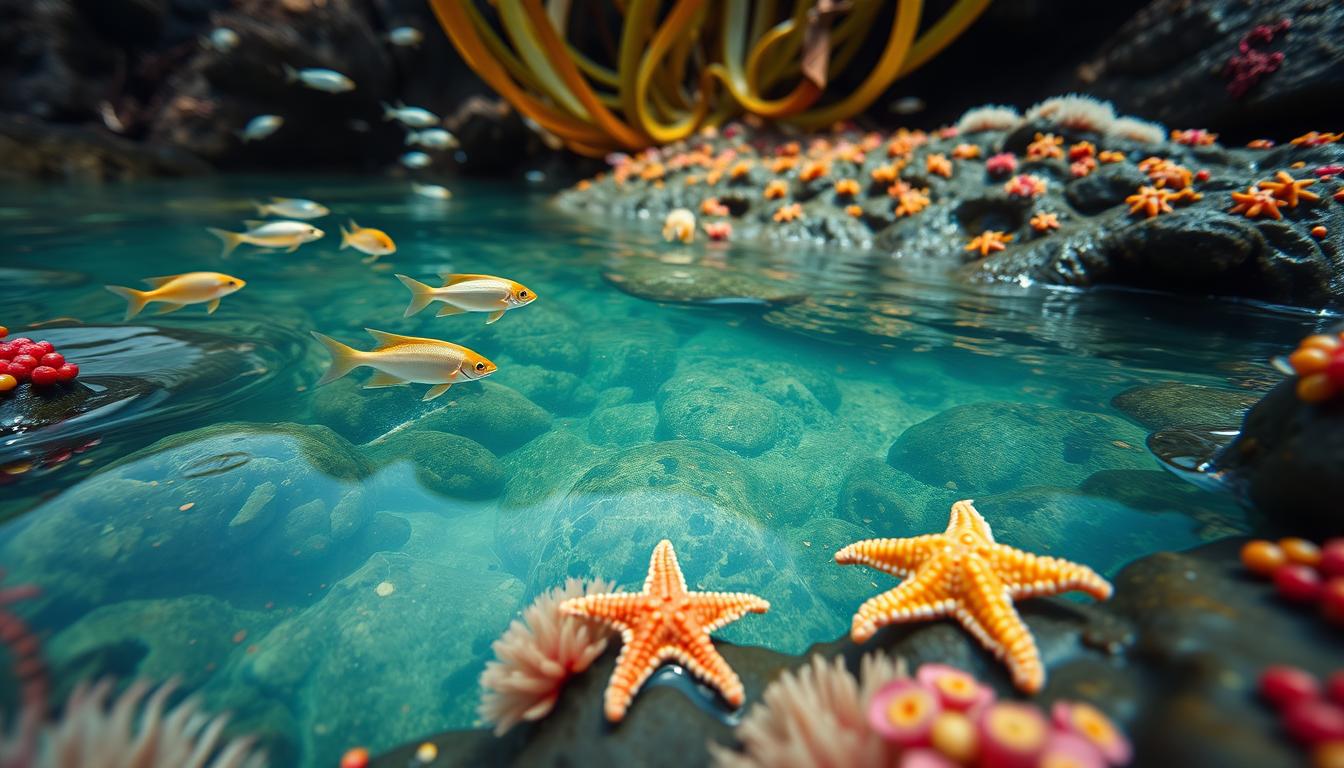
Discover the fascinating world of marine life in coastal ecosystems during low tide. Shallow pools of seawater, known as tide pools, are left on the beach. They are teeming with a diverse array of creatures.
Exploring these pools offers a unique glimpse into the lives of creatures that thrive in this dynamic environment. As the water recedes, a variety of marine life is revealed. This includes colorful anemones and playful sea stars.
This introduction to the world of coastal ecosystems sets the stage for a deeper dive into the wonders of tide pools. It also highlights the excitement of exploring them.
What is a Tide Pool?
Tide pools are special places where the ocean meets the shore. They are formed when seawater stays in the rocky shoreline’s depressions and crevices as the tide goes out.
These pools are key to the coastal ecosystem. They are home to many marine life species. The creatures living here have learned to thrive in this changing environment.
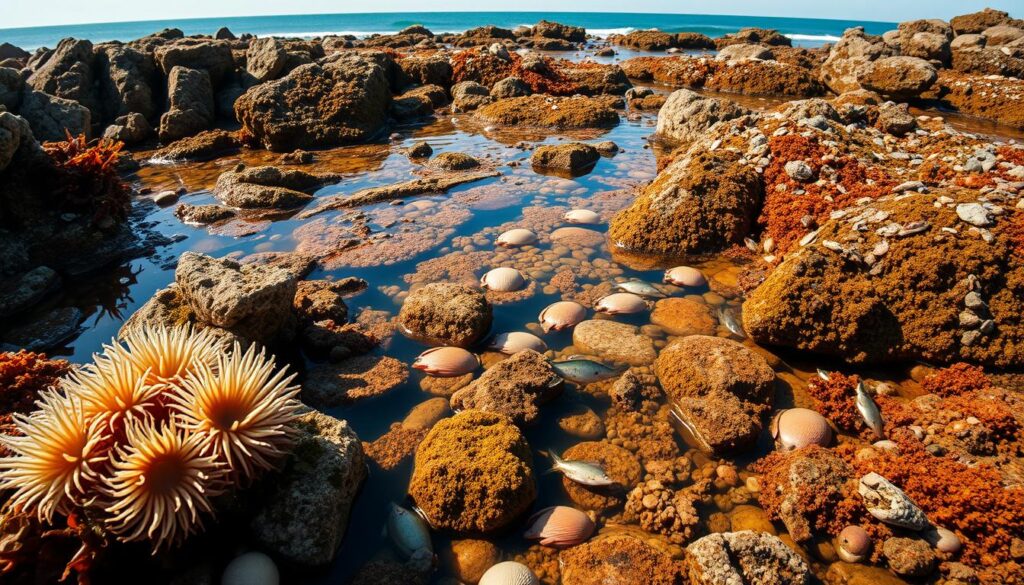
Tide pools are important for many marine animals. They are a safe place for young creatures to grow before they go into the open ocean.
The Unique Characteristics of Tide Pools
Tide pools are isolated from the open sea at low tide. This creates a unique environment that is both challenging and fascinating. The tide pool ecosystem is full of life, with species adapting in amazing ways to the changing conditions.
Learning about tide pools and their inhabitants helps us understand the coastal ecosystem better. It also shows us how environmental changes affect these delicate places.
The Best Locations for Tide Pool Exploration
The United States has many great tide pool locations. They offer a peek into a special marine world. From rocky coasts to national parks, these places are full of life and ready for you to discover.
Cabrillo National Monument in California is famous for tide pooling. It’s known for its colorful sea life, like sea anemones and mussels. Make sure to check the tide times to get the most out of your visit.
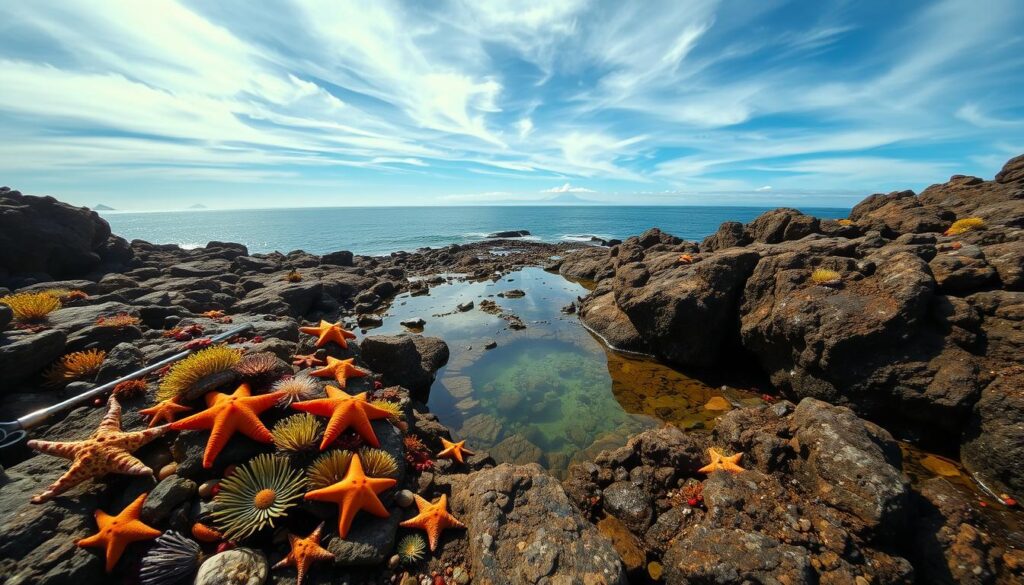
Acadia National Park in Maine gives a different tide pooling experience. Its rough shoreline has pools filled with life adapted to cold conditions. You can also enjoy hiking and scenic views along the coast.
Olympic National Park in Washington State is a hidden treasure for tide pool locations. Its pools are home to many marine creatures. The area also offers great coastal exploration. But, be ready for the Pacific Northwest’s changing weather.
When you visit these national parks for tide pooling, remember to respect the environment. Don’t touch or stand on marine life to protect the ecosystem. With care and preparation, you’ll have a great tide pooling adventure.
Timing Your Visit: When to Go
To enjoy your tide pool adventure, timing is key. Knowing when to go can really make your visit better.
First, check the tide charts. These charts tell you when the low and high tides are. This helps you plan your day.
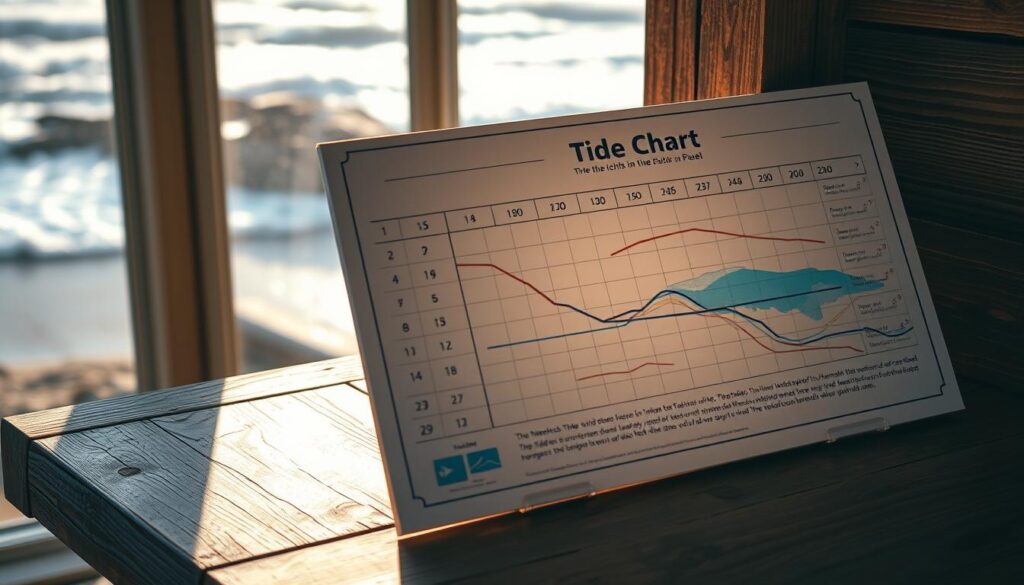
The best time to see tide pools is during low tide. This is when more of the beach and its creatures are out. But, you need to know when the tide is coming back.
Low tides are better because you can get to the tide pools more easily. Morning low tides are often the best. The water is calm, and the sun isn’t too strong.
Also, think about the season when you plan your visit. Some seasons have better tide conditions.
By looking at tide charts and planning well, you can have a safe and fun time at the tide pools.
Essential Tide Pool Exploration Gear
To enjoy your tide pool adventure, you need the right tide pool gear. This includes clothes and accessories that make your trip better and keep you safe.
Wearing the right shoes is key. Water shoes give you a good grip on wet rocks and protect your feet. It’s also smart to wear layers because the weather can change fast. Bringing extra clothes, including a warm layer, is a good idea.
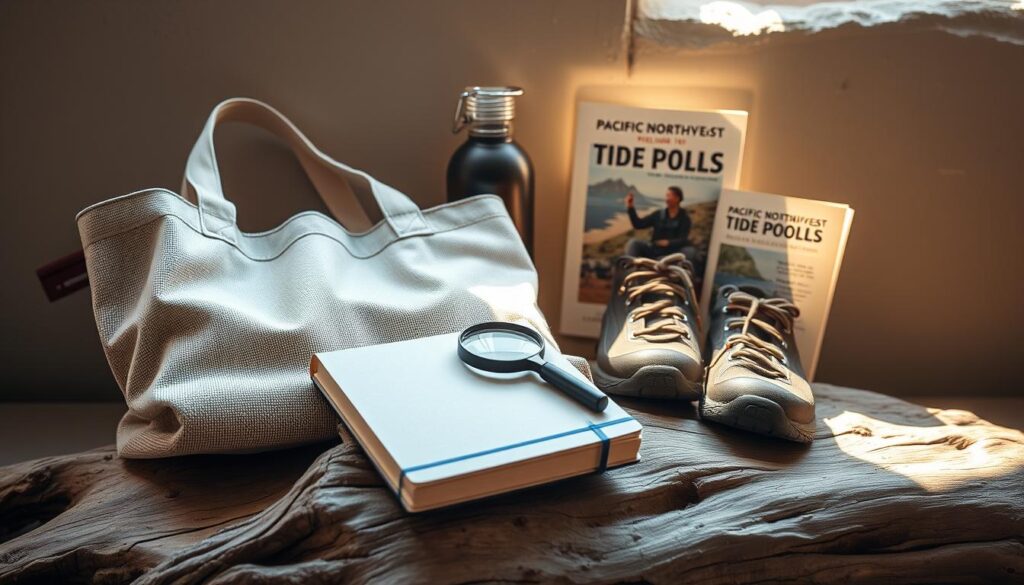
A pocket guide to seashore life can really help you learn about the tide pool world. It helps you identify the creatures you see, making your trip more fun and educational. Don’t forget towels and a small first-aid kit.
For outdoor exploration, staying hydrated and protected from the sun is important. Bring water and use sunscreen often to stay safe and comfortable.
Lastly, be careful of your surroundings and the creatures in the tide pools. Using safety equipment like gloves can protect you and the marine life from harm.
Safety Tips for Tide Pooling
Exploring tide pools is exciting, but safety is key. Knowing the risks and taking steps to avoid them is vital. This way, you can have a safe and fun time.
One important safety tip is to watch your step. Tide pools are rocky and slippery, which can lead to falls. Wear shoes with good traction to stay safe. Also, check the tide times to avoid being trapped by the incoming tide.
When you’re around marine life, be gentle and responsible. Don’t touch or remove animals, as it can hurt them and you. Some creatures, like sea urchins, can be very painful if handled wrong. It’s best to keep a safe distance for responsible exploration.
Conservation is also key. Make sure to leave the area as you found it. Don’t take any rocks, shells, or creatures. This helps keep the tide pool’s ecosystem safe for others to enjoy in the future.
By following these safety tips and caring for the environment, you can have a great time exploring tide pools. Enjoy these natural wonders while also conserving them for the future.
Identifying Common Tide Pool Creatures
Tide pools are home to a variety of marine life, including sea stars and barnacles. Exploring these shallow pools reveals a range of marine life adapted to their environment.
Sea anemones are a standout in tide pools. These colorful, flower-like animals are predators that catch prey with their tentacles. Dr. Jane Smith, a marine biologist, says, “Anemones show the diversity of life in tide pools. Their ability to thrive here shows their adaptability.”
“The tide pool is a microcosm of the ocean’s edge, where creatures have evolved to survive in a world of changing tides and turbulent waves.”
Barnacles, crabs, and sea stars are also common in tide pools. Barnacles filter food from the water, while crabs search for food on the pool floor. Sea stars move slowly, eating mussels and other shellfish.
To identify these creatures, look for unique features like an anemone’s tentacles or a crab’s shell color. Knowing the different species and their homes makes beachcombing more rewarding. It also deepens your appreciation for sea life in these ecosystems.
When exploring tide pools, observe creatures gently and avoid harming them. This way, you learn more about marine life identification and help protect these environments for the future.
Protecting Tide Pools During Your Visit
Exploring tide pools is exciting, but we must remember to protect them. Protecting tide pools is key to keeping their biodiversity alive.
Tide pools are very sensitive to human actions. To not harm them, we should tread lightly. We must avoid touching or standing on the marine life or habitat.
Here are some easy ways to enjoy tide pools without harming them. For example, we shouldn’t remove any creatures or rocks. This keeps the ecosystem balanced. We should also watch our steps to avoid damaging the habitat.
Practicing responsible tourism is important for conservation. By being mindful of our actions, we help keep tide pools safe for others. This means not littering, not feeding the marine life, and staying on paths.
Environmental protection is a team effort. Every small action we take helps. By being sustainable and respectful, we can enjoy tide pools while keeping them safe.
Fun Activities to Enjoy at Tide Pools
Tide pools are a great place for fun activities that make your beach visit better. You can try tide pool activities like nature journaling, photography, and watching marine life.
Nature journaling helps you write down what you see and learn. It’s a way to understand and love the tide pool world more. You can sketch the creatures you see too.
Photography lets you capture the beauty of marine life and the tide pool. You can use a phone or a camera to take amazing pictures.
Watching marine life is also rewarding. You can learn about the different species in the tide pools. You can see how they behave and what they need to survive.
These outdoor activities make your nature exploration better. They help you appreciate the natural world more. You’ll remember your visit to the tide pools and feel closer to nature.
Whether you love nature, photography, or just beach fun, tide pools are for everyone. Explore and enjoy the activities at the tide pools. Make your visit unforgettable.
Resources for Further Tide Pool Exploration
If you’re excited to learn more about tide pools, there are many resources out there. You can find books on marine biology that talk about tide pool creatures and their homes. These books are a great way to learn more.
The National Oceanic and Atmospheric Administration (NOAA) website is a treasure trove of information. It has lots of details on how to protect tide pools and where to explore them. Local groups also offer tours and classes to help you understand these special places better.
Using these resources can help you learn more and help protect tide pools. This way, you can ensure these amazing places stay healthy for a long time.