







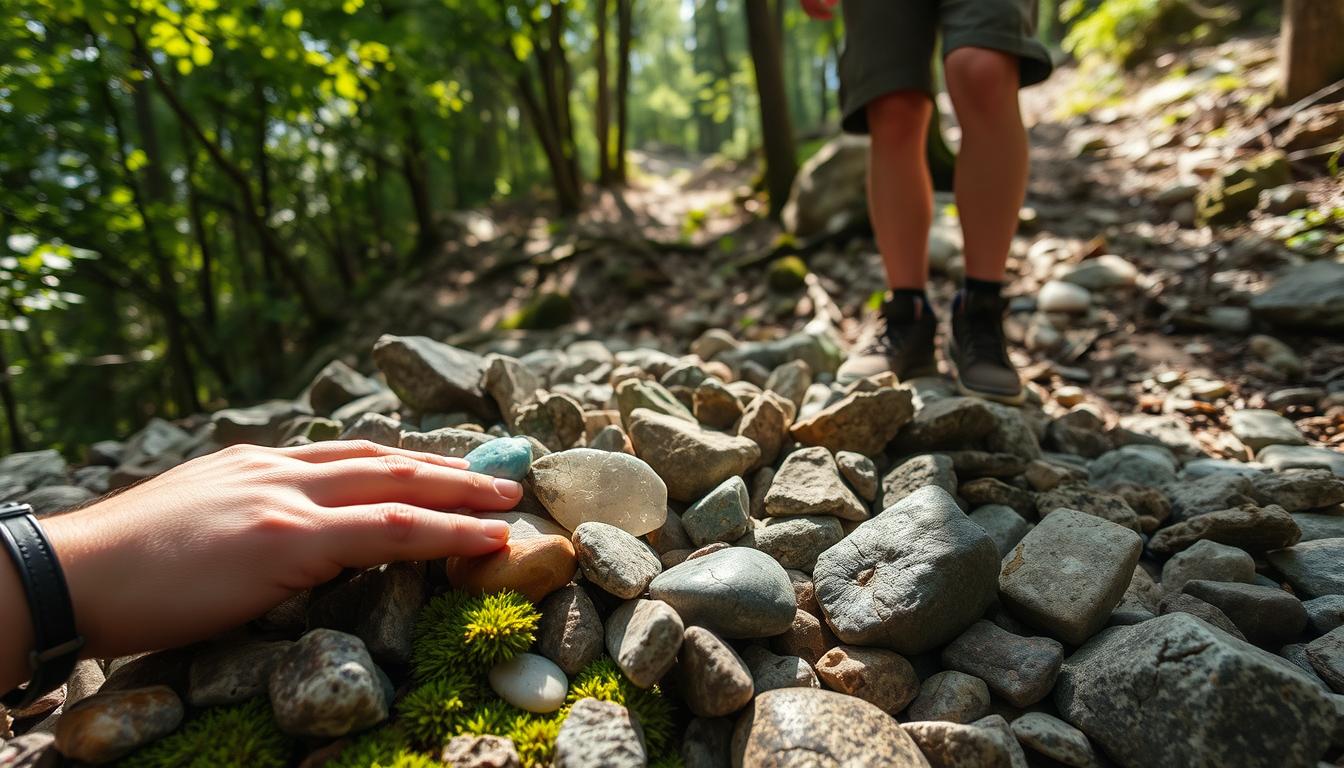
Are you fascinated by the natural world and enjoy exploring the outdoors? Rockhounding might be the hobby for you! It’s an exciting activity that lets people discover and appreciate geological wonders.
Collecting minerals and rocks can be a fun and rewarding experience. It’s a great way to learn about geology. Whether you’re a seasoned collector or just starting out, there’s always something new to discover.
In this article, we’ll explore the basics of rock collecting. We’ll also provide tips on where to find interesting rocks and minerals. So, let’s get started on this exciting journey and uncover the fascinating world of rockhounding!
The Fascinating World of Rocks
Rocks are more than just pieces of the earth’s surface. They are ancient storytellers of our planet. The earth’s surface is made up of different geological formations, including rocks and minerals. These tell us about the planet’s history.
The study of geology helps us understand how the earth evolved. It looks at rocks and minerals to learn about the earth’s past. This includes how it was formed, the changes it went through, and what’s happening now.
Rocks are different, each with its own story. Igneous rocks form when magma or lava cools and solidifies. Sedimentary rocks are made from compressed sediments, often with fossils that show us the earth’s past.
Minerals are the basic parts of rocks. They are naturally occurring, inorganic substances with certain chemical and crystal structures. Minerals are key to understanding the earth’s history. They are also used in many ways, like in industrial processes and jewelry.
Studying rocks and minerals is very important. They help us understand the earth’s history and how it has changed over millions of years. By looking at rocks and minerals, geologists can piece together the earth’s past. This helps us learn about the forces that have shaped our planet.
The Beauty of Geodes
The charm of geodes comes from their hidden crystal formations. These natural wonders are found worldwide. They show us the amazing ways our planet changes.
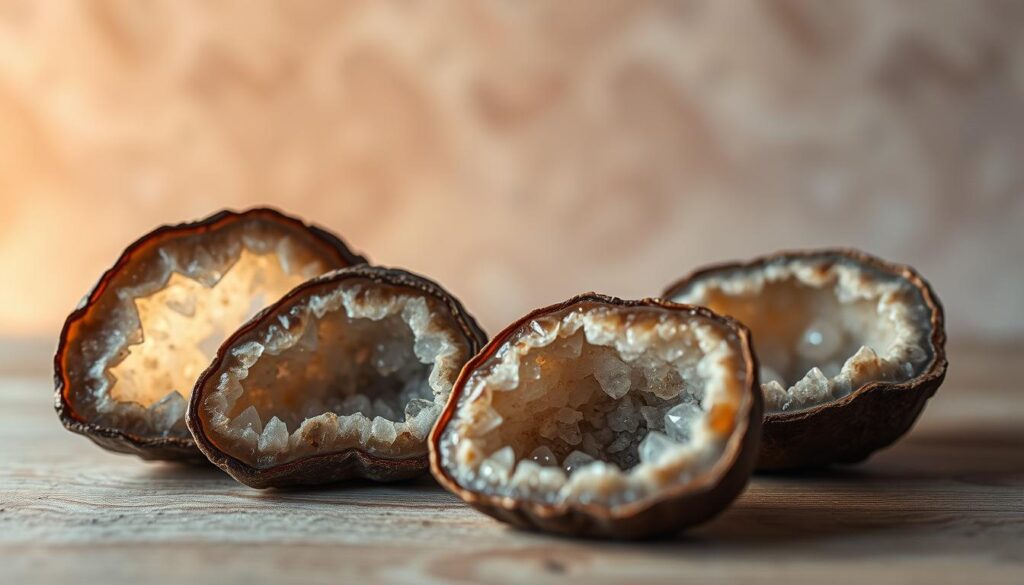
Geodes are hollow rocks filled with crystals or minerals. Their creation takes thousands to millions of years. They come in all shapes and sizes, from small to huge.
How Geodes Are Formed
The making of geodes starts with a rock cavity. This can happen due to volcanoes or mineral dissolution. Then, mineral-rich water fills the space, leaving behind layers of minerals as it dries.
The minerals inside geodes vary based on their formation place. You might find quartz, calcite, or amethyst. Each geode’s unique conditions lead to its own special crystals.
Learning about geodes and their crystals helps us understand the Earth. They show us the beauty hidden beneath our feet. Whether you collect them or just love nature, geodes will amaze and inspire you.
Collecting Rocks: A Beginner’s Guide
The world of rock collecting is vast and fascinating. It offers a unique way to connect with nature. For those new to this hobby, also known as rockhounding, getting started can seem daunting. But with the right guidance, it’s a breeze.
To begin your rock collecting journey, you’ll need some basic equipment. A geologist’s hammer, hand lens, and a sturdy bag to carry your finds are essentials. You can start by exploring areas around your home or local parks, looking for interesting rocks and minerals.
When it comes to rockhounding, knowing where to look is key. Areas with exposed geological formations, such as riverbeds, beaches, and rocky outcrops, are often rich in collectible rocks. Always check local regulations before collecting rocks, as some areas may be protected or require permits.
As a beginner, it’s also helpful to join a rock collecting community or club. These groups can provide valuable insights, tips, and guidance on how to identify and preserve your finds. With a beginner’s guide and a bit of patience, you’ll be well on your way to building a fascinating collection of rocks and minerals.
Remember, rockhounding is not just about collecting rocks; it’s also about appreciating the beauty and history behind each specimen. As you continue on your hobby journey, you’ll discover the joy of uncovering pieces of the earth’s history, each with its unique story to tell.
Common Rock Types and Their Features
Learning about different rocks and their traits is key for geology fans. There are mainly three types: igneous, sedimentary, and metamorphic rocks. Each has its own special features.
Igneous rocks come from magma or lava cooling down. They’re split into intrusive and extrusive types. Granite is a common example of an intrusive igneous rock, known for its durability and beauty.
Sedimentary rocks are made from sand and mineral particles settling and sticking together. Limestone, for example, is a sedimentary rock made of calcium carbonate. Metamorphic rocks, on the other hand, are changed rocks from heat and pressure, like marble.
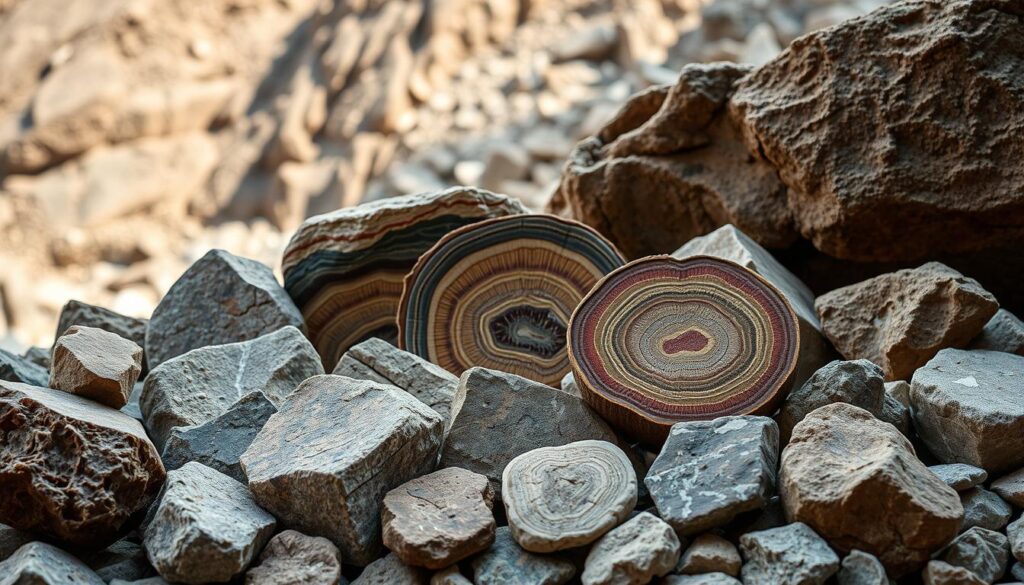
Every rock type has its own special traits. These traits help us understand the Earth’s history and how it works. By studying these rocks, both fans and scientists can learn a lot about our planet.
Unique Rocks Around the United States
The USA is full of unique rocks, from the Grand Canyon to the Great Plains. These rocks tell the story of the country’s geological history. Millions of years of tectonic activity, erosion, and sedimentation have shaped the diverse geology.
Many rockhounding locations in the United States are famous for their unique rocks. For example, the Petrified Forest National Park in Arizona is known for its stunning petrified wood.
Moonstone Beach in California is famous for its moonstones found on the shore. The Ouachita Mountains in Arkansas and Oklahoma are known for their quartz crystals, which are highly prized by collectors.
The geology of the USA is fascinating, not just for the rocks but for the stories they tell. From ancient fossils in the Badlands of South Dakota to volcanic rocks in Hawaii, each rock has its own story.
For those interested in rockhounding, the USA offers endless opportunities. Whether you’re a seasoned collector or just starting out, the diverse geology of the United States has something for everyone.
Identifying Interesting Rocks
To find interesting rocks, you need to know a lot and pay close attention. Rock identification is exciting. It’s about learning about mineralogy and geology.
Start by looking at the rock’s color, texture, and how hard it is. For example, shiny rocks might have metallic minerals. Glassy rocks could be quartz or obsidian.
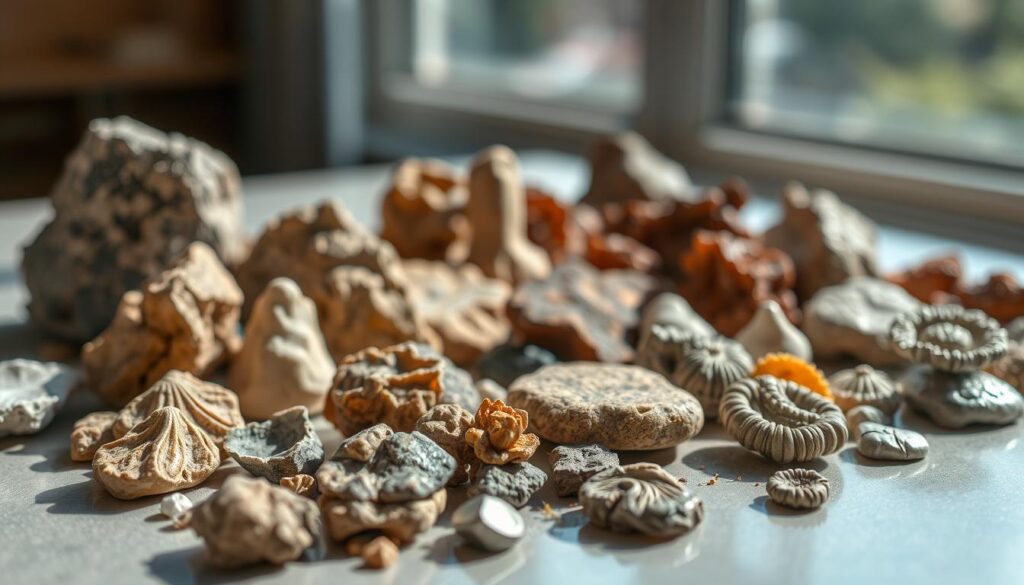
It’s also important to know where the rock came from. This means understanding if it’s igneous, sedimentary, or metamorphic. Igneous rocks cool from magma or lava. Sedimentary rocks are made from gathered sediments.
With good observation and knowledge of mineralogy and geology, you can learn to identify rocks. This skill makes you appreciate rocks more. It also lets you explore the world of geology.
The Art of Rock Polishing
Rock polishing is a lapidary art that needs patience and skill. It brings out the best in mineral specimens. This process smooths and polishes rocks, revealing their hidden beauty. It transforms them into stunning pieces for jewelry and decorative items.
The techniques used in rock polishing are key to success. First, rocks are cleaned and checked for cracks or inclusions. Then, finer abrasives are used to grind down the rock surface. This removes imperfections and shows the underlying patterns and colors.
Lapidary equipment is essential for rock polishing. Tools like tumblers, grinders, and sanding belts are used. Tumblers are popular because they automate the polishing process, making high-gloss finishes easier to achieve.
The art of rock polishing is more than just a technical process. It’s also about understanding mineralogy. Knowing mineral properties helps predict how they’ll polish. Some minerals are harder and more resistant, while others are softer and need gentler handling.
As one gets better at rock polishing, they can try different techniques and equipment. This can lead to unique effects. The process is rewarding, connecting us with nature and creating something beautiful from raw materials.
In conclusion, rock polishing is a complex art that combines technical skill with mineralogy appreciation. Whether as a hobby or profession, it offers a creative outlet and a way to appreciate natural beauty.
Rocks in History and Culture
Rocks have held deep symbolic meanings across cultures, showing their key role in human history. They’ve been used in ancient rituals and made into modern jewelry. This shows their wide-ranging impact on society.
The history of rock use is rich and diverse. Some rocks were seen as spiritually powerful, while others were prized for their strength. The symbolic meaning of rocks often relates to their physical traits, like color and texture.
In many societies, rocks symbolize power, wealth, and status. For example, diamonds and rubies adorned royal jewelry, showing the wearer’s high rank. Ancient cultures also used rocks to make tools and weapons, showing their daily importance.
Rocks also hold cultural and spiritual value. Many indigenous cultures see certain rocks as spiritually charged, using them in rituals. The bond between rocks and the earth is central to many spiritual practices worldwide.
In summary, rocks have been vital in human history and culture. They’ve been more than just materials; they’ve symbolized spiritual, cultural, and social values. Learning about rocks’ role in history and culture helps us appreciate their value and impact on society.
Environmental Impact of Rock Collecting
It’s important to collect rocks responsibly to protect our environment. As more people start collecting rocks, we need to do it in a way that doesn’t harm nature.
Collecting rocks can hurt the environment. It can disrupt habitats, cause soil erosion, and damage ecosystems. For example, taking rocks from their natural place can change the landscape and harm local wildlife.
“The earth’s resources are not infinite, and our actions today will determine the kind of world we leave for future generations.” This statement emphasizes the importance of adopting sustainable practices in rock collecting.
To lessen these effects, rock collectors should follow sustainable practices. They should only collect rocks in designated areas and avoid sensitive habitats. It’s also important not to take too many rocks at once.
By thinking about the environmental impact of rock collecting, enthusiasts can enjoy their hobby without harming nature. Sustainable rock collecting is about more than just not causing harm. It’s about being responsible and promoting a culture of care among collectors.
Sustainable rock collecting practices include respecting private property and getting the right permits. By following these rules, rock collectors can make sure their hobby doesn’t hurt the environment.
Fun Facts About Rocks
Rocks are more than just stones. They are filled with fascinating facts. From their different compositions to their many uses, rocks are truly amazing.
Did you know some rocks come from ancient sea creatures? Fossil rocks hold pieces of plants and animals from millions of years ago. They give us a peek into Earth’s past.
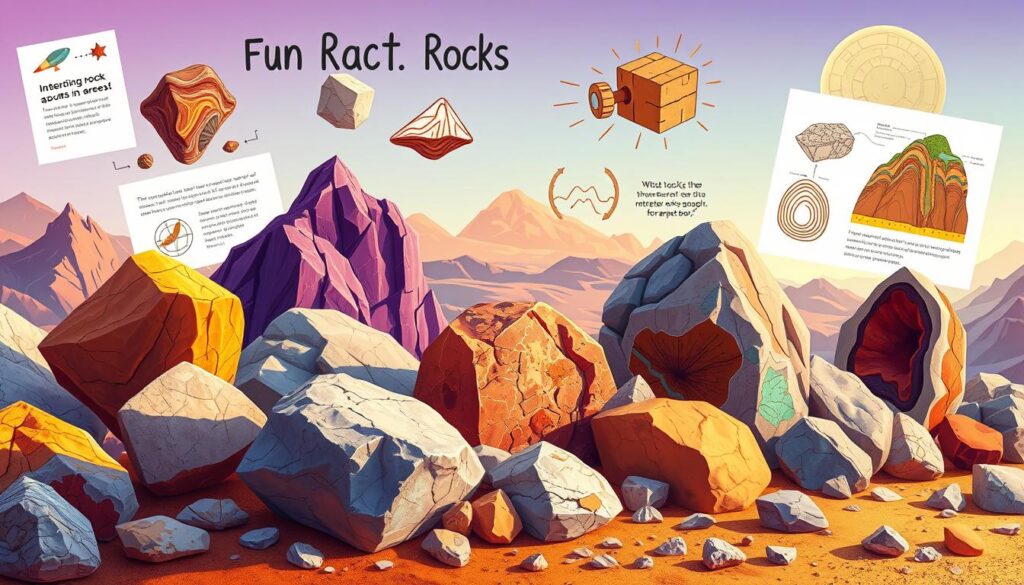
Rocks also have special qualities. For example, geodes are hollow rocks with crystals inside. They are loved by collectors. The way rocks form, through volcanoes or sediment, creates many textures and colors.
Rocks are also important in our everyday lives. They are used in buildings, jewelry, and technology. Granite, for instance, is strong and often used in construction.
In summary, rocks are not just simple objects. They help us understand Earth’s history, its processes, and its wonders. Learning about rocks can be a fun hobby. It helps us appreciate the natural world more.
Joining a Rock Collecting Community
Joining a rock collecting community is a great way to meet others with similar interests. By joining a rockhounding club, you can learn more, find new places to collect, and take part in events.
Rockhounding clubs are places where enthusiasts can share their stories, show off their collections, and learn from each other. Clubs often plan field trips, workshops, and lectures. These events help you meet other collectors and improve your skills.
Being part of a rock collecting community can lead to new discoveries and friendships. You’ll meet experienced collectors who can help you identify and care for your rocks. Joining a club means you’re part of a group that loves rock collecting as much as you do.