








Good communication depends a lot on using personal pronouns right. These words take the place of nouns in sentences. This makes our language more lively and easy to follow. Words like “he,” “she,” and “it” help us talk about people, things, and ideas without saying their names over and over.
are key for clear and polite talk. This piece will dive into the world of pronouns. It aims to boost your writing and talking skills.
Learning to use pronouns well can make your words clearer and more powerful. Your writing will become more interesting and simple to get.
What Are Pronouns and Why Do They Matter?
Understanding pronouns is key for good communication. They help us talk about people without saying their names. This makes our language more precise and interesting.
Pronouns are more than just words in grammar. They are deeply connected to who we are. Using the right pronouns shows respect and understanding. The importance of pronouns is huge because they change how we see and talk to each other.
Using the correct pronouns makes someone feel valued and respected. But using the wrong ones can make them feel ignored or disrespected. So, knowing the pronoun definition and using them right is vital for a friendly and welcoming space in our daily communication.
In short, pronouns are important because they shape how we address and interact with each other. They play a big role in our social lives and relationships.
Types of Pronouns
Pronouns can be grouped into personal, demonstrative, and indefinite types. Knowing these categories helps us communicate better.
Personal Pronouns point to specific people or groups. Examples are “I,” “you,” “he,” “she,” and “it.” They are key in making sentences clear about who or what is being talked about.
Demonstrative Pronouns show or point out nouns. Common ones are “this,” “that,” “these,” and “those.” They make sentences clearer by specifying which noun is meant.
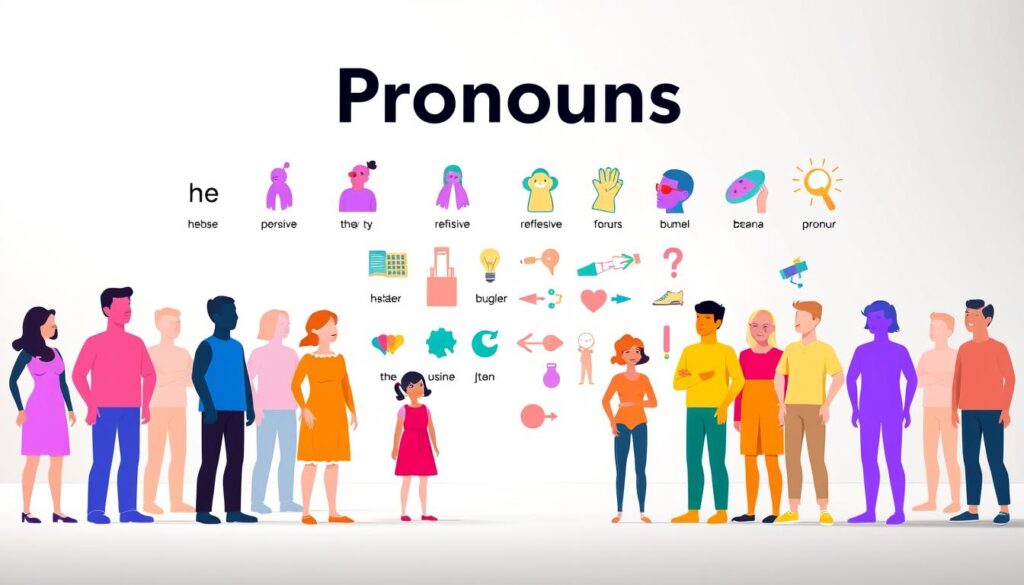
Indefinite Pronouns talk about people or groups without giving details. Examples are “someone,” “anyone,” “nobody,” and “everyone.” They’re handy when we don’t need to know who or what is being talked about.
Knowing how to use personal, demonstrative, and indefinite pronouns makes our English better. It helps us express ourselves more clearly and accurately.
How to Use He, She, and It Correctly
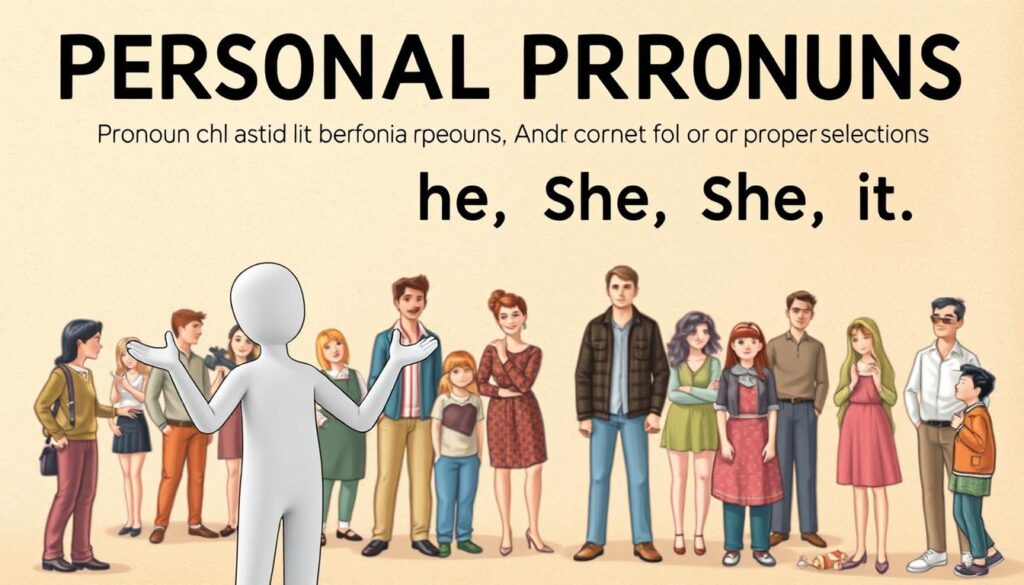
Using “he,” “she,” and “it” correctly is key for clear communication. These words replace nouns, making speech and writing easier and less repetitive.
“He,” “she,” and “it” refer to people or things. Their use depends on their role in a sentence. For example, “he” and “she” are subject pronouns. “him” and “her” are object pronouns.
Using He, Him, She, and Her Correctly
Knowing the difference between subject and object pronouns is important. For example, in “He gave her a gift,” “He” is the subject. “Her” is the object.
“Him” and “her” come after verbs or prepositions. For instance, “The gift was given to him and her” shows “him” and “her” as objects of “to.”
The gift is for her. (Here, “her” is the object.)
Mastering “he,” “she,” “it,” and their object forms improves communication. It ensures clear and precise expression.
The Role of Gender in Pronouns
Pronouns are key in how we see and share gender. We choose between “he” and “she” for specific genders, or “they” and “ze” for none. This choice reflects an individual’s gender identity.
It’s vital to respect someone’s pronoun choices for an inclusive space. Correct pronouns show respect and make people feel valued. Wrong ones can make them feel ignored or disrespected.
Gender-neutral pronouns like “they” are becoming more common. They’re used for both singular and plural, helping those who don’t identify with traditional genders.
Valuing pronoun preferences is key to supporting people’s gender identities. It’s about building a culture where everyone feels welcome and important.
Using the right pronouns shows we care about inclusivity and respect. This effort helps us build a society that values diversity. Being aware of gender and pronouns is a big step towards understanding and celebrating different identities.
Pronouns in Different Contexts
Pronouns change a lot depending on where you use them. In formal contexts, like school or work, they follow strict rules. For example, “he or she” is used to talk about a person without guessing their gender.
But in informal contexts, like social media or chats with friends, things are more relaxed. Here, “they” is often used as a single pronoun. This shows how language is changing to be more open and accepting.
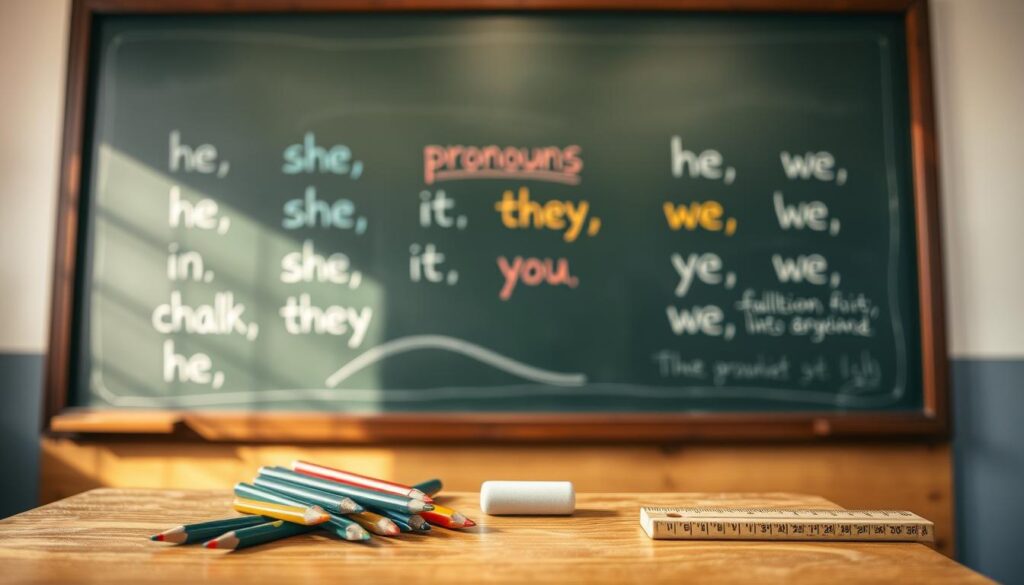
Knowing how to use pronouns in different places is key for good communication. By adjusting how we use pronouns based on the situation, we can share our thoughts better and with respect.
In the end, how we use pronouns shows how language is always changing. As language keeps evolving, so will the rules for using pronouns. This reminds us to stay alert and considerate of how we speak.
Respecting Pronoun Preferences
Using the right pronouns shows respect and inclusivity. In today’s world, it’s key to understand and respect someone’s pronoun preferences. This helps create a welcoming space for everyone.
It’s important to ask for someone’s pronouns and use them right. Getting it wrong can hurt, so saying sorry and correcting yourself matters. This small act of respect can make a big difference in how valued someone feels.
Inclusive language is more than just using the right pronouns. It’s about recognizing and respecting people’s identities. This helps build a culture of understanding and acceptance.
If we get someone’s pronouns wrong, apologizing is just the start. It’s about trying to use the correct pronouns from then on. This shows we’re committed to respecting and understanding their identity.
To make everyone feel respected, it’s not just about pronouns. It’s about using inclusive language and valuing diversity. It’s about creating a space where everyone feels understood and valued.
Pronouns in Modern Language
The way we use pronouns today shows how our world is changing. Our language changes with society, meeting new needs and values.
Pronoun usage has changed a lot over time. Now, we see more gender-neutral pronouns. We also understand the importance of using the pronouns people prefer.
This change is more than just words. It shows our society is becoming more inclusive and respectful of diversity.
Using gender-neutral pronouns is a big part of this change. It helps make language more welcoming for everyone, respecting their gender identity.
Also, we’re learning to respect each person’s pronoun choice. Language is not just about rules; it’s about showing respect and understanding for who we are.
Pronouns play a key role in our language today. They help us communicate and show respect and understanding.
As our society keeps growing, so will our language. It will reflect our changing values and how we see the world.
Teaching Pronouns to Children
Teaching children about pronouns boosts their communication skills and promotes inclusivity. It’s a key part of early education, helping them grow in language and social skills.
In early education, learning about pronouns helps kids understand their social world better. It’s important to make it fun and simple to grasp the different types and how to use them.
Teaching kids about pronoun awareness helps their language skills and shows them the value of respecting others’ choices. This is key to creating a welcoming space where everyone feels valued and heard.
By teaching pronouns in early education, teachers can greatly improve kids’ communication and empathy. It’s a way to build a kinder, more inclusive world from the start.
Conclusion: The Power of Pronouns
Pronouns can include or exclude, showing respect or disrespect. Using them correctly is key to good communication.
They have the power to affirm or deny someone’s identity. When used right, pronouns help create a welcoming and understanding space. This shows why it’s important to use pronouns correctly every day.
Good communication starts with respect, and pronouns are a big part of it. By picking the right pronouns, we show respect for others and their identities. This small action can change how we connect with each other.
In short, knowing how to use pronouns is vital for respectful and effective communication. By understanding their power, we can make our personal and work lives more inclusive and respectful.