







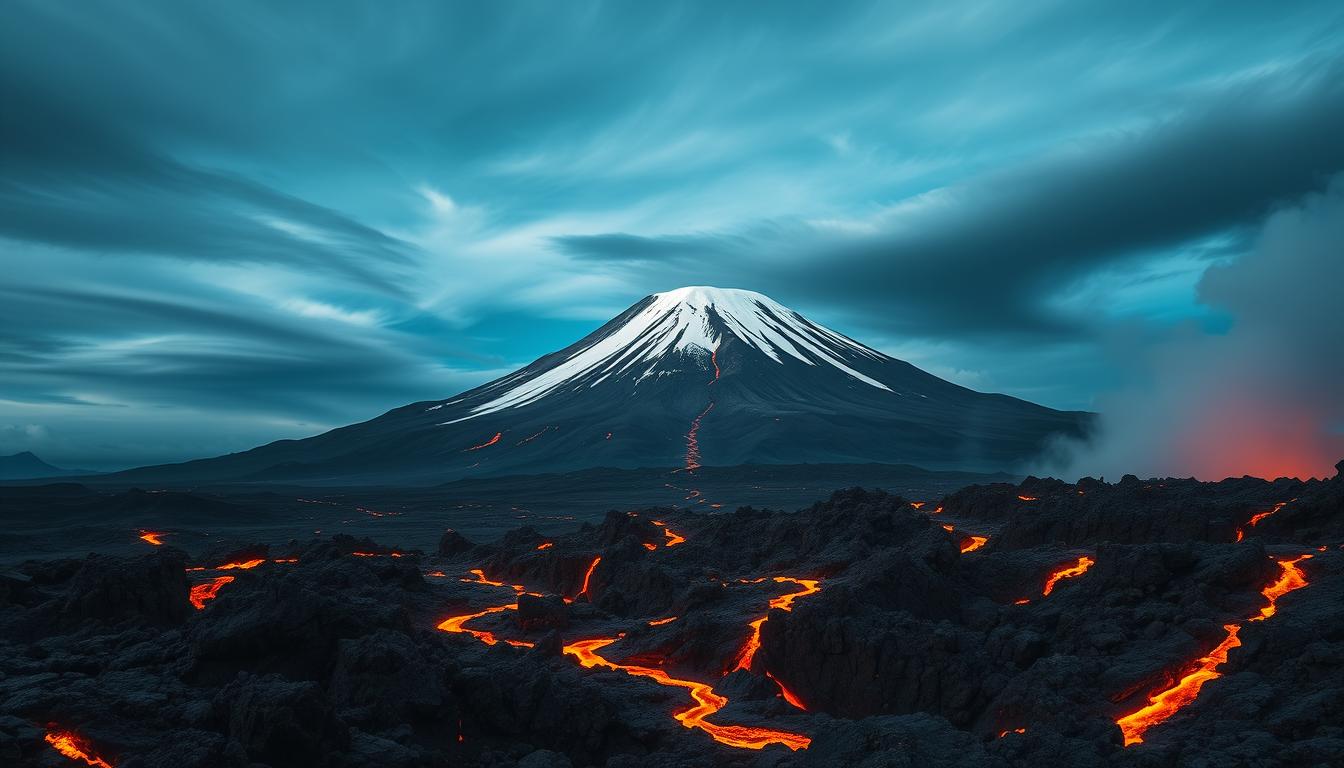
Volcanic regions have always fascinated us with their powerful displays of nature. One of the most intriguing aspects of these areas is the presence of Lava Rock. It’s a testament to the intense geological processes that shape our planet.
The study of volcanic rocks offers a unique window into the Earth’s past. Scientists can accurately determine when and how they were formed. This knowledge not only deepens our understanding of volcanic activity. It also provides insights into the Earth’s Geological Origins.
As we explore the world of Lava Rock and volcanoes, we uncover the secrets behind these natural wonders. We gain a deeper appreciation for the complex processes that have shaped our planet over millions of years.
What are Lava Rocks?
Lava rocks are what’s left when molten lava cools down after a volcano erupts. Lava rock definition covers a wide range of rocks that form when lava cools and solidifies.
Lava and magma are often confused, but they’re not the same. Magma is molten rock under the Earth, while lava is magma that comes out on the surface. When lava cools, it turns into igneous rocks. These rocks can be glassy or have crystals, depending on how fast they cool.
Igneous rocks from lava tell us a lot about Earth’s volcanic past. They help us understand volcanic activity and its effects on our planet.
Lava rocks come in many types, showing the wide range of magma and cooling conditions. This makes them very interesting to study in geology.
The Formation of Lava Rocks
Lava rocks are a natural wonder created by magma cooling and solidifying. This process is key to understanding their unique characteristics and diversity. They are often found near volcanic regions.
Cooling and Solidification
The type of magma, how long it cools, and gases in the eruption affect lava rocks. As magma cools, elements form crystals, turning into igneous rocks.
The Rate of Cooling is important for the rock’s texture. Fast cooling makes rocks glassy. Slow cooling leads to rocks with larger crystals and a coarse texture.
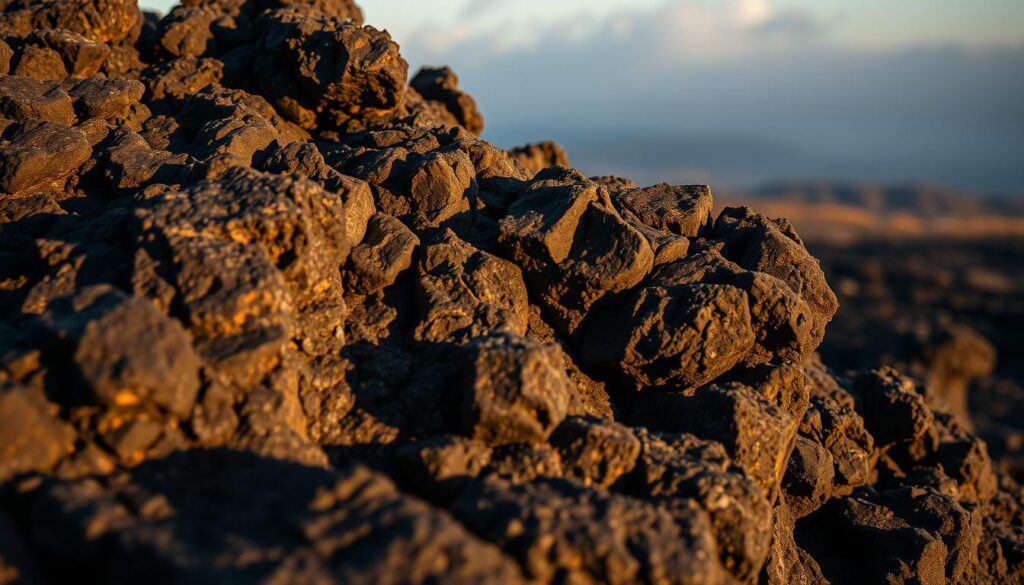
Gases in the eruption also shape the rock’s texture. They create bubbles or vesicles as they escape during cooling. This makes each lava rock unique.
Many factors influence lava rock characteristics. These include the magma’s chemical makeup and cooling conditions. Knowing these helps us appreciate the complexity and variety of lava rocks.
Best Locations to Find Lava Rocks
Many people search for lava rocks in America’s volcanic landscapes. These places show nature’s fiery past. Knowing the best locations to find lava rocks is key for enthusiasts and collectors.
The National Park Service app is a great tool for finding lava rocks. It lists many volcanic sites, including those on the Volcanic Points of Interest webpage. Hawaii Volcanoes National Park, for example, is perfect for collecting lava rocks because of its volcanic activity.
Other volcanic regions in the U.S. include the Lava Beds National Monument in California and the Craters of the Moon National Monument in Idaho. These places are full of lava rocks and offer a look into the area’s geological history.
For those looking to explore more, lava rock locations can be found near volcanoes, whether they’re dormant or active. The Pacific Northwest is also a good place to find lava rocks because of its volcanic history.
It’s important to know the local rules about collecting rocks. Some places, like national parks and monuments, have rules to protect the environment.
In summary, finding lava rocks can be very rewarding. By using the National Park Service app and visiting known volcanic regions, collectors can find these geological treasures.
How to Identify Lava Rocks
Lava rocks have unique features that show they come from volcanoes. Identifying Lava Rocks means looking at their texture, color, and other traits.
The texture of lava rocks can be smooth or very porous. Vesicular texture is seen in rocks like pumice, which is so light it can float. On the other hand, rocks like obsidian cool quickly and have a glassy look.
Pumice is a light-colored rock that can float. It’s made of volcanic glass and is very light. Obsidian, also made of volcanic glass, cools fast and looks smooth and glassy.
To spot lava rocks, check their color, texture, and if they have air pockets or crystals. Different lava rocks, like pumice and obsidian, have special features that help identify them.
Safety Considerations When Collecting Lava Rocks
When you go to collect lava rocks in volcanic areas, safety is key. The beauty of lava rocks is undeniable, but the dangers are real.
Lava rocks can be risky because of how they interact with their surroundings. For example, when lava hits the ocean, it quickly cools down. This creates small glass particles that can be carried away by steam. This can be dangerous for those collecting them. “The instant cooling of lava when it meets the ocean forms small particles of glass, and the rising steam carries them away, which can be hazardous.”
To stay safe, know your surroundings and the current conditions. Look out for signs of increased volcanic activity. Be careful of the terrain and watch the weather.
Experts stress that safety is not just a suggestion. It’s a must in volcanic regions. So, wear protective eyewear and sturdy shoes.
It’s also smart to collect lava rocks with a group or a guide. This makes everyone safer. Plus, you can learn a lot about the area and its dangers.
Best Practices for Collecting Lava Rocks
Collecting lava rocks responsibly means finding a balance. We want unique rocks, but we must protect volcanic areas. Volcanologists study these rocks to learn about volcanoes. So, we must collect them without harming research or the environment.
When you collect lava rocks, think about your impact. Stay on paths, don’t take rocks from protected places, and avoid damaging the land. Always put environmental concerns first. This way, we keep these areas beautiful and valuable for others.
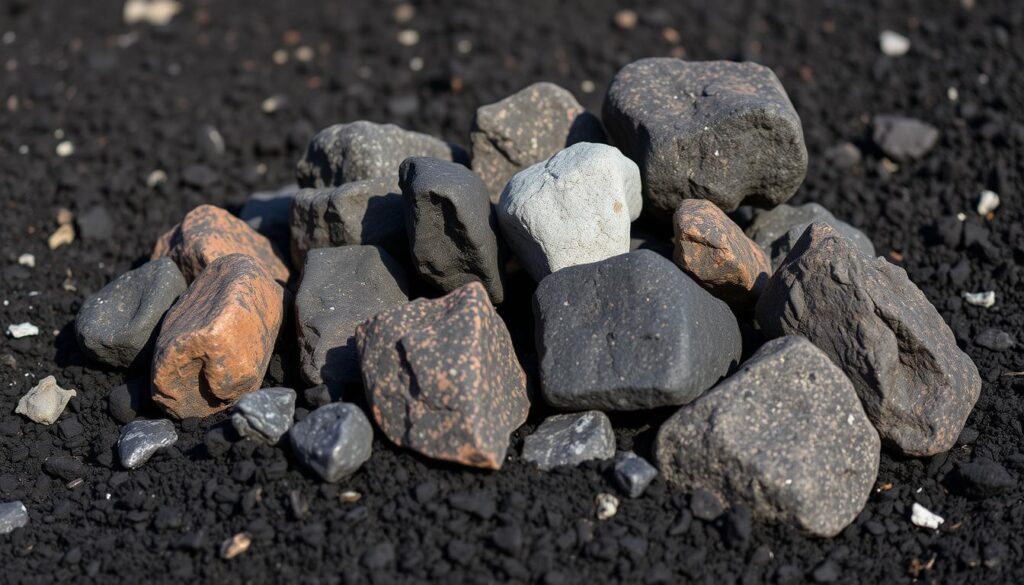
It’s also important to know local rules and respect private land. Some places have specific rules for collecting rocks. Always leave the area as you found it, taking only photos and leaving no trace.
Lava rocks are incredibly valuable scientifically. They help us understand our planet’s history, including volcanoes and landscapes. By collecting them responsibly, we help preserve these resources and learn more about our world.
In summary, collecting lava rocks can be rewarding if done right. By following best practices, we protect these unique resources for the future.
The Scientific Value of Lava Rocks
Scientists study lava rocks to learn about volcanic eruptions and their effects on the landscape. These rocks offer a peek into the Earth’s past, showing how our planet has changed over time.
The scientific value of lava rocks comes from what they tell us about volcanoes. By looking at the makeup and features of lava rocks, scientists can figure out how they were made. This helps them understand the temperature, pressure, and gases in the magma, which are key to knowing about eruptions.
Lava rocks are also key for predicting future eruptions. By studying their history, scientists can spot patterns that might mean more eruptions are coming. This info is super important for people living near volcanoes, helping them get ready for emergencies.
Studying lava rocks is a big job that needs many different skills. Geologists, chemists, and physicists all work together to learn from these rocks. Their research helps us understand the Earth’s inner workings and how it changes.
In short, lava rocks are very important for science. They help us understand volcanoes, the Earth’s history, and how it works inside. By studying them, we learn more about the Earth’s past and how to deal with future eruptions.
Creative Uses for Lava Rocks
Lava rocks are perfect for many uses because of their special features. They are great for decorative landscaping. Their rough texture and natural colors can make gardens and outdoor areas look amazing.
They also help with gardening by improving soil drainage and keeping moisture in. This is good for plants that like well-drained soil. Plus, they can make rock gardens look beautiful or cover the ground around plants.
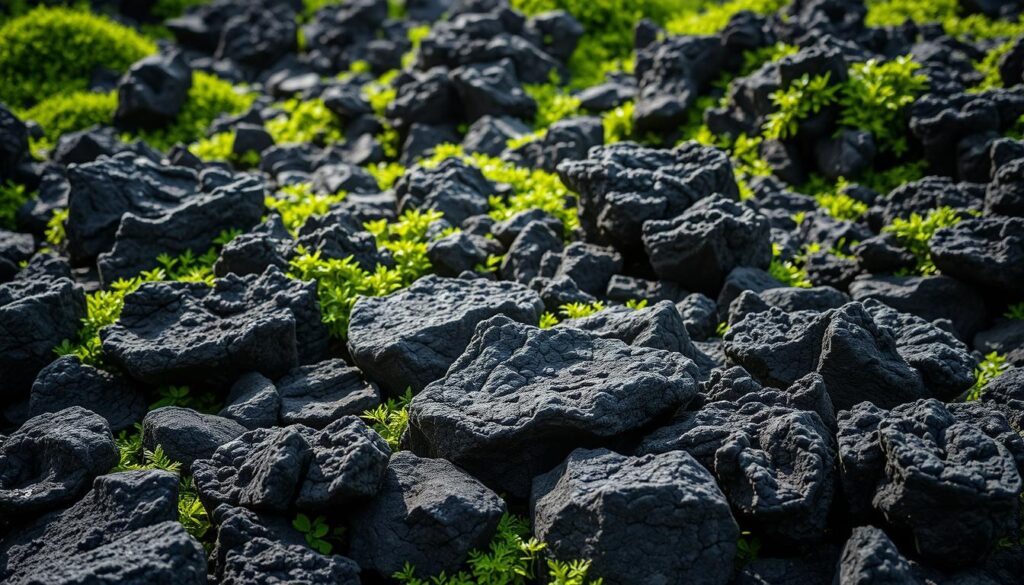
Lava rocks are not just for landscaping. They are also useful in construction and design. Like granite, they could be used for kitchen or bathroom countertops. They could also be used for fireplaces or accent walls in homes.
Landscape designers say, “Lava rocks add a special look to outdoor areas. They mix function with natural beauty.” Their lasting quality and flexibility make them popular for many projects.
“The rugged beauty of lava rocks can transform any outdoor space into a dramatic landscape feature.”
In summary, lava rocks have many uses, from landscaping to interior design. Their unique qualities make them a great choice for adding natural elements to projects.
Lava Rocks in Culture and History
Lava rocks have shaped human society in many ways. They’ve influenced art, spirituality, and technology. Many cultures have cherished lava rocks for their beauty and special qualities.
Lava rocks, like obsidian, were highly valued for their uses and spiritual meaning. In the Stone Age, people used obsidian for its sharp edges. It was a key tool for early humans. It was also important in many ancient cultures, showing our ancestors’ cleverness.
In many cultures, lava rocks are more than just rocks. They carry deep spiritual and symbolic meanings. For example, some indigenous cultures see them as sacred, tied to ancestral spirits and earth myths. These rocks are used in rituals, showing their role in cultural heritage.
Lava rocks have also played a part in art and architecture. They’ve been used in decorations and building structures. This shows their versatility and the creativity of those who use them.
In summary, lava rocks have a rich cultural and historical significance. They’ve influenced art, spirituality, and technology. This highlights the deep connection between natural resources and human culture.
Fascinating Facts About Lava Rocks
The story of lava rocks is full of interesting facts. They come from volcanic activity. Volcanoes exist not just on Earth but also on other planets and moons.
Did you know the biggest volcano in our solar system is Tamu Massif? It’s near Japan, at the bottom of the Pacific Ocean. This volcano is as big as New Mexico. It shows how big and complex volcanoes can be.
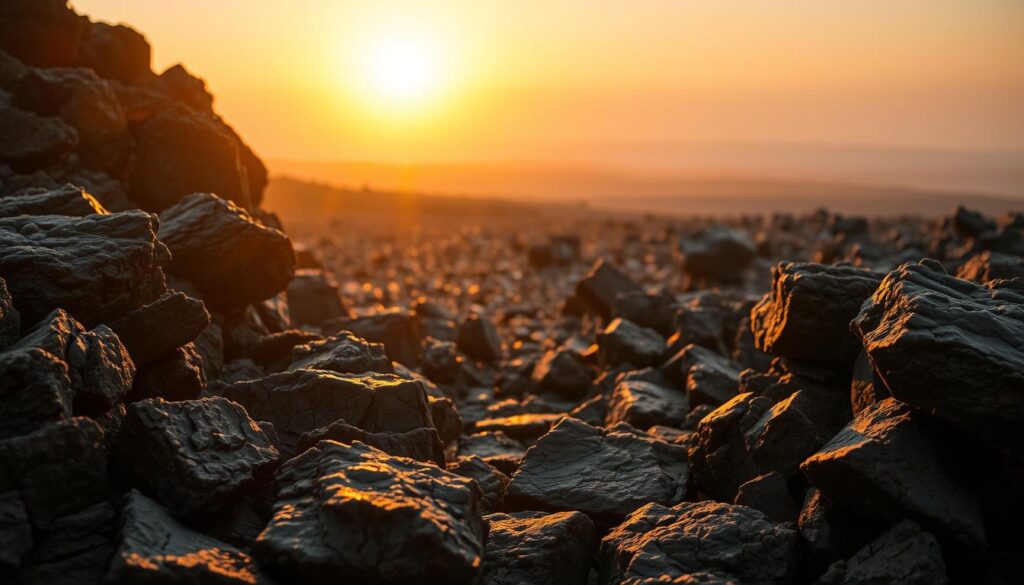
Lava rocks on Earth are also unique. They can be very dense and heavy. Some have a porous texture because of gas release during formation. This makes lava rocks interesting to study in geology.
Humans have used lava rocks for many things. They’ve been used in construction and for decoration. Their strength and beauty make them popular.
In summary, lava rocks are more than just rocks. They tell us about Earth’s history and volcanic processes. Learning about interesting facts about lava rocks helps us appreciate these natural wonders.
Environmental Impact of Lava Rock Collection
Collecting lava rocks has a big impact on the environment. Volcanic eruptions release gases and ash, changing the climate. It’s key to understand how collecting lava rocks affects the planet.
Collecting lava rocks can harm the environment. It can change the landscape and disturb local plants and animals. It can also cause soil erosion and damage natural habitats.
It’s important to collect lava rocks responsibly. We should only take a few and avoid protected areas. This way, we can reduce harm and keep volcanic regions beautiful for others to see.
Lava rocks also have scientific value. They help scientists learn about volcanoes and the Earth’s history. By studying them, we can understand more about eruptions and their effects.
In summary, collecting lava rocks can harm the environment, but we can lessen this impact. By being mindful and responsible, we can enjoy nature without harming it.
Conclusion: The Joy of Finding Lava Rocks
Finding lava rocks at a volcano is an exciting adventure. It connects us with the earth’s raw power. Volcanoes grow and change all the time. Each eruption brings new rock to the area.
Collecting lava rocks helps us understand volcanoes better. It also lets us see the unique features of these rocks. Whether for science or art, lava rocks are special.
Exploring lava rocks shows us how dynamic our planet is. It’s key to keep these wonders safe. By enjoying finding lava rocks, we grow to love the natural world more.