





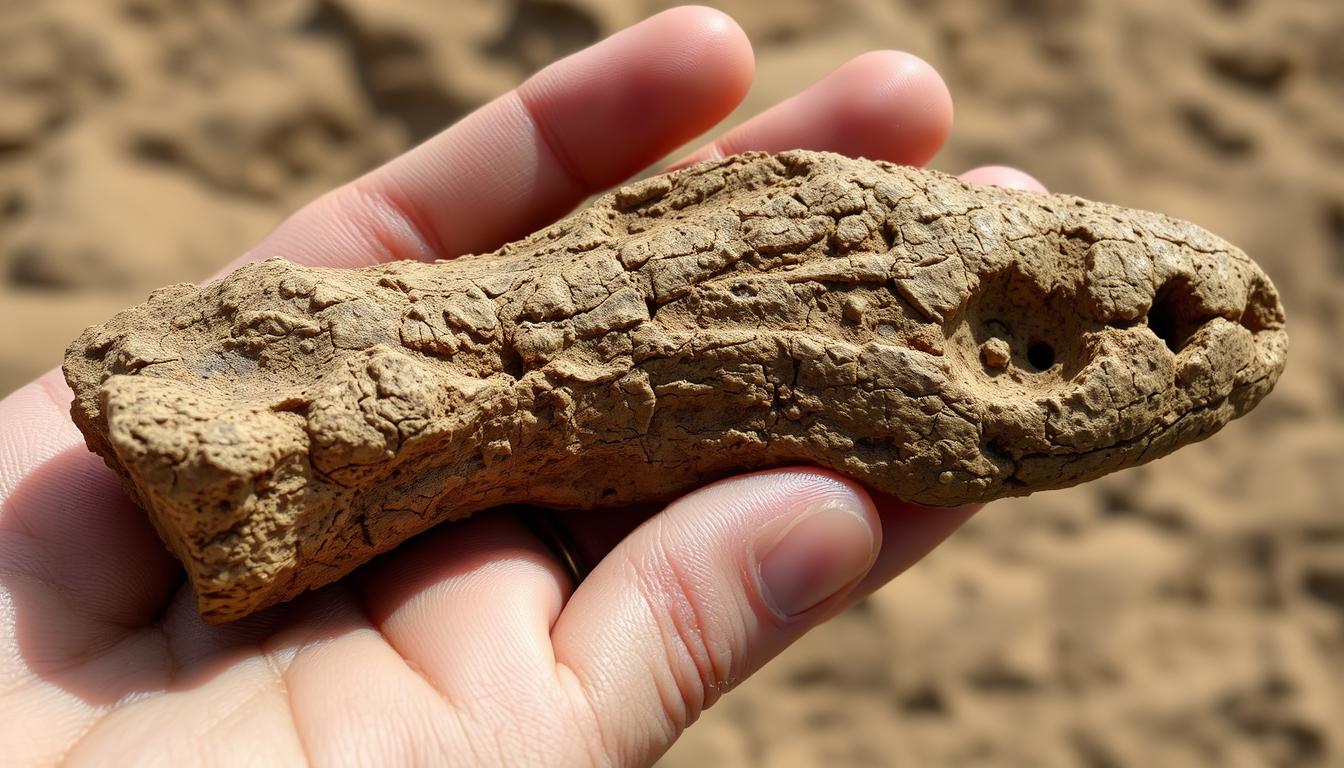
Holding a dinosaur bone is a unique experience. It connects us to a bygone era. It’s a tangible link to the past, a zoological testament to creatures that once roamed our planet.
This fossil material sparks curiosity and fascination. It invites us to explore the world of prehistoric creatures. As we touch and examine these ancient remains, we gain a deeper understanding of the natural world and our place within it.
The significance of these ancient relics extends beyond their historical value. They captivate our imagination and inspire new generations of scientists and enthusiasts alike.
The Tactile Connection to Prehistoric Life
When you hold a dinosaur bone, you feel a direct link to prehistoric life. The bone’s weight and texture spark wonder and curiosity. You start to think about the ancient creatures that once walked the Earth.
Fossilization is a complex and fascinating scientific discovery. It turns organic remains into stone. Like petrified wood, dinosaur bones get minerals that replace the original material. This keeps the bone’s structure and details intact.
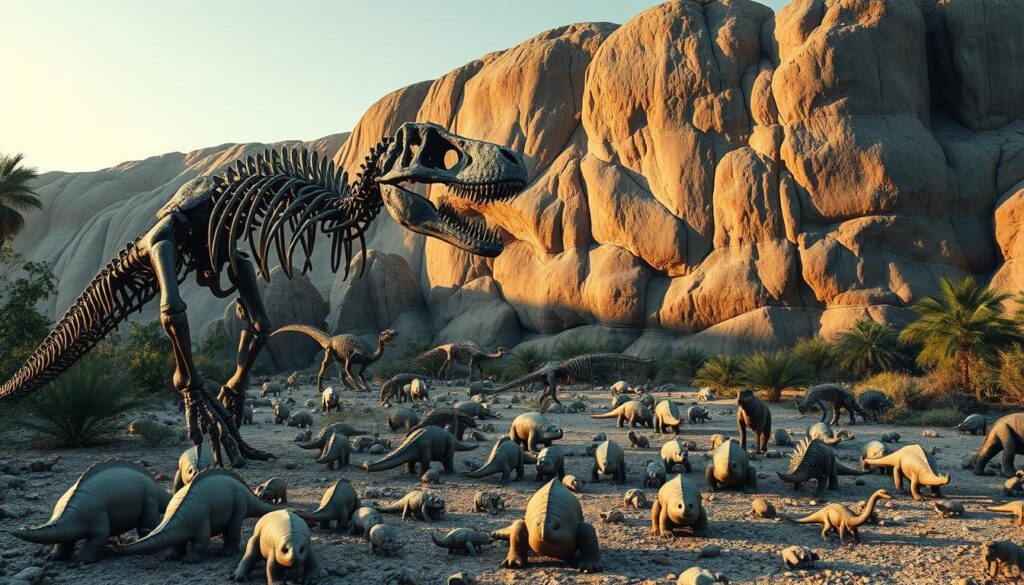
This tangible link to the past lets us study dinosaur evolution closely. By looking at the bone’s structure, scientists learn about the dinosaur’s diet, habitat, and behavior. The fossil’s details give us a peek into the lives of these ancient animals.
Holding a dinosaur bone is more than just a hands-on experience. It’s an emotional and intellectual connection to a long-lost era. It fills us with awe and curiosity, pushing us to learn more about our planet’s history.
The bond to prehistoric life through dinosaur bones shows how vital it is to protect our natural heritage. Museums and research centers are key in saving these fossils. They make them available for study and for the public to enjoy.
The Science Behind Dinosaur Bones
Learning about dinosaur bones means exploring the fossilization process. This complex process turns organic remains into fossils. It gives us a peek into the past. Dinosaurs like the Apatosaurus left behind bones that have fossilized over millions of years.
The softer parts of dinosaur bones rot away over time. But the harder parts stay, keeping their original shape. When these bones meet minerals dissolved in water, the soft spots get filled with minerals. This happens as water fills the spaces and then evaporates.
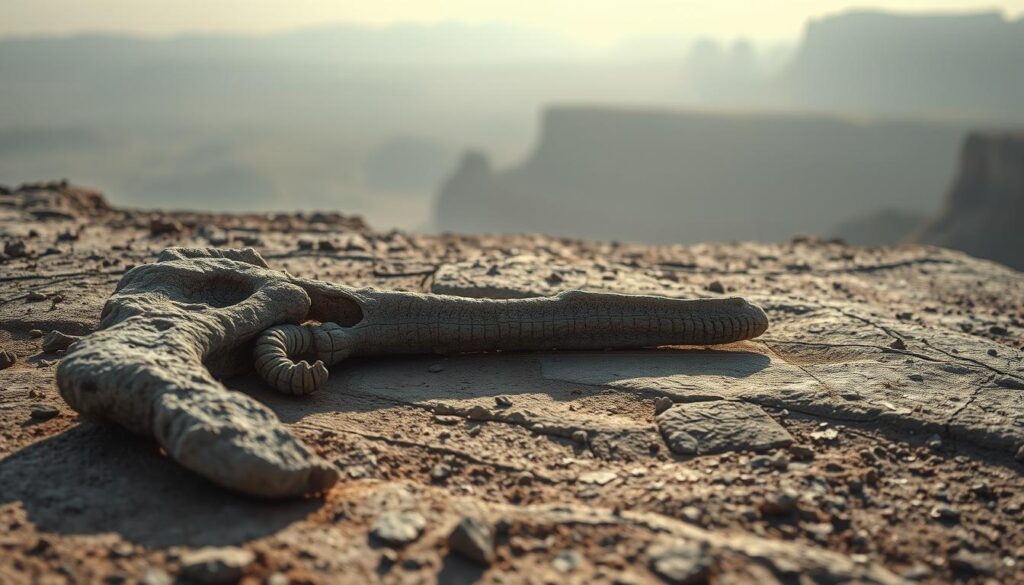
Mineral replacement is key in the fossilization process. As the original material breaks down, minerals from the environment fill in the tiny spaces. This can take thousands to millions of years, depending on the environment.
Identifying Original Bone Material
Finding the original bone material in fossils is hard because minerals replace it. But scientists use special methods to study the fossils. They can tell the difference between the original bone and the minerals that replaced it.
Studying dinosaur bones, like those of the Apatosaurus, helps us understand the fossilization process. It also tells us about these amazing creatures’ lives. By studying mineral replacement and identifying original bone material, scientists learn a lot.
Famous Dinosaur Bone Discoveries Throughout History
From the massive hadrosaurs, or duck-billed dinosaurs, to other dinosaur species, famous dinosaur bone discoveries have reshaped our understanding of Earth’s history. Hadrosaurs, weighing up to 8,000 pounds, were among the largest dinosaurs. Their discovery has been key in understanding dinosaur diversity and complexity.
In 1858, a significant find was made in New Jersey, USA. The Hadrosaurus foulkii was discovered, providing nearly a complete skeleton. This helped scientists understand hadrosaur anatomy and behavior better. Such well-preserved specimens are rare and offer valuable insights into prehistoric lives.
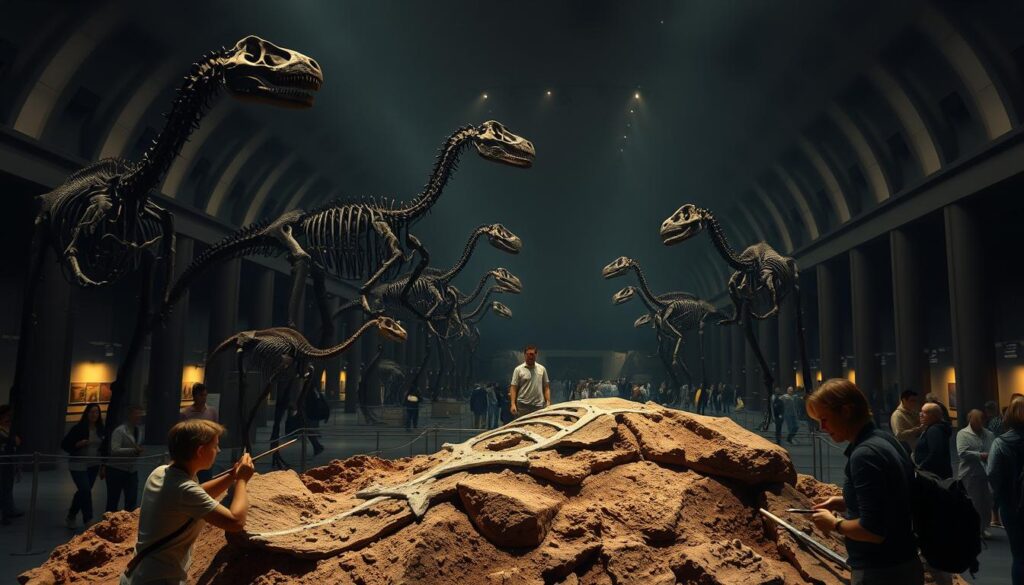
Other notable discoveries include the finding of dinosaur fossils in Alberta, Canada’s Dinosaur Provincial Park. The Hell Creek Formation in Montana, USA, also has rich deposits of dinosaur bones. Finds like Tyrannosaurus rex and Edmontosaurus have greatly enriched our knowledge of ancient times.
The study of these famous dinosaur bone discoveries continues to fascinate both scientists and the public. New discoveries keep lighting up the history of these fascinating creatures. They inspire more research and exploration.
The Journey From Excavation to Exhibition
When a dinosaur bone is found, paleontologists start a detailed process. They work hard to get it ready for museums. This journey has many steps, from digging it up to showing it off in a museum.
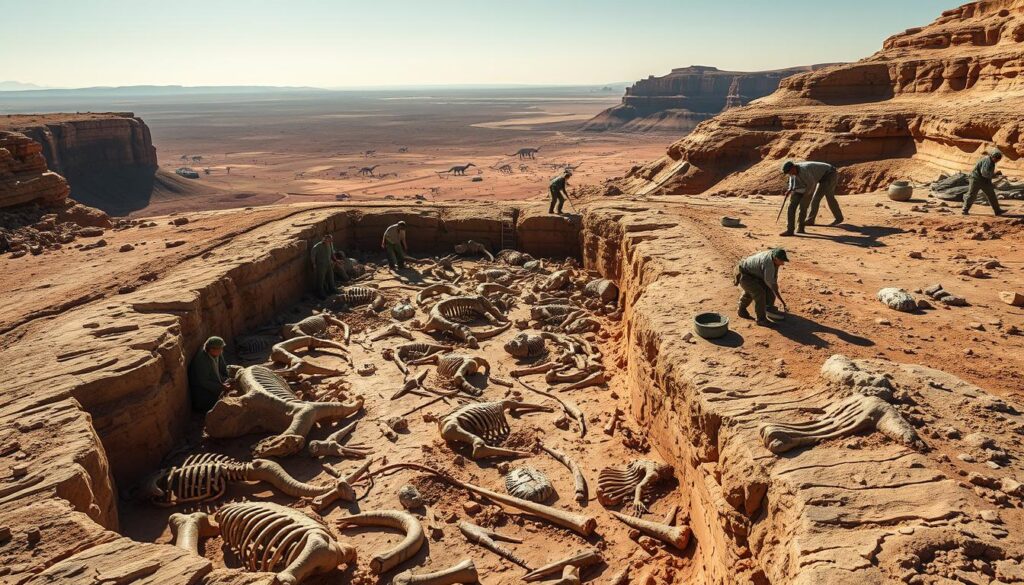
Paleontologists use tools and methods to dig up dinosaur bones. They use brushes, chisels, and special tools like pneumatic drills and X-ray machines. This careful work helps keep the bones safe for scientists to study later.
Documenting the Discovery Site
It’s important to document where the bones were found. Paleontologists write down notes and take pictures of the site. They note where the bones are and any nearby rocks or soil. This helps scientists understand the bones’ history and do more research.
Preparing dinosaur bones for museums is more than just showing fossils. It’s about telling the story of how they were found. With modern tools, paleontologists make sure these ancient bones are shown in a way that teaches and excites people.
Types of Dinosaur Bones You Might Encounter
Exploring dinosaurs, we find many bone types that show their evolution. Dinosaur bones vary a lot, showing how they adapted to different places and lives.
Trabecular bone structure, or spongy bone, is common in dinosaurs. It’s light and flexible, unlike dense bone. This structure is key to understanding their evolutionary advantages.
Dinosaur bones show their complex biology. We see everything from hollow bones for light skeletons to dense bones for strength. Each bone tells us about their locomotion, diet, and physiology.
Studying these bones helps us learn about dinosaurs. It shows how they adapted, moved, and ate. This knowledge is vital for understanding their dinosaur evolution.
The study of dinosaur bones is always growing. New finds give us fresh insights into these creatures. As we learn more, our view of dinosaur bones and their role in history grows, deepening our understanding of these ancient animals.
Where to Experience Holding a Dinosaur Bone
Many museums and exhibitions worldwide let you get close to dinosaur bones. You can touch and sometimes hold dinosaur fossils. It’s a unique experience.
Museums with Notable Dinosaur Collections: The American Museum of Natural History in New York and the Natural History Museum in London are famous. They have big dinosaur bone collections. Visitors can see and touch dinosaur fossils in special exhibitions.
Temporary Exhibitions: Look out for traveling exhibitions. They might let you handle replicas or real fossils. It’s a rare chance to get up close.
Guided Tours and Programs: Museums have tours and programs where you can handle dinosaur bones. Experts lead these, sharing the history and importance of the fossils.
If you want to see dinosaur bones, check out current exhibitions and museum plans. With some research, you can have a memorable and educational experience with these ancient relics.
The Ethics and Legality of Dinosaur Bone Collection
Collecting dinosaur bones is more than just finding ancient relics. It’s about ethics and laws. Paleontologists are key in making sure bones are collected and kept right.
The ethics of dinosaur bone collection matter a lot. It’s about how collecting affects science and the public. We must find a balance between wanting bones and keeping them for study and teaching. Without rules, we could lose important scientific data.
Laws on fossil collecting vary a lot, depending on where you are. In the U.S., for example, collecting fossils on public lands is covered by federal laws. Paleontologists and collectors must follow these laws to act legally.
Paleontologists are very important in keeping things ethical and legal. They not only collect and preserve bones but also help us learn more about dinosaurs and their time.
In short, collecting dinosaur bones is a complex issue. It needs careful thought about ethics and laws. By following rules and being responsible, we can keep learning from these ancient finds.
Using Dinosaur Bones in Education and Research
Dinosaur bones show us the details of dinosaur evolution, behavior, and biology. They are more than fossils; they open a window to the ancient world.
In schools, dinosaur bones are key for learning about paleontology, geology, and biology. They connect students to the past, making complex science easy to understand. By studying dinosaur bones, students learn about Earth’s history, fossilization, and life’s evolution.
In research, dinosaur bones help us understand dinosaur biology and evolution. Scientists study their structure, growth, and health to know how dinosaurs lived. For example, studying dinosaur bones helps in designing new materials and structures.
Research on dinosaur bones also leads to new scientific discoveries. It gives us insights into Earth’s climate, species evolution, and new technologies. So, dinosaur bones are essential for ongoing scientific research.
Using dinosaur bones in education and research deepens our love for natural history and science. It inspires a new generation to explore and learn about our planet’s past and its creatures.
The Enduring Legacy of Dinosaur Bones in Modern Science
Dinosaur bones fascinate scientists and the public. They connect us to the ancient world. Their importance goes beyond their discovery, playing a key role in today’s science.
Studying dinosaur bones has changed how we see the world. They help us understand Earth’s history, evolution, and life diversity. These fossils give us a peek into the past, showing us how ancient creatures lived.
Dinosaur bones inspire new scientists. They remind us of the need to protect our natural world. By studying these fossils, we keep learning about the ancient world. This ensures their legacy lives on, teaching us about the wonders of the past.