





Starting a new writing project is both thrilling and scary. For many, finding the right writing prompts is key to unlocking their creativity.
Robert Lee Brewer, a famous author and Senior Editor of Writer’s Digest, has written a lot on this topic. His books, like “40 Plot Twist Prompts for Writers,” show how important creative writing prompts are in sparking new ideas.
Using story starters helps writers get past the first steps and start their stories with confidence. Whether you’re experienced or just starting, these prompts are a great tool. They help spark your imagination and guide your writing.
What are Story Starters?
A story starter is a prompt or idea that helps writers start their story. It acts as a creative spark that lights up the imagination. This gives a base for the story to grow.
One writer finds these prompts fascinating and entertaining. They hope to find one that sparks creativity. This shows how story starters inspire writers.
Story starters can be a simple sentence or a scenario. They can even be a question that prompts writing. They aim to spark the mind and break through writer’s block.
Using story starters, writers can explore new ideas and perspectives. This makes the writing process more dynamic and engaging. Whether you’re experienced or new, story starters are a great tool for creativity.
Types of Story Starters
Story starters are many and varied, helping writers start their tales. They are great for both new and experienced writers. These prompts can unlock your creativity.
Starting a story with dialogue-based prompts is a good way. These prompts offer a piece of conversation that can lead to many story paths. For instance, a prompt might reveal a character’s past or introduce a conflict.
Dialogue-Based Prompts
Dialogue-based prompts are great for stories focused on characters. They let writers dive into character interactions, leading to conflicts or surprises. Websites like “Writer Prompts” have many dialogue prompts to get you started.
Image-based prompts are another way to start a story. They use pictures to spark ideas. An image can set a mood, suggest a setting, or introduce a character, making it a versatile tool for creativity.
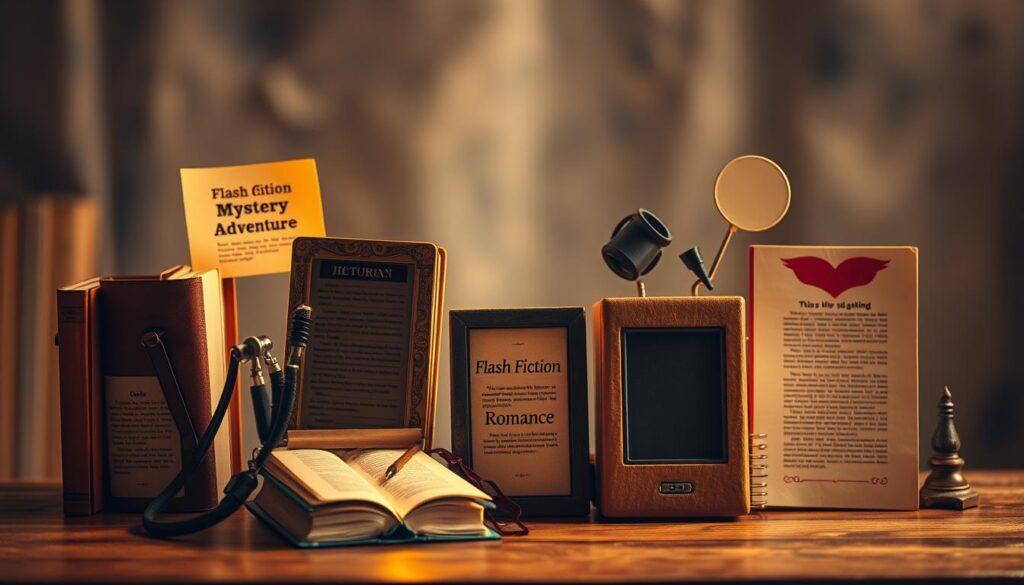
Scenario-based prompts are also favored by many writers. These prompts describe a situation or scenario for a character to face. They are perfect for stories driven by plot.
Exploring the different types of story starters helps writers find what works best for them. Whether it’s through dialogue, images, or scenarios, the right prompt can spark a compelling story.
How to Choose the Right Story Starter
Choosing the right story starter is key to sparking your creativity. It’s important to think about your writing goals and the project you’re working on. There are many options out there.
When picking a story starter, take a moment to think about how it fits your project. This helps you adjust the prompt to suit your needs. It makes it more effective in inspiring your writing.
“Give yourself a moment or two to consider how you can apply this prompt to your current project before you dive into the exercise.”
This careful approach helps you use the story starter to its fullest. It ensures it matches your writing goals. Whether you’re writing a novel, short story, or just need writing inspiration, the right starter can be a game-changer.
Think about the genre, tone, and style of your project when choosing a starter. For example, if you’re writing science fiction, look for prompts with futuristic themes. Matching the starter to your project’s needs creates a better creative writing environment.
The secret to picking the right starter is knowing your writing needs. Be open to trying different prompts until you find one that excites you. With the right starter, you’ll be on your way to writing stories that grab your audience’s attention.
Benefits of Using Story Starters
Exploring the benefits of story starters can change your writing path. They boost your writing productivity by helping you start new pieces easily. This lets you jump into the creative process without delay.
Story starters are great for enhancing creativity. They offer unique prompts that lead to new ideas and themes. This can spark fresh and exciting storylines.

Many writers say story starters are key to building writing stamina and getting results. For example, one author found that writing exercises improved their stamina and brought tangible results. This shows how story starters can elevate your writing productivity.
The creative benefits of story starters go beyond new ideas. They help writers find their unique voice and style. This is done by trying out different techniques and genres. It’s a great way to break through writer’s block by seeing things from a new perspective.
Tips for Crafting Your Own Story Starters
Creating your own story starters lets you make writing prompts that fit your needs and interests. This approach can spark your creativity and guide your writing. It makes your writing more meaningful.
Think about the themes, genres, or topics you like. Consider what sparks your imagination, like character types, settings, or plot twists. By focusing on these, you can create personalized prompts that excite you and inspire new ideas.
Use your own experiences and observations to create story starters. Think about important events, people, or places that have touched you. You can also try different genres or styles to explore new ideas.
Here are some tips for making story starters:
“The best way to get started is to quit talking and begin doing.” – Walt Disney
Keep your story starters flexible and open-ended. This lets you explore different story paths and adjust your prompts as you go. It helps you use your creativity and write engaging stories.
Creating effective crafting story starters means trying new things and improving your prompts. Don’t hesitate to try new ideas and refine your prompts based on your writing. This way, you’ll build a strong set of tools for sparking creativity and moving your writing forward.
Using creative writing techniques in your story starters can make them even better. Try freewriting, mind mapping, or exercises to develop characters. These can help you come up with fresh ideas and add depth to your stories.
Story Starter Examples
Discovering the right story starter can unlock your next great story. These examples show how story starters spark creativity and guide your writing. They are not just random prompts.
Let’s look at some writing prompts that make great story starters. For example, “Someone at a grocery store runs into a problem” is simple yet engaging. It makes you wonder, “Who is this person?” and “What kind of problem do they face?” You also think about how they solve it.
This prompt encourages you to see everyday situations in a new light. It turns them into exciting stories.
Another example is “A ghost haunts a classroom.” This could lead to a thrilling or supernatural tale. You can dive into the ghost’s past, how students and teachers react, and how the haunting ends. These story starter examples offer a solid base for a captivating story.
With these story starter examples, you can practice making your story grow. Ask yourself about the characters, setting, and plot. This helps you add depth to your story.
The aim is to use these prompts as a starting point for your creative inspiration. Let your imagination lead the way.
Trying out different story starters can lead to new ideas and ways to tell stories. Whether you’re writing fiction, non-fiction, or anything in between, these prompts can spark your creativity. They also help improve your writing skills.
Incorporating Story Starters into Your Routine
Adding story starters to your daily writing routine boosts your creativity and productivity. It helps you build your writing stamina and keeps your imagination sharp.
To make story starters a part of your routine, set aside a specific time each day or week for writing. Consistency is key to a creative habit. Use a journal or digital tool to track your progress and note your prompts and stories.
Writing experts say building stamina through practice is essential for writers. Using writing prompts or story starters regularly is a great way to do this. It not only sparks new ideas but also improves your writing skills over time.
Adding story starters to your routine can greatly enhance your creativity and productivity. By making it a habit, you’ll see continuous improvement in your writing skills and stay inspired to create new stories.
Overcoming Challenges with Story Starters
Using story starters can unlock your creativity and beat writer’s block. Many writers find it hard to start a story. They struggle to move from a blank page to a full story.
One big challenge is overcoming writer’s block. Even experienced writers can get stuck. Story starters help by giving a spark to start writing.
Getting inspiration from outside can be tricky. But, it can also lead to new ideas. By letting the story starter guide you, you can find fresh directions for your story.
“The best way to get started is to quit talking and begin doing.” This quote helps show how to start a story.
To use story starters well, stay open to new ideas. This openness can lead to creative solutions. Using story starters regularly can keep you inspired and focused.
In summary, story starters are great for writers. They spark creativity and help start new stories. This leads to more interesting and varied stories.
Expanding Ideas from Story Starters
Starting with a story starter can kick off a rich and engaging tale. The initial prompt is like a foundation. It lets you build characters, plotlines, and settings that grab your audience’s attention.
Expanding on a story starter can be done by listing conflicts, characters, and settings. This makes your story more detailed and interesting. For example, if your starter is a mysterious event, think about its causes, characters, and setting.
Character Development is key in expanding your story. Ask yourself: Who are the main characters? What drives them? How do they interact? Well-rounded characters make your story relatable and fun.
Plot expansion means thinking about the story’s sequence of events. Consider the climax, falling action, and resolution. This creates a story arc that’s both coherent and exciting.
Setting creation is also vital. The setting can set the mood and tone of your story. Describe the time and place vividly to pull your readers into your world.
By expanding on your story starter, you can turn a simple idea into a complex and captivating story. This process boosts your creative writing and makes a narrative that connects with your audience.
Conclusion: The Joy of Starting Stories
Using story starters can really boost your creativity and get you writing. They help you build your writing skills and see real progress. Starting new stories brings a joy that helps you grow as a writer.
Story starters come in many forms and can fit your writing style. They help you overcome obstacles and grow your ideas. The most important thing is to keep exploring and enjoying the writing journey.
By making story starters a regular part of your writing, you unlock your creative power. It’s a chance to dive into exciting new stories. So, start now and let story starters lead you to new adventures in writing.