






Personification is a powerful tool in literature. It gives human-like qualities to things like objects, animals, or ideas. This makes stories and poems more vivid and engaging for readers.
Writers use personification to make things feel more real. For example, saying “the sun smiled down on us” makes us feel warm and happy. This is a form of anthropomorphism, showing how personification works.
This technique is a big part of figurative language. It helps authors add depth and complexity to their stories. By making objects seem alive, writers draw readers into their world, making the experience more fun and real.
What is Personification?
Personification is when we give human traits to things that aren’t alive. This makes them seem more real and interesting. It’s a way to make objects, animals, or ideas seem alive in our minds.
For example, saying “The sun smiled down on us” makes the sun seem like it can smile. Saying “The wind howled in anger” makes the wind seem angry. These examples of personification make stories more vivid and easy to picture.
Personification is different from other literary devices like metaphors and similes. Similes compare things using “like” or “as,” while metaphors say one thing is another. Personification, on the other hand, directly gives human traits to non-human things. For instance, “He ran like a cheetah” is a simile, but “The city slept” is personification.
“Personification gives life to the lifeless, and makes the abstract concrete.”
This quote shows how powerful personification is in writing. It lets writers share complex feelings and ideas in a way that’s easy to understand. Knowing about personification definition and how it works is key for both writers and readers to enjoy literature more.
The Importance of Personification in Literature
Personification is key in literature. It lets authors share complex feelings and ideas through stories. By giving human traits to things that aren’t alive, writers make their descriptions come alive.
In poetry, personification shines. Poets use it to share deep emotions and meanings. For instance, a poem might say the sun smiles on the earth, making us feel welcome.

In storytelling, personification makes stories more real and fun. It turns objects or nature into characters, making the world feel more alive. This is great for creative writing, aiming to connect with readers.
Personification also helps writers tackle tough themes and feelings. It lets them show what characters feel and the mood of a scene. This way, authors can share their stories in a deep and moving way.
So, personification is a powerful tool in literature. It adds depth, creativity, and emotion to stories. It’s a key part of a writer’s arsenal.
Common Examples of Personification
Personification in literature and poetry brings stories to life. It makes readers feel emotions by giving human traits to things that aren’t alive. This trick is not just for books; it’s also used in everyday talk.
Take phrases like “The city is awake” or “The sun is hiding behind the clouds.” They make us see things in a new way. In books, it helps readers feel closer to the story.
Examples of Personification in Literature and Poetry
In books, personification makes stories feel real. For example, in “I Wandered Lonely as a Cloud” by William Wordsworth, daffodils dance. “The waves beside them danced; but they out-did the sparkling waves in glee”, he writes. This makes us feel happy and free.
“The wind howled in the night, a mournful cry that echoed through the empty streets.”
This shows how personification can set a mood. The wind sounds like it’s crying, like a person in pain. It makes the story feel more real and emotional.
In our daily talk, personification makes things more interesting. Saying “The sun smiled down on us” is like giving the sun a smile. It makes us feel good.
Knowing about personification helps us appreciate language more. It’s a key literary device that makes our words more powerful, whether in books or everyday chats.
How Personification Enhances Poetry
In poetry, personification makes objects and ideas come alive. It grabs the reader’s imagination. Poets give human traits to things that aren’t alive, making their words powerful and moving.
Personification is key in making imagery in poetry vivid. It lets poets share complex feelings and thoughts in a deep yet subtle way. For instance, saying “The sun smiled down on us” uses personification to share warmth and joy.
Figurative language, like personification, adds depth to poetry. It makes readers think and reflect more on the poem’s meaning.
William Wordsworth is a great example of personifying nature in his poetry. He makes nature more than just a setting. It’s a living thing that interacts with us.
Using personification in poetry makes it more emotional and engaging. It helps readers understand the poet’s message and the poem’s impact better.
Personification in Popular Culture
In popular culture, personification brings brand mascots and animated characters to life. It gives them human-like qualities. This makes stories engaging for people all over the world.
Personification in Advertising makes brands more relatable and memorable. Think of Tony the Tiger for Kellogg’s Frosted Flakes or the Geico Gecko. These characters are friendly and approachable, making the brand more appealing.
In media, personification creates animated characters that connect with audiences. Characters like Disney’s Mickey Mouse or the Simpsons are examples. They are given human-like qualities to make them more endearing and engaging.
The power of personification in popular culture is its ability to create an emotional bond. It makes non-human entities relatable. This enhances the impact of advertising and media, making brand identities memorable.
Personification is not just for advertising and media. It’s also used in films and TV shows to create engaging storylines and characters. It enriches the narrative and makes content more enjoyable for a wider audience.
Techniques for Using Personification
Writers can make their stories come alive with personification. Effective personification gives human traits to things that aren’t alive. This makes stories more interesting and engaging.
Choosing the right verbs and adjectives is key. Verbs like “whispers” or “smiles” can make objects seem alive. For example, “The sun smiled down on us” or “The wind whispered through the trees.”
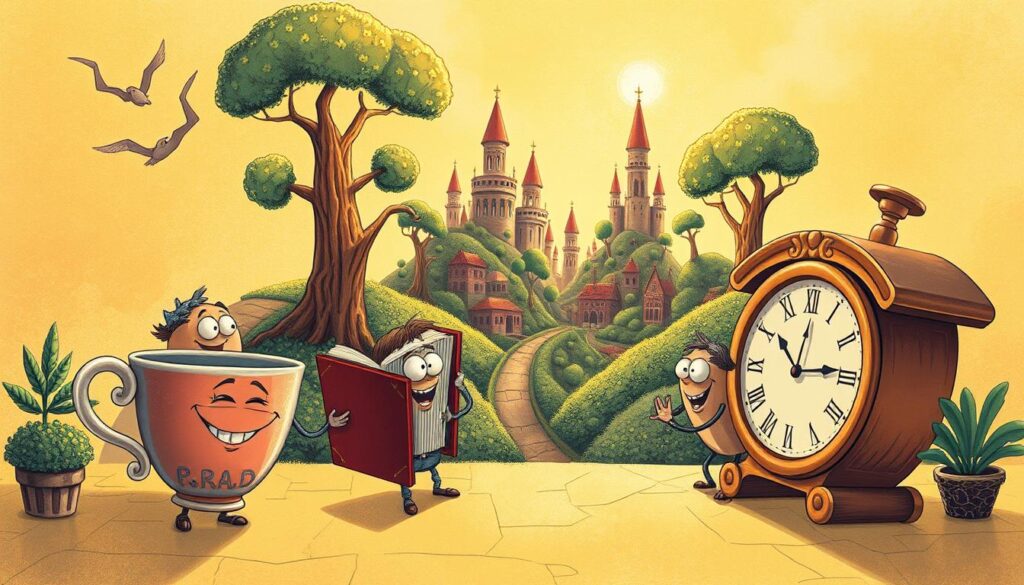
Using adjectives that describe humans can also work. Say “The old, stubborn door refused to open” or “The angry sea crashed against the shore.” These words make the story vivid and touch the reader’s feelings.
In creative writing, personification helps create deep metaphors. It also makes abstract ideas easier to understand. This way, writers can share their unique views and connect with readers.
To use personification well, writers must think about their audience. They should aim to make the story better without confusing the reader. Learning personification techniques can make writing more emotional and detailed.
Analyzing Famous Literary Works
Classic literature is full of examples of personification. This literary device has been used by authors for centuries. It has made their works richer and captured readers’ imaginations.
William Shakespeare and John Milton are great examples. They used personification in their works. In Shakespeare’s plays, he gives human qualities to abstract ideas and objects. This creates vivid images that grab the audience’s attention.
In Macbeth, Shakespeare makes darkness and chaos come alive. This creates a feeling of doom and tension. John Milton’s Paradise Lost also uses personification. He gives life to Sin and Death, making them real and important in the story.
“The very ports and gates of hell, / The blackness of darkness that doth dwell / Between the world and thee, shall be / A barrier ‘twixt thee and felicity.”
This quote from Paradise Lost shows how personification can create powerful images. It pulls readers into the poem’s world.
By looking at these famous works, we learn how personification adds depth to literature. It’s a key part of literary analysis.
The Relationship Between Personification and Metaphor
In the world of literature, personification and metaphor are key. They help create vivid and imaginative expressions. These techniques often blend together to make literature more engaging.
Personification gives human traits to things that aren’t alive, like objects or animals. For example, “The sun smiled down on us” makes the sun seem alive. Metaphor, on the other hand, compares two different things without using “like” or “as.” Saying “He is a lion on the battlefield” means he’s brave and fierce.
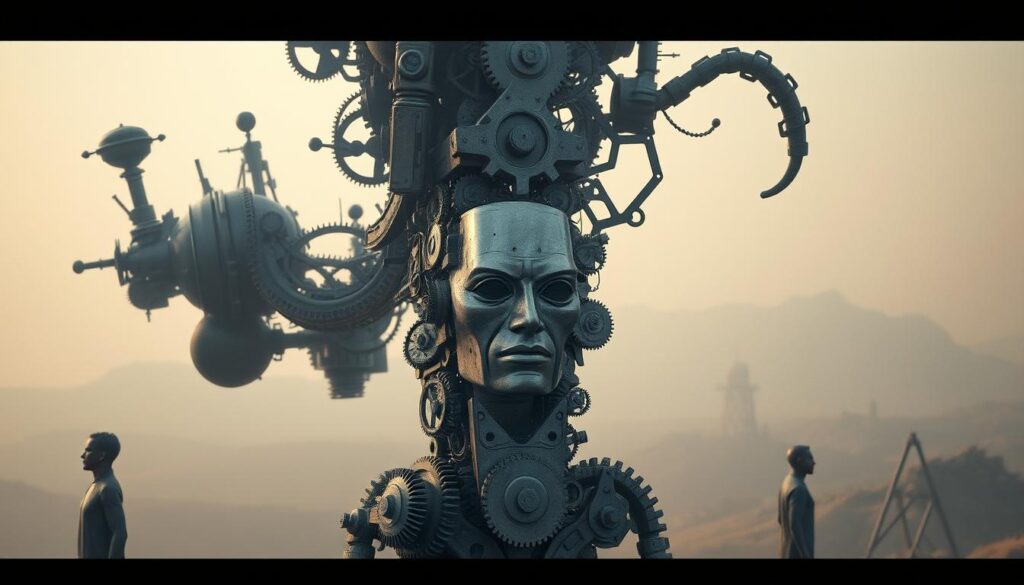
Personification and metaphor are closely linked. Often, personification is used in metaphors to add depth. As literary critic and scholar Harold Bloom said, “The more powerful the metaphor, the more it resists interpretation.” This makes their combination powerful in literature.
“The wind howled in anguish, its mournful cries echoing through the desolate landscape.”
In this example, the wind is given human-like qualities, making it vivid and emotional. This personification is part of a metaphorical scene that shows desolation and sorrow.
Using personification and metaphor together makes literature richer. By giving human traits to non-human things and comparing unlike things, writers craft engaging stories. As figurative language evolves, understanding these devices is key for writers and readers.
In summary, the mix of personification and metaphor is a strong tool in literature. It allows writers to create stories that are not just fun to read but also full of meaning and emotion.
Teaching Personification in the Classroom
Adding personification to classroom activities boosts students’ creative writing. It lets them see everyday objects as if they were alive. This way, they grasp the concept better.
Writing exercises are a great way to teach personification. Ask students to tell a story where an object comes to life. This sparks creativity and shows how personification adds depth to writing. As Neil Gaiman said, “The one thing that you have that nobody else has is you. Your voice, your mind, your story, your vision. So write and draw and build and play and dance and live as only you can.”
“The wind howled in the night, a mournful cry that echoed through the empty streets.” This example shows how personification brings vivid images and feelings to the reader.
Students can also make personification games. For example, they can do a “Personification Scavenger Hunt.” They look for examples in their world or books. It’s a fun way to learn.
By doing these activities, teachers help students grow in creative writing. As they get better with personification, they can use it in their stories. This makes their writing unique and engaging.
The Role of Personification in Art
In the world of art, personification makes non-human things seem more real and relatable. It’s a key part of visual art and illustration. This method helps create characters and images that stick in our minds.
Artists use personification to share deep feelings and ideas in a clever way. By giving human traits to things like objects or animals, they connect with us on a deeper level. This technique is both subtle and strong.
Examples of Personification in Art
Cartoons and comics often use personification. Characters like Mickey Mouse and Bugs Bunny are made to seem human. This makes them more lovable and easy to connect with.
Personification also shows up in nature. For example, a tree might be shown with a gentle face. This adds a sense of peace and calm to the image. It touches our emotions deeply.

But personification isn’t just for cartoons and comics. It’s also found in fine art. A painting might show a stormy sea with a human face. This represents the turmoil and chaos we feel inside.
In short, personification is essential in art. It lets artists create works that are engaging, memorable, and emotionally powerful. By giving human qualities to non-human things, artists share complex ideas and feelings in a unique and impactful way.
Conclusion: Why Personification Matters
Personification is a powerful tool in literature and creative writing. It makes objects seem alive, adding vividness and imagination to stories. By giving human traits to things that aren’t alive, writers create memorable and engaging tales.
This technique helps authors share complex feelings and ideas in a unique way. It makes reading more enjoyable and adds depth to the text. This is why personification is so valuable for writers and artists.
In short, personification is key to creative expression. It makes literature and art more relatable and impactful. By mastering personification, writers can inspire and engage their audience, leaving a lasting mark on literature and beyond.