







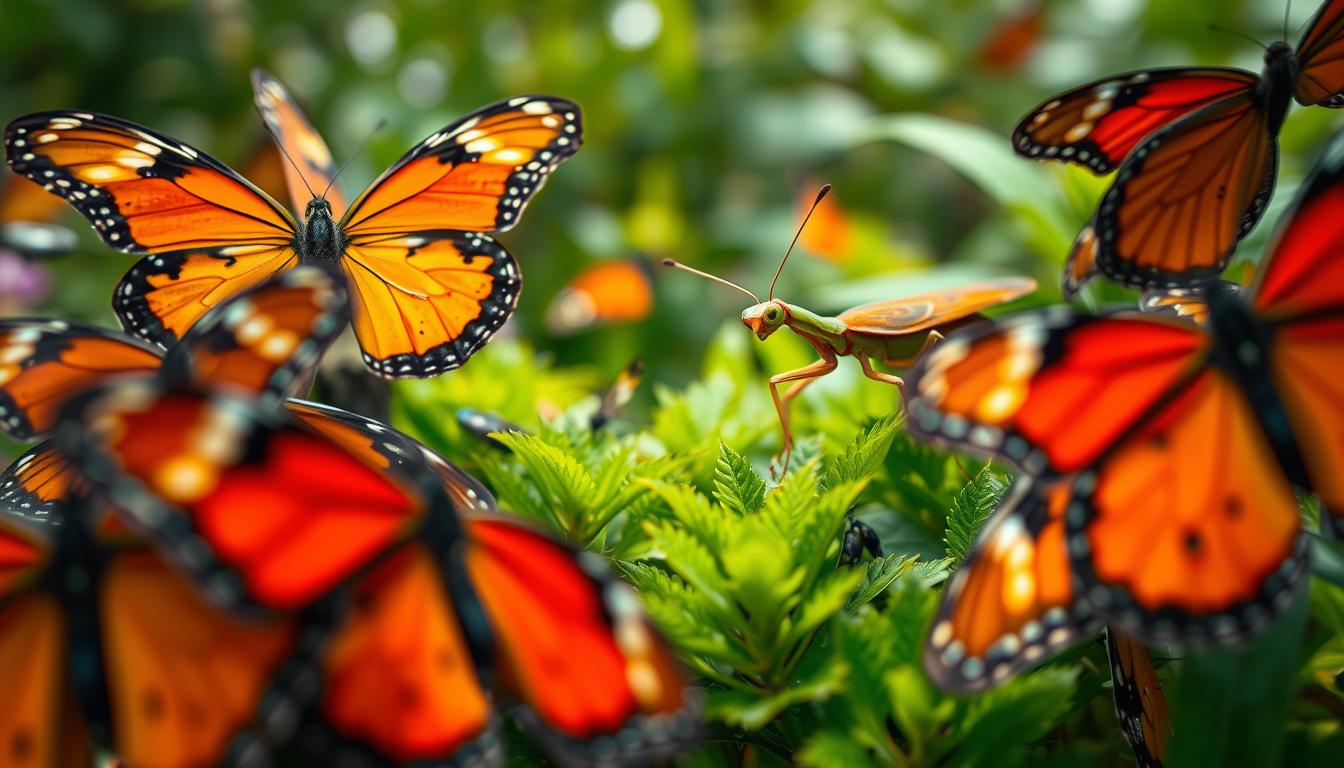
Explore the world of colorful insects that are all around us. Their bright colors and patterns make our world more beautiful and interesting.
Insect spotting is a fun hobby that lets you see the natural world up close. It teaches you about the importance of insect diversity. By learning about these creatures, you’ll see how vital they are to our ecosystem.
This article will give you expert tips on finding colorful insects in your area. It will help you appreciate the natural world and its amazing variety of life.
Understanding Insect Diversity
The Sonoran Desert in Arizona is home to over 20,000 insect species. This vast array of insects is fascinating to study and explore. Insect diversity includes the variety of characteristics, behaviors, and roles insects play in their ecosystems.
Insects like beetles, butterflies, and bees are just a few examples found in the Sonoran Desert. Each group has unique traits and contributions to the ecosystem. For example, beetles come in many forms, adapting to different environments and playing various roles.
The study of insects, known as entomology, helps us understand ecosystem interactions. By studying insect species and their habitats, scientists learn about ecosystem health and environmental impacts.
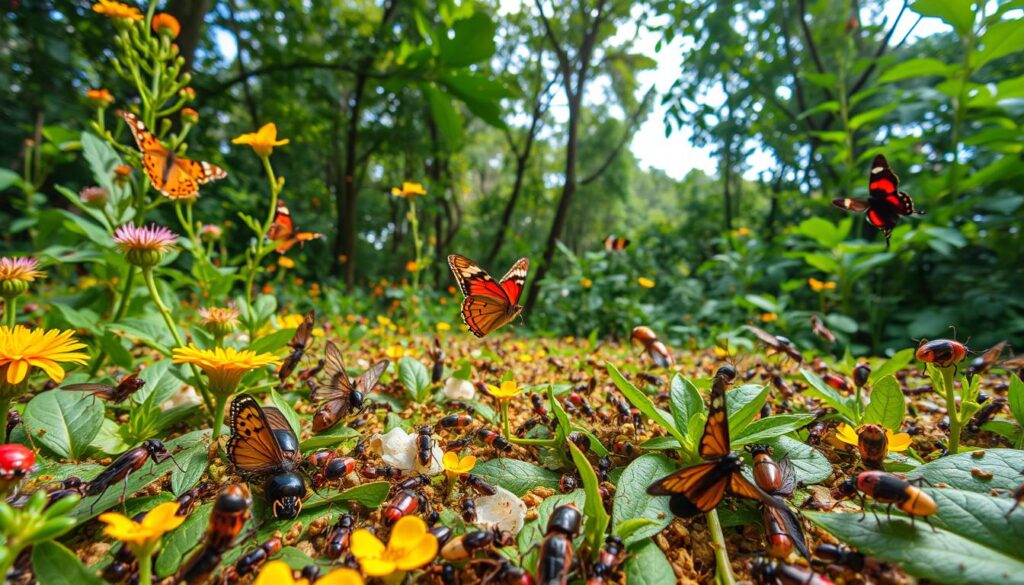
Understanding insect diversity is key to appreciating nature’s balance. As we learn about different insect species and their roles, we can better protect these vital ecosystem components.
Habitats Where Colorful Insects Thrive
Colorful insects live in many places, from lush gardens to dry deserts. These places are key for their survival and variety. They give insects what they need to eat, hide, and have babies.
Gardens are full of life for these insects. With many flowers and plants, gardens draw in butterflies and bees. The variety of plants in gardens makes a rich ecosystem full of life.
Forests are also great homes for colorful insects. Forests have different levels, from the ground to the top leaves. This setup creates many homes for insects, each suited to its own needs.
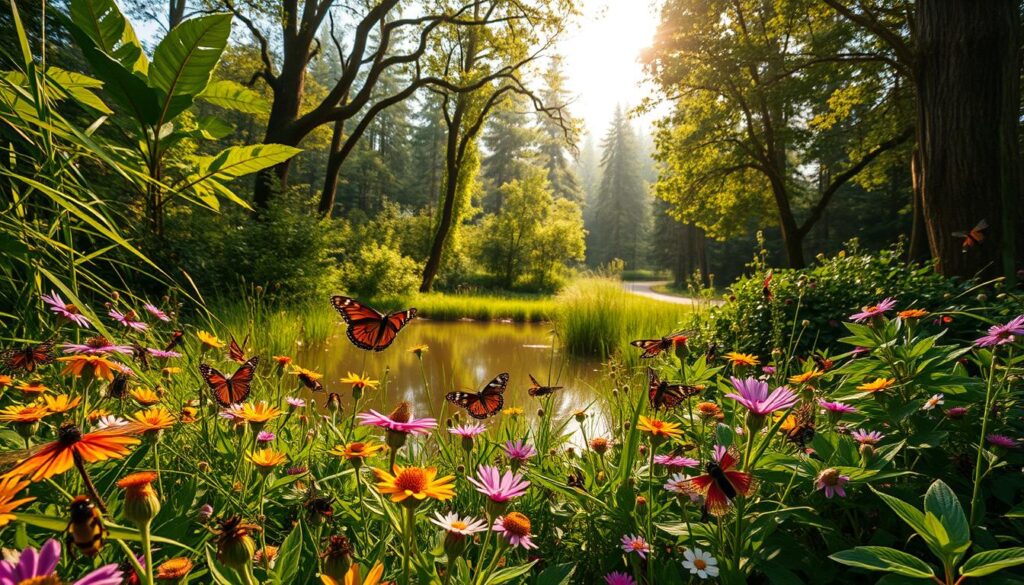
Several things affect how good a place is for insects. Climate is very important. It decides what plants grow and how much water is around, both key for insects.
Vegetation is also key. It gives insects food and a place to hide. How diverse and dense the plants are affects how many insects there are.
“The complex bond between insects and their homes shows the beauty and complexity of nature.”
Soil quality matters too. Soil helps plants grow and gives insects nutrients. This supports the life of insects.
In places like Arizona, the rainy season brings insects out. This shows how insect homes change with the weather.
Identifying Common Colorful Insects
Arizona’s unique habitats are home to many colorful insects. The fig beetle, palo verde root borer beetle, and jewel beetle stand out. They are known for their bright colors and interesting behaviors.
The fig beetle is bright and metallic. It loves fig trees, where it eats the fruit. Its insect characteristics include a strong body and unique colors that vary by species.
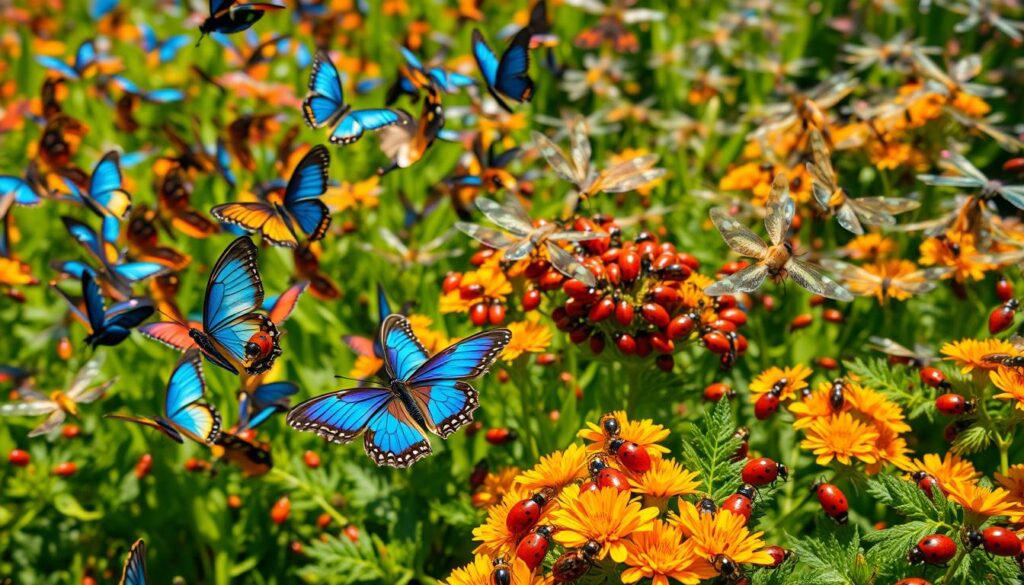
The palo verde root borer beetle is also colorful. It helps break down dead palo verde trees. This helps the ecosystem by adding nutrients. To spot this beetle, look at its size, color, and elytra patterns.
Insect identification is a fun hobby. It lets people see the variety of colorful insects. Knowing their traits and habits helps us value their role in nature.
For those into insect identification, watching where and how they live is key. Arizona’s different areas, from deserts to forests, are full of colorful insects. They can be found by observing and studying them closely.
The Importance of Insects in Ecosystems
Insects are key to our planet’s health. They help with pollination, breaking down organic matter, and are a food source. Their role is vital for life on Earth.
Insects are important for ecosystem services. They play a big role in pollination. Like bees, they move pollen between flowers, helping plants reproduce. This is essential for growing many crops we eat.
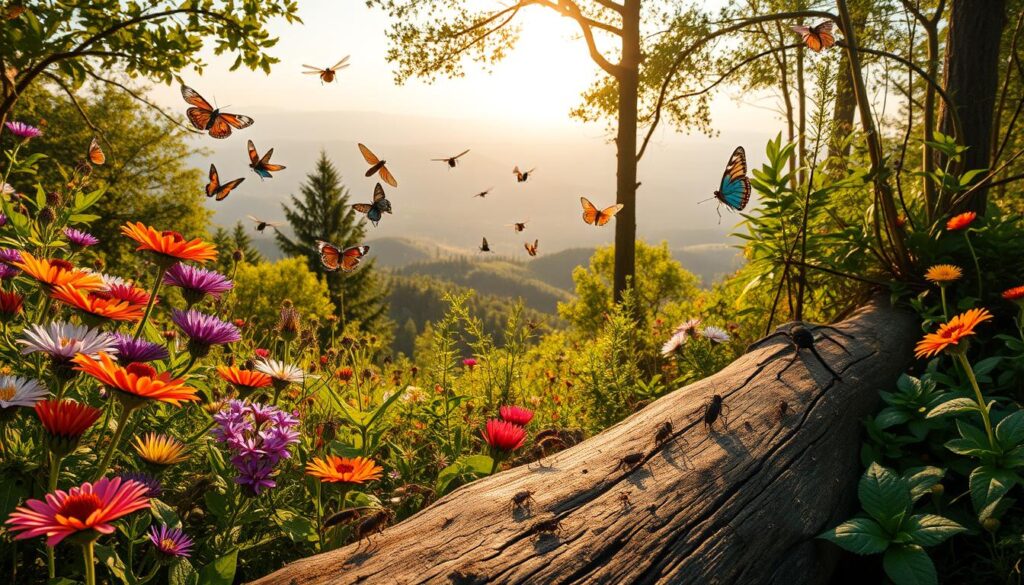
They also help with decomposition. Insects break down organic matter, recycling nutrients into the soil. This keeps soil healthy and supports plant growth. They keep the nutrient cycle going in ecosystems.
Insects are a main food source for many animals. Birds, bats, spiders, and other insects eat them. They are rich in protein, helping these animals grow and survive. Losing insects could harm animal populations that depend on them.
It’s important to save insect biodiversity. Protecting insects and their homes keeps ecosystems healthy. We can do this by preserving natural habitats, using fewer pesticides, and supporting green farming.
In conclusion, insects in ecosystems are essential. They help with pollination, decomposition, and are a food source. We must protect insects to keep ecosystems healthy and diverse.
How to Attract Colorful Insects
Planting a variety of flowers can make your garden a colorful haven for insects. This not only makes your garden look better but also helps the local ecosystem.
To attract colorful insects, you need to create an insect-friendly environment. Plant flowers that produce nectar. These are very attractive to beneficial insects like bees and butterflies.
Gardening for insects needs some planning. Choose flowers that bloom at different times. This way, you’ll have nectar available all season. Also, using native plants can attract native insects.
Creating a welcoming habitat means avoiding pesticides. Pesticides can harm or kill the insects you want to attract. Instead, use natural pest control methods to keep your garden’s ecosystem balanced.
By following these tips and being patient, you can enjoy colorful insects in your garden. Your outdoor space will become vibrant and healthy.
Tools for Spotting Insects
To truly appreciate the diversity of insects, you need the right tools. Whether you’re an expert or just starting, the right equipment makes a big difference.
Insect Identification Keys are key for identifying insects. They help narrow down possibilities based on what you see. This makes it easier to figure out what insect you have.
Magnifying glasses and handheld lenses are also essential. They let you see insects up close without scaring them away. For even more detail, microscopes are perfect for examining insect anatomy closely.
Cameras and smartphone apps are also important for spotting insects. They help you take great photos for identification and documentation. Some apps even identify insects based on your photos.
Using these insect identification tools and entomology equipment improves your insect spotting experience. It helps us all understand and appreciate the variety of insects better.
Safety and Ethics in Insect Observation
Exploring the world of insect observation requires careful attention to safety and the insects’ well-being. It’s important to take safety precautions to protect both the observer and the insects.
Handling insects gently and humanely is key in ethics in entomology. This approach avoids harming the insect or its home. It keeps the insect safe and helps protect the ecosystem.
Knowing the needs and behaviors of the insects you observe is essential. This knowledge helps you avoid harming them. It also keeps you safe by being mindful of your surroundings.
Best Practices for Safe Insect Observation
Wear gloves and appropriate clothing to protect yourself from bites or stings. It’s also important to know the legal and ethical rules of insect observation in your area.
Following these guidelines lets insect lovers enjoy their hobby. They help protect insect populations and their homes, showing respect for ethics in entomology.
Fun Facts About Colorful Insects
Colorful insects are truly amazing. They have fascinating behaviors and adaptations. For example, the desert millipede can grow up to half a foot long. It also releases a foul-smelling liquid to defend itself.
This is just one example of the incredible diversity in insects. Many have evolved unique characteristics to survive and thrive in different places.
Insect behaviors are also very interesting. Some have complex social structures, while others have detailed mating rituals.
For instance, some butterflies migrate thousands of miles each year. They cross entire continents on their journey. These insect facts show how resilient and adaptable these tiny creatures are.
Studying insect behaviors and characteristics helps us understand their biology. It also shows why we need to protect these species and their habitats.
Resources for Insect Enthuisasts
Insect enthusiasts have many resources to learn more about insects. The University of Arizona Insect Collection is a great place to start. It has lots of specimens and data for research and fun.
Need help with insect identification? The Cooperative Extension’s Insect Diagnostics Clinic is here to help. Online communities and forums are also great for sharing knowledge and experiences.
Using these resources, enthusiasts can meet others who love insects. This helps us all appreciate the natural world and the insects in it.