







Have you ever noticed how some people do well in tough situations? Others feel stuck. It all comes down to how we see and deal with conflict and challenges. By changing how we feel, we can make obstacles chances for growth and excitement.
The Cleveland Clinic shows us how to solve problems. By using their methods, we can see challenges in a new light. This emotional transformation helps us face problems with energy and joy. It makes life more rewarding.
Let’s dive into how problem-solving can spark personal growth and development.
Understanding Conflict: The Essence of Drama
The heart of drama lies in conflict, a key element that boosts emotional response. Conflict makes a story lively, adding tension and excitement.
Interestingly, our body’s reaction to conflict is tied to adrenaline. Adrenaline kicks in when we face stress or excitement, getting us ready for action. Whether we feel fear or excitement depends on the situation and how we see it.
The role of conflict in drama is complex. It can make us feel uneasy or tense, keeping us hooked. Yet, when conflict is resolved, we feel relieved or happy, adding to the drama’s impact.
Conflict shapes the story in big ways. It moves the plot along and connects us deeply with the characters. By using conflict wisely, writers can create dramas that touch our hearts.
In short, conflict is drama’s lifeblood, adding tension, excitement, and emotional depth. By understanding conflict‘s role, creators can craft stories that leave a lasting impression.
The Role of Conflict in Personal Relationships
Conflicts in personal relationships can be tough, but they also offer chances for growth and understanding. When handled well, conflicts can make bonds stronger and connections deeper.
The secret to handling these conflicts is emotional intelligence. It helps people understand and manage their feelings and empathize with their partner’s. This way, they can respond to conflicts more thoughtfully and less impulsively.

Building resilience is key in personal relationships. It means being able to handle and bounce back from conflicts. Effective communication is a big part of resilience, as it lets people talk openly and honestly about issues.
Also, resilience in personal relationships is about conflict resolution. It’s about finding solutions that everyone can agree on and moving forward positively. By focusing on finding solutions, people can build stronger, more resilient relationships.
In summary, conflicts are a normal part of personal relationships. But with emotional intelligence and a focus on resilience, people can turn these challenges into opportunities for growth and deeper connection.
Conflict in the Workplace: Challenges and Solutions
Handling workplace conflicts well is key to boosting employee engagement and better performance. Conflicts can come from poor communication, different opinions, and competing goals.
Effective conflict resolution keeps the work environment positive and productive. If conflicts aren’t handled right, they can lower morale, increase turnover, and cut productivity.
The Cleveland Clinic’s Continuous Improvement Department and its SolVE method are great examples of problem-solving at work. SolVE lets employees at all levels find problems, come up with solutions, and make changes. This builds a culture of ongoing improvement.
Using methods like SolVE, companies can turn conflicts into chances for growth and betterment. This approach not only solves conflicts but also boosts employee engagement. It gives employees a say and gets them involved in making decisions.
Key Strategies for Conflict Resolution
To manage workplace conflicts well, several strategies work:
- Encourage open communication and active listening.
- Foster a culture of respect and empathy.
- Empower employees to solve problems and improve processes.
- Implement structured problem-solving methodologies like SolVE.
By using these strategies, companies can make their work environment more harmonious and productive. This leads to better conflict resolution and improved performance overall.
The Psychological Impact of Conflict
It’s key to know how conflict affects our minds to cope better. Conflict can make us feel fear and anxiety or even positive. How we deal with these feelings greatly affects our mental health.
When we face conflict, our body’s “fight or flight” response kicks in. This releases stress hormones like adrenaline and cortisol. These hormones can make us feel anxious and fearful. But, studies show we can turn fear into excitement, making us better at handling conflict.

To manage conflict’s psychological effects, we need self-awareness, emotional control, and good coping strategies. Mindfulness and meditation can lower stress and anxiety. Seeing conflict as a chance to grow, not just a threat, helps us react better.
Conflict deeply affects our relationships and well-being. Long-term conflict can increase stress, harming our mental health. It might even lead to depression and anxiety disorders. So, finding healthy ways to solve conflicts is vital.
Understanding conflict’s psychological effects and using effective strategies can boost our resilience and life quality. It’s not just about reducing negative effects. It’s also about using conflict to grow and develop personally.
Utilizing Conflict in Creative Writing
In creative writing, conflict is key for character and plot growth. It drives the story, creating tension and helping characters evolve.
Conflict can be internal, like a character’s inner battle, or external, like challenges from others. Character development is closely tied to conflict. It shows what a character is like, what they want, and what they believe in.
The plot structure of a story is shaped by conflict. A good plot has conflicts that build up and then get solved, ending with a satisfying finish. Conflict adds suspense, surprise, and emotional depth, keeping readers hooked.
Writing experts say, “Conflict is the heart of every story, providing the necessary tension and drama that captivates readers.”
“The conflict is what makes the story; it’s what drives the characters to act, to change, and to grow.”
This shows how vital conflict is in creative writing.
Authors should think about both internal and external conflicts for their characters. This way, they can create a story that’s not just fun but also deep in character and plot.
The Positive Side of Conflict
Seeing conflict as a chance for personal development and innovation can be powerful. It’s not always seen as a bad thing. In fact, it can help us grow and improve in many ways.
In our personal lives, conflict can make our relationships stronger. It lets us share our needs and feelings openly. This can lead to deeper understanding and more resilient bonds.
At work, conflict can spark innovation. It brings different ideas and challenges the usual ways of doing things. When teams discuss openly, they often come up with creative solutions and make better choices.

Dealing with conflicts also helps us grow personally. We learn to communicate better, solve problems, and manage our emotions. It makes us think about our values and how we act, helping us become more aware and mature.
By seeing conflict as a chance for growth, we become more adaptable and resilient. This way of thinking can make us more positive and productive in our personal and work lives.
Navigating Conflict in Politics
Understanding diplomacy and negotiation is key to handling political conflicts. These conflicts often stem from different beliefs, interests, or values. It’s vital to have effective conflict resolution strategies to keep peace and stability.
Diplomacy is essential in managing these conflicts. It involves talking and negotiating between different groups. Good diplomats can help find common ground and work together, solving problems peacefully. For example, they can help create treaties or agreements that meet everyone’s needs.
Negotiation is also a critical tool in politics. It’s about direct talks to find an agreement that works for everyone. To succeed, you need to understand each side’s interests, needs, and limits. Mediation and arbitration can also help in these talks.
The role of conflict resolution in politics is huge. If conflicts aren’t solved, they can lead to violence. This violence can destabilize areas and threaten global security. By using the right strategies, leaders can aim for lasting peace and cooperation. They need to address both the immediate issues and the root causes of the conflict.
In summary, dealing with conflicts in politics is a complex but vital task. By using diplomacy, negotiation, and conflict resolution methods, leaders can find peaceful solutions to these problems.
Cultural Perspectives on Conflict
The impact of cultural perspectives on conflict is huge. Different cultures have their own ways of handling and solving conflicts. Cultural differences greatly influence how people see and deal with conflict.
In some cultures, facing the issue head-on is key to solving problems. Others focus more on keeping peace and avoiding direct conflict. For example, in many Asian cultures, saving face is very important. They often use indirect talks to avoid shame or loss of dignity.
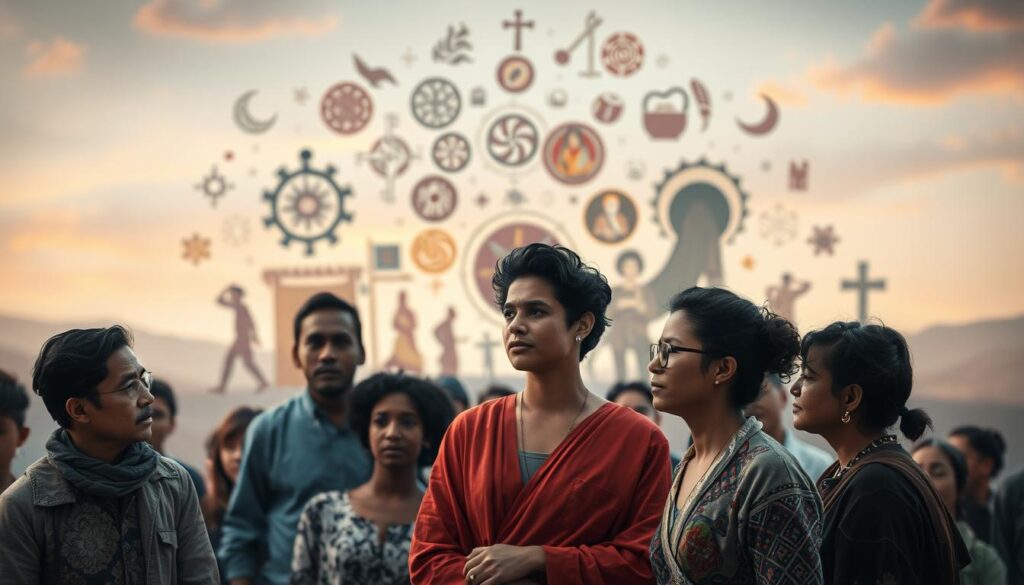
It’s vital to understand these cultural nuances for effective conflict solving in diverse settings. As the world gets more connected, knowing how to handle cultural differences in conflict is a key skill.
“Cultural understanding is not just about knowing the differences; it’s about being able to apply that knowledge in real-world situations to foster better relationships and resolve conflicts more effectively.”
By embracing cross-cultural understanding, we can better handle conflicts caused by cultural differences. This leads to more peaceful and productive relationships.
Media and Conflict: A Double-Edged Sword
The link between media and conflict is complex. It can inform or mislead. The way media shows conflicts can change how people see things, shaping opinions and actions.
Media can highlight conflicts that might not get attention, sparking public support and action. Investigative journalism uncovers hidden parts of conflicts, giving a clearer view. For example, media coverage of crises can lead to global responses, as seen in many conflicts.
But, media can also spread wrong information or biased views, making things worse. Media influence can be both good and bad, depending on how it’s used.
“The media are not the enemy of the people, but they are not neutral arbiters of truth either. Their role in conflict is multifaceted, requiring critical consumption of the information they provide.”
The digital age makes things more complicated. Social media can share news fast, but not always right. This shows why media literacy is key to tell real news from fake.
In summary, media’s role in conflicts is complex. It can help or hurt public perception and conflict paths. Knowing this is vital in today’s world.
Conclusion: Embracing Conflict for a Better Tomorrow
Embracing conflict isn’t about looking for fights. It’s about seeing the chance for growth and change in disagreements. We’ve seen how conflict affects personal relationships, work, creative writing, and politics.
Understanding conflict’s psychological effects and navigating cultural views can turn divisions into growth chances. The media often exaggerates conflict, but looking deeper reveals its power to solve problems and bring positive change.
By embracing conflict, we build resilience, strengthen relationships, and create a more vibrant and inclusive space. A constructive approach to conflict opens doors to personal growth and helps us build a better future.