





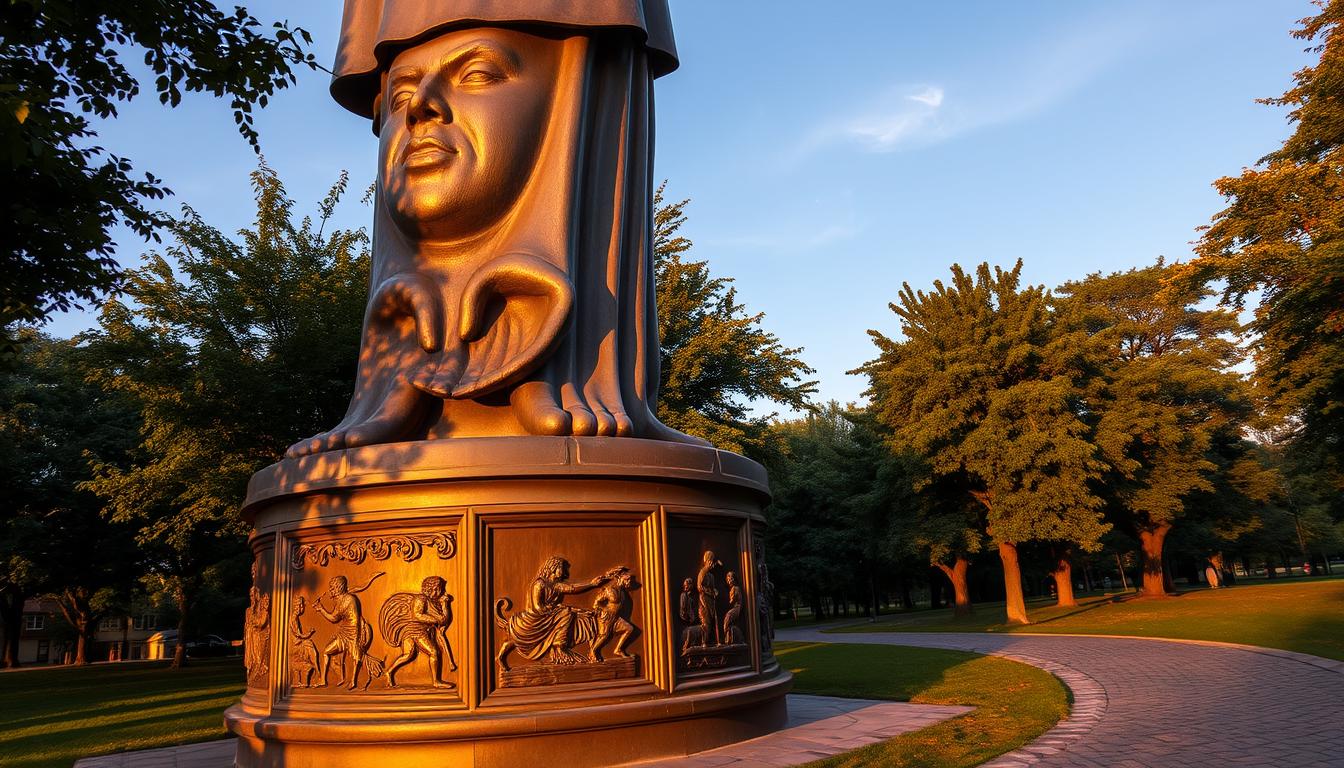
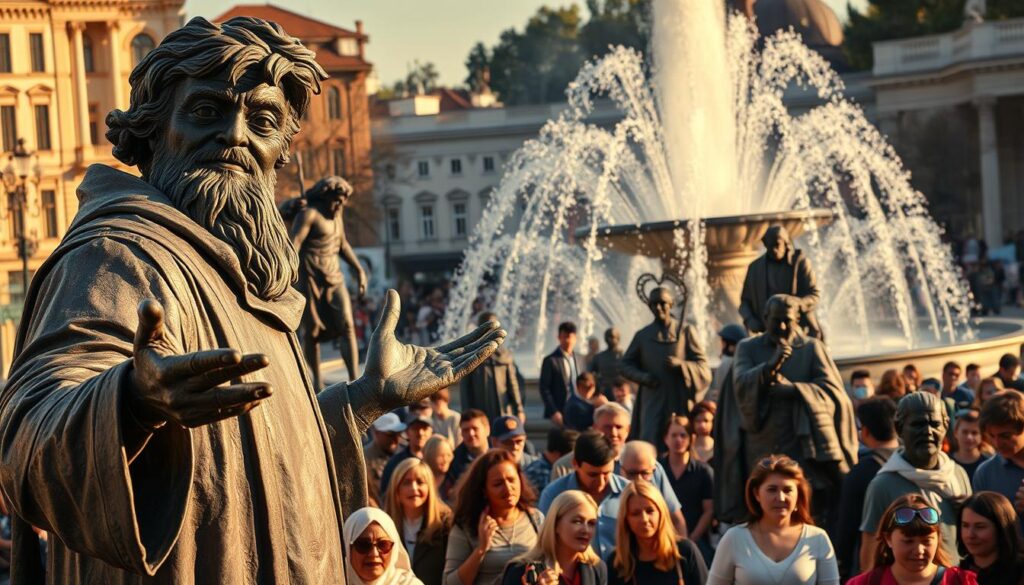
In Central Park’s heart, a talking statue has amazed New York City’s kids for 65 years. Every Saturday in summer, children gather around Hans Christian Andersen’s statue. There, they listen to magical stories by professional storytellers.
This tradition shows how art and stories are deeply connected. The statue sparks storytelling, bringing people together. It creates a sense of community.
We will look into the role of talking statues today. We’ll explore famous sculptures in New York City. And how they impact the community.
What is a Talking Statue?
A talking statue is more than just a sculpture; it’s a storyteller. Many of our handcarved stone pieces draw from ancient stories. For example, the Boy With Thorn sculpture is inspired by a Roman sculpture of a messenger boy named Marcius.
Talking statues are works of art that tell stories. They engage and interact with viewers. They can share messages, tell tales, or represent historical or mythological figures.
The essence of a talking statue is its ability to communicate. It does this through the stories it tells or the messages it conveys. The idea of talking statues isn’t just about physical sculptures. It also includes the stories and legends around them.
These statues can become symbols of cultural heritage. They represent different aspects of society and history. In essence, talking statues connect art, history, and storytelling. They help us understand cultural narratives better.
The Most Famous Talking Statues Around the World
The world is home to many iconic talking statues. Each has its own story and cultural significance. These statues are a big part of public art, drawing people from all over.
The Venus De Milo is a famous talking statue. It’s seen as the top of Greek classical sculpture and beauty. Even without arms, it inspires and amazes people. Copies of the Venus De Milo show the goddess with different things, adding to her legend.
The Moonbird sculpture in New York City is another famous one. It lets people interact with it, showing how talking statues can turn public areas into art galleries.
Talking statues like these show the art values of their time. They also add to the cultural heritage of their places. They draw tourists and locals, creating a sense of community and shared culture.
These statues are more than pretty to look at. They tell stories of history or myths. By talking to these statues, people learn about the culture they were made in.
In short, famous talking statues are not just decorations. They are keepers of history, culture, and art. As public art, they inspire, teach, and fascinate people. They will keep being important for many years.
How Talking Statues Communicate
Talking statues use a mix of visuals and stories to talk to their viewers. They tell stories in many ways, making their messages clear. This is all thanks to the art of storytelling.
The Moonbird sculpture by Joan Miró is a great example. Made in 1946 and enlarged in 1966, it shows the moon in many ways. It creates a dreamy feel that makes viewers think about its meaning. This statue shows how visuals can tell powerful stories.
Talking statues are special because they mix art and stories. They offer a deep and engaging experience. Whether it’s through design or the story it shares, they connect with viewers on many levels.
In short, talking statues use a mix of visuals and stories to communicate. This makes storytelling key to their impact.
The Cultural Significance of Talking Statues
Talking statues are more than just public art. They tell stories that are deeply rooted in culture. These statues reflect the values and traditions of a society.
As public art, talking statues can honor historical events or celebrate cultural heritage. They can also bring joy and beauty to public areas. For example, the Alice in Wonderland sculpture in Central Park, New York City, was a gift in 1959. It was given by philanthropist George Delacorte to all New York City children, in memory of his wife. This statue has become a beloved landmark, symbolizing the city’s whimsical and imaginative spirit.
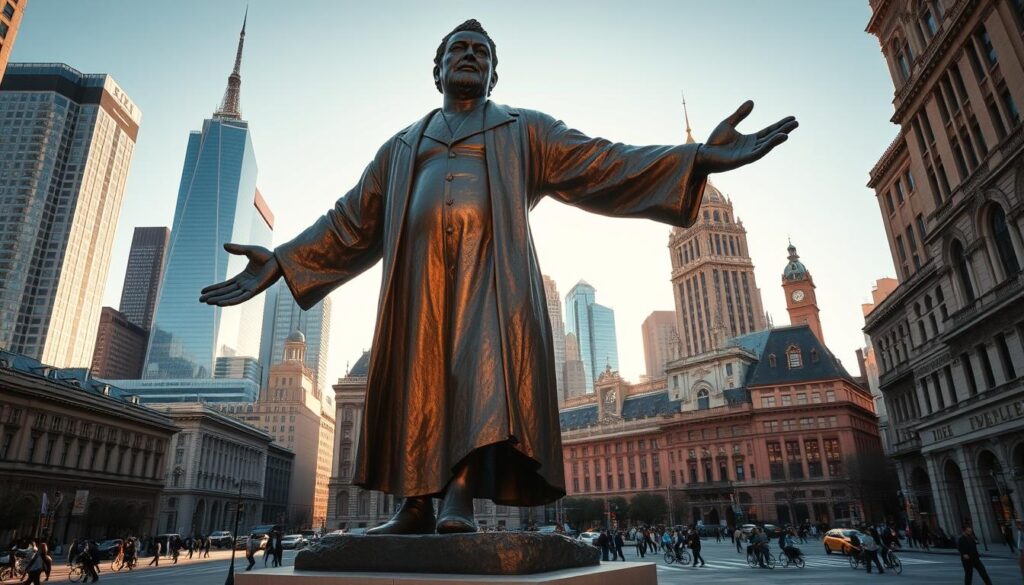
Talking statues also engage communities and foster a sense of shared identity. By using interactive technology, these statues become dynamic parts of public art. This makes them even more culturally significant.
In essence, talking statues are not just decorative. They are vessels for cultural expression and storytelling. Their presence in public spaces highlights the role of art in reflecting and shaping societal values.
The Evolution of Talking Statues in Modern Times
The story of talking statues in today’s world is both exciting and complex. It mixes art, technology, and culture in a unique way. Traditional statues are now being updated with new tech, making them interactive and engaging.
The “Le Petit Prince” sculpture is a great example. It was made by Jean-Marc de Pas in bronze in Normandy, France. This piece shows how modern statues can connect with people in new ways. “The art of sculpture is not just about creating a visually appealing piece; it’s about crafting an experience that resonates with people.”
Today, talking statues are more than just fantasy. They are used in public art and education, making them more meaningful. With technology, these statues can talk to visitors, share stories, or offer fun experiences.
A curator at a modern art museum said,
“The integration of technology into traditional art forms like sculpture is revolutionizing the way we experience and interact with art.”
This change shows a bigger trend towards wanting to be involved and engaged in art.
Talking statues also have a deep cultural impact. They connect the old with the new, letting us see history, culture, and tech in a new light. They help us understand our world in a unique way.
In summary, the evolution of talking statues is a blend of art, tech, and culture. As we keep innovating, it will be thrilling to see how these interactive sculptures keep inspiring people everywhere.
Benefits of Engaging with Talking Statues
By making statues talk, we open up new ways to tell stories and share culture. It lets us connect with art in a hands-on way. This makes the experience more personal and meaningful.
Enhancing Cultural Awareness: Talking statues can teach us about history, myths, and traditions. They turn learning into an exciting journey through different cultures.

Inspiring Creativity: Talking statues spark the imagination of artists and writers. They let people explore new stories and characters. This adds depth to fiction and art.
Talking to statues encourages us to think creatively. It’s not just about the statue but the stories it shares. This is great for kids, helping them grow their creative skills through interactive tales.
“The statue stood tall, its stone eyes seeming to hold a thousand stories. As it began to speak, the air was filled with the whispers of history and myth.”
Educational Benefits: Using talking statues in school makes learning fun. They help teach history, literature, and culture in a fun way.
Also, museums and cultural spots can use this tech to give visitors a deeper experience. With audio stories and interactive displays, they can share their collections in a more engaging way.
In summary, talking statues offer many benefits, from learning about culture to sparking creativity. As technology improves, we’ll see even more ways to use talking statues in education and entertainment.
Creating Your Own Talking Statue
With a little imagination, you can design a talking statue that tells its own story. Creating a talking statue is a fun and creative project. It lets you express your imagination and bring your ideas to life.
To start, decide on the theme or character of your statue. Will it be a historical figure, a mythical creature, or something original? The possibilities are endless, and you can tailor the design to your preferences and skills.
Once you have a concept, think about the materials and techniques to use. You might choose clay, wood, or recycled materials, depending on the look you want.
The next step is to add the technology for your statue to “talk.” You could use a pre-recorded message system or advanced AI. The choice depends on your budget and how interactive you want it to be.
After designing and building your talking statue, add the final touches. This could include painting or decorating it to match your vision. The result is a unique piece that adds character to your home and starts conversations.
If you’re ready to start creating your own talking statue, contact us to begin the design process. Our team is eager to help you bring your imaginative ideas to life.
Recreating a famous sculpture in your home can be rewarding. By following these steps and unleashing your creativity, you can enjoy a talking statue that reflects your personality and style.
The Future of Talking Statues
The future of talking statues is exciting, blending art, tech, and stories. As an artist, I seek the unusual and creative. As a writer, I dive into stories. As a designer, I explore materials and how things are made. This mix makes talking statues so captivating.
New tech like AI and IoT will change talking statues. AI can make statues talk more naturally. IoT lets them react to their surroundings.
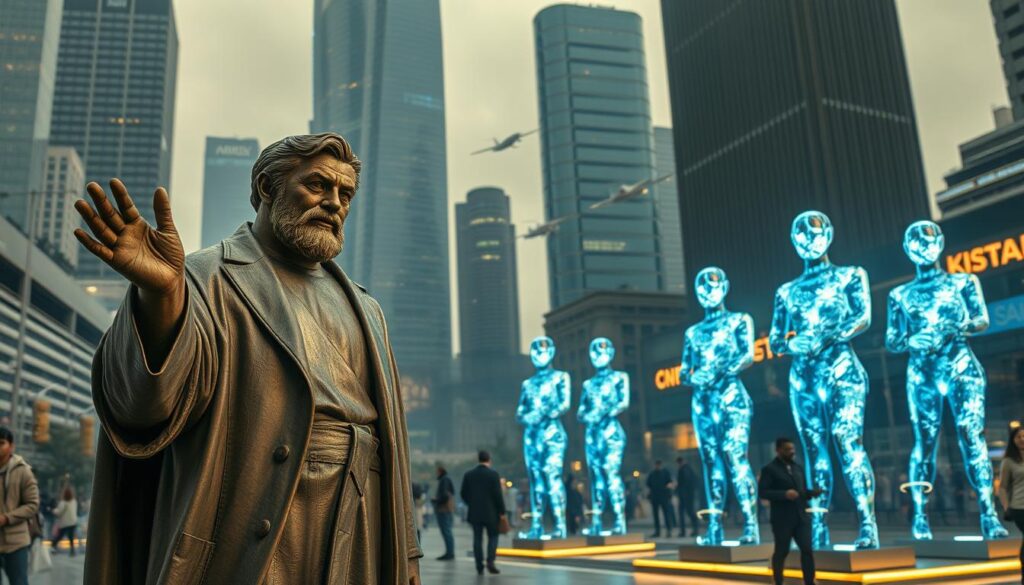
Advanced materials and making techniques will also shape talking statues. New materials open up creative and durable options. Better making methods make complex designs possible.
Interactive Storytelling: Talking statues could soon tell stories that change with each visit. With sensors and AI, statues can grow their stories with every interaction.
Immersive Experiences: We might see statues as part of bigger, all-encompassing experiences. These could include art, sound, and even smells, making everything more real.
Looking ahead, talking statues will keep amazing us with their mix of art, tech, and tales. They could bring us closer to stories or create deep, immersive worlds. The possibilities are endless.
Talking Statues in Literature and Media
In literature and media, talking statues are a powerful symbol. They carry deep meanings and ideas. These statues appear in stories, from old novels to new movies, drawing people in with their mystery and meaning.
“Alice in Wonderland” is a famous tale that has been turned into a bronze statue by José de Creeft. This story includes a talking statue, showing how statues can add to a story’s magic.
Talking statues in media often mean timelessness, wisdom, or the voice of the past. They appear in books, movies, and games. They connect the past with the present, or reality with fantasy.
“The statue, like a story, is a repository of memories, a keeper of secrets, and a teller of tales.” – This quote captures the essence of talking statues in stories and media. It shows their role as keepers of history and tellers of forgotten tales.
The use of talking statues in stories adds depth to the story. It also lets creators share complex ideas and feelings in a way that touches people.
In summary, talking statues in literature and media are more than just creative ideas. They are storytellers, carrying history, culture, and emotions. Their impact inspires creators and fascinates audiences, making them a lasting part of storytelling.
How to Find Talking Statues in Your City
Looking for talking statues in your city can uncover amazing stories and legends. You might find fabled creatures or famous literary characters on Manhattan’s streets. Or, you could discover unique public art in your local neighborhoods.
To begin, search for public art, monuments, and statues in your city’s parks and streets. Many cities offer guided tours or maps to help you find these spots. You can also try searching online for “talking statues near me” or “public art in [your city].”
While exploring, keep an eye out for statues with stories or interesting histories. These can be hidden in alleys or quiet corners of parks.
Engaging with these statues can deepen your appreciation for your city’s culture and history. So, take a walk around and see what tales its statues share.
The Impact of Talking Statues on Tourism
Talking statues are key in shaping a city’s identity and boosting tourism. They make urban landscapes more beautiful and serve as cultural ambassadors. This attracts visitors and improves their experience.
Public art, like talking statues, has big economic benefits. They can draw more people to areas where they are placed. For example, a talking statue in a tourist spot can make it a must-see, encouraging visitors to explore more.
Enhancing Cultural Identity Talking statues add to a city’s cultural richness, making it more attractive to tourists. They can reflect the local history, mythology, or values, giving visitors a unique experience.
“The presence of talking statues can transform a city into a more engaging and interactive environment.” The Hans Christian Andersen statue is a great example. It tells the author’s story and features his stories etched into it, enriching visitors’ experiences.
Talking statues also promote cultural exchange. They share information about local customs, historical events, and important figures. This helps tourists understand and appreciate the local culture more.
“Public art is a vital part of the urban landscape, and talking statues are at the forefront of this movement, combining technology and creativity to captivate audiences.”
The impact of talking statues on tourism is wide-ranging, from boosting the economy to enriching culture. As cities grow and add more public art, talking statues will play an even bigger role.
Conclusion: The Lasting Legacy of Talking Statues
The story-telling sculpture walk shows the lasting impact of talking statues. Five sculptures can be seen in an afternoon walk from 57th Street to 79th Street.
Talking statues inspire and captivate people everywhere. They reflect the cultural values and traditions of a society.
These statues make public spaces more beautiful. They also give us a peek into the past, keeping history and culture alive for the future.
By enjoying talking statues, we show their value in shaping our culture.