





Imagine finding a piece of history hidden under your feet. The excitement of discovering an ancient coin is a dream for treasure hunters. For those who love coin collecting, the search is as thrilling as the find.
Using metal detecting, people look for old treasures. They find pieces from the past, connecting us to history. This makes coin collecting full of adventure and mystery.
We will look into the world of finding old coins. We’ll share expert tips, amazing stories, and guide you on this exciting hobby.
The Thrill of Discovering Ancient Coins
For those who love history and adventure, finding ancient coins is thrilling. The world of coin hunting is vast and full of stories. These stories have captivated historians and enthusiasts for years.
Amateur Discoveries That Changed History
Many ancient coin discoveries were made by amateur enthusiasts. They found coins while walking or during a hobby. These finds give us valuable insights into history and culture.
The Reval hoard in Estonia is a great example. It included a large collection of medieval coins. This discovery shed light on the trade routes of the time. It shows how important these coins are as links to our past.
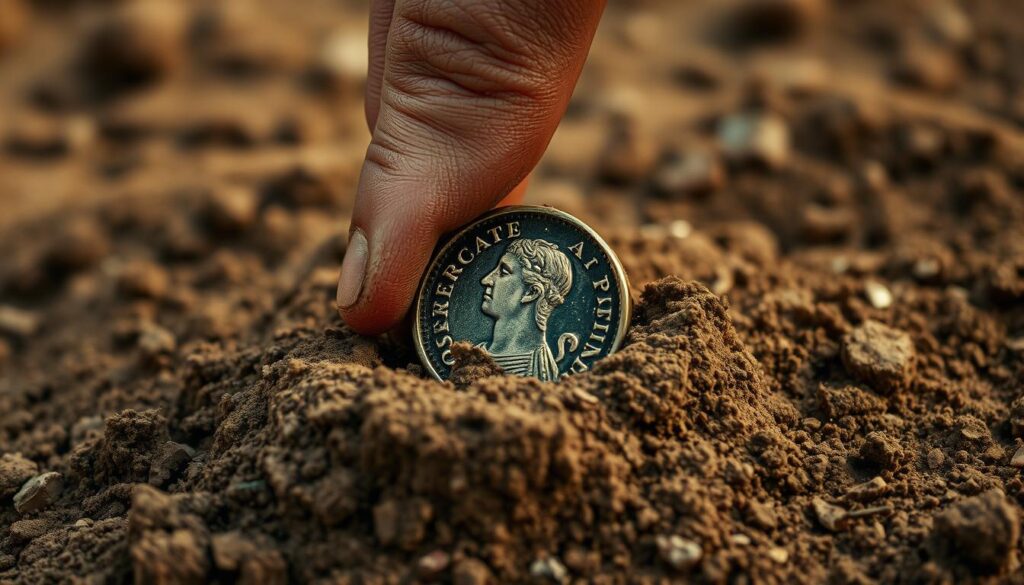
There are many stories of treasure finds by everyday people. These finds are often museum-worthy. They thrill the finders and help us understand history better.
For example, Roman coins found in England were fascinating. They gave historians new information about Roman occupation. Stories like these inspire others to explore ancient coins.
These discoveries highlight the excitement and importance of ancient coin hunting. It’s a hobby that is both rewarding and historically valuable.
Where to Hunt for Ancient Coins
The excitement of searching for ancient coins starts with knowing where to look. Ancient Coin Hunting Locations range from historical sites to beaches and waterways.
Historical Sites and Settlements
Historical sites and settlements are great places to find ancient coins. These areas were hubs of commerce, making it more likely to find lost coins. Always check if there are any legal rules or permissions needed.
Beaches and Waterways
Beaches and waterways are also good spots for ancient coin hunting. Erosion and changes in water can reveal hidden treasures. Metal detecting here can be rewarding, but make sure to follow local treasure hunting laws.

Before you begin, getting the right permits and permissions is key. Many historical sites are protected, and searching without permission can lead to fines or losing your finds. Research the rules for the places you want to explore.
Treasure Trove Laws in the United States
Knowing Treasure Trove Laws in the U.S. is important for serious coin hunters. These laws differ by state but usually outline how to handle found treasures. Learn the laws in your area to follow them and know your rights.
By focusing on these spots and understanding the laws, you can increase your chances of finding ancient coins. Happy hunting!
Essential Tools for Ancient Coin Hunting
To find coins from the past, you need the latest metal detecting tech and skills. The right gear can turn a successful hunt into a reality. Without it, your search might be in vain.
Best Frequencies for Coin Detection
The frequency on a metal detector is key for finding coins. Very Low Frequency (VLF) detectors are favorites among treasure hunters. They balance depth and discrimination well.
For ancient coins, a 4-8 kHz frequency range is best. It lets you find coins at a good depth and tells different metals apart.
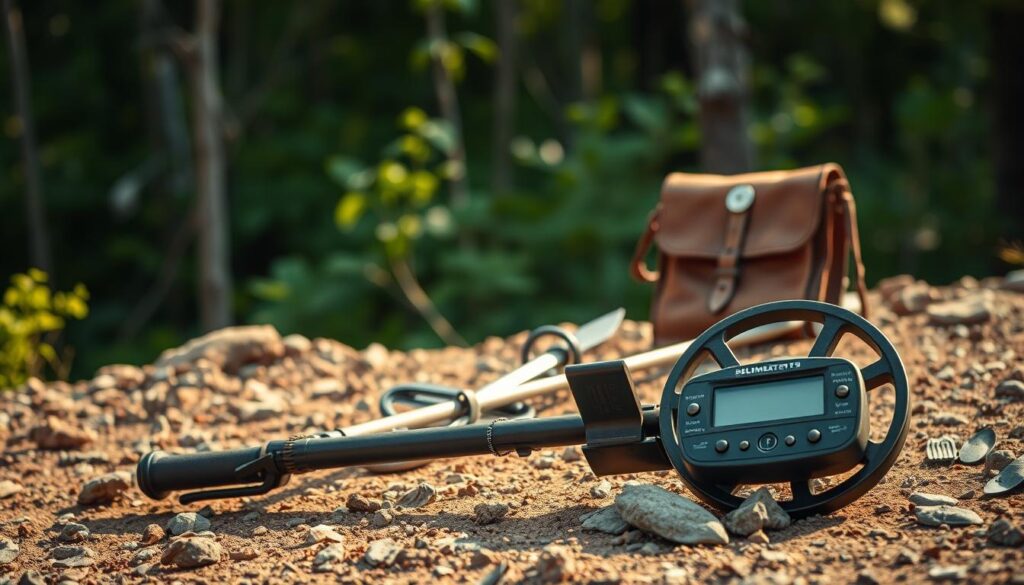
Modern metal detectors can tell metals apart. This helps ignore iron and find more valuable coins. Adjusting the settings can help filter out trash and find ancient coins.
Photography Tips for Coin Documentation
After finding a coin, documenting it is key. Coin photography needs focus. Use a camera with good macro for clear shots. A neutral background and the right light are essential.
Natural or diffused artificial light shows the coin’s details without harsh reflections. With the right gear and techniques, ancient coin hunting is a fulfilling hobby.
Identifying Your Ancient Coin
Ancient coins are full of historical secrets. To figure them out, you need to know about numismatics and how to analyze them. You have to look at different parts of the coin closely.
Portraits and Figures
The pictures on ancient coins are key to figuring them out. Rulers and deities were often shown. Knowing who is in the picture can tell you when and where the coin was made.
Iconography also matters a lot. Different symbols and designs were used by different cultures and leaders. By studying these, you can learn more about the coin’s past.
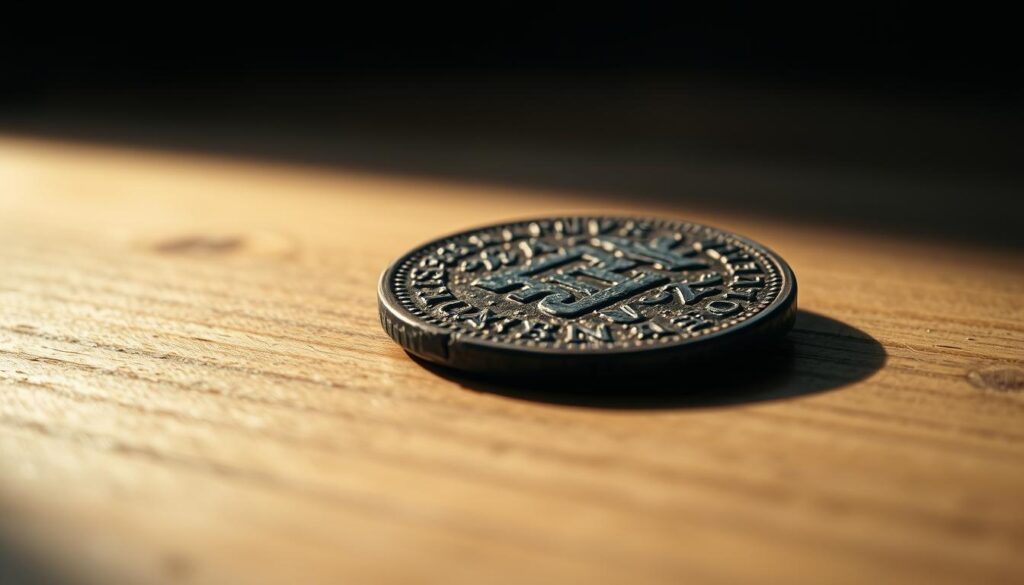
Inscriptions on ancient coins are also very important. The language and writing style can show where the coin came from. Ancient languages like Greek and Latin were often used. Knowing how to read these inscriptions is a must for coin collectors.
Looking at these inscriptions can also tell you about the coin’s value and when it was made.
Metallurgical Analysis
The type of metal in an ancient coin can tell you a lot. Different places and times used different metals, like gold, silver, and copper. By checking the metal, you can see if the coin fits with the minting practices of its time.
Stylistic Evolution Through Time
The way ancient coins looked changed over time. This was due to cultural and artistic changes. By studying these changes, you can guess when a coin was made more accurately. For example, the shift from classical to Hellenistic styles in Greek coins shows big cultural changes.
Knowing about these changes is key for numismatists to accurately identify and date ancient coins.
In short, figuring out an ancient coin involves looking at portraits, inscriptions, metal, and style. By using all these methods, collectors can uncover the rich history of their coins.
Major Types of Ancient Coin Throughout History
Ancient coins give us a peek into the past. They show us the economy, culture, and politics of ancient times. From the first electrum coins to the complex systems of ancient empires, coinage tells a story of human history.
Coins came in different types for different needs. Drachms from ancient Greece were a common currency. The Romans used Denarii, first made of silver, and later Aurei, gold coins, to show wealth and power.
Coins helped trade and showed the culture and values of their makers. They often had images of gods, goddesses, and mythical creatures. These images told stories of the time’s beliefs and values.
Imperial Portraits and Propaganda
Roman emperors used coins for imperial propaganda. They put their images on coins to show their power and right to rule. These portraits were often stylized, showing the emperor’s divine authority.
This helped them control their vast empire. It also spread their message and image to the people.
Spanish Pieces of Eight
The Spanish Pieces of Eight were important from the 16th to the 19th century. They were used in global trade, mainly in the Americas and Asia. Their silver quality and the Spanish empire’s size made them widely accepted.
These coins showed Spanish economic power. They also played a big role in international trade, becoming a global currency.
Early Federal Coinage
The United States started its own coinage with the Coinage Act of 1792. Coins like the half-cent, cent, and dollar were key in creating a standard U.S. currency.
These coins showed the new nation’s values and its goal for a unified economy. They marked the start of a new chapter in American numismatics.
Authenticating Your Ancient Coin Find
The process of authenticating ancient coins needs both skill and technology. It’s key for collectors, historians, and numismatists. This is because it affects the coin’s value and its historical importance.
There are many ways to check if a coin is real, each giving different clues about its past.
Visual Inspection Techniques
First, coins are looked at closely for signs of aging and wear. Experts can spot tiny details that show if a coin is real or fake.
Checking a coin’s weight and size against known standards is also important. Real ancient coins usually match the minting standards of their time. This helps prove they are genuine.
XRF Analysis
X-Ray Fluorescence (XRF) analysis is a way to check a coin without damaging it. It shows the coin’s metal composition. This is very helpful in Numismatic Authentication, as it can spot fake coins by their metal mix.
Metallographic Examination
This method looks at the coin’s metal structure under a microscope. It can tell us about how the coin was made and how old it is. This helps in confirming if a coin is real.
In summary, checking an ancient coin’s authenticity is complex. It uses old-fashioned numismatic knowledge and new science. With these methods, collectors and historians can be sure about their finds.
Proper Handling and Preservation Techniques
Keeping ancient coins in good shape needs the right handling and care. Coin Conservation is about keeping the coin’s condition and value.
Cleaning ancient coins is a careful job. Stay away from harsh chemicals and rough materials that can harm the coin. Use a soft-bristled brush to gently remove dirt. For deeper cleaning, get help from a professional conservator.
Damaging Practices to Avoid
Improper handling can seriously harm coins. Don’t touch the coin’s surface, as your skin oils can cause rust. Never use household cleaners or rough materials to clean a coin, as it can ruin it.
Coin Holders and Albums
It’s important to store coins in the right holders and albums. Choose holders made from materials that won’t harm the coin. Albums should be made for coins, with pages that don’t have harmful chemicals.
Environmental Controls
The place where you store your coins matters a lot. Keep them away from direct sunlight, high humidity, and extreme temperatures. A cool, dry spot is best for storing ancient coins.
Professional vs. DIY Conservation
Some coin care can be done at home, but complex tasks need a pro. Numismatic Preservation experts have the skills and tools to care for coins without harming them.
In summary, taking good care of ancient coins is key to keeping them in great shape. Use safe cleaning methods, avoid harmful practices, and store them right. Control the environment and know when to ask for professional help. This way, your ancient coin collection will last a long time.
Determining the Value of Your Ancient Coin
Figuring out what your ancient coin is worth needs careful thought. You must look at several key factors that affect its value.
The worth of an ancient coin is greatly influenced by its rarity and historical significance. Coins made in small numbers or tied to big historical events are more valuable. For example, coins from brief dynasties or marking important events can fetch a higher price because of their rarity and historical importance.
Rarity and Historical Significance
The rarity of a coin depends on how many were made and how many have survived. Coins made in small numbers or hard to find are more valuable. Also, coins linked to major historical events or figures can increase in value because of their historical significance.
As a numismatist,
“The value of a coin is not just in its metal content but in the story it tells and the history it represents.”
This shows how important it is to know the coin’s history and rarity.
Condition and Preservation
The condition and preservation of an ancient coin also matter a lot in its value. Coins in good shape, with little wear, are more valuable than those that are damaged.
The coin’s condition is judged by its preservation, like its shine, surface quality, and any damage. Coins graded high on the Sheldon Scale (like MS-65 or higher) are seen as excellent and are worth more.
To get a true value of your ancient coin, it’s key to talk to reputable appraisers who know coins well. Look for experts who belong to groups like the American Numismatic Society. They follow strict rules and know their stuff.
Good appraisers will look at your coin’s rarity, condition, and history. They’ll give you a detailed idea of what it’s worth.
The Enduring Legacy of Ancient Coins: Connecting Past and Present
Ancient coins have made a lasting impact on human history. They are more than just money; they are a link to the past. By studying these coins, we learn about the cultures, societies, and economies of old times.
These coins hold great cultural value. They show the art and technology of ancient civilizations. They also symbolize power, trade, and cultural exchange. Today, they fascinate collectors, historians, and enthusiasts, helping us understand our shared heritage.