








Creating a story is more than just listing events. It needs a clear big idea that speaks to your audience. This big idea is the theme that makes your story deep and meaningful.
Finding this core idea is key. It connects your characters, plot, and setting into one strong story. A good big idea grabs your readers and stays with them even after they’ve finished reading.
To create a strong big idea, you must look closely at your story’s parts. You need to find the message you want to share. This helps you connect with your audience in a powerful way.
Understanding What a Theme Is
Knowing what a theme is is key for writers who want to make a mark. A theme is the main idea or message that comes out of a story. It ties everything together, adding depth and meaning.
Themes can be simple or complex. They can be shown through symbolism, imagery, and character development. By grasping the concept of theme, writers can share their message clearly.
In storytelling, the theme is the core. It gives the story its power and importance. It makes the story stick with readers, long after they’ve finished reading.
A clear theme definition helps writers stay focused. It makes sure every part of the story supports the main message. This makes the story more cohesive and enriches the reader’s experience.
By adding a well-defined theme to their narrative theme, writers can connect with their audience on a deeper level. This makes their stories more relatable and impactful.
Different Types of Themes
Themes are key in any story, and knowing their types is vital for good storytelling. In books, themes come in many forms, each giving a unique view of life.
One major type of theme is worldview revelation. This theme asks big questions about life, right and wrong, and what it means to be human. J.R.R. Tolkien’s “The Lord of the Rings” is a great example, showing the battle between good and evil.

Societal themes look at how society works, like fairness, justice, and change. Harper Lee’s “To Kill a Mockingbird” is a prime example, tackling racial injustice and growing up.
Narrative themes can be very personal, focusing on one person’s journey and feelings. These themes make stories feel real and touching. “The Alchemist” by Paulo Coelho is a great example, diving into finding oneself and spiritual quests.
Exploring Theme Categories
Knowing the different theme categories helps writers pick the right themes for their stories. This way, they can share their messages clearly and make their stories more interesting.
The way we group narrative themes isn’t strict; themes can mix or be seen in many ways. This openness lets writers tackle complex ideas and feelings, making their stories richer.
In summary, the many types of themes give writers tools to tell engaging stories. By grasping and using these themes well, writers can connect with their readers.
How to Identify Your Theme
Looking into your story’s parts is the first step to find its theme. Start by checking the main character’s journey and how it ties to the story. This can help you see the message you’re trying to share.
Understanding the Protagonist’s Journey is key to finding the theme. Think about how the main character changes or grows. This change often shows the theme, as it points out the lessons learned or challenges faced.
Narrative techniques like symbolism, foreshadowing, and imagery also hint at the theme. By studying these, you can get a better grasp of the story’s hidden message.
The story’s structure, including the plot and setting, is also important for the theme. By looking at how these parts work together, you can find the story’s core message.
To find your theme, follow these steps:
- Analyze the main character’s change and its importance.
- Look at the narrative techniques used and their effect on the story.
- See how the plot and setting help share the overall message.
By taking these steps and carefully looking at your narrative, you can find the theme that holds your story together. This ensures a strong, meaningful story.
The Role of Conflict in Developing Theme
In storytelling, conflict does more than just create tension. It’s a key tool for showing and developing the theme. Conflict drives the plot and pushes characters to grow and change. This growth is key to revealing the theme, as it lets the story explore its message.
Conflict and Theme Development go hand in hand. The challenges characters face test their beliefs and values. This shows the theme of the story, making it both engaging and meaningful.

The type of conflict used shapes the theme. Internal conflict can show character growth and human insight. External conflict can highlight struggles against society or nature. How conflict is resolved or left open also affects the theme.
To develop a theme through conflict, writers need to understand the story’s core message. They must create conflicts that drive the plot and highlight the theme. This means crafting complex characters with deep inner lives and motivations.
Using conflict to explore the theme adds depth and complexity to a story. This makes the story more impactful and memorable. It also draws the audience in on a deeper level.
Weaving Theme into Your Narrative
A well-integrated theme can make your story more engaging and meaningful. Writers use various techniques to subtly show the theme in their work.
Using symbolism is a great way to do this. Symbols can stand for big ideas or themes. For example, a rose might mean love, or a journey could symbolize growth. Adding symbols that fit the theme adds depth to your story.
Imagery is also key for developing the theme. Describing settings, characters, and actions vividly can stir emotions and ideas that match the theme. A dark, empty landscape might show a theme of loneliness or sadness.
Character development is also vital. The main character’s journey, with its ups and downs, can show the theme. Making the character’s experiences reflect the theme makes the story more impactful.
The story’s structure can also carry the theme. How the plot unfolds, including twists and the resolution of conflicts, can support the message. It’s important to plan carefully so every part of the story helps show the theme.
By employing techniques like symbolism, imagery, character development, and structure, writers can integrate their theme into their story. This not only improves the narrative but also connects with readers on a deeper level.
Themes in Different Genres
Themes in literature vary by genre, shaping how readers see the story. Each genre has its own themes, influenced by its conventions and what readers expect.
Big idea nonfiction often has worldview revelation themes. These themes challenge readers, making them think deeply about our world. Romance novels, on the other hand, focus on personal themes like love, relationships, and personal growth.
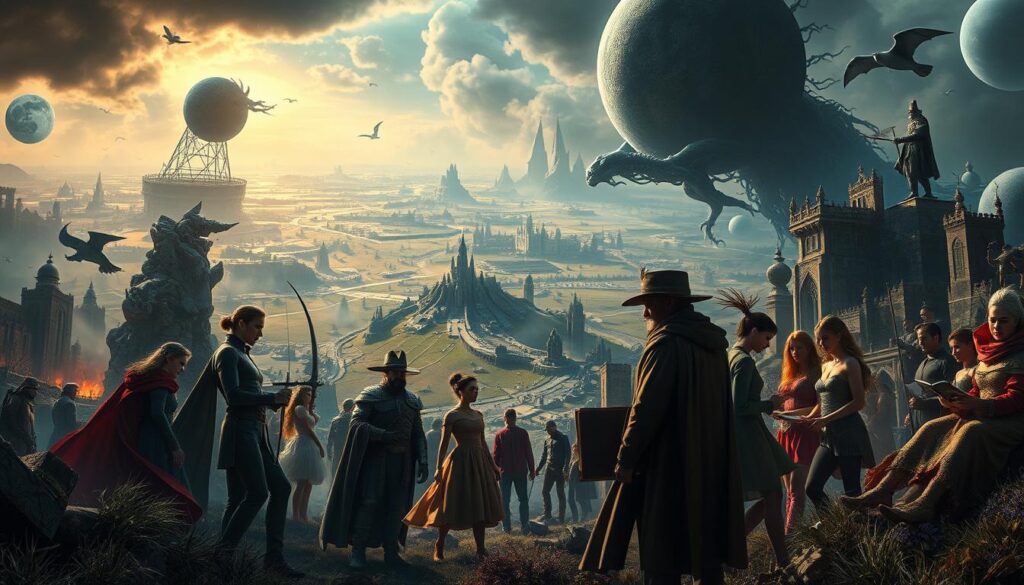
Science fiction explores themes related to technology and its impact on society. It comments on today’s issues and what might come next. Historical fiction, by contrast, looks at themes of survival, sacrifice, and the human condition. It offers a deep dive into human feelings and experiences.
Knowing these genre-specific themes helps writers create stories that meet genre expectations. It also connects with their audience on a deeper level. By using the right themes, authors can make their stories more engaging and meaningful.
In conclusion, the theme of a story is closely tied to its genre. Understanding and using these narrative themes can greatly improve a story’s impact and appeal.
The Importance of Consistency in Theme
Keeping the theme consistent is key to a good story. It makes the story flow better and grabs the reader’s attention. This makes the story more meaningful.
To keep the theme strong, writers use a few tricks. One way is to repeat certain symbols or phrases. These elements show up again and again, making the theme clear. It shows how important the theme is.
Using consistent imagery is another good idea. Imagery brings the story to life and makes it feel real. When the imagery fits the theme, it makes the story even more powerful.
It’s also important for characters and plot to match the theme. Characters should change in ways that show the theme. And plot twists should highlight the theme too. This makes the story more believable and interesting.
By keeping the theme consistent, writers make a story that readers remember. It’s about making sure every part of the story, from characters to images, sends the same message. This makes the story more impactful and memorable.
In short, theme development needs careful attention to consistency. Writers can use tricks like repeating symbols, using consistent imagery, and making sure characters and plot fit the theme. This consistency is what makes a story stand out and stay with readers.
How Theme Affects Your Audience
Understanding how theme impacts the audience is key for writers who want to make a lasting impression. The theme is more than just a background; it’s a powerful tool. It can significantly enhance reader engagement by touching their experiences and emotions.
A well-crafted theme makes a story more relatable and memorable. This increases its narrative impact. When readers connect with the theme personally, they become more invested in the story. They often think about its messages long after finishing the book.

On the other hand, a poorly executed theme can push readers away. It makes the story seem irrelevant or uninteresting. Writers need to know their audience and create a theme that speaks to them. This way, they can make sure their story has the impact they want, leaving a lasting impression.
The connection between theme and audience is complex and goes both ways. As writers work on their theme, they must think about how it will be received. They should make changes as needed to ensure the story resonates well.
Revising to Strengthen Your Theme
Revising your story to make your theme stronger can change everything. It means looking closely at your story’s parts to make sure they match and support your theme.
First, check your story’s structure. Think if the events flow well towards the theme. Also, is the pace right for your genre and readers? Changing your story’s structure can really make your theme stand out.
Characters are key too. They should show the theme or contrast it. Look at their journeys to see if they add depth to your theme. Changing character reasons or pasts can tie them closer to the theme.
Plot changes are also important. Remove scenes that don’t help the theme and add ones that do. Knowing your theme well helps you make these choices.
Revising to strengthen your theme takes time and effort. You’ll need to go back to your story many times, making changes and checking their impact. This way, you’ll craft a story that’s both exciting and full of meaning.
Famous Examples of Themes in Literature
Themes in literature reflect the human experience. Authors explore universal themes that readers find relatable today.
James Baldwin’s “Sonny’s Blues” is a great example. It talks about redemption and growing up in tough times. Baldwin’s work shows the struggles of finding identity and belonging. He says,
“The most dangerous creation of any society is the man who has nothing to lose.”
This quote shows the theme of desperation and seeking identity in Baldwin’s work.
F. Scott Fitzgerald’s “The Great Gatsby” also explores themes. It looks at the American Dream critically. Jane Austen’s “Pride and Prejudice” talks about love, class, and social status. These stories entertain and give insight into past societies.
These themes are timeless. They speak to basic human experiences. By studying these examples, writers can learn to create impactful themes in their stories.
Themes are key in literature. They help us understand human nature and society. As literature grows, exploring themes remains vital.
Final Thoughts on Crafting Your Theme
Crafting a compelling narrative theme is key in storytelling. It involves thinking about the message you want to share, the techniques you’ll use, and how to blend the theme into your story. This way, you can make a story that connects with your audience.
A well-crafted theme can make your story more engaging and meaningful. You’ve learned that finding and developing your theme is important. It means understanding different themes, using conflict to enhance your theme, and integrating it into your story.
To improve your storytelling, aim to create a theme that sticks with your readers. This will help you craft a narrative that is both memorable and impactful. Ultimately, it will lead to a satisfying conclusion.