







Visual storytelling is a key part of human expression. Comic Strips are a big part of this. They mix art and stories to grab our attention and share complex ideas simply.
Comic strips are special because they combine pictures and words. This makes them great for telling stories. They let artists share feelings and thoughts through images and text.
Comic Art has changed a lot over time. It uses different styles and methods to draw us in. Comic strips keep inspiring creativity and imagination in everyone, no matter their age.
The Magic Behind Visual Storytelling
Visual storytelling in comic strips mixes images and text to draw you in. It tells complex stories in a fun and easy way. This makes the experience both engaging and accessible.
Comic strips have been a key part of visual storytelling for years. They use a series of images to tell a story. Colors, textures, and character designs add depth, pulling you into the story.
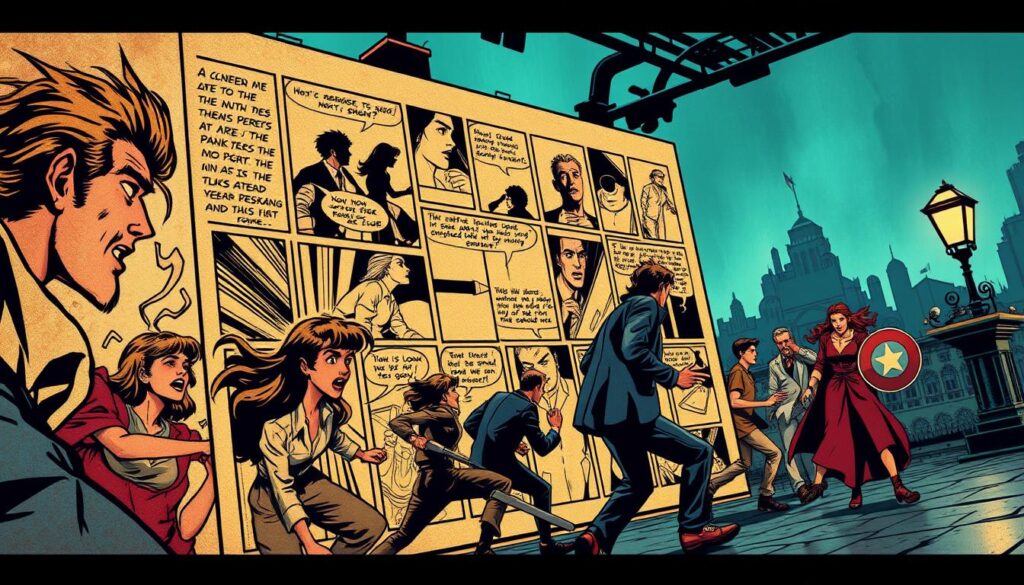
Comic strips use many techniques to tell their stories. They use captions and speech bubbles for dialogue and backstory. The layout of panels controls the story’s pace. These elements work together to create a story that readers love.
Comic strip creators use visual storytelling to make stories that grab your attention. Whether it’s through humor, drama, or adventure, the magic is in connecting with readers. It’s a powerful way to share stories.
A Brief History of Comic Strips in America
The history of comic strips in America is filled with art and stories. They have been entertaining people for a long time. This is thanks to their mix of pictures and words.
The first American comic strips started in the late 1800s. Richard F. Outcault’s “The Yellow Kid” is a big name in this early time. It first appeared in Joseph Pulitzer’s New York World in 1895. This strip was a hit, helping to start the comic strip trend.
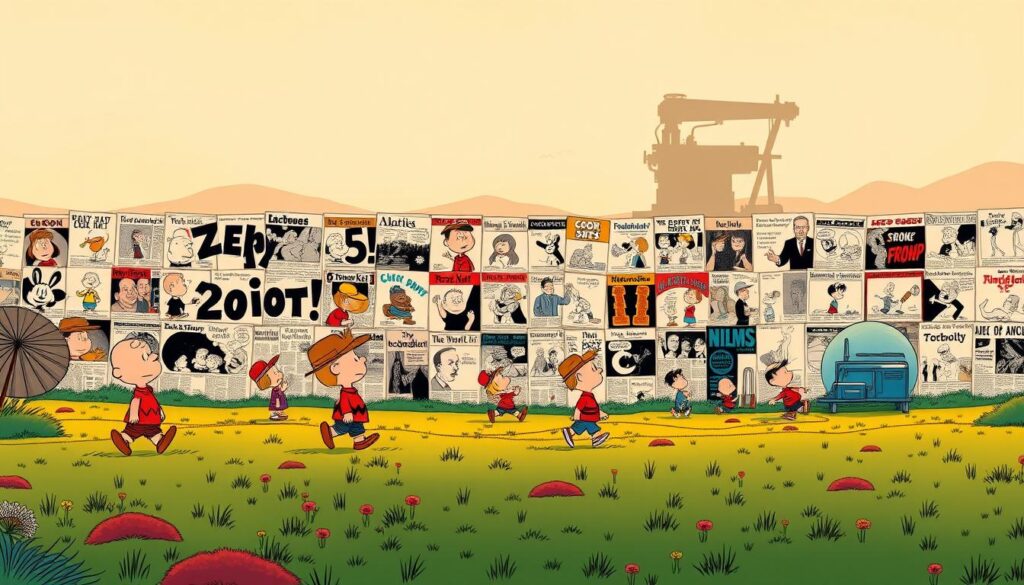
In the early 1900s, comic strips kept getting better. Characters like Krazy Kat and Blondie became very popular. These strips not only made people laugh but also showed what life was like in America.
“Krazy Kat” was praised for its surreal and poetic storytelling, influencing generations of cartoonists and artists.
The mid-1900s were big for comic strips in American newspapers. Peanuts by Charles M. Schulz and Pogo by Walt Kelly became very famous. They talked about serious topics in a funny way.
By the late 1900s and into the 2000s, comic strips changed a lot. The internet came along, and many strips moved online. This let them reach more people and try new things.
The history of comic strips in America shows how powerful pictures and words can be. From “The Yellow Kid” to today’s webcomics, they have always found a way to connect with people. They reflect the changing times and tastes of America.
Understanding Different Types of Comic Strips
The world of comic strips is full of variety, with many types created over time. They are a favorite way to tell stories, entertain, and even teach. Each type of comic strip has its own format and genre, appealing to different people.
Comic strips fall into genres like humor, adventure, romance, and science fiction. Each one has its own style and draws in specific fans. For example, humor comics use jokes to make readers laugh. Adventure comics have heroes and exciting stories.
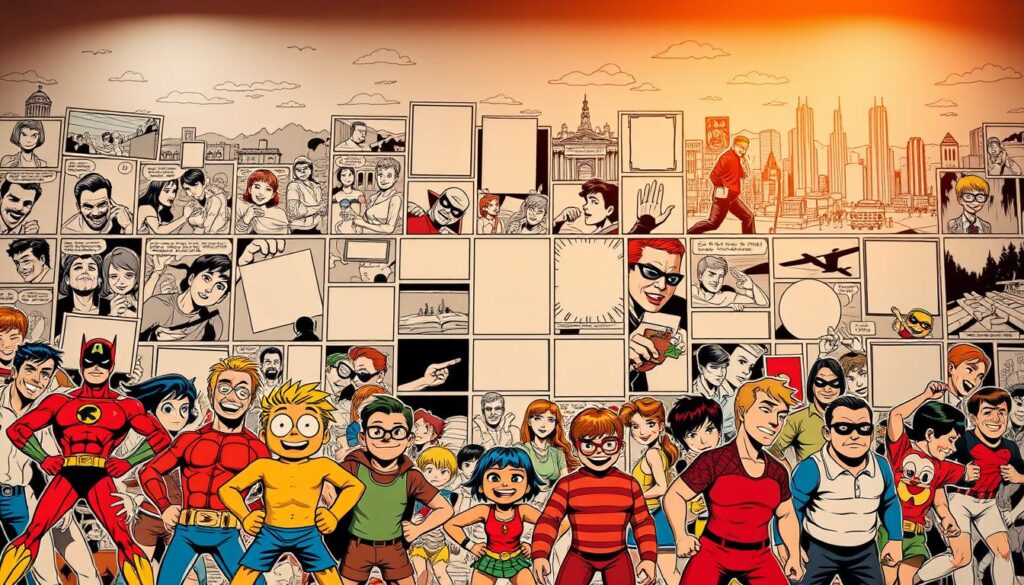
There are also different comic formats, such as strips, single-panel comics, and graphic novels. Strips are the classic style, with panels side by side. Single-panel comics tell a story or joke in one picture. Graphic novels are longer, more detailed stories that have become popular.
Knowing about the types of comic strips and their genres and formats is key for creators. By picking the right style and genre, artists can share their stories well and reach their audience.
The wide range of comic strips lets artists try new things and tell stories in new ways. As comics keep growing, we can expect to see even more types of strips, making the world of comics even richer.
Essential Elements of Compelling Comic Strips
Great comic strips have key elements like character development and visual consistency. These help create engaging narratives that grab and keep the audience’s interest.
Creating memorable characters is a vital comic strip element. Characters that are well-designed and relatable make the story more exciting for readers.
Creating Memorable Characters
To make memorable characters, comic strip artists should give them unique personalities and backstories. This emotional connection with characters boosts the story’s impact.
Visual Consistency and Character Bibles
Keeping visual consistency is key for a unified comic strip. A character bible is a great tool for tracking character details. It ensures consistency in the story, covering appearance, personality, and more.
A character bible helps keep the story visually consistent and rich. By blending engaging narratives with memorable characters, creators can make work that connects with their audience.
The success of a comic strip depends on balancing story and visuals. This creates a captivating experience for the reader.
The Visual Language of Comic Strips
Comic strips have a special visual language to share stories and feelings. This language uses images, text, and layout to tell tales.
The visual storytelling techniques in comic strips are varied and clever. Creators use colors, textures, and panel layouts to show mood and emotion.
Good comic art is key to a great story. Artists mix text and images to lead the reader. They use visuals to highlight important moments and feelings.
Panel transitions are a big part of comic strip language. Creators control the story’s pace to build tension or share complex info.
The visual language of comic strips is a strong tool for storytelling techniques. It lets creators share complex ideas and emotions clearly and engagingly. By mastering this language, comic artists can make stories that grab and hold the audience’s attention.
Creating Your Own Comic Strips: Step-by-Step Guide
With just a pencil and paper, you can turn your ideas into DIY Comics. Making comic strips is a fun way to express yourself. It involves planning, drawing, and telling a story.
The first step is to brainstorm and pick a storyline. Think about your characters, setting, and plot. Decide what kind of story you want to tell and how to make it engaging. Write down your ideas and imagine how they’ll come together in your comic strip.
Planning Your Comic Strip
After you have a clear story idea, plan your comic strip. Choose how many panels you’ll use and their layout. Most comic strips have 3 to 5 panels. Sketch out a rough version of your panels, thinking about the story’s flow. This is a key part of your Comic Strip Guide journey.
With your plan ready, start drawing your comic strip. Use simple lines and expressive characters. The goal is to tell a story that grabs your audience’s attention. Feel free to try different styles until you’re happy with your work.
As you get better at making DIY Comics, you’ll find it’s a rewarding hobby. You can share your work online or in print and meet other comic fans. The joy of turning simple materials into stories is what makes DIY comics special.
By following these steps and practicing, you’ll create engaging comic strips. They’ll show off your creativity and storytelling skills. Whether you’re new to comics or have experience, making comic strips is a unique and exciting way to express yourself.
Tools and Resources for Comic Strip Artists
The world of comic strip art is full of tools and resources. These help artists make their work better. They use both old and new tools to tell their stories.
Many comic strip artists start with traditional art supplies. They need materials for the first steps of creating.
Pencils, Inks, and Papers
The basics of comic strip art are pencils, inks, and papers. High-quality pencils help artists draw lines clearly. Archival-quality inks make the art last longer. The right paper texture also matters a lot.
Lettering and Coloring Tools
Good lettering and coloring make comic strips look great. Lettering guides and digital coloring software help artists get professional results.
Comic strip artists also use digital tools. Software for making and editing comics has many benefits. It makes editing easy and sharing work online simple.
By using both old and new tools, comic strip artists can make amazing work. This work connects with many people.
Publishing and Sharing Your Comic Strips
After you’ve made your comic strip, you can share it in many ways. The world of publishing comics has changed a lot with digital platforms.
Online platforms let you reach a huge audience quickly. Websites and social media for comics are great for showing off your work. They help you connect with fans all over the world. This is perfect for new artists who want to grow their fan base.
Self-publishing gives you more control over your work. You can publish in print or digital formats by yourself. It takes more work but lets you keep more of the profit and have more creative freedom.
Sharing your comics through community events is also smart. Going to comic conventions, local art shows, and online forums can help. You get feedback, build a community, and get more people to see your work.
Each way has its good and bad sides. Online platforms are great for visibility but are very competitive. Self-publishing gives you freedom but needs a lot of effort. Knowing these options helps creators choose the best way to share their comics.
From Doodles to Legacy: The Enduring Impact of Comic Strips
Comic strips have made a lasting impact on popular culture. They have inspired many artists, writers, and fans. Their influence can be seen in everything from graphic novels to animated movies.
Comic strips do more than entertain. They also tackle big social issues and help us understand the world. They offer commentary on what’s happening today.
Comic strips are loved by people of all ages. They have a special power to connect with us all, no matter when we were born. This is what makes them so culturally significant.
The art of comic strips continues to inspire new generations. By learning about comic strip history and how they work, creators can keep making exciting new stories.